







What Size PET Strapping Should I Use for Heavy Pallets?
By hqt
Sep, 2026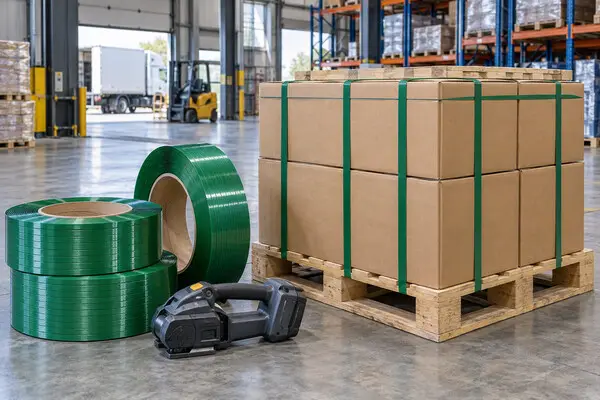
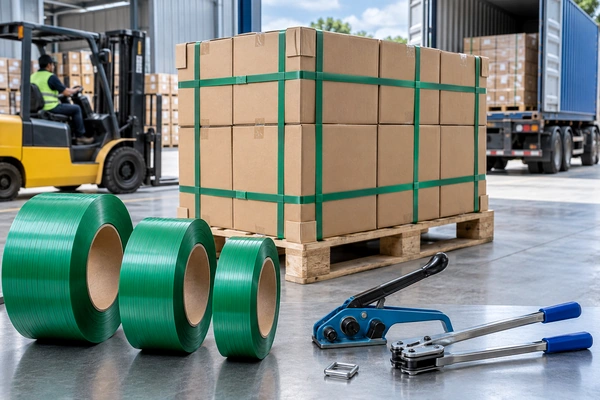


For heavy-duty pallet packaging, PET strapping with widths of 16mm and 19mm is the standard choice; 13mm PET strapping is suitable for applications involving compact, highly stable loads that require lower strapping tension. Selecting the right strapping specification requires a comprehensive assessment of factors such as pallet load weight, load stability, required breaking strength, number of straps, equipment compatibility, and the transportation environment.
A wider or thicker strap does not necessarily guarantee better packaging performance. When selecting strapping, purchasers should evaluate the entire strapping and packaging system rather than basing their decision solely on dimensional specifications.
What PET strapping specifications are typically used for heavy-duty pallets?
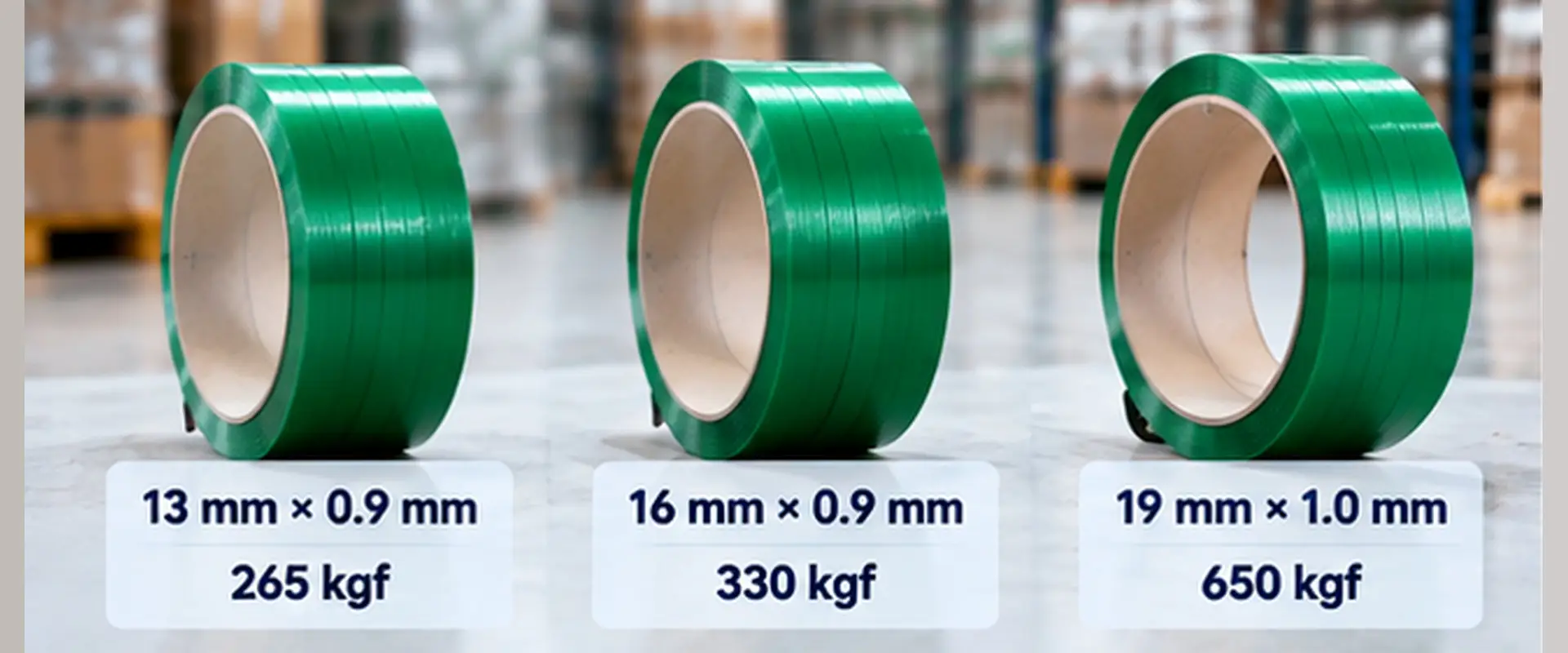
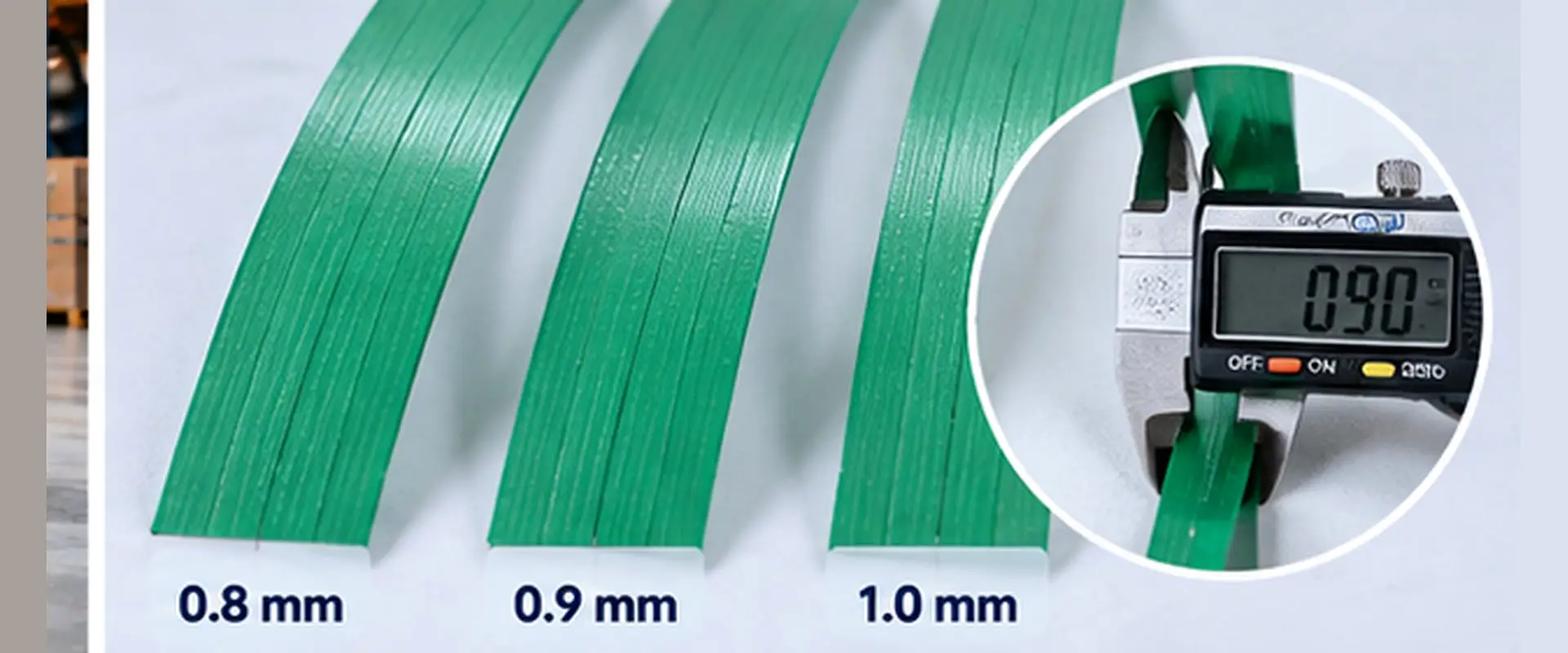
PET strapping comes in various widths and thicknesses to suit different packaging scenarios. Common widths include 13mm, 16mm, and 19mm, while common thicknesses are 0.8mm, 0.9mm, and 1.0mm. The table below provides reference examples of PET strapping specifications and their corresponding nominal breaking strengths.
| PET strapping size | Example breaking strength | General application considerations |
| 13 mm × 0.9 mm | 265 kgf | Compact, stable loads with suitable restraint requirements |
| 16 mm × 0.9 mm | 330 kgf | Palletized products requiring greater strap strength |
| 19 mm × 1.0 mm | 650 kgf | More demanding load-securing applications |
The above are merely examples of product specifications; they do not represent a universal strength rating for all PET strapping of the same dimensions.
Given similar raw materials and manufacturing processes, 19mm strapping typically offers higher tensile strength than the 13mm specification. However, actual product performance depends on the raw material formulation, manufacturing quality, and the measured breaking strength.
For heavy palletized loads, purchasers should first determine the required securing strength before selecting the appropriate strapping size.
Should you choose 16mm or 19mm PET strapping for heavy pallets?
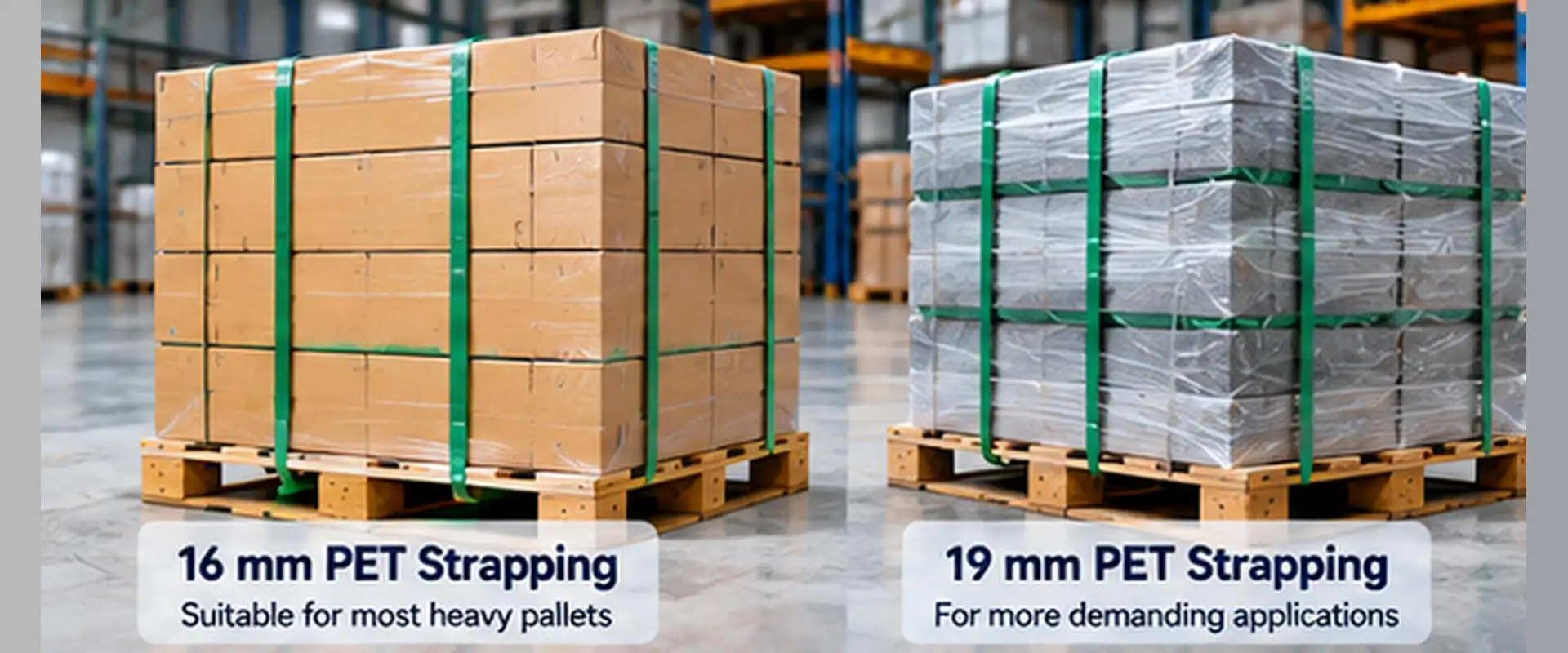
Both 16mm and 19mm PET strapping can be used for pallet securing, but they are designed for different strength requirements and usage scenarios. If the load is stacked neatly and stably, and the chosen strapping specification and securing method provide sufficient binding force, 16mm PET strapping is generally adequate.
19mm strapping offers a larger contact surface area; assuming equal quality, it achieves higher tensile strength, making it suitable for heavier loads, less stable loads, or shipments subject to harsh transport conditions.
However, strapping width should not be selected based solely on the total pallet weight. For instance, consider two pallets of the same total weight: one contains neatly stacked cartons forming a compact unit, while the other holds irregularly shaped metal parts; the stress dynamics for these two loads differ significantly.
Factors such as the load's center of gravity, shape, strapping configuration, and the handling and transport environment all influence the required securing strength. Selection should be based on actual on-site conditions rather than simply applying a fixed standard based on pallet weight.
How does PET strapping thickness affect load securing performance?
The thickness of PET strapping determines the amount of material used and directly impacts tensile performance. For example, a 16mm × 0.9mm strap has a larger cross-sectional area than a 16mm × 0.8mm strap. Given identical raw material formulations and manufacturing quality, the strap with the larger cross-sectional area can typically withstand higher tensile force.
However, increasing the strap thickness does not mean the breaking strength will increase in direct proportion. Even if external dimensions are identical, the performance of two strapping bands can differ due to variations in raw materials, molecular orientation, manufacturing processes, and dimensional uniformity.
Thickness also affects compatibility with the strapping machine. If the strap thickness exceeds the equipment's specifications, issues such as poor strap feeding, failure to tension correctly, and sealing malfunctions are likely to occur. Before opting for a thicker strap, purchasers should verify the breaking strength required for the specific application and the strap specifications permitted by the strapping machine.
Does a wider PET strap necessarily improve pallet stability?
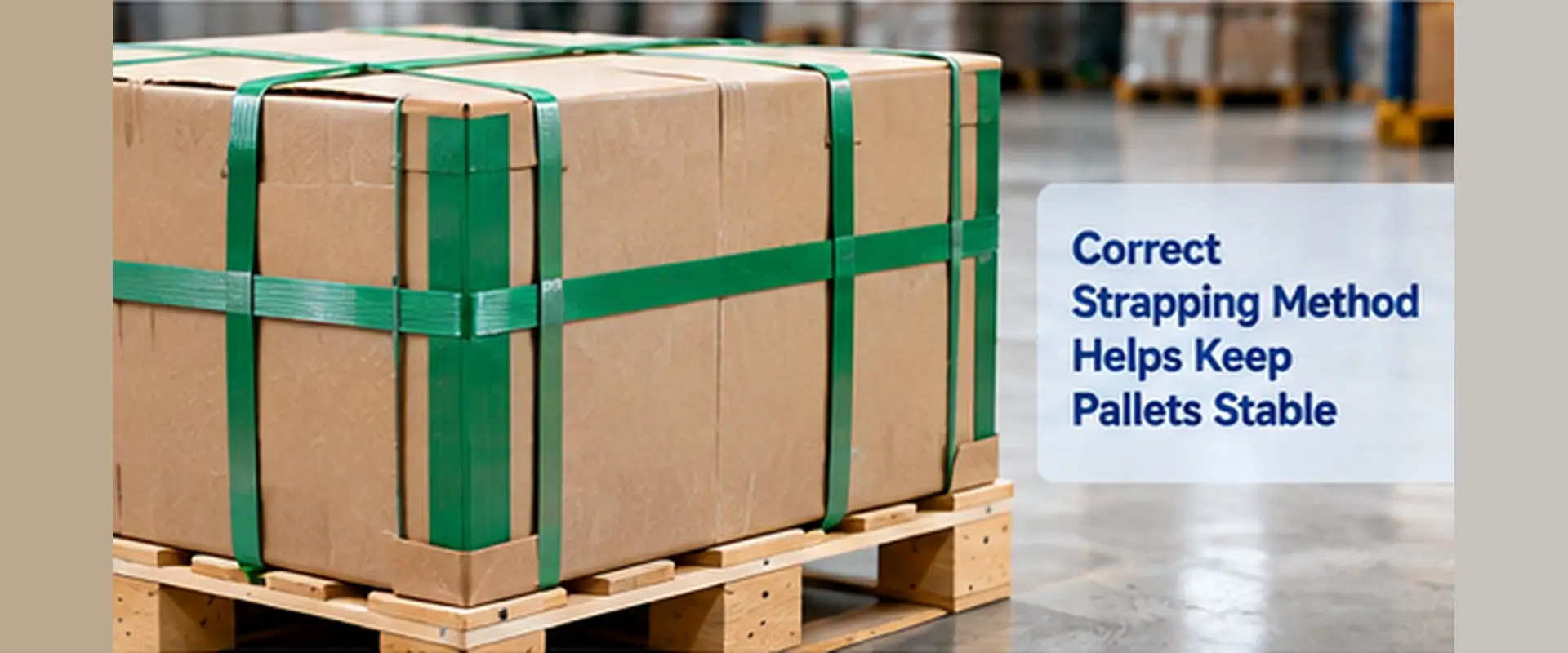
Not necessarily. While a wider PET strap offers a larger contact area and higher theoretical tensile potential, pallet stability is not determined solely by the width of a single strap. Factors such as the number of straps used, their placement, and the strapping direction significantly influence how securely the load is held. For instance, vertical strapping locks stacked goods firmly onto the pallet, whereas horizontal strapping is typically used to bundle specific products together. Strapping layouts should be designed based on the characteristics of the goods and the packaging process.
The strength of the sealed joint is equally critical. A PET strap with a nominal breaking strength of 650 kgf often fails to achieve that full strength after the sealing process is complete. Joint efficiency depends on the sealing method, machine parameters, the properties of the strap itself, and on-site operating conditions. For high-risk, heavy-load applications, purchasers must evaluate the entire strapping system rather than relying solely on the strap's nominal strength rating.
What specifications of PET strapping are suitable for bricks, lumber, and metal components?
Although these are all classified as heavy loads, the packaging challenges differ by product category.
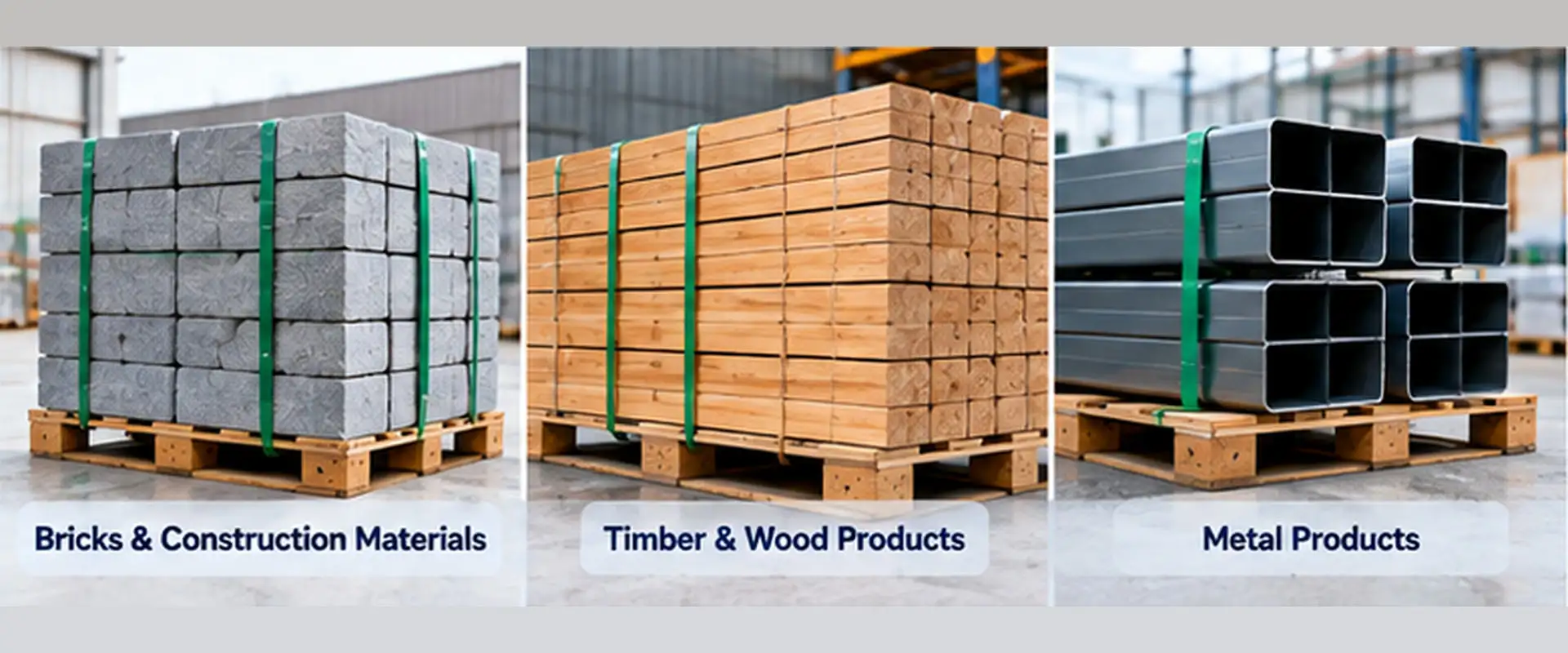
Bricks and building materials: Palletized loads are dense, with rough surfaces and many sharp corners. Selection must balance strap strength and load stability while incorporating appropriate edge protectors to distribute localized stress.
Lumber and wood products: Bundle shapes, dimensions, and surface conditions vary widely; packaging solutions must account for potential load shifting and deformation during storage and transport.
Metal products: Metal components can cause stress concentration and present sharp contact points. Proper strap placement and the use of edge protectors are essential, along with verifying that the PET strap meets the specific bundling requirements.
For these heavy-duty applications, 16mm or 19mm wide PET strapping can be selected based on performance needs. Final specifications should be confirmed through testing involving actual samples, pallet arrangements, and transport conditions. High-strength strapping alone cannot solve packaging failures caused by unstable stacking or flawed bundling strategies.
How does the strapping machine influence the choice of PET strap specifications?
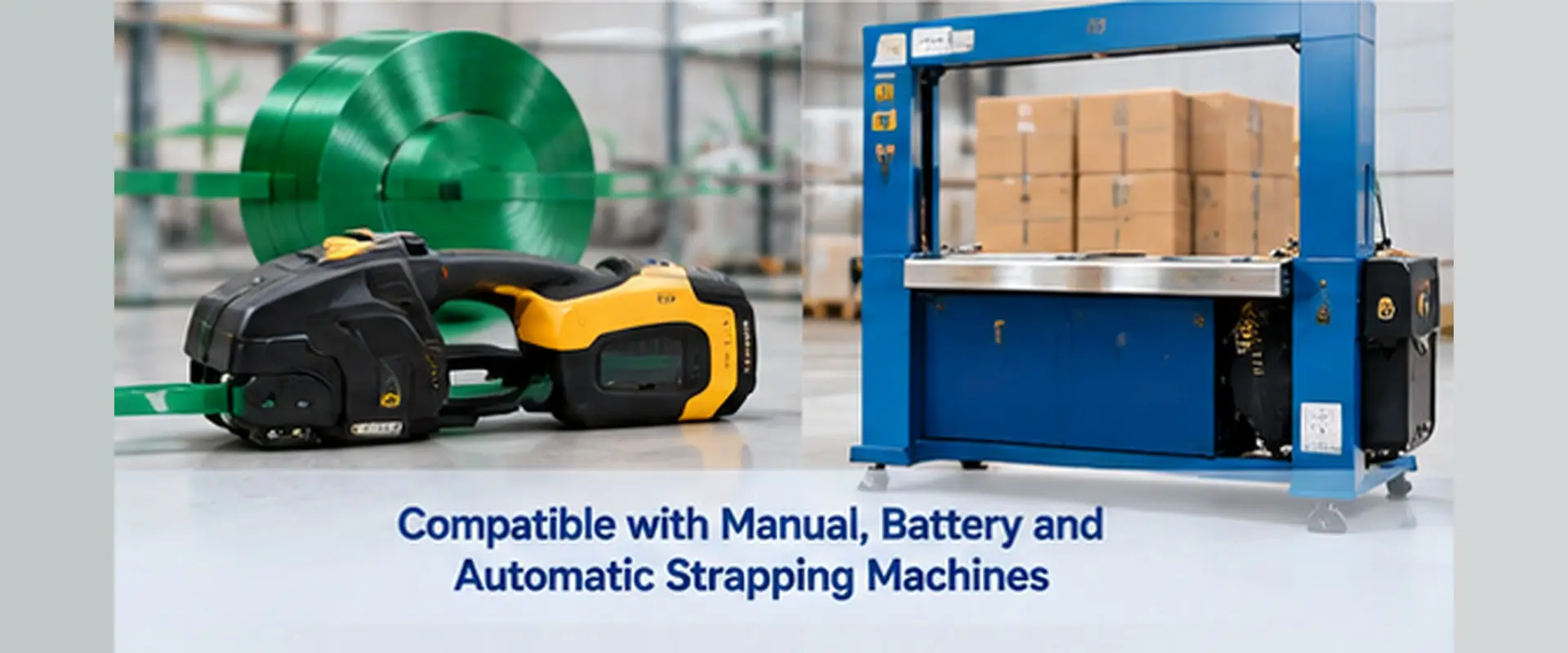
Equipment compatibility is a crucial factor when selecting PET strapping. Manual, pneumatic, battery-powered, and fully automatic strapping machines have different requirements regarding strap width, thickness, surface characteristics, and joint types. Even if a selected 19mm PET strap meets nominal strength standards, it cannot be used if the existing machine only supports narrower straps.
Before placing an order, please verify the strapping machine model, supported strap dimensions, tensioning range, and sealing method. The quality of friction-welded joints depends on both machine parameters and the quality of the strap itself. Excessive tension can crush cartons or products, while insufficient tension fails to secure the load adequately.
Purchasers need to distinguish between breaking strength and actual tensioning force: breaking strength is a value derived from standard laboratory tests and is not equivalent to the recommended tension setting for the strapping machine.
What information should buyers confirm before purchasing PET strapping?
A comprehensive quotation for PET strapping cannot simply list width and thickness specifications. Buyers need to clearly define requirements regarding breaking strength, coil dimensions, paper core specifications, equipment compatibility, and actual usage scenarios. An example of procurement specifications might include the following:
| Specification | Example requirement |
| Product | PET Strapping |
| Width | 16 mm |
| Thickness | 0.9 mm |
| Breaking strength | 330 kgf |
| Application | Palletized product packaging |
| Equipment | Specify machine model |
| Core size | Confirm according to equipment |
| Roll length or weight | Confirm before quotation |
| Packing | Confirm rolls per pallet |
| Transportation | Domestic or export shipment |
The dimensions and breaking strengths listed above are merely examples of product specifications and do not constitute specific selection recommendations for heavy-duty palletized loads.
For new applications, purchasers are encouraged to provide detailed information, such as actual photos of the pallet, product dimensions, load weight, specifications of currently used strapping, and any packaging issues encountered to date.
Yalan Pack supplies PET and PP strapping in a wide range of specifications—offering various widths, thicknesses, and tensile strengths—widely used for industrial packaging and the securing of palletized loads. For demanding operational conditions, it is recommended to conduct on-site testing and validation of the selected strapping using actual cargo and strapping equipment before placing bulk orders.
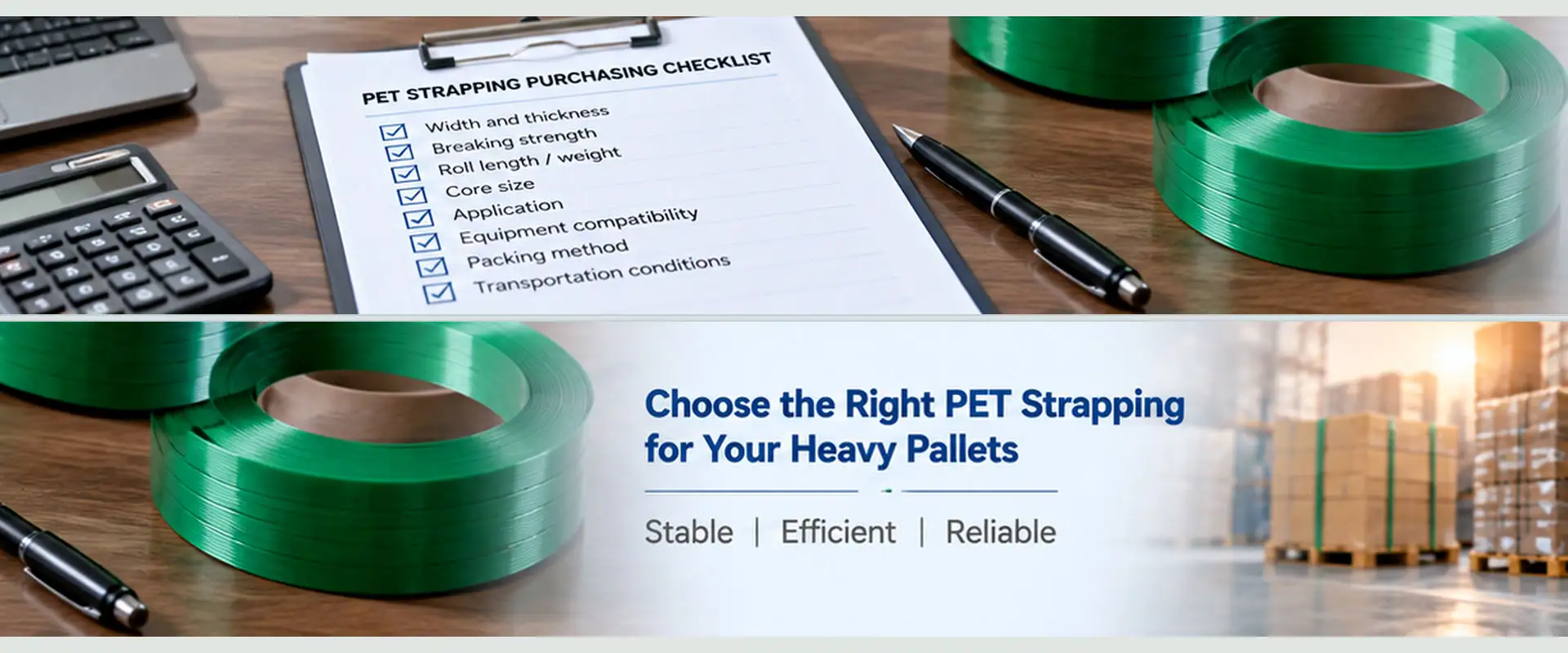
How do you select PET strapping for heavy-duty pallets?
For heavy-duty pallets, 16mm and 19mm wide PET straps are the preferred options; however, these widths are not suitable for every type of heavy load.
Proper selection requires a comprehensive assessment of factors including required breaking strength, strap dimensions, joint performance, the number and arrangement of straps, equipment compatibility, and transportation conditions. Purchasers should also evaluate the overall packaging solution to determine whether to incorporate stretch wrap or edge protectors for supplementary protection.
Key Purchasing Principle: The selection of PET strapping should be based on the actual condition of the cargo and the verified performance of the strap itself, rather than relying solely on pallet weight or strap width.
Share on Social:


-
PREV:
How Much Breaking Strength Does PET Strapping Need?
- NEXT: Null


