







7 Hidden Packaging Costs Buyers Often Overlook
By hqt
Nov, 2026


Hidden costs in the packaging process typically include: wasted materials, material loss, low labor efficiency, equipment downtime, product damage, additional freight charges, and inconsistent product quality.
For those responsible for packaging procurement, the lowest quoted price does not equate to the lowest total cost of ownership. Low-priced stretch film, strapping, or PET bands can easily lead to additional expenses during warehousing, handling, and transportation.

Understanding these seven hidden costs can help importers, distributors, and warehouse operators make more informed procurement decisions.
1.Paying for packaging materials that cannot be used
One of the most frequently overlooked costs is paying for materials that cannot actually be used for packaging.
This is particularly important when purchasing stretch film based on the weight of the roll.
A roll of stretch film consists of the film itself and a paper core; the gross weight is the combined total, while the net weight represents the actual, usable amount of film.
For example:
| Specification | Supplier A | Supplier B |
| Gross roll weight | 3.0 kg | 3.0 kg |
| Paper core weight | 0.5 kg | 0.3 kg |
| Net film weight | 2.5 kg | 2.7 kg |
Even if two rolls have the same gross weight, the one from Supplier B may provide 8% more usable film.
Purchasers should also verify the actual roll length, film thickness, and dimensional tolerances.
This logic also applies to BOPP strapping; the key is to confirm the effective length and total thickness.
Procurement decisions should be based on the product's actual, usable specifications, rather than just the weight or dimensions stated on the label.

2. Material Waste in Daily Packaging Operations
Packaging material loss gradually drives up operational costs.
Common scenarios for such losses include:
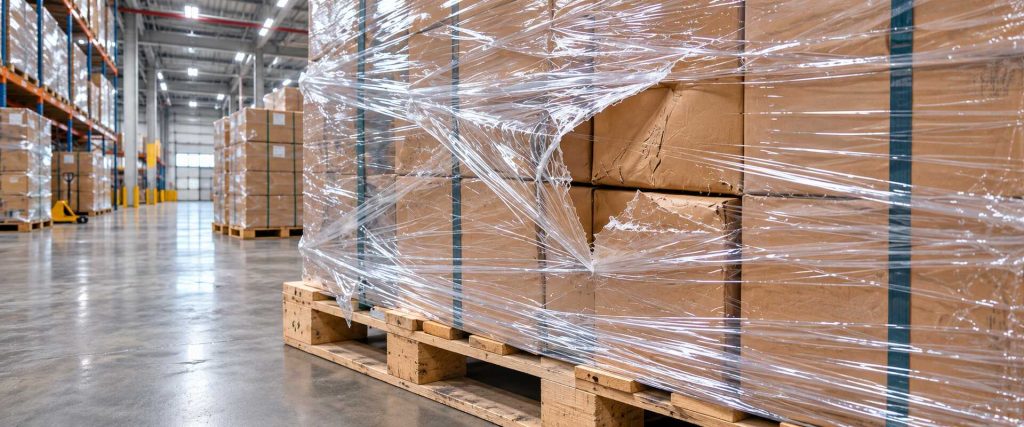
Stretch film breaking while wrapping pallets.
Strapping tearing or failing to feed smoothly.
PET strapping breaking during the tensioning process.
Excessive packaging due to improper handling.
Packaging materials being discarded during rework.
For example, if a warehouse spends $5,000 per month on packaging consumables and experiences a 4% loss rate, that amounts to $200 in wasted costs every month.
Over the course of a year, this adds up to $2,400 in material losses. The actual loss rate depends on product quality, equipment settings, staff training, and specific packaging conditions.
Purchasers should continuously monitor loss data; do not simply assume that all purchased materials are being utilized efficiently
3. Additional Labor Requirements and Increased Packaging Time
The quality of packaging consumables directly impacts the efficiency of warehouse staff.
Stretch film that is difficult to handle extends the time required for wrapping.
Packing tape with poor initial tack forces employees to repeatedly reinforce cartons.
PET strapping that does not feed smoothly through equipment disrupts the packaging workflow.
In high-throughput warehouses, even short, individual delays can accumulate into a significant impact over time.
For instance, if a packaging issue adds 30 seconds to the processing of each pallet—across 200 pallets—it results in approximately 100 extra minutes of labor per day.
Assuming a total labor cost of $18 per hour (including benefits), this translates to an additional daily labor cost of $30. Based on 250 working days per year, this can result in up to $7,500 in additional expenses.
This simplified scenario assumes that the extra time required translates directly into labor costs; the actual financial impact would depend on specific staffing levels and operational models.
Therefore, when evaluating packaging materials, one must consider not only the unit purchase price but also packaging efficiency.

4. Equipment Downtime and Maintenance Costs
Automated packaging equipment requires a high degree of stability and consistency in consumables.
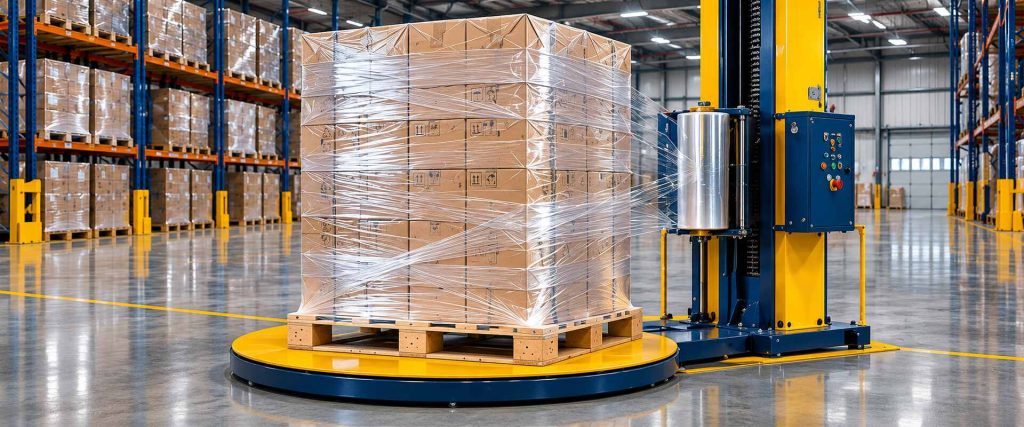
Machine-grade stretch film must be compatible with the specific equipment and its operating parameters.
BOPP tape used in automatic carton sealers must ensure smooth dispensing and consistent adhesion.
PP or PET strapping must also meet the technical specifications of the strapping machine.
Poor compatibility or significant performance fluctuations in consumables can lead to issues such as:
Film breakage
Tape feeding malfunctions
Strapping jams
Equipment downtime
Additional troubleshooting and maintenance requirements
Frequent interruptions reduce the number of pallets or cartons that can be processed per hour.
The losses resulting from downtime include not only wasted materials but also maintenance labor costs, reduced throughput, and shipping delays.
Before switching suppliers, it is advisable to conduct on-site testing using your own equipment.
5. Cargo Damage and Customer Claims
The primary purpose of packaging is to protect goods, not merely to secure them in place.
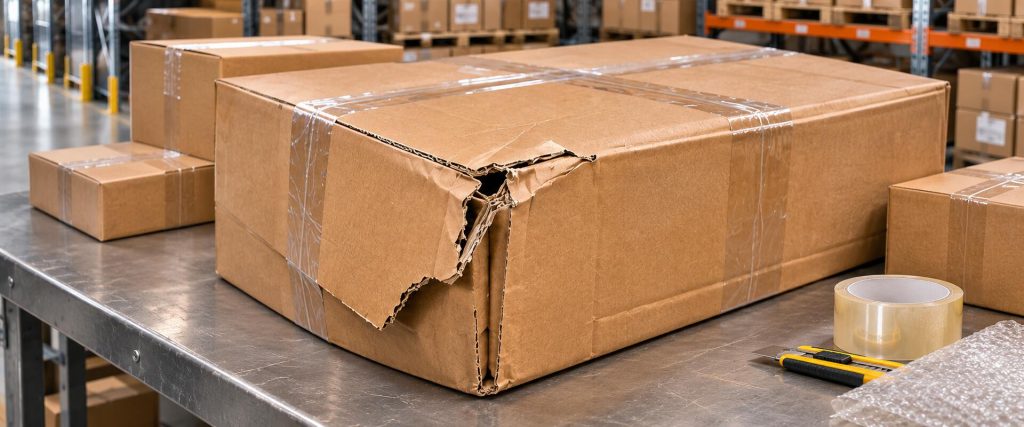
Insufficient stretch wrapping, failed carton seals, or improper strapping methods all increase the risk of cargo shifting or sustaining damage during transit.
Associated costs may include:
Replacement of damaged products
Customer refunds and claims
Repackaging and inspection
Additional transportation costs
Loss of orders and decreased customer satisfaction
For example, if a warehouse ships 5,000 pallets annually and incurs $10,000 in cargo damage costs related to packaging, that averages out to $2 per pallet.
Saving a small amount on packaging materials at the cost of higher cargo damage expenses is rarely a sound trade-off.
Of course, cargo damage can stem from various factors, including loading and unloading conditions, pallet design, and how goods are secured within a shipping container. Packaging performance should be evaluated comprehensively as an integral part of the entire supply chain and logistics network.
6. Freight, Duties, and Inventory Costs
For buyers sourcing packaging internationally, a supplier’s quoted price is only one component of the landed cost.
Depending on the agreed-upon Incoterms (International Commercial Terms) and the chosen shipping method, additional expenses may arise, including:
Ocean or inland freight charges
Customs duties and related taxes
Port and terminal handling charges
Customs clearance fees
Warehousing and inventory carrying costs
Additional loading and unloading expenses
Packaging solutions also directly impact transport efficiency.
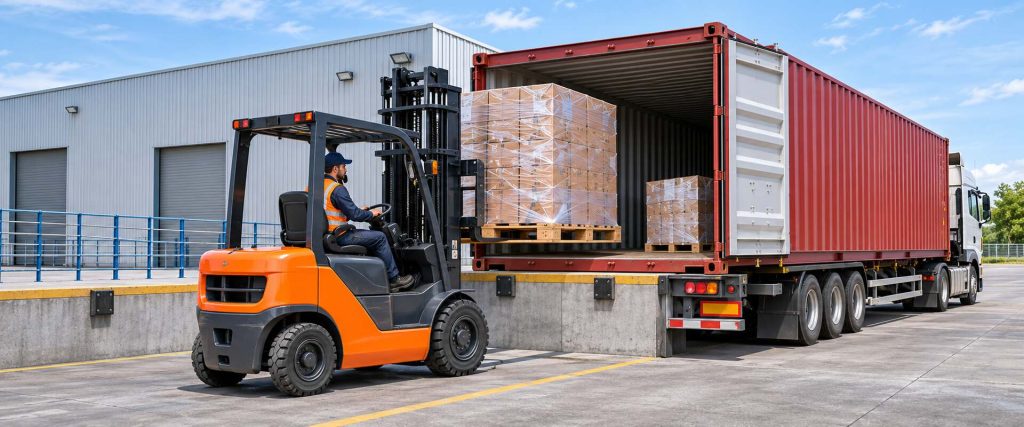
For instance, oversized cartons, unnecessary packaging weight, or inefficient pallet stacking patterns can reduce the volume of goods that can be loaded into a shipping container.
If the freight cost per unit of usable material is high, a lower unit price for the product does not necessarily translate into a true cost advantage.
When comparing suppliers, buyers should use landed cost as the standard metric—for example, calculating the cost per roll, per kilogram, or per meter of usable material once it has reached the final destination.
7. Quality Variability Between Batches
Quality inconsistency is another hidden cost that often only becomes apparent after multiple shipments.
While samples may meet specifications, subsequent mass-produced batches might deviate in parameters such as thickness, adhesion, tensile strength, or roll length. Inconsistent thickness or stretch properties in stretch wrap, for example, will directly alter the amount of material consumed.
Fluctuations in the adhesion of BOPP carton-sealing tape can lead to failed seals on boxes.
Inconsistencies in the specifications or mechanical properties of PET strapping can disrupt automated equipment and compromise the security of the cargo.
Such issues often result in the need for repeated testing, production adjustments, customer complaints, and additional quality inspection costs.
Buyers should ensure that specifications, tolerance ranges, and quality inspection procedures are clearly defined and agreed upon, with batch traceability requirements implemented where necessary.
Technical data sheets and batch-specific test records can help both the buyer and the supplier align their expectations.
How can a buyer identify these hidden costs associated with packaging materials before placing an order? When comparing suppliers, you shouldn't just focus on the unit prices listed in the quotes; you need to take a broader range of factors into account.
| Hidden cost | What buyers should check |
| Unusable material | Net weight, actual length, core weight |
| Material waste | Breakage, damaged materials, rework |
| Labor | Packaging time per carton or pallet |
| Equipment downtime | Machine compatibility and stoppages |
| Cargo damage | Load stability and packaging performance |
| Freight and inventory | Landed cost and loading efficiency |
| Quality inconsistency | Specifications, tolerances, batch inspection |
In routine procurement, buyers can track data on material consumption, packaging time, waste, and product damage to evaluate and compare different suppliers under consistent conditions.
If a product delivers quantifiable cost savings across these dimensions, it may be the better choice—even if its unit price is higher.
However, such potential benefits must be verified through actual performance; one should not rely solely on a supplier’s claims.

What is the best way to compare packaging suppliers?
The most reliable approach is to calculate the total cost of ownership for packaging materials—from procurement through to actual application.
When selecting stretch wrap, buyers should consider net weight, thickness, roll length, actual consumption, and the stability of the palletized load.
For BOPP carton-sealing tape, the focus should be on effective length, adhesive performance, and sealing efficiency.
For PP and PET strapping, key evaluation criteria include dimensions, breaking strength, equipment compatibility, and on-site performance.
Yalan Pack manufactures stretch wrap and BOPP carton-sealing tape, and also supplies a range of industrial packaging solutions, including PP/PET strapping and paper edge protectors.
When requesting a quote, buyers should provide specific product specifications, details on their packaging workflow, and any current pain points they are experiencing.The optimal packaging solution is not necessarily the one with the lowest unit price; its true value lies in consistent performance, high material efficiency, and the ability to minimize unexpected costs throughout the entire supply chain.
Share on Social:


