







How Can Better Packaging Reduce Logistics Costs?
By hqt
Nov, 2026


Optimizing packaging can effectively reduce logistics costs by improving space utilization, preventing product damage, minimizing packaging material waste, streamlining warehouse operations, and enhancing transport efficiency.
For importers, distributors, and warehouse operators, packaging is more than just a protective layer. Its dimensions, weight, strength, and design directly impact freight costs, storage capacity, labor requirements, and the incidence of product damage across the entire supply chain.
Packaging optimization should be viewed as an integral component of the logistics system, rather than focusing solely on the unit purchase price of packaging materials.
1. How does packaging design affect transport costs?
Packaging dimensions are a critical factor in determining transport efficiency.
If cartons are too large—leaving excess internal space—or if pallet stacking configurations are inefficient, the load capacity of trucks or shipping containers will decrease.
For instance, by optimizing carton dimensions, it may be possible to fit 10% more cargo into the same transport space, thereby reducing the transport cost per unit.
Naturally, the actual cost savings depend on factors such as weight limits, loading constraints, and the applicable billing model—whether based on volume, weight, or a flat rate for an entire container.
Key considerations for packaging design include:
Carton specifications and product arrangement
Pallet dimensions and stacking patterns
Total cargo weight
Container or truck load limits
Product protection requirements
Reducing excess packaging volume—without altering the product itself—can significantly improve transport efficiency.
2. Can using higher-quality stretch wrap reduce the costs associated with pallet wrapping?
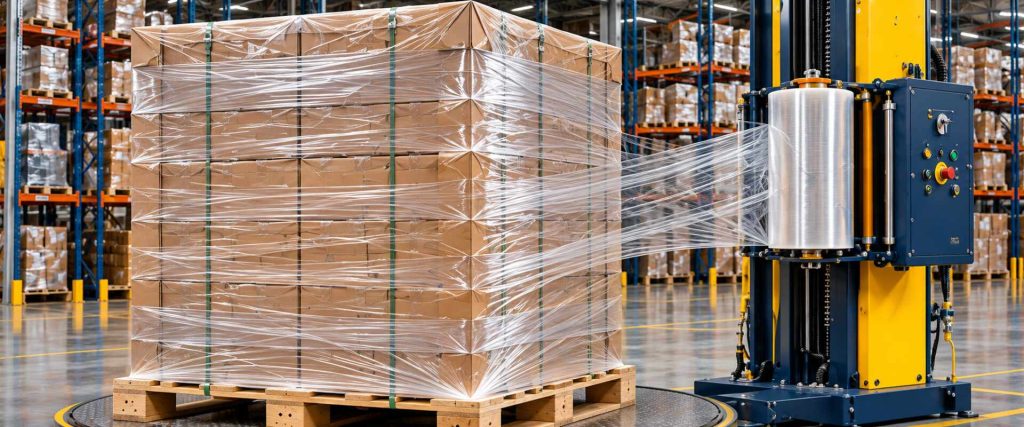
Stretch wrap is commonly used to secure palletized goods during storage and transport.
However, using more film does not necessarily equate to better protection.
Selecting the right type of film and employing an appropriate wrapping technique can reduce material consumption while ensuring that the cargo remains stable and secure throughout transit.
Below, we compare two different wrapping approaches:
| Item | Method A | Method B |
| Film consumed per pallet | 0.50 kg | 0.40 kg |
| Film price | $1.70/kg | $1.85/kg |
| Film cost per pallet | $0.85 | $0.74 |
Although the film used in Option B has a higher unit price, the lower consumption rate results in a net reduction in film costs per pallet of approximately 13%.
The data above is for reference only. Regardless of the option chosen, it is essential to ensure that palletized goods maintain sufficient stability under identical testing conditions.
For high-throughput warehouses, tracking the actual film consumption per pallet is far more meaningful than simply comparing the price per roll of film.
3. How does more secure packaging reduce cargo damage?
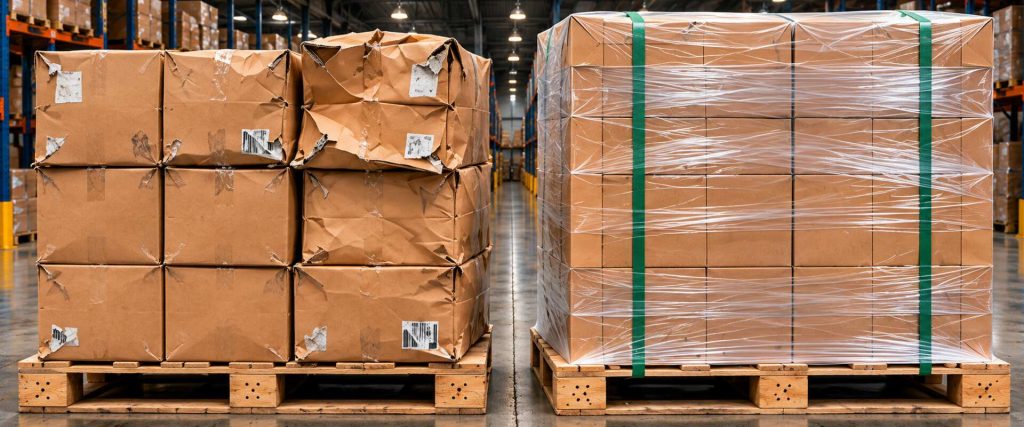
The total cost associated with cargo damage is typically far higher than the procurement cost of the packaging materials themselves.
When goods are damaged, a company may incur costs related to reshipment, secondary transport, quality inspections, repackaging, or even compensation to the customer.
Common risks of cargo damage related to packaging include:
Loose carton seals
Unstable pallet stacking
Insufficient stretch film wrapping
Improper tension of strapping bands
Lack of edge protection for cartons
BOPP packing tape keeps cartons sealed, while stretch film secures goods on the pallet.
For additional reinforcement, PP or PET strapping bands can be used; paper edge protectors help distribute pressure and safeguard vulnerable carton corners.
The selection of packaging materials should be based on the specific characteristics of the goods and the transport environment.
An effective packaging solution prevents cargo damage without the excessive use of materials, thereby truly lowering overall logistics costs.
4. How can packaging improve warehouse efficiency?
Packaging materials directly affect the time required for pre-shipment processing.
For instance, low-quality stretch film may break frequently during the wrapping process.
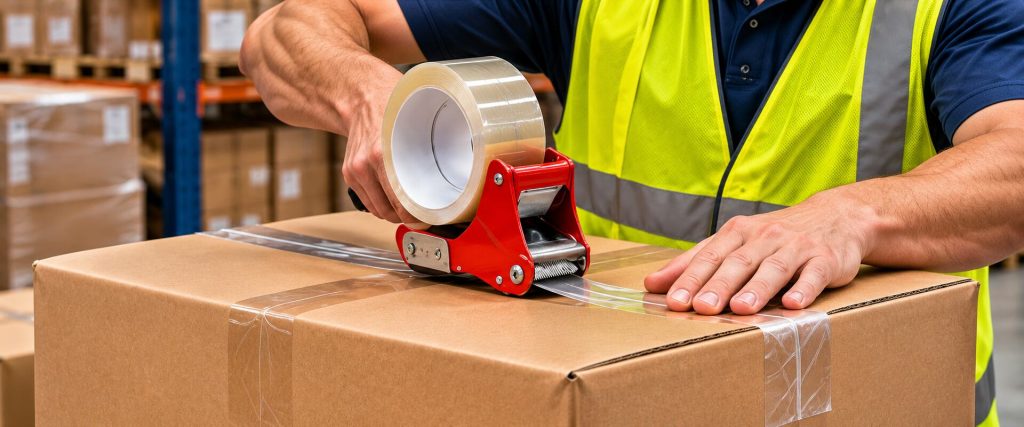
Inferior packing tape can cause cartons to come unsealed, requiring staff to reseal them.
Incompatibility between strapping bands and packaging equipment can lead to operational interruptions or even downtime for troubleshooting.
Such issues increase labor requirements and diminish overall operational efficiency.
Standardized packaging protocols help warehouses establish stable and consistent operational workflows. For warehouses with high-volume outbound shipments, using machine-applied stretch wrap in conjunction with automated carton-sealing equipment can significantly boost packaging efficiency.
However, before switching to a new packaging solution, it is essential to evaluate equipment compatibility and operational costs.
5. Can packaging help reduce warehousing and inventory costs?
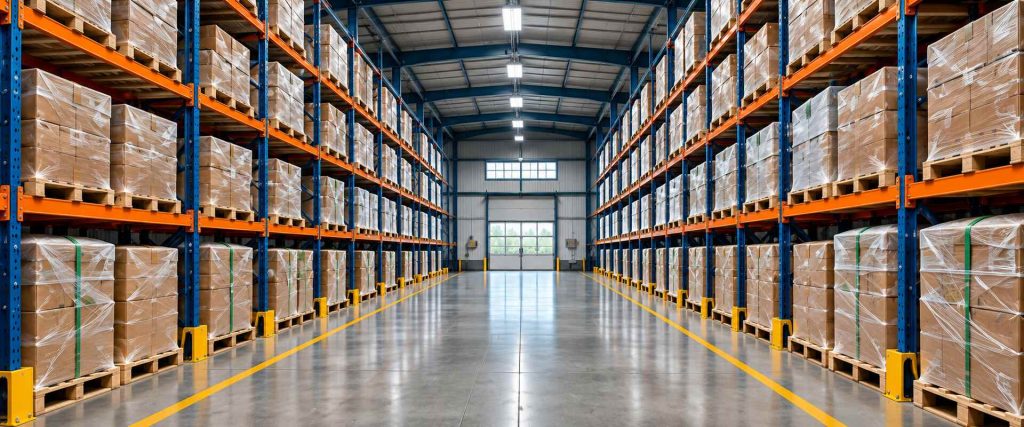
Packaging design also influences warehouse space utilization.
If carton dimensions are too large, they will consume more pallet positions and storage space.
Inconsistent carton sizes also complicate stacking and increase the burden on warehouse management.
Selecting appropriate carton dimensions and ensuring stable pallet stacking can increase storage density. For instance—provided that product strength, pallet load capacity, and warehouse safety regulations allow—reducing excess carton height can enable more compact stacking.
Increasing stacking density must not come at the expense of product protection or handling safety.
Standardizing packaging specifications and handling protocols can also simplify inventory management.
6. How do strapping and edge protectors affect transportation costs?
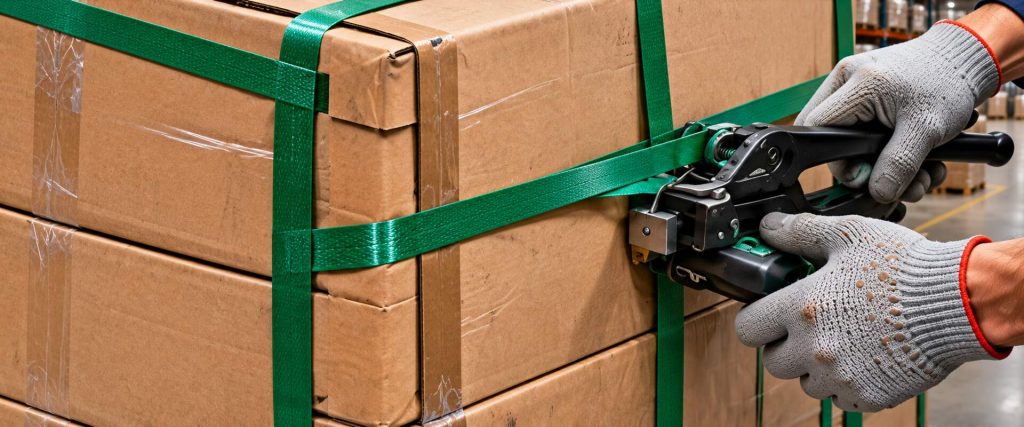
While materials like PP (polypropylene) or PET (polyethylene terephthalate) strapping and paper edge protectors add to material expenses, they are indispensable for certain types of cargo.
PET strapping is typically used for securing heavy industrial goods, whereas PP strapping is generally better suited for lighter items.
Paper edge protectors help distribute the localized pressure exerted by strapping, safeguarding the corners and edges of cartons.
For example, using appropriate edge protectors can prevent damage to carton corners during stacking and handling.
However, not every pallet requires such protective consumables.
Selection should be based on factors including product weight, shape, carton strength, handling methods, and transport requirements.
The core principle: ensure adequate protection for the goods while avoiding unnecessary material expenditure.
7. How can packaging optimization improve container loading efficiency?
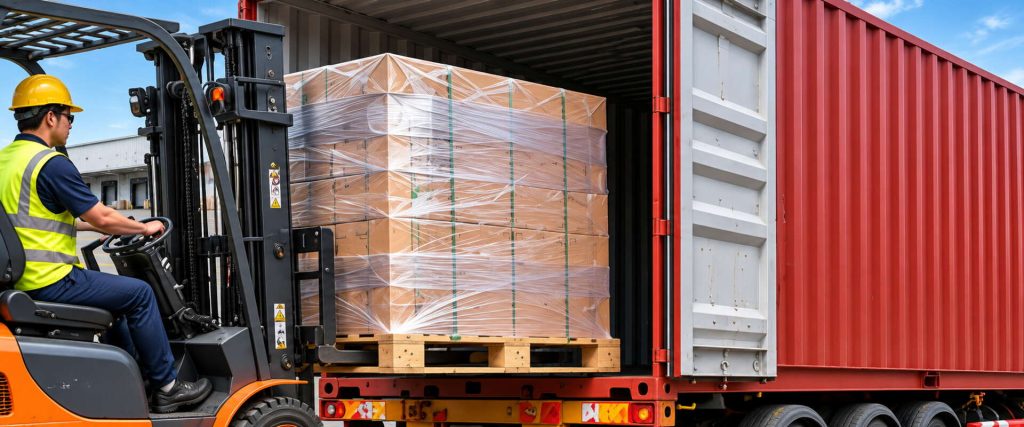
Container loading efficiency is critical in international freight transport. When loading a container, two scenarios may arise: either the weight limit is reached while there is still spare space, or the container is filled to capacity before the weight limit is met.
Factors such as packaging dimensions, pallet stacking patterns, and cargo density determine the final quantity that can be loaded.
For instance, using standardized cartons allows for more efficient pallet stacking, thereby minimizing wasted space.
An optimal pallet layout also facilitates smoother loading and unloading operations.
When optimizing a container loading plan, the following points should be considered:
Maximum load capacity per item
Rated load capacity of the container
Balanced weight distribution
Strength of pallets and cartons
Requirements for cargo securing/bracing
Transport-related restrictions at the destination port
An effective loading plan maximizes the use of available space while ensuring the safety of cargo handling and securing.
Improvements resulting from packaging optimization should be evaluated using quantifiable operational data.
Key metrics to consider include:
| Performance indicator | What it measures |
| Packaging cost per pallet | Direct packaging material expenses |
| Freight cost per unit | Transportation efficiency |
| Products per container | Loading utilization |
| Packaging time per pallet | Labor efficiency |
| Cargo damage rate | Product protection performance |
| Material waste rate | Packaging consumption efficiency |
| Storage space per unit | Warehouse utilization |
For example, suppose a company optimizes its packaging, resulting in a reduction of $0.40 in combined shipping and packaging costs per unit.
Assuming shipping volume and other cost factors remain constant, a shipment of 100,000 units would yield savings of up to $40,000.
However, when calculating the net benefit, the company must also account for any additional investments required for the packaging upgrade.
To objectively evaluate the effectiveness of such optimizations within a consistent operational environment, the best approach is to compare operational data from before and after the changes.
9. How can packaging optimization effectively reduce logistics costs?
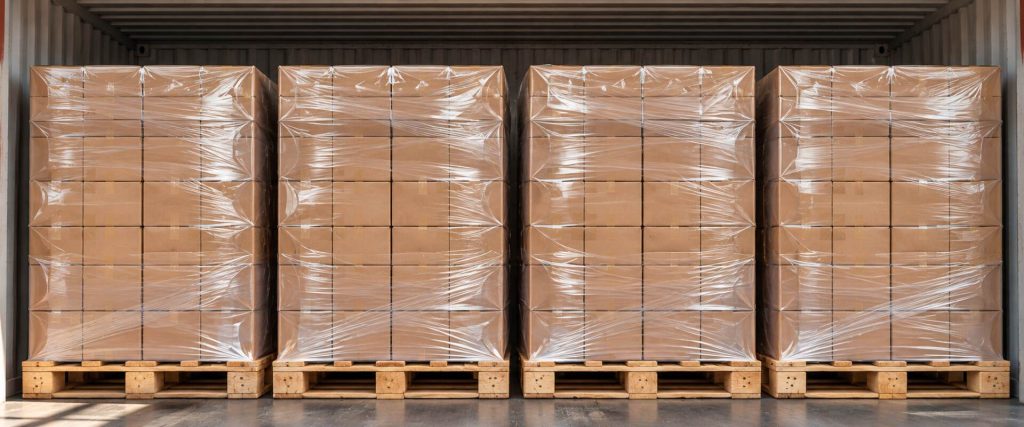
Reducing logistics costs requires finding the right balance between material consumption, product protection, transport efficiency, and warehouse operational efficiency.
A packaging material with a low unit purchase price may not be the most cost-effective solution if it leads to increased product damage, material waste, or longer loading and unloading times.
Conversely, if increasing investment in packaging significantly reduces product damage during transit, such an adjustment is economically sound.
When evaluating packaging materials, industrial procurement professionals should consider the specific usage scenarios and the overall performance across the entire logistics chain.
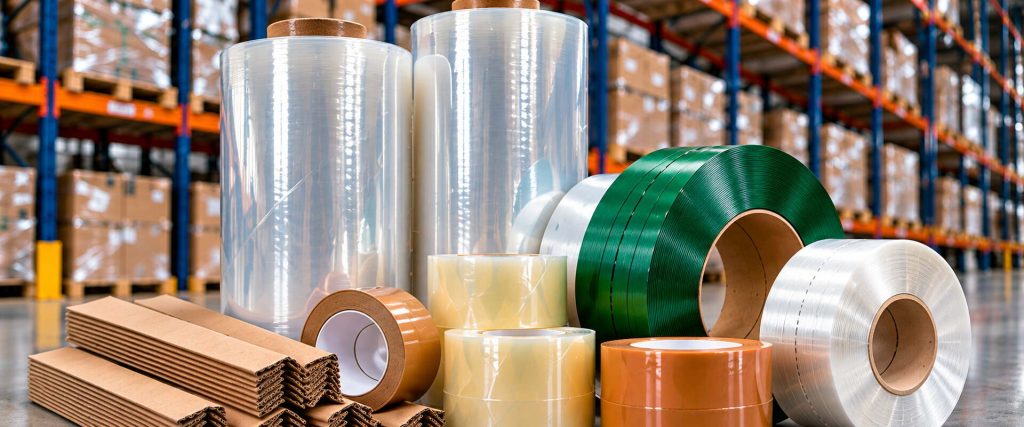
Yalan Pack supplies hand-applied and machine-applied stretch film, BOPP carton sealing tape, as well as PP/PET strapping and paper edge protectors—products widely used for industrial and export packaging.
When selecting an appropriate packaging solution, buyers can provide detailed information such as product specifications, pallet dimensions, wrapping methods, and transport requirements.
Better packaging does not simply mean adding or removing materials; rather, it involves selecting the right materials and processes to ensure adequate product protection while eliminating unnecessary expenses throughout the supply chain.
Share on Social:


