







Why Does PET Strapping Break During Packaging or Transportation?
By hqt
Sep, 2026

PET strapping can break during packaging or transit due to factors such as excessive tension, sharp product edges, insufficient strap strength, weak joints, unstable load stacking, unsuitable environmental conditions, or improper handling.
However, not all strap breakages stem from the same cause. The issues behind a strap breaking during tensioning may differ significantly from those causing failure days after shipment.
To identify the right solution, buyers should examine the break location, the timing of the failure, and the load securing method before changing strap specifications.
Is the breakage caused by excessive tension?
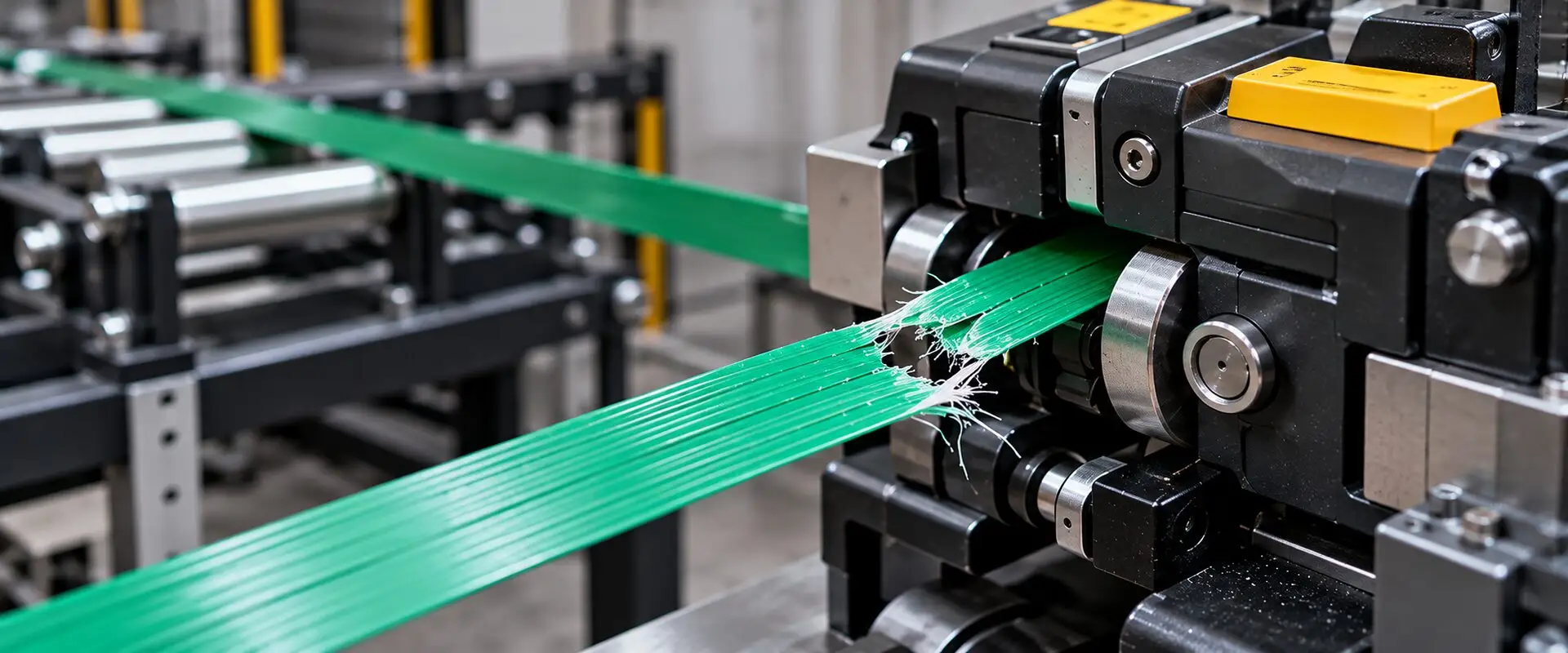
Excessive tension is a potential cause of PET strap breakage during the packaging process.
While sufficient tension is required to secure the load, applying too much force can subject the strap to excessive stress or damage the packaged product.
This issue often arises when the strapping machine's tension settings do not match the strap specifications or the nature of the load.
It is crucial to distinguish between "break strength" and "applied tension." Break strength refers to the force required to snap the strap under specific te
st conditions, whereas applied tension refers to the force exerted during the packaging process.
Even if a PET strap can withstand 330 kgf of force in a tensile test, the tension setting should not be set to 330 kgf.
If the strap frequently breaks during tensioning, check the machine settings, strap specifications, and contact points along the strap's path.
Appropriate tension levels should be determined based on the specific load, equipment, and validated packaging methods.
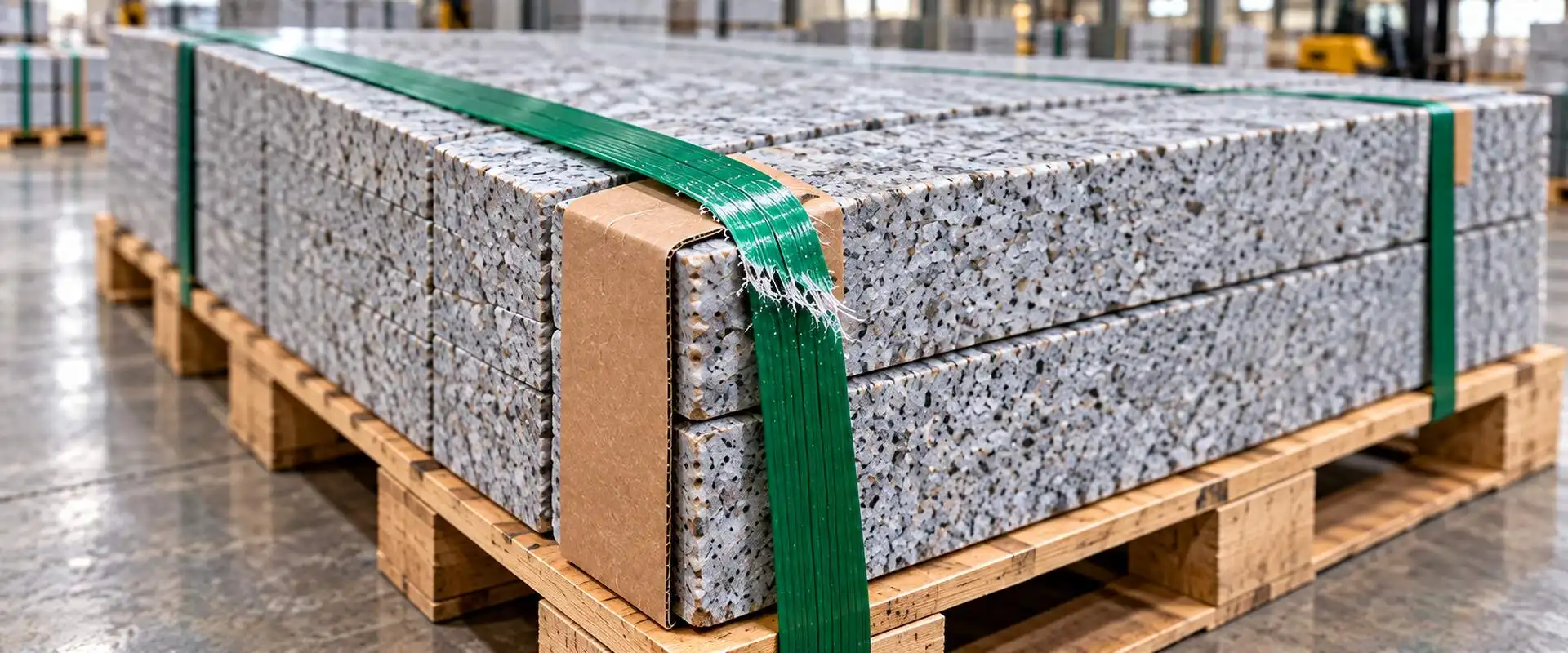
Are sharp edges cutting or damaging the PET strap?
Sharp product edges can cause stress concentration on the PET strap.
This is particularly relevant when packaging bricks, construction materials, lumber, metal products, or other loads with hard surfaces or irregular shapes.
When the strap is tightened, it may press firmly against sharp corners or edges. Such edges can damage the surface of the strapping or cause localized stress concentrations.
During transport, vibration and cargo shifting can cause the strapping to rub repeatedly against the same contact point, thereby increasing the risk of failure.
An effective way to identify this issue is to examine the broken strapping. If the damage is concentrated near the product's edges or contact points, the shape or structure of the cargo itself may be the cause of the failure. Paper edge protectors or other suitable protective devices help distribute pressure and reduce direct contact between the strapping and sharp surfaces.
However, the choice of edge protectors should depend on the specific product and load conditions. Never assume that simply adding edge protectors can compensate for an inadequate strapping strategy.
Is the strength of the PET strapping insufficient for the application requirements?
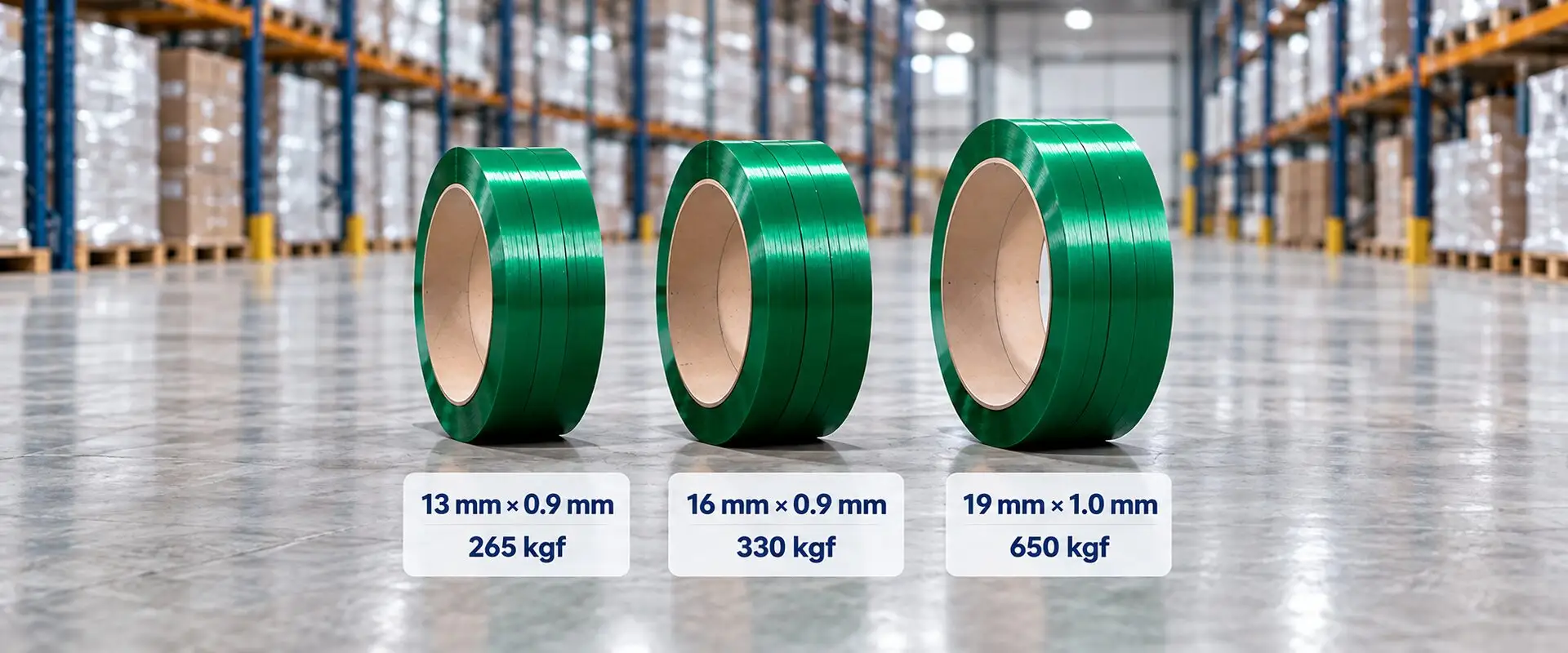
PET strapping is available in a variety of widths, thicknesses, and break-strength specifications.
For example, the PET strapping specifications offered by Yalan Pack include:
| PET strap size | Example breaking strength |
| 13 mm × 0.9 mm | 265 kgf |
| 16 mm × 0.9 mm | 330 kgf |
| 19 mm × 1.0 mm | 650 kgf |
These are merely examples of product specifications; they do not represent universal strength ratings applicable to all PET strapping of the same dimensions.
If the strapping strength is insufficient to meet the requirements for securing the load, breakage may occur during tensioning, handling, or transport.
However, buyers should not select PET strapping based solely on pallet weight.
Required strength also depends on load stability, the number and layout of straps, joint performance, handling conditions, and transportation requirements.
If two pallets weigh the same but one carries neatly stacked, stable cartons while the other holds irregularly shaped, shift-prone cargo, different strapping strategies may be required.
If strapping breaks frequently despite correct operation and the use of adequate edge protectors, the required breaking strength and the performance of the entire strapping system should be re-evaluated.
Is the joint the actual point of failure?
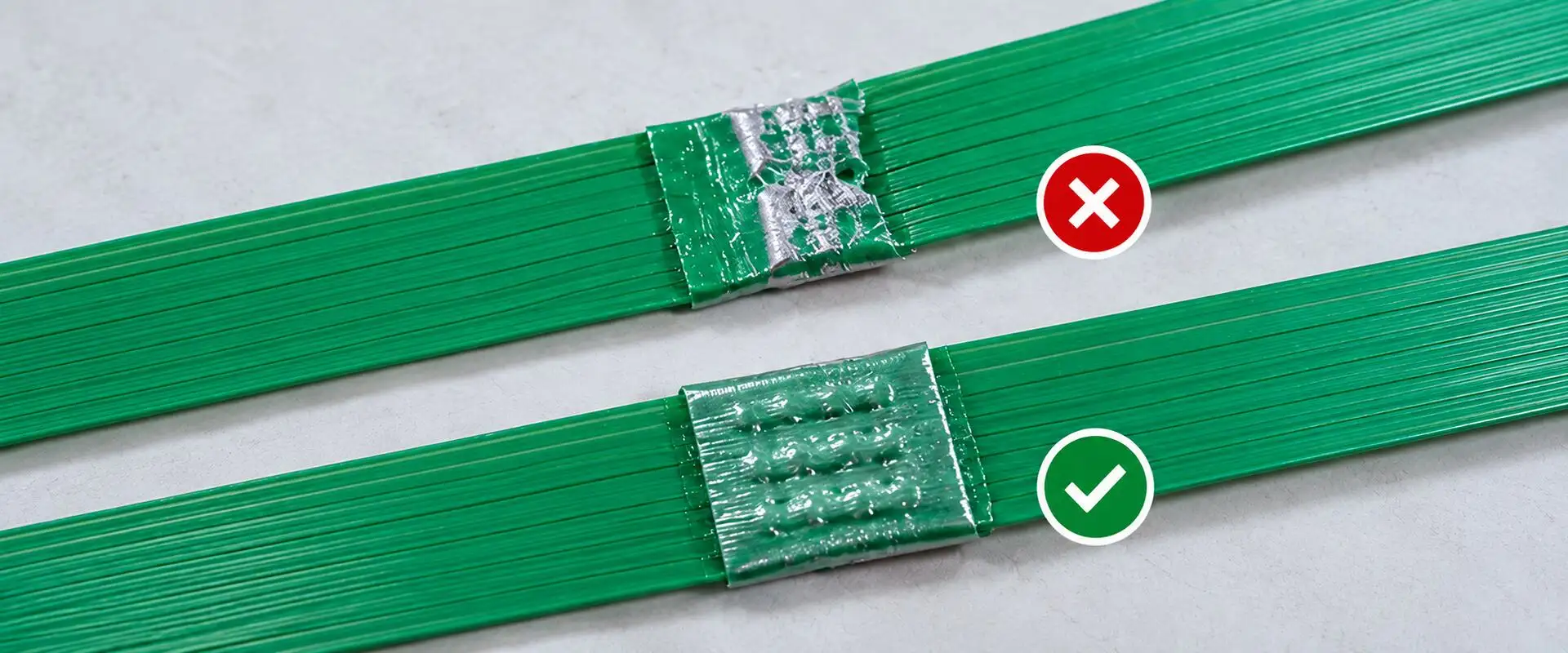
Sometimes the PET strap itself remains intact, yet the formed strap loop breaks at the joint.
This differs from a break in the main body of the strap.
Depending on the equipment and application, PET strapping can be joined via friction welding or other fastening methods.
For friction-welded joints, improper machine settings, mismatched strap characteristics, or poor equipment maintenance can compromise joint performance.
The strength of the formed strap loop may be lower than the strap's nominal breaking strength.
For example, a strap with a nominal strength of 650 kgf may not necessarily achieve that same strength at the joint.
If failures frequently occur at the joint (seal), buyers should inspect the joint's appearance, machine settings, strap compatibility, and equipment condition.
For demanding applications, testing the strength of the formed joint provides more valuable information than simply looking at the strap's nominal breaking strength.
How can unstable pallets lead to strapping failure?
While PET strapping helps secure loads, it cannot resolve all issues caused by unstable pallet stacking. If the load is unevenly stacked, overhangs the pallet edges, or has a high center of gravity, shifting may occur during handling and transport.
Such shifting alters the forces acting on the strapping.
For example, a pallet may appear stable immediately after strapping, but repeated vibrations or braking during transit can cause cartons to settle or shift.
As the load configuration changes, some straps may slacken while others are subjected to increased stress. Therefore, buyers should evaluate the overall pallet configuration rather than relying solely on higher-strength strapping.
Depending on the specific application, PET strapping can be used in conjunction with stretch wrap, appropriate edge protectors, and proper pallet stacking methods.
Each material serves a distinct purpose: stretch wrap helps unitize the load on the pallet, while PET strapping provides restraint along the strapping path.
The complete packaging system should be tested under conditions that simulate actual handling and transport processes.

Do temperature and storage conditions affect PET strapping?
Environmental conditions can influence the performance of packaging materials, including PET strapping.
PET is a polyester material; its mechanical properties change depending on temperature and exposure conditions.
Extreme temperatures, prolonged exposure to sunlight, or improper storage conditions may affect the performance of specific strapping formulations.
However, buyers should not assume that all PET strapping has the same temperature tolerance limits, nor should they assume that normal humidity levels will automatically cause PET strapping to break.
Actual performance depends on material formulation, manufacturing quality, duration of exposure, and application conditions.
For goods stored outdoors or transported in environments with significant temperature fluctuations, please consult the supplier regarding recommended handling and storage conditions.
PET strapping coils should be stored according to supplier recommendations and protected from unnecessary physical damage prior to use.
If breakage occurs only after prolonged storage or exposure to unusual conditions, environmental factors should be included in the investigation.

Can transportation and cargo handling cause PET strapping to break?
Palletized goods may remain stable within a factory but are subjected to additional forces during transport.
Forklift handling, vehicle acceleration and braking, vibration, and repeated loading and unloading can all impact the cargo and its strapping system.
In international shipping, pallets may undergo multiple handling stages before reaching their final destination.
If the cargo shifts, the strapping may be subjected to additional tension or friction against product edges.
However, PET strapping on a pallet should not be confused with cargo securement requirements inside a shipping container or transport vehicle.
Even if a pallet is properly strapped, appropriate blocking, bracing, or other cargo securement measures may still be required depending on the mode of transport and relevant regulations.
When customers report breakage issues after delivery, useful information includes: photos of the broken strap, its location on the pallet, the condition of the cargo, and the stage at which the damage was discovered.
This helps distinguish between issues with the strapping material itself and problems such as joint failure, cargo stability issues, or transport-related incidents.

How can buyers prevent PET strapping from breaking?
The most effective solution is to identify the failure mode before increasing the width or thickness of the strapping.
| Observed problem | What to check first |
| Strap breaks during tensioning | Applied tension, machine settings and strap strength |
| Strap breaks near a product corner | Sharp edges, abrasion and edge protection |
| Strap separates at the joint | Sealing settings, joint quality and equipment compatibility |
| Strap breaks after the load shifts | Pallet stability and strapping arrangement |
| Breakage occurs after prolonged storage | Exposure conditions and material suitability |
| Breakage occurs during transportation | Load movement, handling and cargo securing |
For new applications, buyers should provide suppliers with details regarding pallet dimensions, load weight, product type, packaging method, machine model, and current strapping specifications.
Yalan Pack offers PET and PP strapping in a variety of widths, thicknesses, and strength ratings, suitable for industrial packaging and pallet load securing.
A key principle when sourcing is to identify the root cause of any strap breakage before changing specifications. While some applications may require higher-strength strapping, proper tensioning, reliable joint integrity, appropriate edge protectors, and stable pallet wrapping are equally critical.
Share on Social:


-
PREV:
What Size PET Strapping Should I Use for Heavy Pallets?
- NEXT: Null


