







How Much Breaking Strength Does PET Strapping Need?
By hqt
Sep, 2026Related Posts
How Much Breaking Strength Does PET Strapping Need?
Sep 23, 2026

How Do You Compare BOPP Packing Tape Prices Correctly?
Sep 22, 2026

7 Things Importers Should Check Before Buying BOPP Packing Tape
Sep 21, 2026

Adhesive Packing Tape Testing Guide: Peel Adhesion, Tack, Holding Power and Tensile Strength
Sep 20, 2026
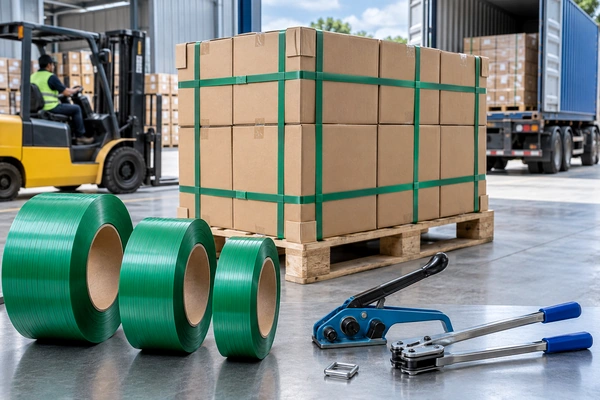
When selecting the breaking strength for PET strapping, one must consider factors such as cargo weight, pallet stability, strapping quantity, strapping orientation, handling conditions, and specific load-securing requirements. There is no single, universal breaking strength specification suitable for all pallets. For instance, while PET straps with rated breaking strengths of 265 kgf, 330 kgf, and 650 kgf offer varying levels of tensile capacity, the highest-rated product is not necessarily required for every application. Buyers should evaluate their choice in the context of the entire strapping system, including the strap itself, joint performance, tensioning method, and the specific characteristics of the load to be secured.
What is the breaking strength of PET strapping?
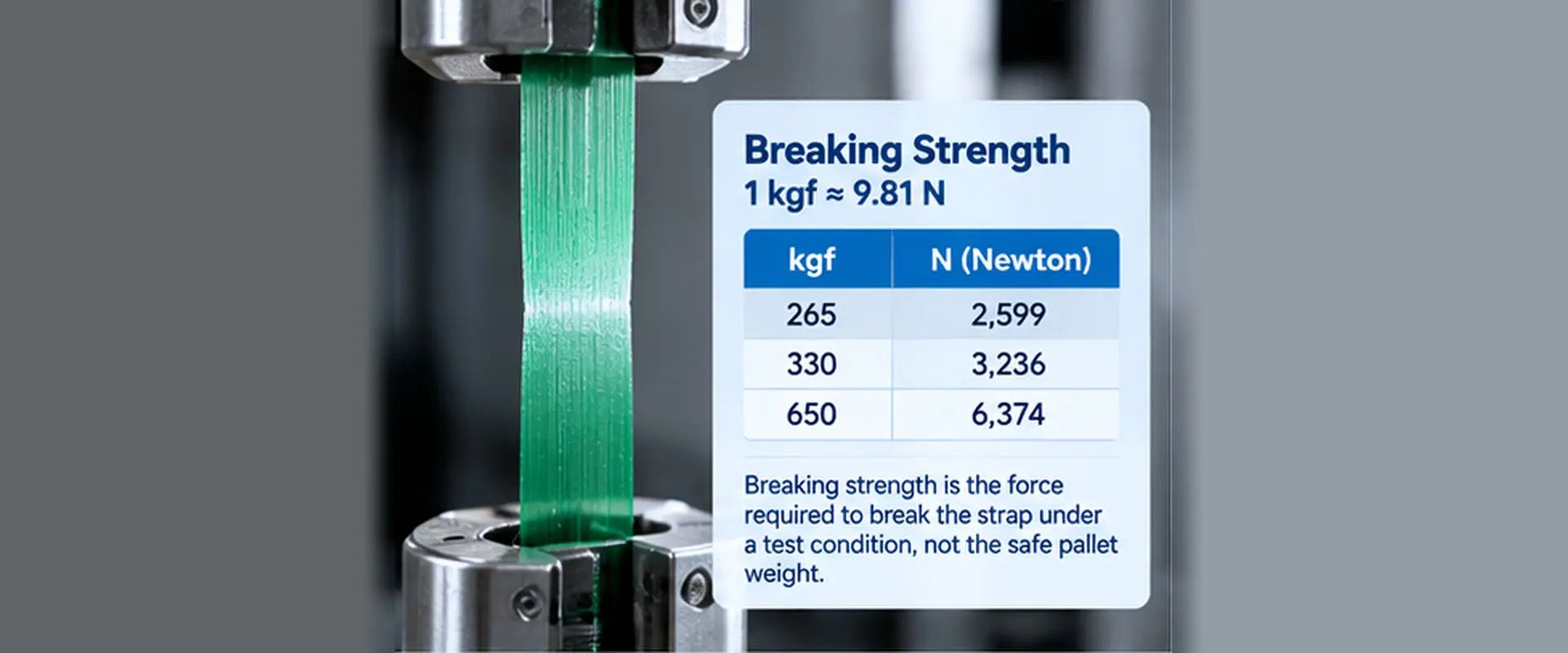
Breaking strength refers to the tensile force required to snap the PET strap under specific testing conditions; it is typically expressed in units of kilogram-force (kgf) or Newtons (N).
Breaking strength conversion
| 1 kgf ≈ 9.81 N |
| 265 kgf ≈ 2,599 N |
| 330 kgf ≈ 3,236 N |
| 650 kgf ≈ 6,374 N |
The figures above represent unit conversions for force and do not indicate the safe load-bearing rating for a pallet. A PET strap with a breaking strength of 650 kgf can withstand a tensile force of approximately 6.37 kN before breaking under standard test conditions; however, this does not mean a single strap can safely secure a pallet weighing 650 kg. The actual strapping force required depends on the cargo's movement characteristics, the strapping configuration, and the performance of the entire strapping system under the stresses of transportation. Buyers should also distinguish between the breaking strength of the strap material itself and the overall strength of the complete loop formed after the strap joint is sealed.
How do the width and thickness of PET strapping affect breaking strength?
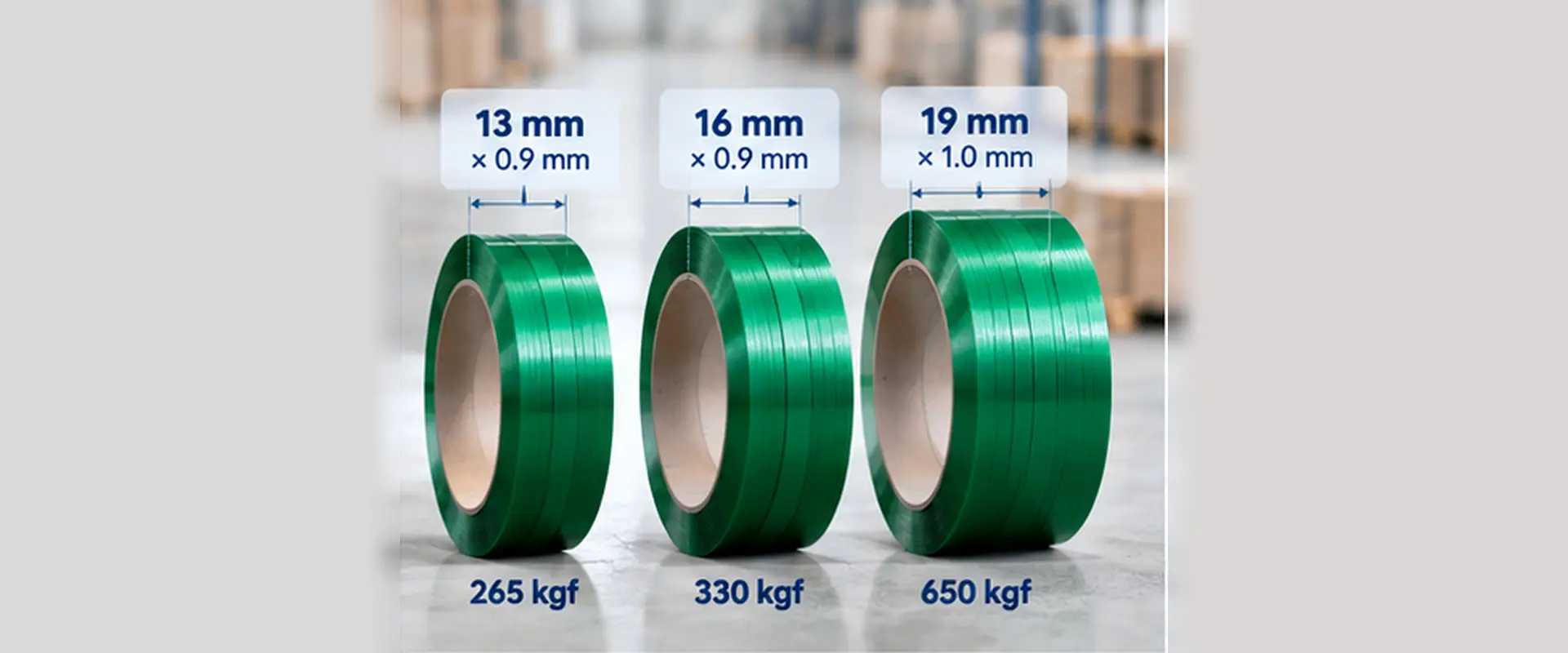
PET strapping comes in various widths and thicknesses, with common widths including 13 mm, 16 mm, and 19 mm. Generally, assuming consistent material composition and manufacturing quality, a larger cross-sectional area results in higher tensile strength.
However, width and thickness are not the only factors determining the final breaking strength.
For instance, two PET straps with identical nominal dimensions may exhibit vastly different tensile performance due to variations in raw material quality, manufacturing processes, the degree of molecular orientation (stretching), and dimensional consistency.
The specifications below illustrate the different strength levels achievable with PET strapping:
| PET strap size | Example breaking strength |
| 13 mm × 0.9 mm | 265 kgf |
| 16 mm × 0.9 mm | 330 kgf |
| 19 mm × 1.0 mm | 650 kgf |
The above are merely examples of product specifications and do not represent a universal strength rating for all PET strapping of the same dimensions. When comparing quotes, buyers should ask suppliers to clearly state the product's dimensions and nominal breaking strength; if necessary, they should also request documentation regarding testing methods or technical parameters.
Do heavier pallets necessarily require higher-strength PET strapping?
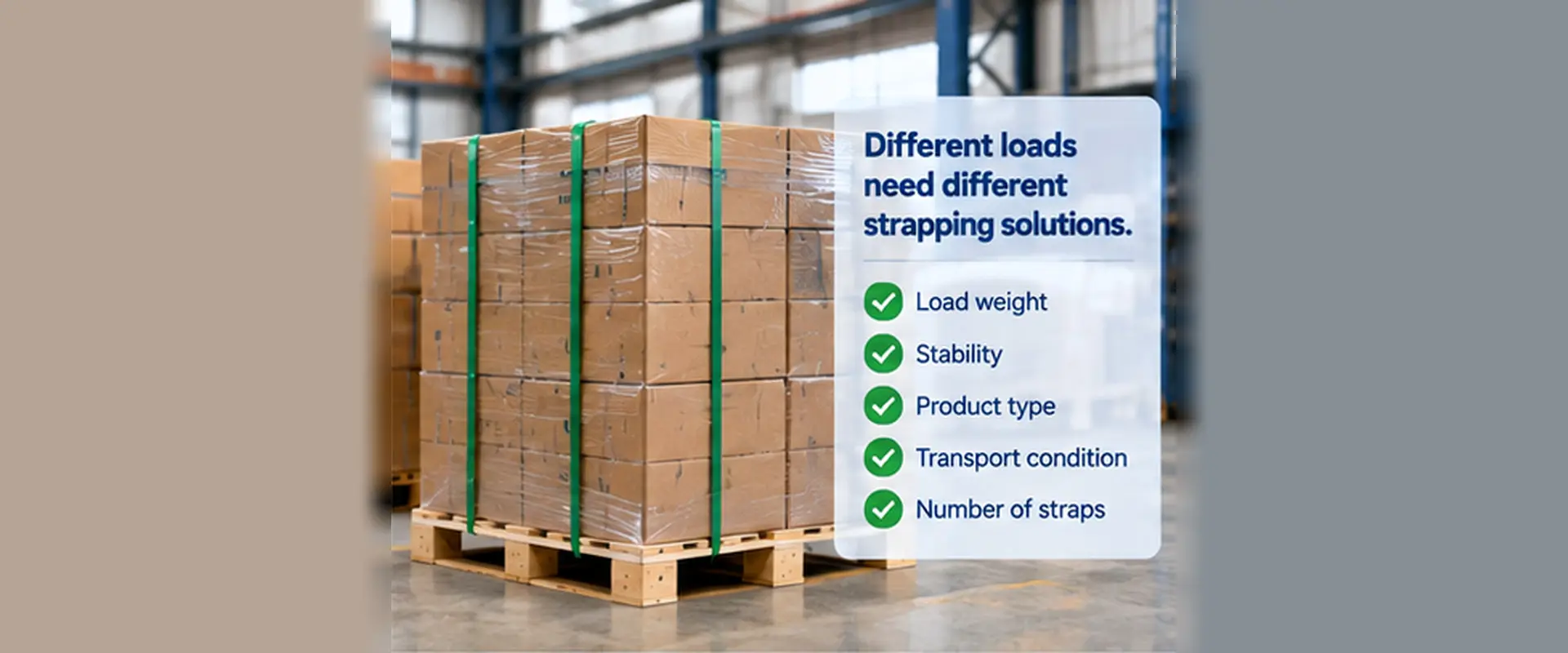
While pallet load weight is a key factor in selection, it should not be the sole criterion.
Consider two pallets of similar weight: one is loaded with uniformly stacked, tightly packed cartons, resulting in a stable structure; the other carries irregularly shaped goods with a high center of gravity, making the load prone to shifting during transit. Even if the total weights are comparable, the strapping and reinforcement solutions required for each will differ significantly.
The external forces acting on the strapping are directly related to transport conditions. Factors such as forklift handling, vehicle acceleration and deceleration, road vibrations, and inertial forces during turns dictate the required securing strength of the strapping. Therefore, establishing a rigid standard—such as a pallet of a certain weight must use PET strapping with a specific breaking strength—is technically unsound. A more reasonable approach involves a comprehensive assessment of cargo dimensions, center of gravity, stacking stability, the transport environment, and the overall strapping system. The selected strapping must ensure the load remains stable throughout the entire process of handling and transportation.
Why are the number of straps and joint strength critical?
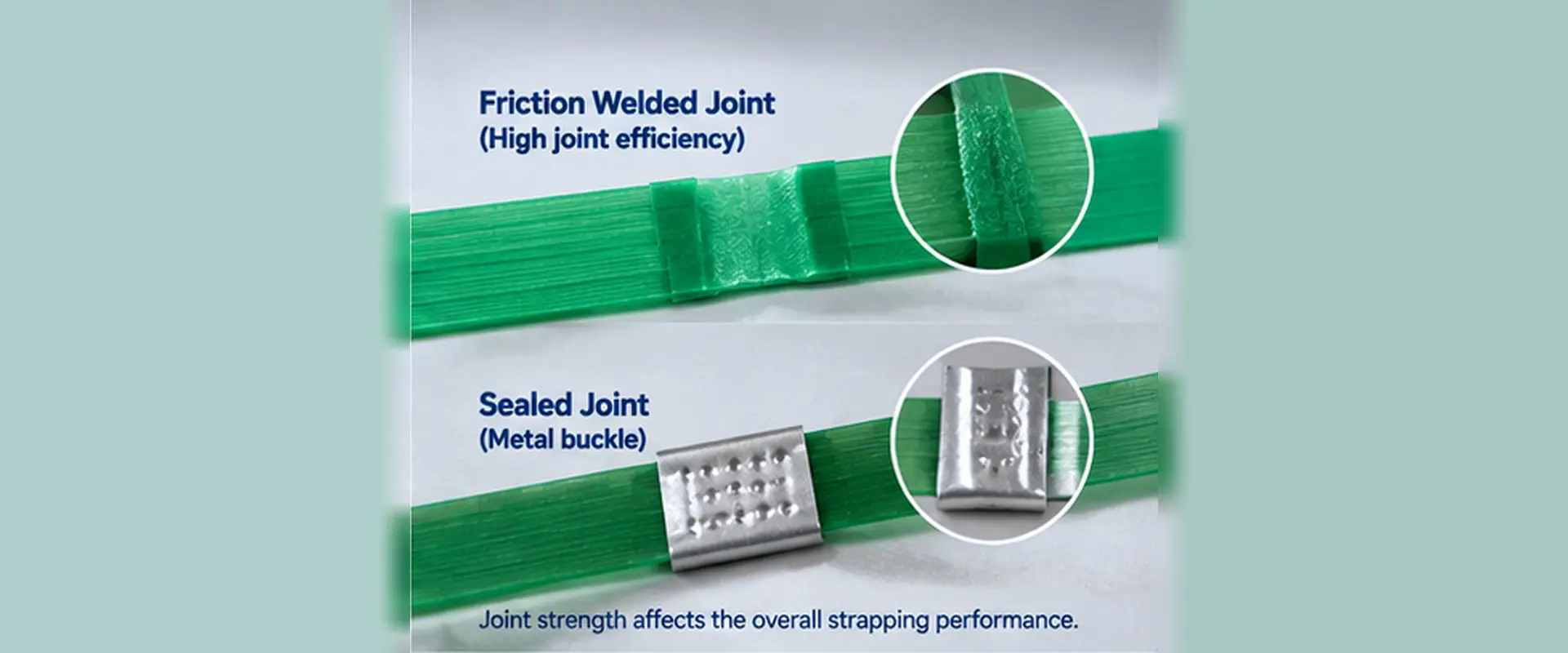
A PET strapping system comprises more than just the strap itself. A complete system includes the strap, tensioning tools, friction-weld joints (or other fastening methods), and the contact areas between the strap and the cargo. The joint is often the weakest link in the strapping loop and acts as the limiting factor for load-bearing capacity.
For example: Suppose a PET strap has a nominal breaking strength of 650 kgf, and the joint retains 80% of the strap's tensile strength. The joint's load-bearing capacity would be approximately 650 kgf × 80% = 520 kgf. This figure is for illustrative purposes only and does not represent a guaranteed joint strength or a safe working load. Actual joint efficiency is determined by a combination of factors: the strapping equipment, operating parameters, strap material, and testing conditions.
Similarly, using two straps does not mean the load-bearing capacity simply doubles. Factors such as strap placement, strapping angle, tension, and the nature of the contact with the load all influence the final reinforcement effectiveness. For high-risk transport scenarios, purchasers must evaluate the entire strapping system rather than relying solely on the rated breaking strength of an individual strap.
Is higher breaking strength always better?
While high-strength PET straps are suitable for heavy-duty, demanding applications, the model with the highest breaking strength is not necessarily the right choice for every scenario. High-strength straps consume more raw material and may require adjustments to equipment settings. If strap specifications far exceed actual requirements, packaging costs will rise without a corresponding improvement in load stability.
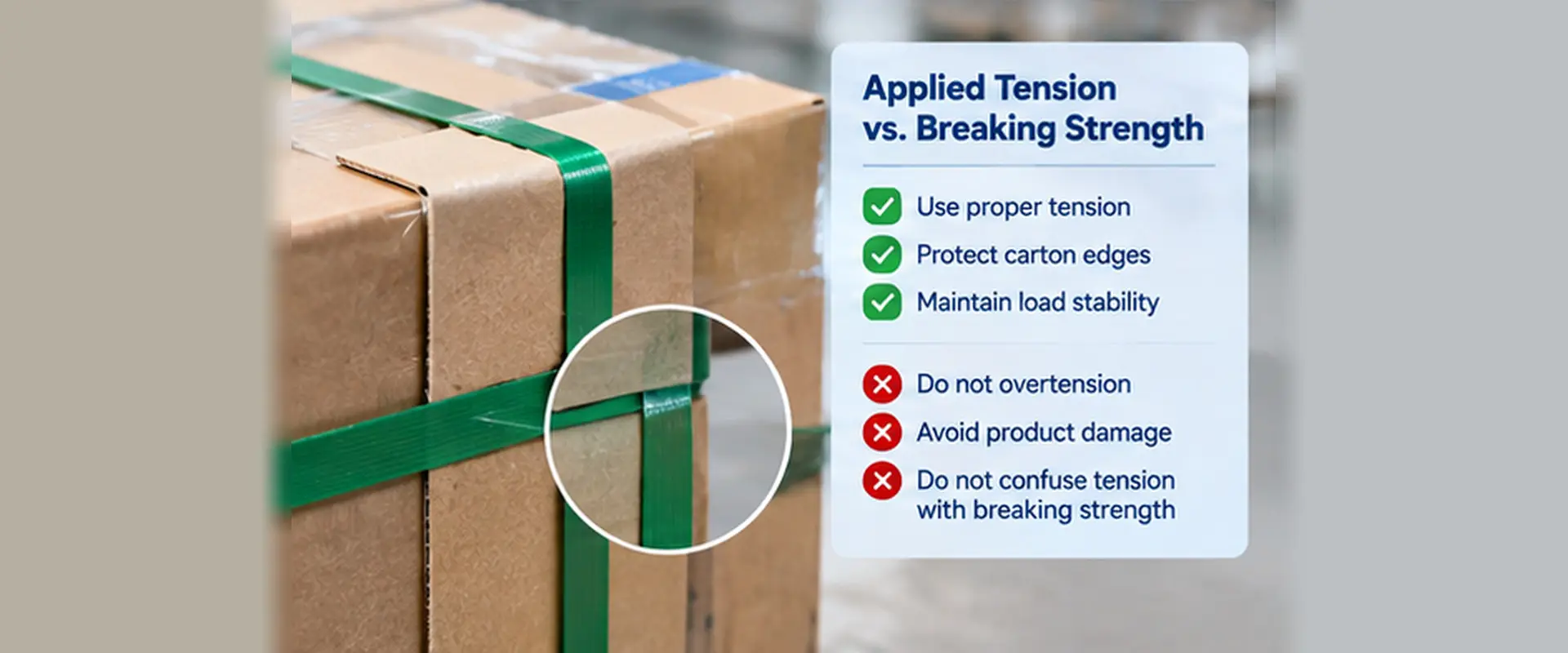
It is also important to distinguish between three concepts: breaking strength, applied tension, and residual tension.
• Breaking strength: The tensile force a strap withstands at the point of failure under laboratory test conditions.
• Applied tension: The tensioning force exerted on the strap during the strapping process.
• Residual tension: The tension remaining in the strap after strapping is complete, accounting for load deformation and system stress relaxation.
One should not tension a strap close to its breaking limit based solely on laboratory breaking strength figures. Excessive tension can crush cartons, deform products, or cause damage at pallet corners. The appropriate tension level should be determined based on the type of goods, the strapping equipment, and a validated strapping procedure.
How do transport conditions influence the selection of PET strapping?
PET strapping is commonly used to secure palletized goods during warehousing, container loading, and transportation. There are significant differences in packaging requirements between short-distance internal warehouse handling and long-distance export transport involving multiple loading and unloading operations.
During transit, goods are subjected to continuous external forces caused by vibration, vehicle acceleration, braking, and repeated handling. These conditions can lead to load settling or shifting, thereby altering the tension and stress distribution within the strapping system.
For export orders, buyers must also consider how pallets are positioned and secured inside trucks or containers. Depending on actual operating conditions, PET strapping can be used in combination with stretch wrap and paper edge protectors.
Synergy of packaging materials:
• PET strapping: Provides rigid binding force to secure the load.
• Stretch wrap: Wraps the entire palletized load into a single unit, providing additional stability.
• Paper edge protectors: Distribute the localized pressure from the strapping and protect carton corners from crushing damage.
Each packaging material serves a distinct function; selection should be based on a comprehensive assessment of the entire packaging system. Note that securing the load to the pallet and securing the pallet within the container or truck are two separate requirements that should not be conflated.

What information should buyers provide when requesting a quote for PET strapping?
Suppliers cannot recommend the appropriate PET strapping specifications based solely on pallet weight.
Buyers should provide the following details: type of goods, external pallet dimensions, total loaded pallet weight, strapping quantity and layout plan, specific break strength requirements (if any), and the strapping method. For machine-based strapping, the strapping machine model and compatible strap dimensions are critical information.
Reference Template for PET Strapping Request for Quotation (RFQ)
| Product | PET Strapping |
| Width | 16 mm |
| Thickness | 0.9 mm |
| Breaking strength | 330 kgf |
| Application | Pallet load securing |
| Equipment | Manual or machine strapping — specify model |
| Load details | Product, pallet size, weight and transport conditions |
This serves only as an example of an inquiry specification. The strength values listed herein do not constitute a standard recommendation for selecting strapping for specific palletized loads.
Buyers should also confirm details such as roll length or weight, core specifications, quantity per carton, and any specific performance testing requirements.
Yalan Pack offers PP and PET strapping in a variety of widths, thicknesses, and strength specifications to meet needs ranging from carton bundling to pallet reinforcement. For new applications or demanding transport conditions, it is recommended to conduct on-site testing using the actual goods and strapping equipment to verify that the entire packaging system meets performance expectations.

What breaking strength should be selected for the strapping?
There is no universal standard for PET strapping breaking strength that applies to all palletized loads.
Making a reliable selection requires a comprehensive assessment of factors including cargo weight and stability, strapping dimensions, the number and arrangement of straps, joint efficiency, applied tension, equipment compatibility, and transport conditions.
Purchasers should clearly understand that the rated breaking strength of the strapping itself is not equivalent to the safe load-bearing capacity of the entire strapping system.
When selecting PET strapping, do not simply aim for the highest nominal breaking strength (kgf) or compare only the lowest price per roll. Instead, the entire packaging system should be comprehensively evaluated based on actual application requirements.
Share on Social:


-
PREV:
How Do You Compare BOPP Packing Tape Prices Correctly?
- NEXT: Null
Contact Us
In This Article
Related Posts
How Much Breaking Strength Does PET Strapping Need?
Sep 23, 2026
How Do You Compare BOPP Packing Tape Prices Correctly?
Sep 22, 2026
7 Things Importers Should Check Before Buying BOPP Packing Tape
Sep 21, 2026
Adhesive Packing Tape Testing Guide: Peel Adhesion, Tack, Holding Power and Tensile Strength
Sep 20, 2026


