







How Packaging Material Selection Impacts Your Total Logistics Cost
By hqt
Nov, 2026Related Posts

Why Does Stretch Film Not Stick Properly? 7 Common Causes and Solutions
Nov 11, 2026

Does Thicker Stretch Film Always Mean Stronger Pallet Packaging?
Nov 10, 2026

How Packaging Material Selection Impacts Your Total Logistics Cost
Nov 09, 2026

What Packaging Specifications Should Buyers Include in an RFQ?
Nov 06, 2026
When evaluating packaging costs, companies often begin by comparing the price per kilogram of stretch film, the price per roll of adhesive tape, or the price per meter of strapping.
While these metrics are simple and intuitive, they do not reflect the total cost of packaging.
Choosing the wrong packaging materials can lead to excessive film consumption, reduced warehouse operational efficiency, unstable palletized loads, and even product damage during transit. Conversely, an optimized packaging solution—even one with a higher unit procurement cost—can effectively lower overall logistics expenses.
Therefore, when evaluating packaging materials, manufacturers, exporters, and distribution centers should focus on actual performance throughout the entire supply chain.
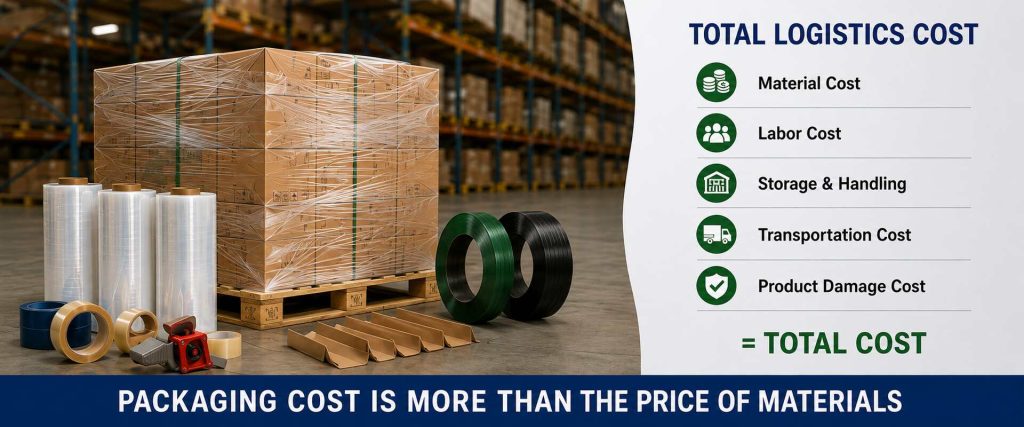
1. Packaging cost is not the same as material procurement price
The total cost of packaging can be calculated using a simple formula:
Total Packaging Cost = Material Costs + Labor Costs + Warehousing Costs + Handling Costs + Transit Loss Costs + Costs of Compensation for Damaged Goods
The material procurement price is merely one component of this equation.
For instance, consider two types of stretch film with different prices per kilogram. If the lower-priced film requires a greater quantity to secure a single pallet, the actual packaging cost per pallet for that cheaper film is, in fact, higher.
This logic applies equally to carton-sealing tape and strapping.
Procurement managers should look beyond the question, How much does a roll cost? and instead focus on:
How much material is actually consumed to package a given shipment?
This serves as a more meaningful and comparable standard for evaluation.
2. Stretch film selection directly determines material consumption
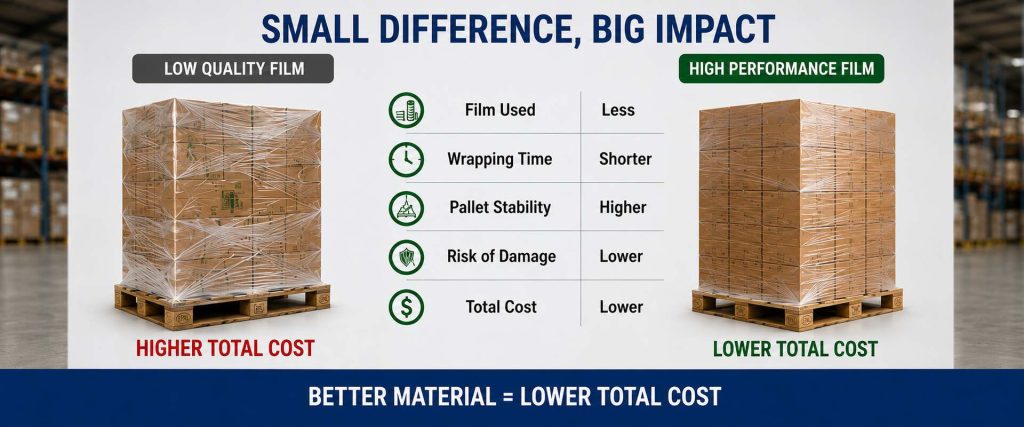
Stretch film is an excellent example of how product specifications influence total costs.
While thickness is an important metric, it should not be evaluated in isolation. Film strength, stretch ratio, puncture resistance, the nature of the goods being packaged, and the wrapping process all ultimately dictate the level of material consumption.
If the film is too thick, it results in unnecessary plastic waste; if it is too thin, it may break during the wrapping process and fail to secure the load effectively. Our goal is not merely to pursue thinner films,
but rather to optimize material consumption while ensuring that palletized goods remain stable and secure.
For warehouses with high shipment volumes, it is worth comparing manual stretch film, pre-stretched film, and machine-applied stretch film based on specific operational conditions. When business volume justifies the investment in equipment, machine-based wrapping offers greater consistency and standardization.
The length and net weight of a roll also impact warehouse operational efficiency. Take BOPP packing tape, for example: two suppliers may offer tapes with similar widths and thicknesses, but one provides 50 meters per roll, while the other provides 100 meters.
Although a longer roll may have a higher price per unit, it significantly reduces the frequency with which workers must change rolls.
The same principle applies to stretch wrap.
In warehouses that process hundreds or even thousands of cartons and pallets daily, the frequent interruptions caused by changing materials add up to significant lost time. Replacing tape, retrieving new supplies, and restarting packaging equipment—all these tasks consume labor.
Therefore, when evaluating products, procurement teams should focus on the actual usable material, rather than simply comparing the total price per roll or the unit price.
4. Tape performance is linked to carton damage rates and rework costs
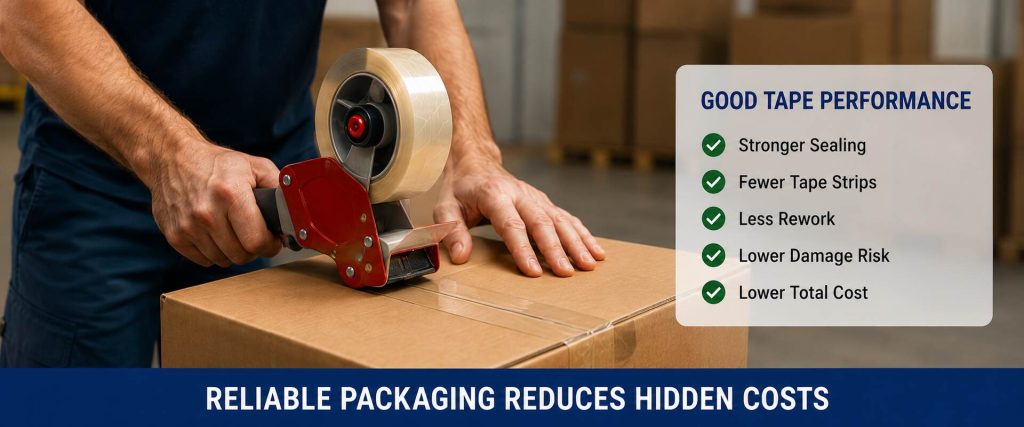
While BOPP packing tape represents a very small fraction of the total value of a shipment, a failure in the seal can lead to a host of problems.
When selecting tape, one must consider factors such as the carton’s load, the material of the corrugated cardboard, the storage environment, operating temperatures, and the specific sealing method used.
Water-based acrylic, hot-melt, and solvent-based adhesives each offer different performance characteristics and must be matched to the appropriate application.
If tape frequently peels at the edges or loses its adhesion, warehouse staff are forced to perform extra work—applying additional tape, resealing cartons, or dealing with cartons that fall apart during handling. This compounds costs in three ways:
Increased consumption of tape + more labor time required + higher risk of cargo damage.
Therefore, even if a particular roll of tape has a higher unit price, it can actually be more cost-effective overall—provided it offers consistent performance and requires less material to seal each carton.
5. PP and PET Strapping Must Match the Specific Requirements of the Cargo
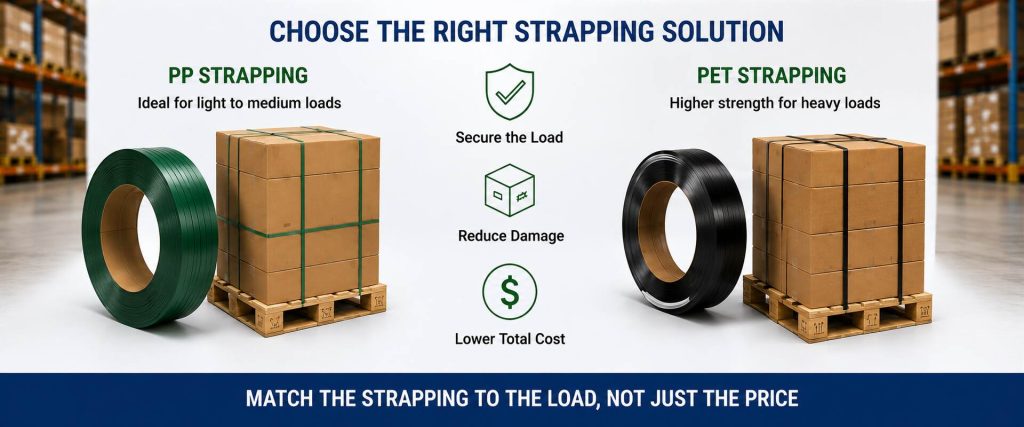
Using a larger quantity of strapping does not necessarily equate to greater safety for palletized goods.
PP (polypropylene) strapping offers excellent value and is suitable for light to medium-weight loads, while PET (polyester) strapping provides higher strength and better tension retention in most applications, making it better suited for heavy palletized cargo.
Mismatches between strapping specifications and the cargo itself can easily lead to various issues.
Insufficient tension can cause the load to shift, while excessive tension may crush cartons or damage the edges and corners of the products.
Incorporating paper edge protectors can optimize the overall packaging solution by distributing the pressure from the strapping over a larger contact area. For carton-based goods, these protectors not only prevent crushing damage but also secure the strapping in place, preventing it from slipping.
Therefore, the core question is not Which strapping is the cheapest? but rather, What combination can securely hold the cargo in place while minimizing the use of unnecessary consumables?
6. Pallet Stability Directly Impacts Transportation Costs
The quality of packaging has a lasting effect on the condition of the goods throughout the entire supply chain after they leave the warehouse.
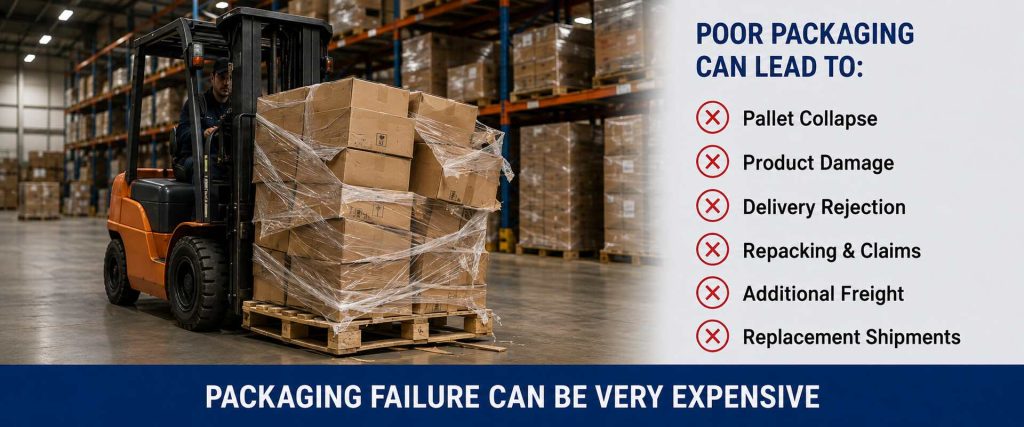
Poor pallet stability makes cargo prone to leaning or collapsing, often necessitating additional reinforcement before the goods are even loaded into a container. Damaged cartons reduce stacking efficiency and complicate warehouse handling.
In severe cases, packaging failure can lead to a range of negative consequences:
・Product damage
・Rejection of goods
・Rework and repacking
・Customer claims
・Additional freight costs
・Replacement shipments
These secondary costs often far exceed any savings gained by cutting back on packaging materials.
This is particularly critical for export shipments. Before reaching the end customer, palletized goods must endure forklift handling, container loading, the vibrations of long-distance transport, and exposure to varying climatic conditions.
7. Packaging Standardization Is an Effective Means of Cost Control
Standardizing packaging specifications is another practical approach to cost management.
If warehouse staff use inconsistent amounts of stretch wrap, tape, or strapping when packing similar types of cargo, it becomes difficult to predict the consumption of these materials. Enterprises can establish packaging standards based on cargo types—for example:
Lightweight cartons → Standard cartons → Heavy palletized loads → Irregularly shaped items
For each category, define the specific requirements for stretch film, adhesive tape, and strapping, along with standardized packaging procedures.
Standardization not only improves the accuracy of procurement forecasting but also ensures consistent and stable packaging quality, regardless of which staff member performs the task.
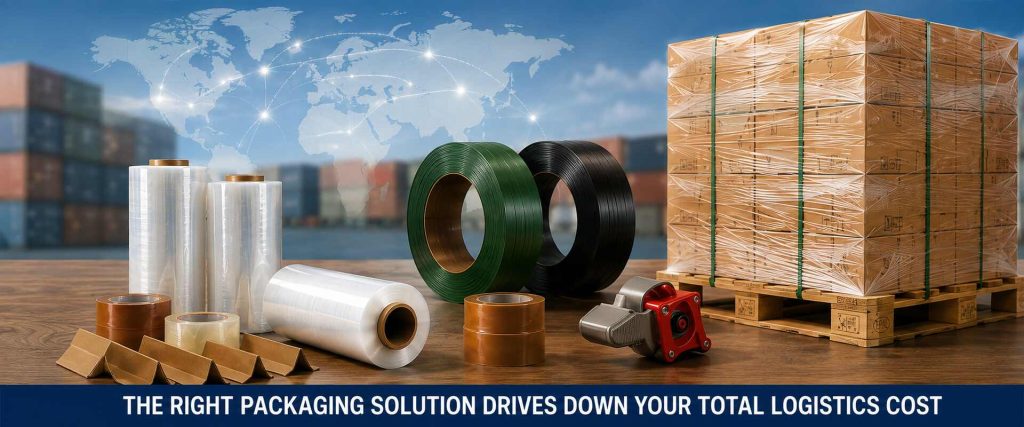
Evaluate the total cost per shipment, rather than the unit price per roll.
Yalan Packing manufactures and supplies a comprehensive range of pallet-packaging consumables, including manual and machine-applied stretch film, pre-stretched film, BOPP carton-sealing tape, PP and PET strapping, and various other auxiliary pallet-packaging materials.
Different product specifications are suited to different load capacities and logistics environments. The selection of packaging materials should be based on actual operational needs, rather than focusing solely on the quoted price.
For high-volume procurement, a rigorous cost comparison should take several factors into account:
Consumption of consumables per shipment + labor time + risk of packaging failure + probability of cargo damage.
Even if a material has a higher unit price, it may still be the better choice if it reduces the quantity of consumables required, saves labor, and lowers the risk of damage during transit.
Ultimately, the most cost-effective packaging material is rarely the one with the lowest price per roll in the warehouse.
A truly cost-advantageous material is one that minimizes total costs and maximizes packaging stability across the entire supply chain—from the initial packing stage all the way to final delivery.


Contact Us
In This Article
Related Posts
Why Does Stretch Film Not Stick Properly? 7 Common Causes and Solutions
Nov 11, 2026
Does Thicker Stretch Film Always Mean Stronger Pallet Packaging?
Nov 10, 2026
How Packaging Material Selection Impacts Your Total Logistics Cost
Nov 09, 2026
What Packaging Specifications Should Buyers Include in an RFQ?
Nov 06, 2026


