







Why Does Stretch Film Not Stick Properly? 7 Common Causes and Solutions
By hqt
Nov, 2026Related Posts

Why Does Stretch Film Not Stick Properly? 7 Common Causes and Solutions
Nov 11, 2026

Does Thicker Stretch Film Always Mean Stronger Pallet Packaging?
Nov 10, 2026

How Packaging Material Selection Impacts Your Total Logistics Cost
Nov 09, 2026

What Packaging Specifications Should Buyers Include in an RFQ?
Nov 06, 2026
Insufficient tack in stretch film is typically caused by one or more of the following factors: inadequate inherent self-adhesion, incorrect orientation during application, the presence of dust or moisture on the film surface, unsuitable ambient temperature, excessive pre-stretching, or improper wrapping techniques.
Unlike packing tape, standard pallet stretch film relies on its own surface tack to secure loads, requiring no additional adhesive. If the tack is insufficient, the outer layers of the film may loosen and the film tail may lift, ultimately resulting in an unstable palletized load.
By identifying these potential causes, warehouse managers and procurement personnel can quickly pinpoint the root of the problem—whether it stems from the quality of the film itself or from improper wrapping practices on-site.
1. Inadequate Inherent Tack of the Stretch Film
The most common reason for poor tack is that the film’s inherent self-adhesion properties fail to meet operational requirements.
Most stretch films are produced using polyethylene, with linear low-density polyethylene (LLDPE) serving as the primary base material. Factors such as the specific resin grade, additive formulations, film structure, and production processes all directly influence the film's self-adhesion performance.
Self-adhesion characteristics vary between different types of stretch film.
Some films are designed to be self-adhesive on both sides, while others are adhesive on only one side, with the opposite side treated to have low tack or anti-slip properties.
If the film’s self-adhesion properties are not suited to the specific operational environment, the overlapping layers of film may fail to bond effectively.
Solution: Verify the film’s self-adhesion specifications and confirm whether it is intended for manual or machine application. Whenever possible, conduct sample testing under conditions that replicate the actual usage environment.
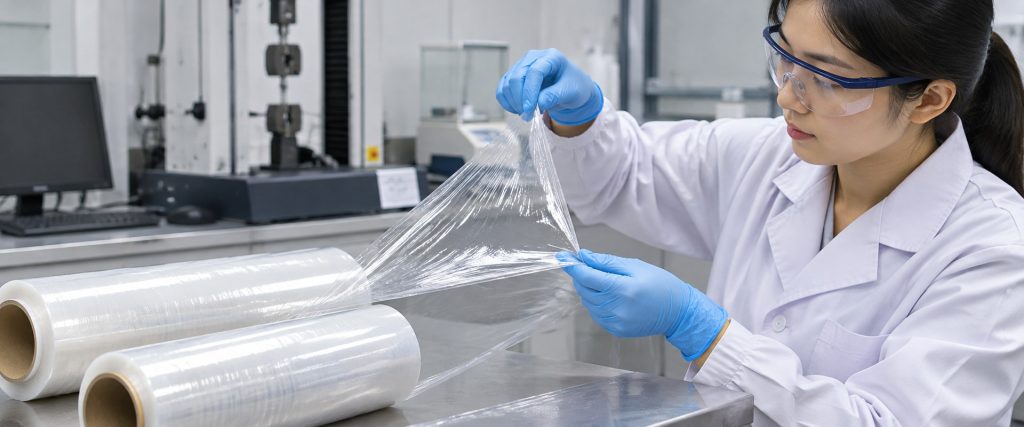
2. Incorrect Orientation of Single-Sided Self-Adhesive Film
Some stretch films have different surface characteristics on each side.
One side is designed to be self-adhesive, while the other side is formulated to minimize adhesion.
This design is advantageous during storage and transport, as it prevents adjacent pallets from sticking to one another.
However, if the film is loaded or applied in the wrong orientation, the adhesive side will not come into contact with the underlying layers, leading to weak inter-layer adhesion and an inability to secure the film tail.
Solution: First, determine whether the stretch film is single-sided or double-sided self-adhesive. Install the film roll strictly according to the supplier’s guidelines—pay particular attention to the orientation, especially when using machine-applied stretch film.
Do not assume that both sides of a roll of stretch film have the same level of adhesiveness.

3. Presence of dust, moisture, or other contaminants on the film surface
Dust, stains, moisture, and debris left over from on-site operations can impair the self-adhesive properties of stretch film.
Warehouse environments can be complex; if the surface of a film roll becomes contaminated, these impurities will prevent the film layers from making proper contact, resulting in reduced adhesion.
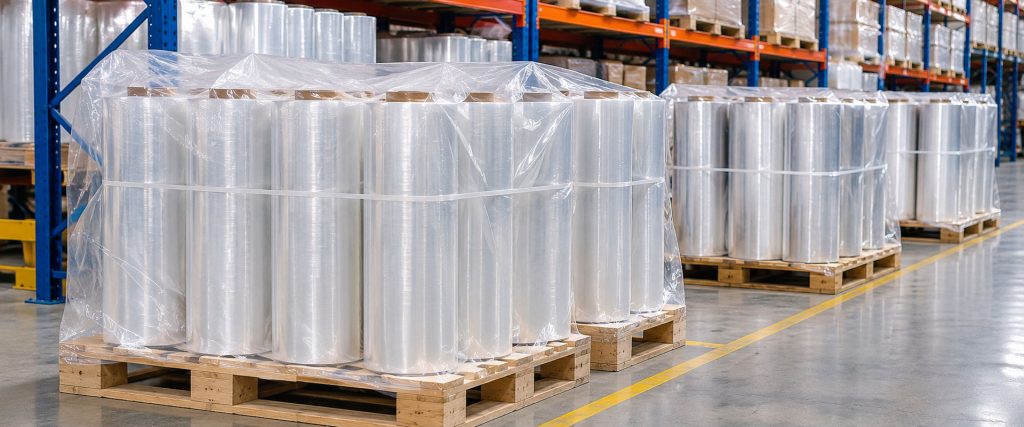
This issue is more likely to occur if: film rolls are not properly protected during storage, are placed directly on the floor after being unwrapped, or are handled by operators wearing dirty gloves.
Solution: Keep unused stretch film in its original protective packaging; ensure the storage area remains clean and dry; and do not place unwrapped film rolls directly on the warehouse floor.
If only specific rolls exhibit abnormal adhesion, investigate the storage and handling conditions first; do not immediately conclude that the entire batch of products is defective.
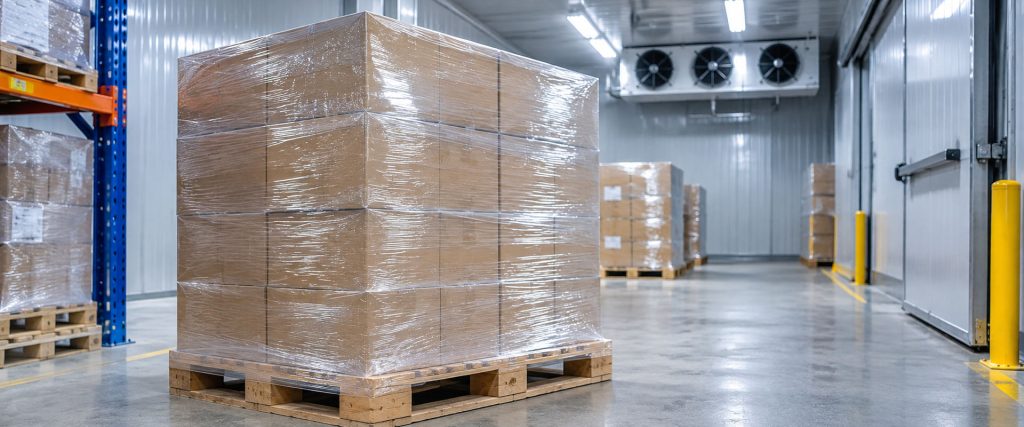
4. Mismatch Between Storage/Usage Environment and Temperature
Temperature significantly affects the performance of stretch film.
Polyethylene films behave very differently in high- or low-temperature environments, and tolerance to temperature varies depending on the specific formulation.
For instance, a film that performs reliably in a room-temperature warehouse may exhibit a significant loss of self-adhesion when used in a cold storage facility.
Conversely, high-temperature storage can cause the film layers to stick together within the roll, making it difficult to unspool.
Note: There is no universal temperature standard applicable to all stretch films; performance depends on the specific formulation.
Solution: Follow the storage and usage temperature requirements provided by the supplier.
When using film in cold storage or other specialized environments, always test samples at the actual operating temperature rather than relying solely on data obtained at room temperature.
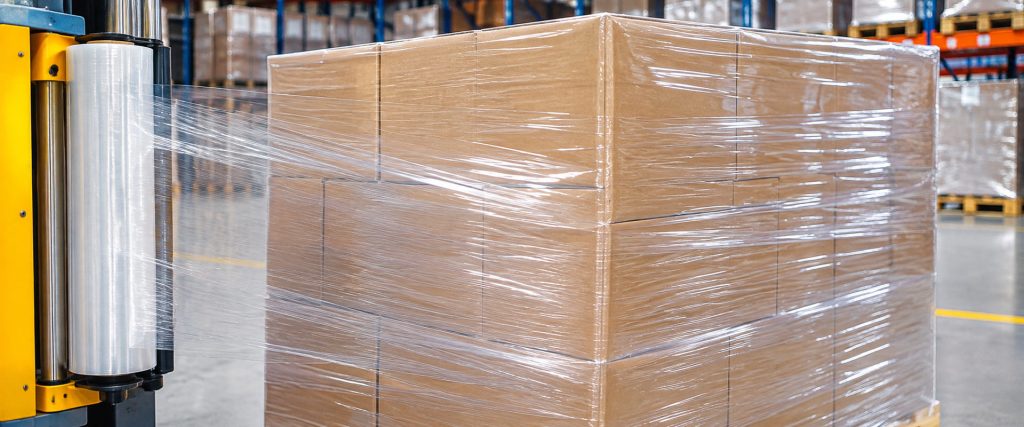
5. Excessive Pre-stretching or Excessive Wrapping Tension
While stretch film requires a certain degree of tension during application, stretching it beyond an appropriate range can lead to performance failures.
If the pre-stretch ratio exceeds the film's design limit, the film may shrink in width, become prone to breakage, and lose its effectiveness in securing the load.
Furthermore, this can result in unstable overlapping of film layers and difficulty in securing the end of the film.
Machine-applied stretch film must be compatible with the wrapping equipment and the configured pre-stretch parameters.
Solution: Verify the pre-stretch ratio, film-feed tension, and wrapping program on the stretch-wrapping machine.
If adhesion deteriorates after adjusting these parameters, revert to the original settings to conduct a comparative test.
For manual wrapping, avoid applying excessive force or uneven tension.
6. Insufficient Overlap or Improper Wrapping Technique
Sometimes, even when the film itself has adequate adhesion, an incorrect wrapping technique can prevent the film layers from bonding tightly together. Common Operational Issues:
Insufficient overlap width between film layers
Inconsistent wrapping tension
Improper securing of the film tail
Uneven film coverage
Incorrect film orientation
Mismatch between the wrapping pattern and the shape of the palletized load
For example, if the overlap area between layers is too small, the contact surface is inadequate to maintain stable interlayer adhesion.
Even if the film itself has good tack, the film may still come loose if the tail is not secured properly.
Solutions: Standardize the wrapping process, ensure sufficient overlap width, and properly secure the film tail.
Press the film tail firmly against the underlying, already-overlapped film layer.
When inspecting the wrapping results, also verify that the load is securely fixed and that the entire palletized unit is stable.

7. Variations in film performance between production batches
If a stretch film that previously performed well shows reduced tack upon the arrival of a new batch, the differences between batches should be investigated.
Potential causes include changes in resin formulation, additives, production processes, or surface treatments.
However, a change in tack does not necessarily indicate a manufacturing defect; other factors such as storage conditions, equipment parameters, and wrapping operations should also be examined.
Solutions: Conduct a comparative test between the problematic film roll and a previously satisfactory roll under identical usage conditions.
Purchasers may request technical specifications, batch information, and test reports from the supplier.
For recurring long-term orders, establish clear product specifications and inspection standards in advance to minimize the impact of batch-to-batch variations.
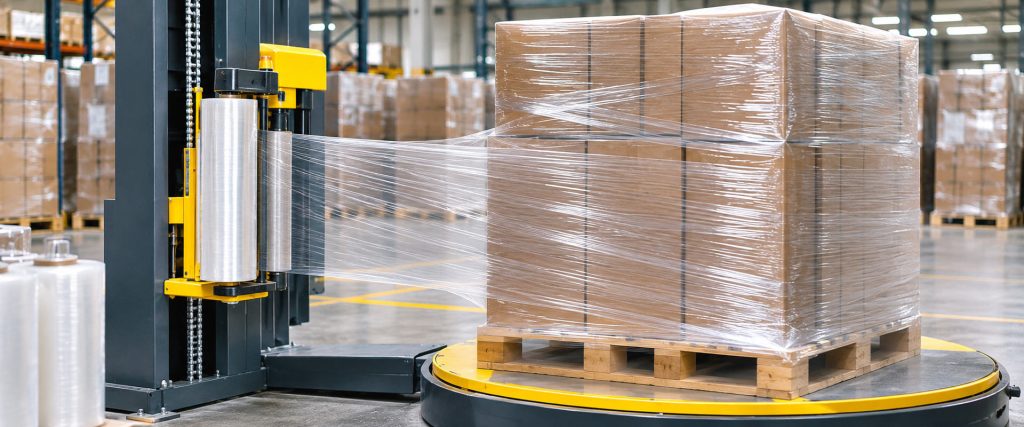
How to troubleshoot insufficient stretch film tack?
The troubleshooting table below serves as a practical reference for identifying and resolving such issues.
| Problem | Possible Cause | Recommended Check |
| Film layers separate easily | Insufficient cling | Compare film samples |
| One side sticks but the other does not | Single-sided cling design | Check film orientation |
| Cling varies between rolls | Storage or batch differences | Compare conditions and batches |
| Film performs poorly in cold storage | Temperature sensitivity | Test at operating temperature |
| Film loosens after machine wrapping | Unsuitable machine settings | Review tension and pre-stretch |
| Film tail lifts after wrapping | Poor overlap or tail placement | Check wrapping technique |
| Film feels contaminated | Dust, moisture, or residues | Inspect roll surfaces |
While the checks mentioned above can help identify potential causes, if performance issues persist, a professional product evaluation is recommended.
Does poor adhesion mean the stretch film is defective?
Not necessarily.
Insufficient adhesion could stem from the film’s formulation, improper handling, unsuitable storage conditions, or the selection of an inappropriate film type.
Furthermore, higher adhesion is not always better.
In some applications, a film with low outer-surface tack is actually preferred to prevent adjacent pallets from sticking to one another.
Therefore, purchasers should evaluate adhesion requirements based on their specific packaging conditions rather than simply opting for the film with the strongest tack.
For stable palletized loads, adhesion must work in tandem with appropriate film tension, containment force, and coverage area.
What information should be clarified before purchasing stretch film?
When sourcing stretch film, it is essential to clearly define your specific packaging requirements.
Key parameters include film width, thickness, roll length (or net weight), whether it is intended for manual or machine application, and whether it requires single-sided or double-sided cling.
For machine-applied film, equipment specifications and the operational environment are particularly critical.
If adhesion issues arise, it is also helpful to specify when the problem occurs and whether it affects all rolls or is limited to a specific batch.
Yalan Pack offers a comprehensive range of manual and machine-applied stretch films, as well as other industrial wrapping materials, widely used in the warehousing and logistics sectors.
Clients can provide details regarding their current film specifications, wrapping methods, and any issues encountered; this allows us to assess your needs and recommend the most suitable film products.
Poor adhesion does not automatically imply that the product itself is defective. Identifying the root cause—whether it relates to the film’s cling properties, the orientation during application, storage conditions, or the wrapping process—is the first step toward improving the stability of your palletized loads.
Share on Social:


-
PREV:
Does Thicker Stretch Film Always Mean Stronger Pallet Packaging?
- NEXT: Null
Contact Us
In This Article
Related Posts
Why Does Stretch Film Not Stick Properly? 7 Common Causes and Solutions
Nov 11, 2026
Does Thicker Stretch Film Always Mean Stronger Pallet Packaging?
Nov 10, 2026
How Packaging Material Selection Impacts Your Total Logistics Cost
Nov 09, 2026
What Packaging Specifications Should Buyers Include in an RFQ?
Nov 06, 2026


