







7 Specifications Buyers Should Confirm Before Ordering Stretch Film
By hqt
Sep, 2026Related Posts

Yalan Pack at the 140th Canton Fair 2026
Sep 18, 2026

Why Does Packing Tape Peel Off Cartons?
Sep 17, 2026

Pallet Film Wholesale Cost Analysis: Factors That Influence Bulk Stretch Film Pricing
Sep 17, 2026

Industrial Pallet Wrap for Automated Packaging Lines: Film Performance Requirements
Sep 17, 2026
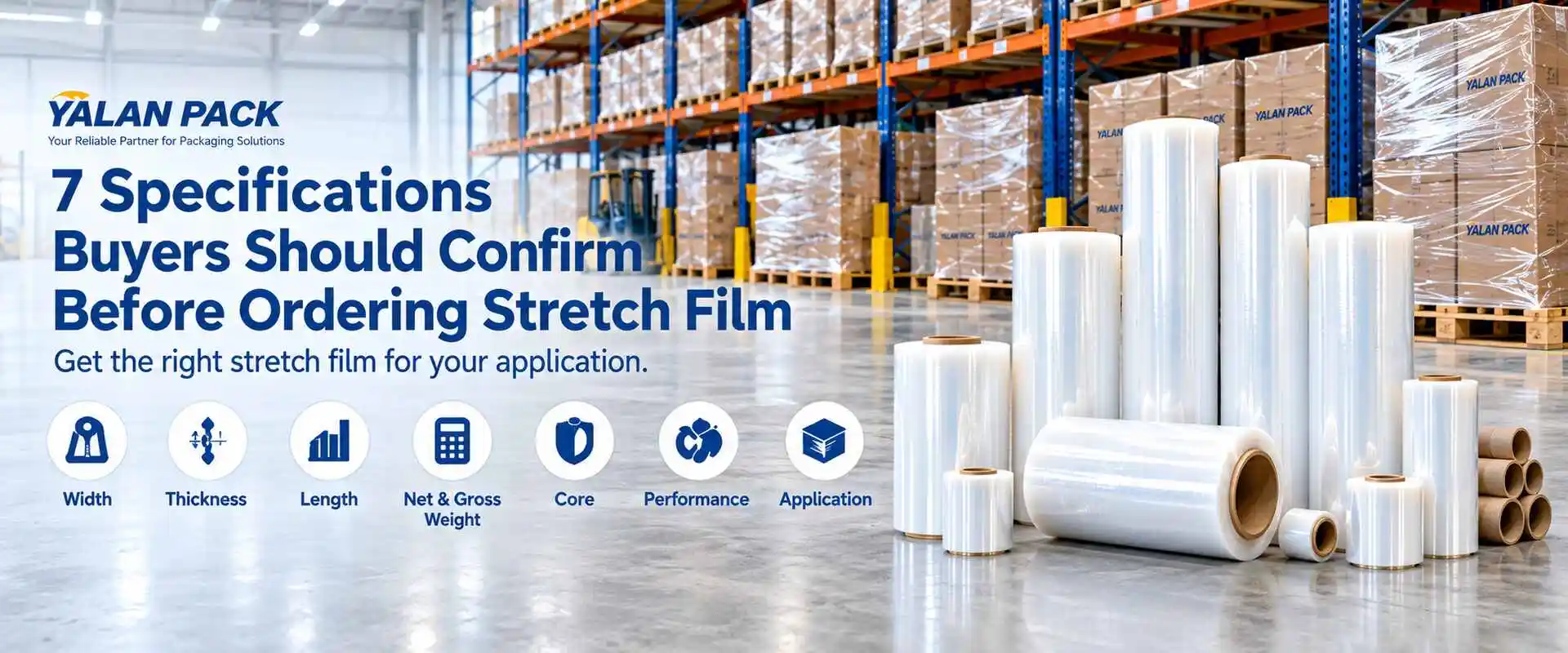
Before ordering stretch wrap, the purchaser needs to confirm at least seven core specifications: film width, thickness, roll length, net and gross weight, paper core specifications, stretch performance, and application method.
These parameters determine the total amount of usable film, whether the roll fits the packaging equipment, and the effectiveness of the wrap on the pallet. Obtaining a quote based solely on brief details like 500mm stretch film or 3kg per roll provides insufficient information for an accurate price comparison.
1. What film width is required?
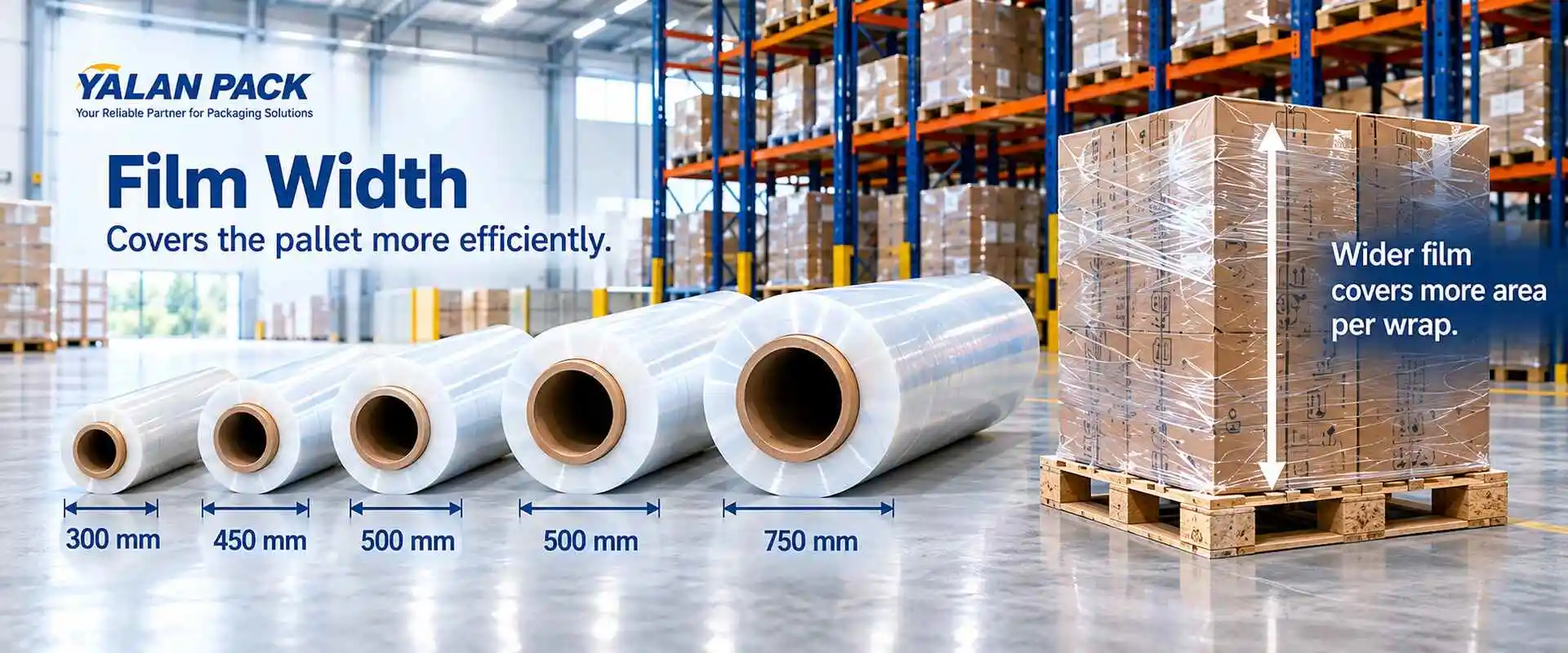
The width determines the pallet area covered in a single wrap rotation. While 500mm is the standard width for pallet wrapping, other widths can be selected based on pallet dimensions, wrapping equipment, and actual operating conditions. Purchasers should not assume that rolls looking similar in appearance share the same width. Examples of available specifications:
·450mm
·500mm
·750mm
·Custom width
Film width is closely linked to the degree of overlap between layers. A wider film covers a larger vertical area per rotation, though the final packaging result still depends on the wrapping technique. When requesting a quote, clearly specify the unit of measurement (millimeters or inches) to avoid misunderstandings caused by unit conversions.
2. What thickness of stretch film is required?
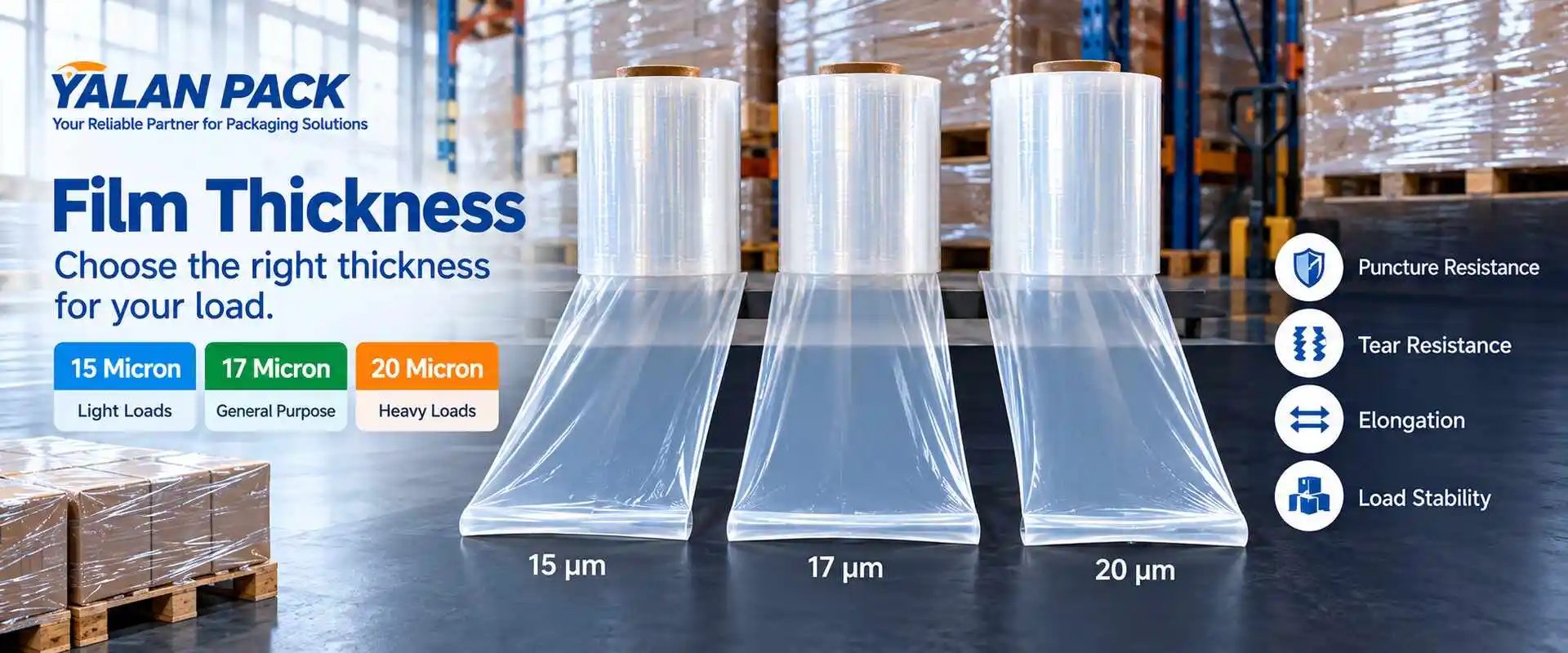
Thickness is the parameter most frequently compared when purchasing stretch film; units typically include microns (µm), Gauge, or mils. Common thicknesses for pallet wrapping include 15µm, 17µm, 20µm, and 23µm.
However, purchasers should avoid the misconception that thicker is always better. While thickness affects material consumption, the film's overall performance also depends on raw material formulation, puncture resistance, elongation, cargo shape, and wrapping conditions. A pallet of lightweight, stable cartons requires a completely different film specification than a pallet loaded with heavy, irregularly shaped, or sharp-edged items. Therefore, film thickness should be selected based on the cargo type and the required level of load stability, rather than looking at this single value in isolation.
3. What is the length of each film roll?
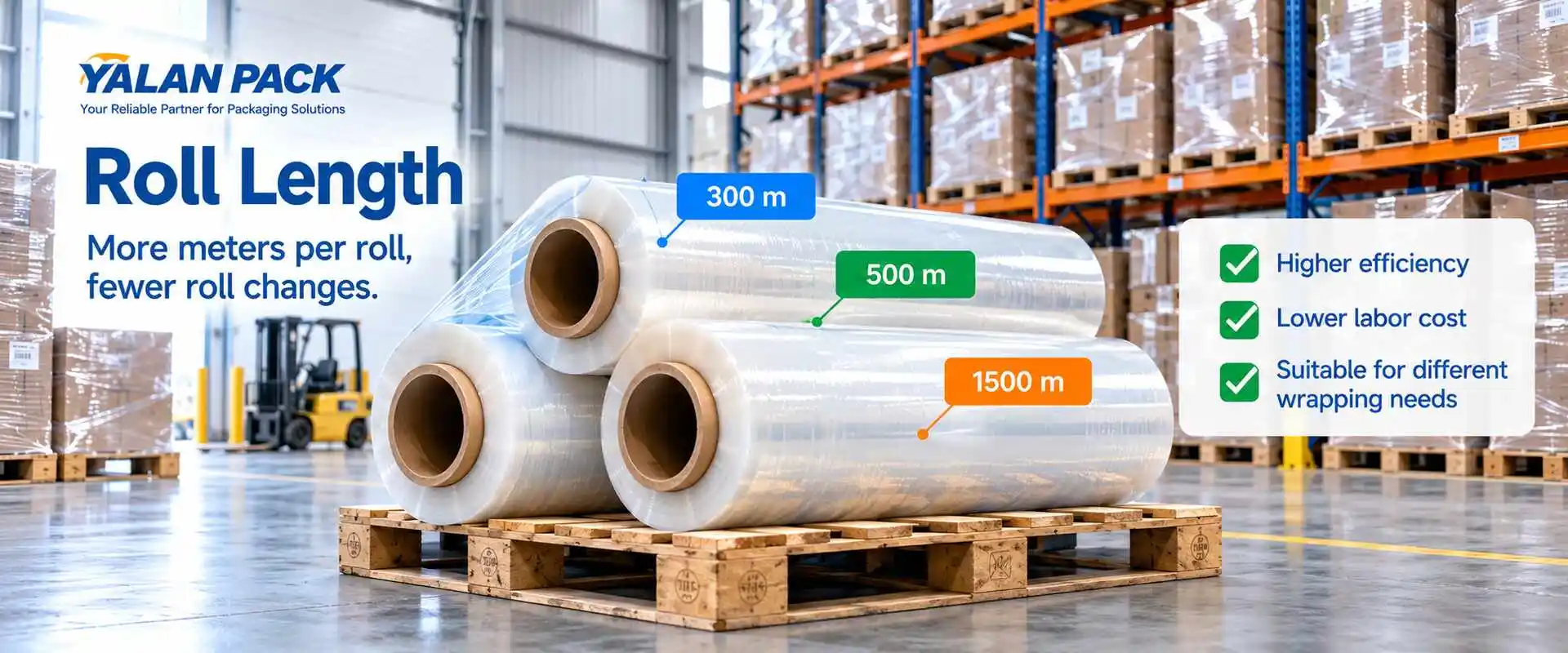
Roll length is a crucial parameter when comparing prices. Two suppliers might both offer stretch film that is 500 mm wide and 17 microns thick, yet one roll might contain only 300 meters while another contains 500 meters; machine-grade film rolls are often even longer.
Roll length directly impacts: total available film → number of pallets wrapped per roll → frequency of roll changes → labor costs → cost per wrapped pallet.
If roll length is a key procurement requirement, suppliers should be asked to clearly specify the unit of measurement (meters or feet). Additionally, it is advisable to cross-check roll length, width, and thickness against the net weight of the film; these parameters should be logically consistent with one another.
4. Does the stated roll weight refer to net weight or gross weight?
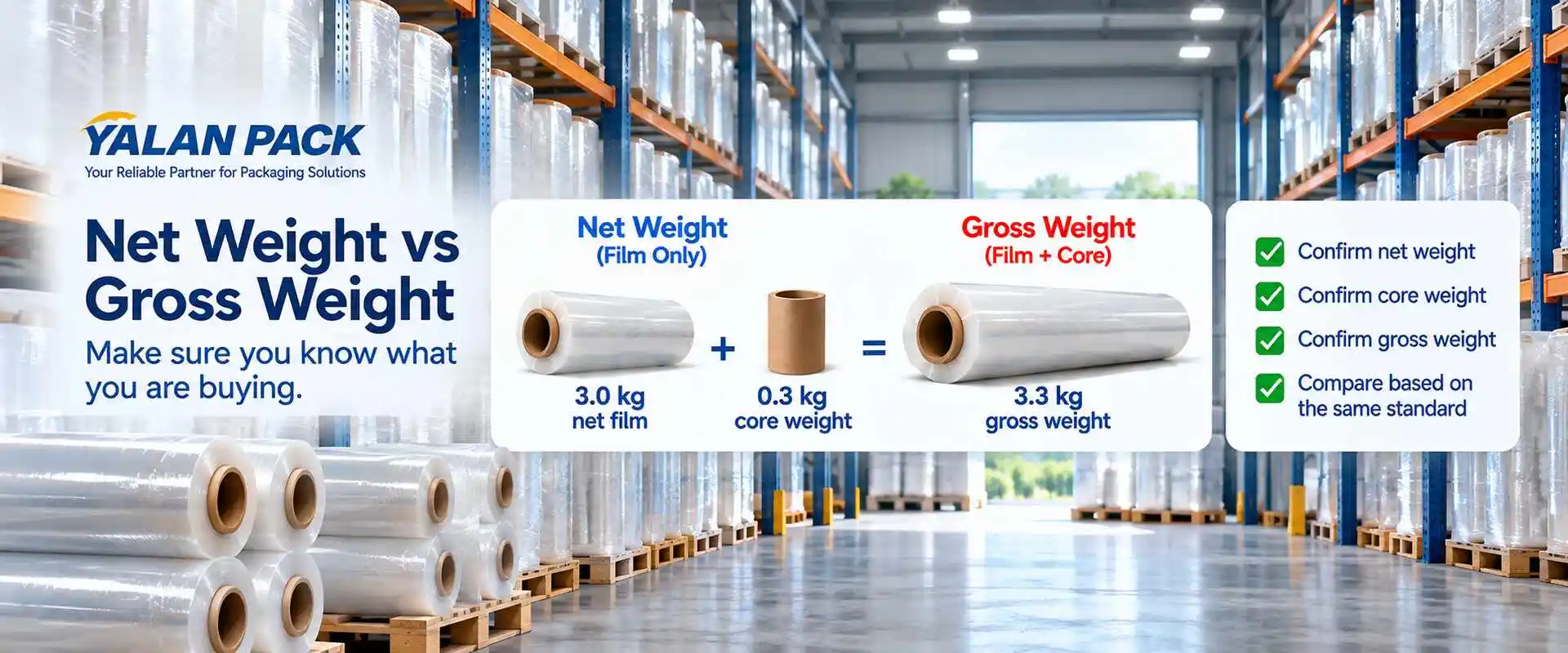
This is a critical detail to clarify before comparing prices. Net weight: the weight of the stretch film itself, excluding the paper core. Gross weight: the total weight of the stretch film plus the paper core.
For example, suppose two suppliers both quote a "3 kg roll":
Supplier A: 3.0 kg net film weight + 0.3 kg core = 3.3 kg gross weight;
Supplier B: 2.7 kg net film weight + 0.3 kg core = 3.0 kg gross weight.
If a quotation does not specify net vs. gross weight, both might simply be listed as "3 kg."
If purchasing 1,000 rolls, the difference in the actual total amount of film could be as much as: 0.3 kg × 1,000 = 300 kg.
Therefore, when specifying weight for procurement, the buyer should confirm the net film weight, the core weight, and the gross roll weight separately.
5. What core size and weight are required?
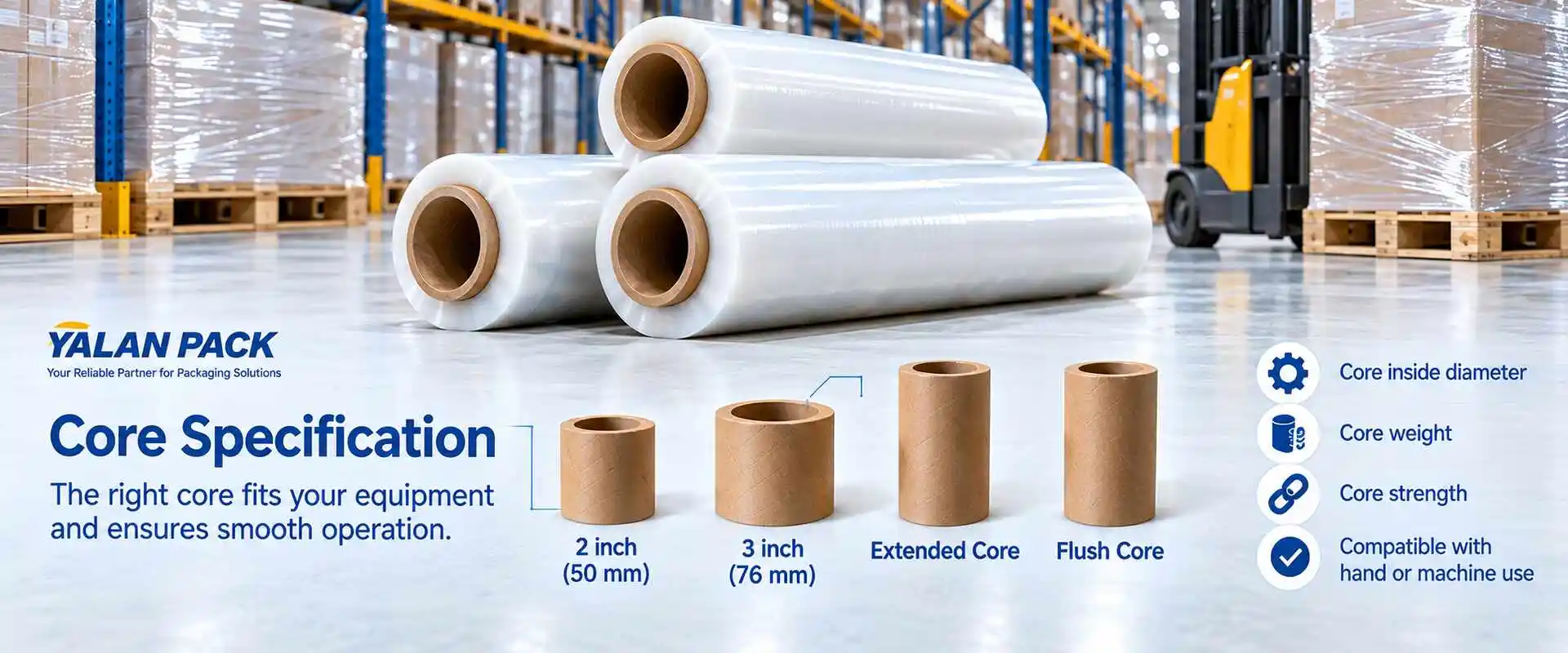
The paper core is often overlooked, yet it directly affects equipment compatibility and the actual usable amount of film. Key information to confirm regarding the core includes:
·Core inner diameter
·Core length
·Core weight
·Core strength
·Core style (extended/protruding or flush)
Different markets and usage scenarios require different core specifications; common inner diameters are 2 inches and 3 inches. Machine-grade stretch film imposes stricter requirements on paper core dimensions, as the roll must fit the film carriage of the wrapping machine. Paper core strength is particularly critical for heavier rolls; cores lacking sufficient strength are prone to deformation during transport, storage, or machine operation. When purchasing rolls based on gross weight, it is important to consider the weight of the paper core: for a fixed total roll weight, a heavier core means a lower net weight of the film itself.
6. What stretch performance is required for the application?
Specifications should not be limited to basic metrics like dimensions and weight. Buyers must also evaluate the film's performance characteristics, particularly for scenarios involving high-standard packaging requirements or automated wrapping equipment.
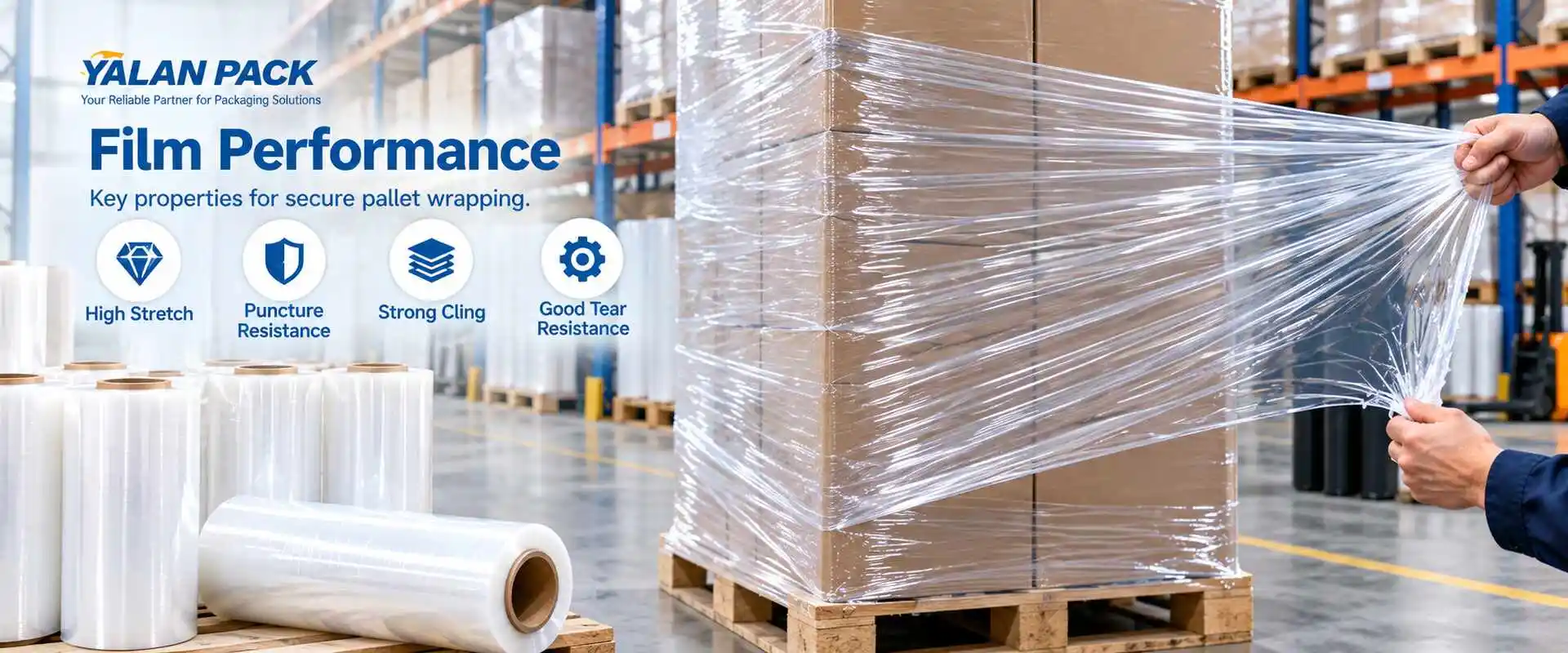
Key performance indicators to focus on include: elongation, puncture resistance, tear resistance, cling (self-adhesion), and pre-stretch capability.
For example, film used for wrapping smooth, regular-shaped cartons faces relatively low puncture stress; in contrast, wrapping palletized loads with sharp corners or protrusions demands entirely different film properties. Machine-grade film must also maintain stable performance under specific pre-stretch ratios and tension settings.
When communicating with suppliers, buyers should clearly specify the type of goods being packaged rather than simply asking for high-performance stretch film. The film's performance specifications must align with the actual usage scenario.
7. Is the film intended for manual or machine wrapping?
Finally, the buyer must clarify the application method.
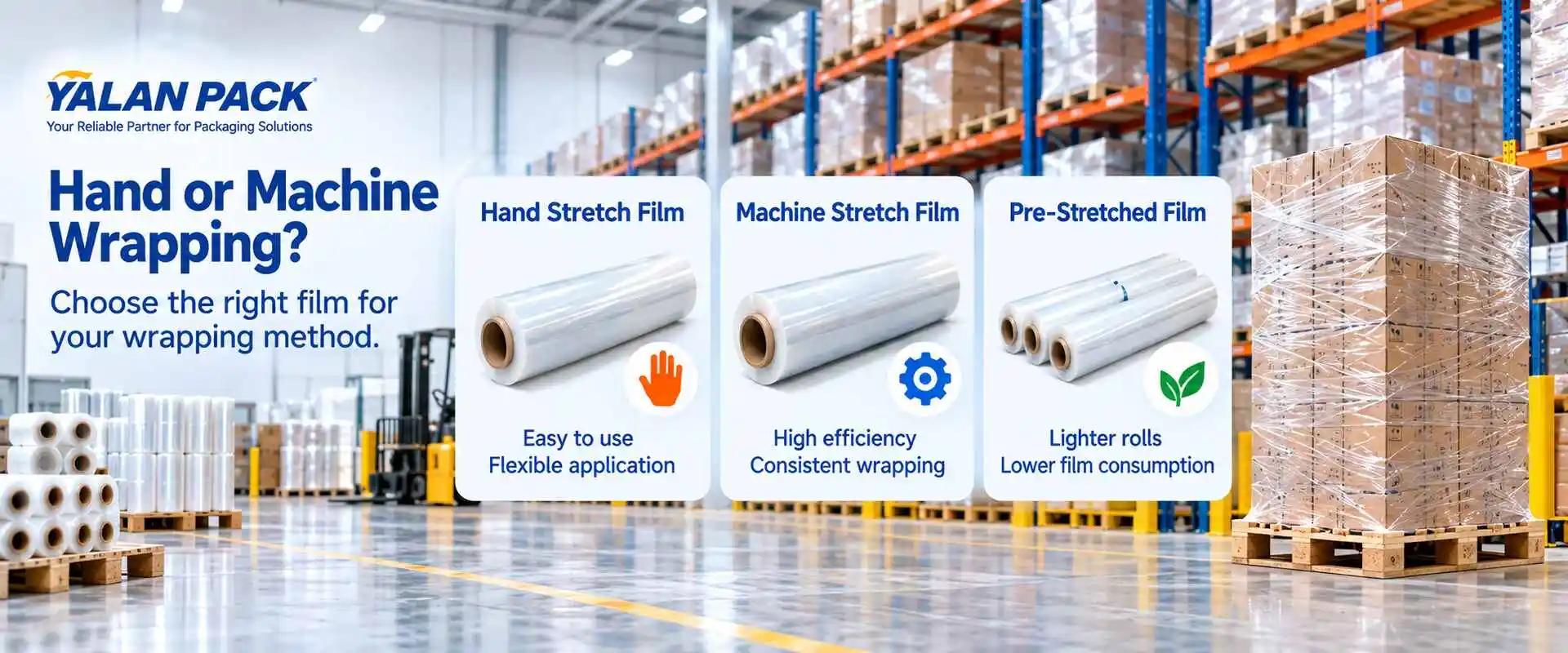
Hand-wrap film: Designed specifically for manually wrapping palletized loads. Key considerations include roll weight, ease of handling, core structure, and user comfort.
Machine-wrap film: Designed for use with pallet wrapping machines. Buyers need to provide suppliers with details such as equipment model, pre-stretch system type, roll dimensions, and performance requirements.
Pre-stretched film: An excellent alternative if the goal is to simplify manual operations and control film consumption.
Selection should not be based solely on similar roll dimensions. The chosen film must be compatible with the packaging method, equipment type, and the specific goods loaded on the pallet.
8. What should a comprehensive Request for Quotation (RFQ) for stretch film include?
A professional RFQ should allow suppliers to understand all core specifications at a glance.
For example:
Product: Clear Hand Stretch Film
Width: 500 mm
Thickness: 20 micron
Length: 400 m
Net Film Weight: 3.0 kg
Core Weight: 0.3 kg
Gross Roll Weight: 3.3 kg
Core ID: 3 inch
Application: Hand wrapping
Color: Clear
For machine-grade stretch film, the buyer can additionally provide the wrapping machine model, required pre-stretch ratio, roll weight, and pallet specifications. This method of inquiry is far more effective than simply sending a message like "Please quote the price for 500mm stretch film." The more detailed the specifications, the easier it is to make a direct comparison of the quotes provided by suppliers.
9. Why shouldn't you compare only the price per roll?
A low price per roll does not necessarily mean a lower overall packaging cost. When comparing two types of stretch film, if the net weight, length, thickness, or performance differ—even if the external dimensions appear similar—the actual usable amount of film and the number of pallets that can be wrapped will vary significantly.
For standard pallet wrapping operations, buyers can evaluate costs using the following formula: Packaging cost per pallet = Actual film consumption per pallet × Price per kilogram of film.
In addition, factors such as the likelihood of film breakage, employee operational efficiency, roll-change frequency, and the stability of the palletized goods must also be considered. The goal of procurement is not merely to purchase the cheapest film per roll, but to select a specification that ensures load stability while maintaining a competitive overall packaging cost. 10.
Stretch Film Specification Checklist
Before confirming a stretch film order, please review the quotation and ensure the following seven items are clearly defined:
| Specification | What to Confirm |
| Film Width | mm or inches |
| Film Thickness | micron, gauge or mil |
| Roll Length | meters or feet |
| Roll Weight | net film, core and gross weight |
| Core | ID, weight, length and design |
| Film Performance | stretch, puncture, tear and cling requirements |
| Application | hand, machine or pre-stretched |
Roll Weight Parameters Net film weight, paper core weight, gross roll weight
Paper Core Parameters Inner diameter, weight, length, and structural style
Film Properties Elongation, puncture resistance, tear resistance, and cling requirements
Application Type Hand-grade, machine-grade, or pre-stretched film
Yalan Pack supplies hand-grade, machine-grade, and pre-stretched films, as well as custom LLDPE stretch films, offering a wide range of widths, thicknesses, roll lengths, net weights, and core specifications. Buyers should keep one practical rule in mind: always confirm that all supplier quotations are based on identical specifications before comparing prices. Clarifying details during the RFQ (Request for Quotation) stage helps prevent future disputes regarding film quantity, product performance, and pricing.


Contact Us
In This Article
Related Posts
Yalan Pack at the 140th Canton Fair 2026
Sep 18, 2026
Why Does Packing Tape Peel Off Cartons?
Sep 17, 2026
Pallet Film Wholesale Cost Analysis: Factors That Influence Bulk Stretch Film Pricing
Sep 17, 2026
Industrial Pallet Wrap for Automated Packaging Lines: Film Performance Requirements
Sep 17, 2026


