







How Do You Calculate the Real Cost of Pallet Packaging?
By hqt
Oct, 2026Related Posts

Why Is Cost per Pallet More Important Than Price per Roll?
Oct 30, 2026

What Packaging Documents Do European Buyers Commonly Request from Suppliers?
Oct 29, 2026

How Do You Calculate the Real Cost of Pallet Packaging?
Oct 28, 2026
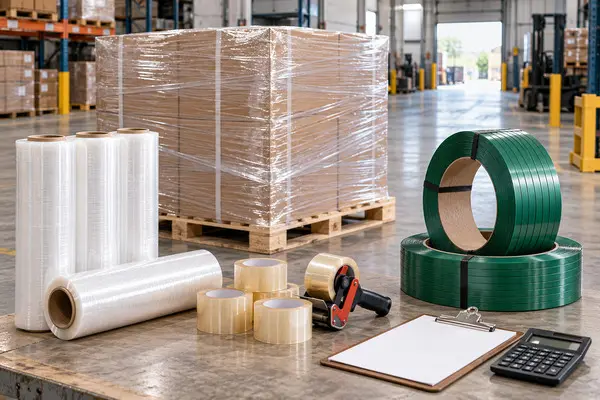
What Packaging Materials Are Commonly Used in North American Warehouses?
Oct 23, 2026
The true total cost of pallet packaging encompasses materials, labor, equipment, packaging waste, and potential losses from product damage. When calculating these expenses, businesses should account for the full packaging cost per pallet, rather than simply comparing the unit purchase prices of individual packaging materials.
By understanding these cost components, warehouse operations and procurement teams can identify opportunities to reduce expenses without compromising the stability of the load or the protection of the products.
1. What are the costs involved in pallet packaging?
Pallet packaging consists of various cost elements, many of which do not appear in a supplier’s price quote.
Direct materials typically include stretch wrap, strapping, PP/PET bands, and paper edge protectors.
Other cost components include:
- Labor costs for wrapping and securing pallets
- Depreciation and maintenance expenses for packaging equipment
- Costs associated with film breakage and material waste
- Expenses for secondary packaging or rework
- Losses resulting from product damage during storage or transportation
Reference formula:
Total packaging cost per pallet = Material costs + Labor costs + Equipment costs + Waste costs + Estimated damage costs
When comparing different packaging solutions, ensure that the criteria used for cost calculation remain consistent.
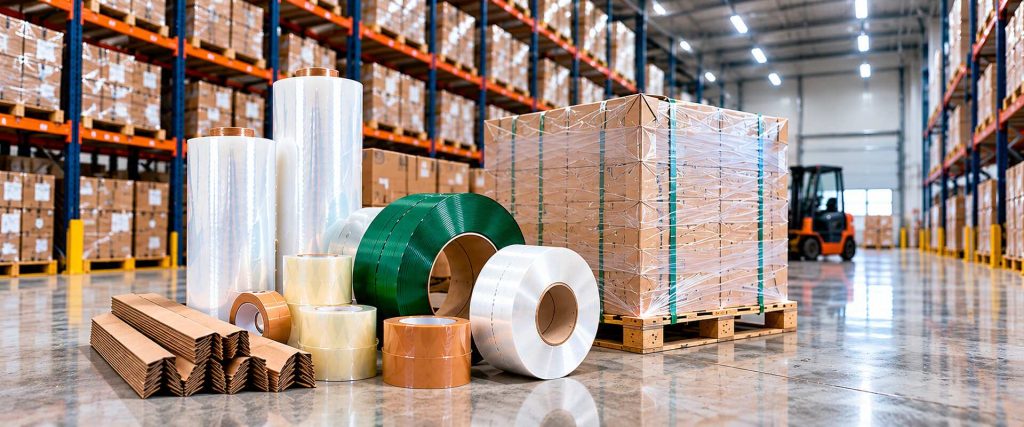
2. How do you calculate the stretch wrap cost per pallet?
Stretch wrap is a core material in pallet packaging.
Comparing only the price per roll can be misleading, as rolls vary in total length, film thickness, core weight, and the actual amount of usable film.
A more reliable approach is to calculate the actual quantity of film consumed.
Stretch wrap cost per pallet = Film consumption (kg) × Unit price of film (currency/kg)
Below is an example comparing two types of stretch wrap:
| Specification | Film A | Film B |
| Price per kg | $1.60 | $1.85 |
| Film used per pallet | 0.45 kg | 0.35 kg |
| Cost per pallet | $0.72 | $0.65 |
Although Type B stretch film has a higher price per kilogram, it requires less material, resulting in a cost reduction of approximately 9.7% per pallet.
The data above is for reference only. Before concluding that these cost savings are viable, it is essential to verify that both types of film can ensure load stability under identical conditions.
When purchasing stretch film by the roll, buyers must distinguish between the net weight of the film and the gross weight of the entire roll.
A heavier paper core does not mean there is more usable film.
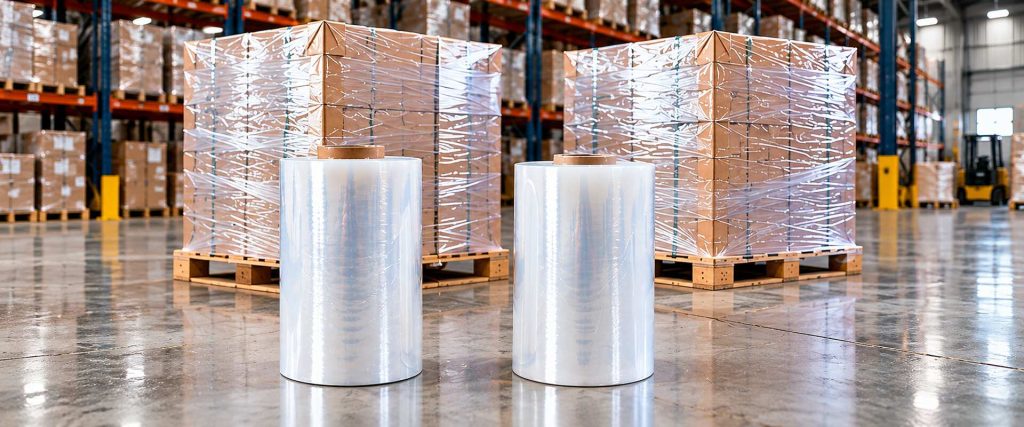
3. What is the cost of packaging tape per pallet?
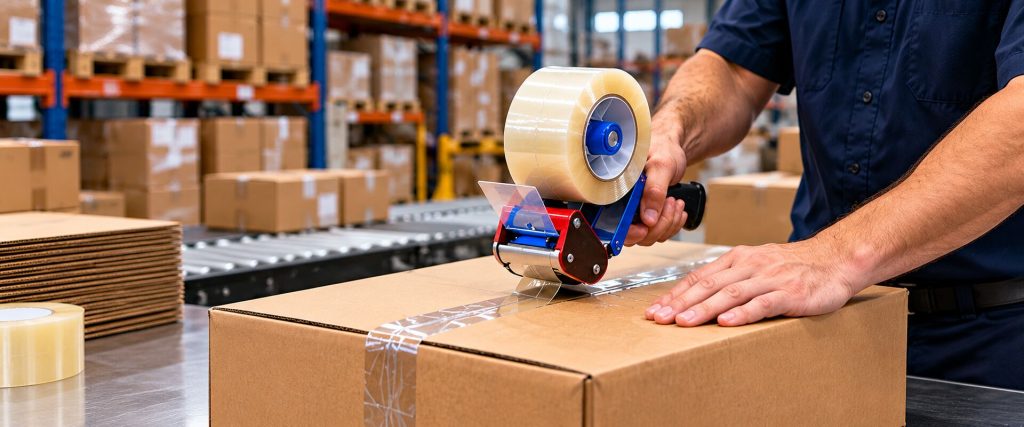
Before a pallet is wrapped, cartons are typically sealed using BOPP packaging tape.
The cost of tape depends on the number of cartons, the amount of tape used per carton, and the unit price of the tape.
Tape cost per pallet = Number of cartons × Tape cost per carton
Example: If a pallet holds 60 cartons, and the tape cost per carton is $0.015:
60 × $0.015 = $0.90 per pallet
It is also important to consider the performance of the tape.
Insufficient adhesion can cause cartons to split open during handling, leading to increased rework costs and the risk of product damage.
Buyers should evaluate factors such as tape width, roll length, total thickness, adhesive type, and actual sealing performance.
A lower unit price does not necessarily mean a lower sealing cost per carton.
4. How do PET strapping and edge protectors affect packaging costs?
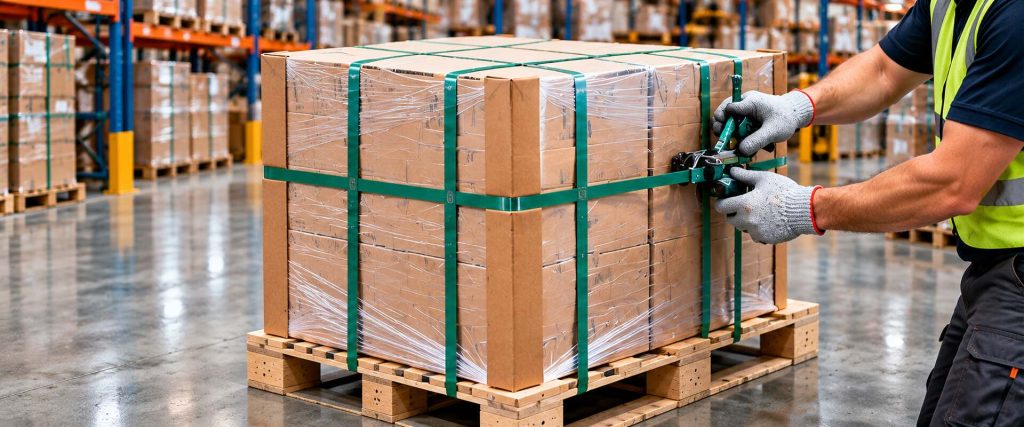
PP or PET strapping can provide additional stabilization for certain palletized loads.
The cost of strapping depends on the length used, the unit price of the material, and the total quantity required.
Strapping cost = Total length of strapping × Price per meter
If applicable, costs may also include fasteners such as buckles or clips.
Paper edge protectors also contribute to overall packaging costs. Example: A single pallet requires 4 edge protectors, with each costing $0.18:
4 × $0.18 = $0.72 per pallet
While such materials increase direct material costs, their proper selection and application can help prevent carton deformation, edge/corner damage, and load shifting. Strapping and edge protectors should not be applied to every pallet by default; their use should be determined based on the specific requirements of the shipment.
5. How do labor and equipment costs affect the total cost?
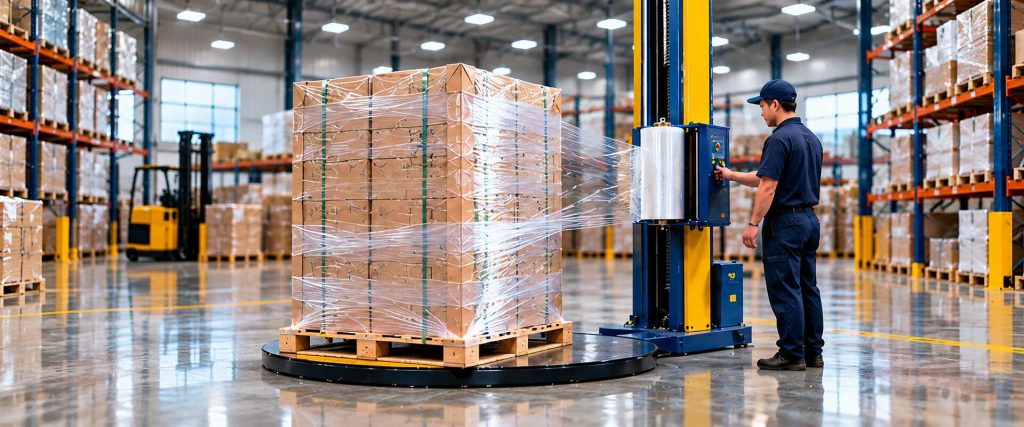
The cost structures for manual and machine-based wrapping differ.
Manual wrapping consumes labor hours, whereas machine-based wrapping involves equipment investment, maintenance, and energy consumption.
Simple formula for calculating manual labor costs:
Labor cost per pallet = Time spent packing (in hours) × Hourly labor cost
Example: It takes 4 minutes to wrap a pallet, with an all-in hourly labor cost of $18:
4 ÷ 60 × $18 = $1.20 per pallet
Machine-based wrapping can reduce labor time and provide more consistent packaging results.
However, one must also account for equipment depreciation, maintenance, and operating expenses.
Warehouses with high shipment volumes should evaluate these costs to determine whether automated packaging is more cost-effective.
6. Why should packaging waste and cargo damage costs be included?
Packaging waste is an expense often overlooked by the purchasing party.
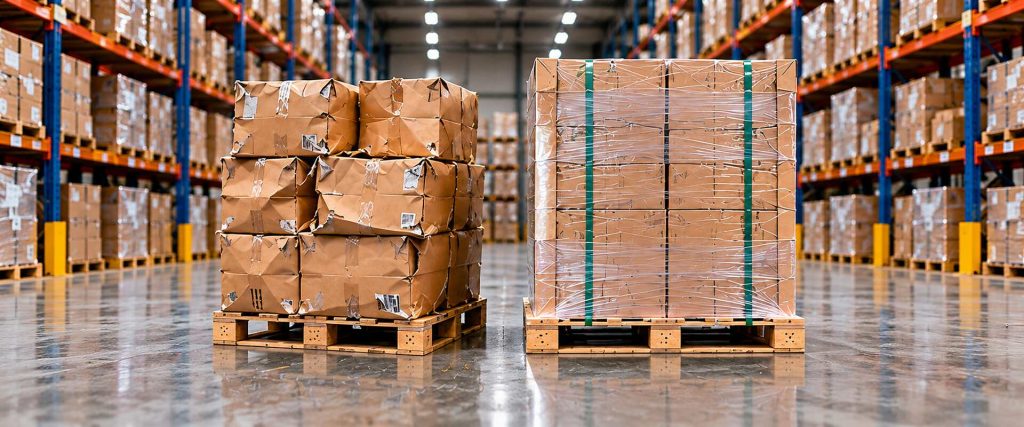
Common examples include damaged stretch wrap, misapplied strapping, crushed cartons, and materials discarded during rework.
The costs associated with cargo damage are even higher, encompassing product replacement, returns, additional shipping charges, and customer claims. Formula for estimating cargo damage costs:
Expected cargo damage cost per pallet = Total cargo damage costs ÷ Total number of pallets shipped
Example: If the total cost of cargo damage related to packaging is $2,000 across 5,000 pallets:
$2,000 ÷ 5,000 = $0.40 per pallet
This historical average can be used to determine whether adjustments to packaging solutions have resulted in a meaningful improvement.
When comparing cargo damage rates, it is essential to ensure that shipping conditions remain consistent.
If reducing the amount of packaging material leads to an increase in cargo damage costs, such a reduction is counterproductive.
7. What is the total cost of packaging a pallet?
The example below incorporates costs related to materials, labor, equipment, and product damage.
| Cost Component | Cost per Pallet |
| Stretch film | $0.65 |
| BOPP packing tape | $0.90 |
| PET strapping | $0.75 |
| Paper edge protectors | $0.72 |
| Labor | $1.20 |
| Equipment allocation | $0.25 |
| Packaging waste | $0.10 |
| Expected cargo damage | $0.40 |
| Total Cost | $4.97 |
This example focuses exclusively on the processes of pallet securing and supplementary packaging.
It does not account for the pallet itself, corrugated cartons, or internal cushioning materials; these should be included when calculating the total cost of transport packaging.
This example illustrates that looking solely at the procurement price of materials fails to reflect the true cost of packaging.

How can buyers reduce pallet packaging costs?
The optimal approach is to simultaneously optimize material usage and the level of protective performance.
Potential optimization measures include:
- Tracking the actual consumption of stretch wrap per pallet.
- Comparing the net weight of the film rather than the gross weight of the entire roll.
- Testing different film thicknesses and wrapping parameters.
- Standardizing carton-sealing procedures.
- Selecting appropriately sized PP or PET strapping.
- Using paper edge protectors to reinforce specific areas.
- Reducing film damage and unnecessary rework.
- Monitoring data on product damage before and after packaging adjustments.
Example: Reducing the packaging cost per pallet by $0.30—given an annual volume of 50,000 pallets and assuming shipment volumes and other costs remain constant—results in annual savings of $15,000.
Any adjustments must be tested in advance to ensure that pallet stability and product protection meet the required standards.
How should buyers evaluate pallet packaging suppliers?
When comparing suppliers, buyers should establish consistent product specifications and assess the actual consumption levels of the materials.
For stretch wrap, key factors include film thickness, width, net weight, stretch ratio, and actual performance under standard wrapping conditions.
For BOPP carton-sealing tape, key aspects to verify are roll length, total thickness, adhesive type, and sealing effectiveness.
For PP and PET strapping, focus on width, thickness, breaking strength, elongation, and compatibility with packaging equipment.
Yalan Pack supplies a comprehensive range of industrial packaging materials, including manual and machine-grade stretch wrap, BOPP carton-sealing tape, PP/PET strapping, and paper edge protectors. To make sound procurement decisions, companies must comprehensively evaluate packaging material specifications, actual consumption rates, labor requirements, and the effectiveness of protection against cargo damage.
The packaging material with the lowest price tag is not necessarily the most cost-effective choice. True value lies in providing reliable protection for every pallet of goods at the lowest overall cost.


Contact Us
In This Article
Related Posts
Why Is Cost per Pallet More Important Than Price per Roll?
Oct 30, 2026
What Packaging Documents Do European Buyers Commonly Request from Suppliers?
Oct 29, 2026
How Do You Calculate the Real Cost of Pallet Packaging?
Oct 28, 2026
What Packaging Materials Are Commonly Used in North American Warehouses?
Oct 23, 2026


