







What Packaging Requirements Should Exporters Know When Shipping to the EU?
By hqt
Oct, 2026Related Posts

PP Strapping for Cartons: Packaging Challenges in E-Commerce Logistics
Oct 21, 2026

Polypropylene Strapping Under Temperature Changes: Effects on Packaging Performance
Oct 21, 2026

PET Strapping Supplier: Heat-Seal Joint Strength and Sealing Reliability
Oct 21, 2026
PP Strapping Supplier Guide: Smooth vs Embossed Strapping for Automated Packaging
Oct 21, 2026
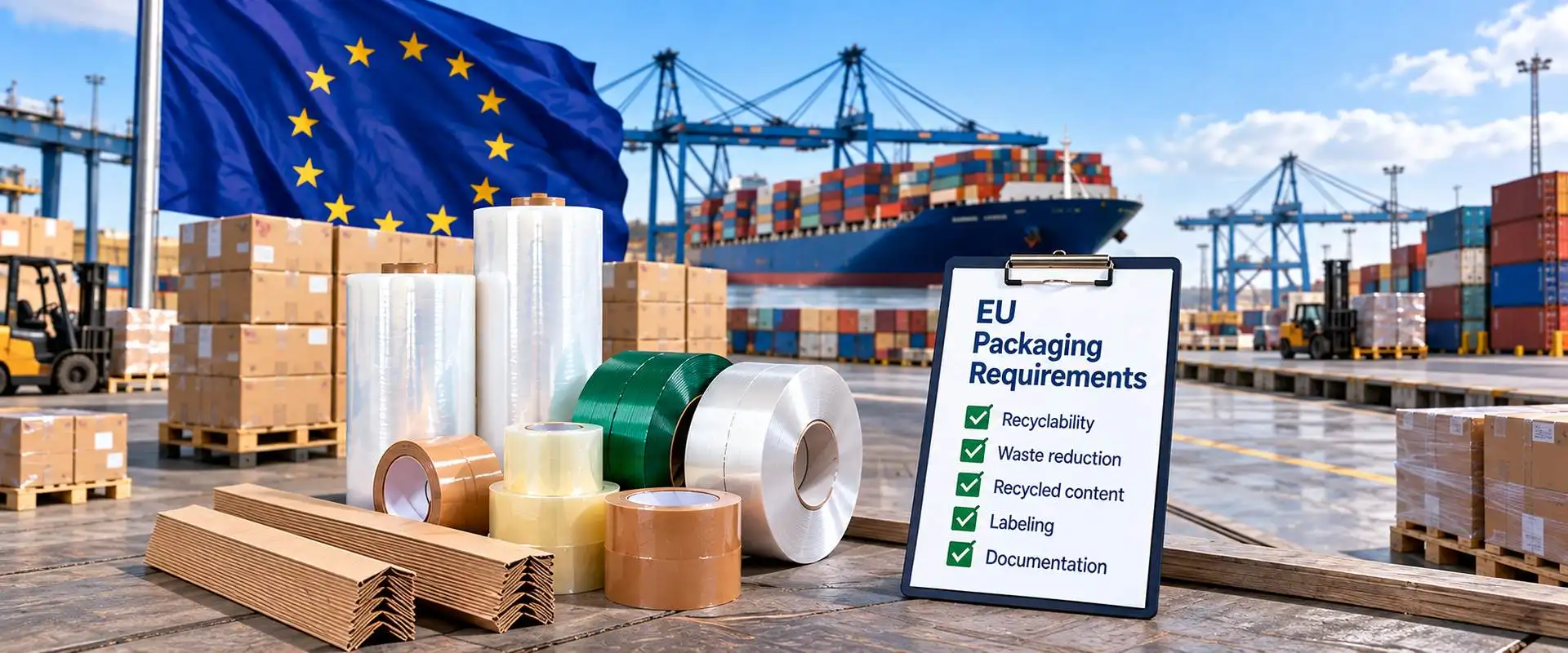
Exporters shipping products to the European Union should verify the compliance of their packaging materials—covering aspects such as recyclability, waste reduction standards, recycled content requirements, labeling specifications, treatment requirements for wooden pallets, and all relevant supporting documentation. The EU’s Packaging and Packaging Waste Regulation (PPWR)—officially Regulation (EU) 2025/40—came into effect on August 12, 2026. However, its requirements are being implemented in phases, with several key provisions scheduled to take effect by 2030. International suppliers are advised to familiarize themselves with these requirements as early as possible to avoid potential shipment delays or unnecessary costs resulting from the need to adjust packaging.
1. What is the EU’s Packaging and Packaging Waste Regulation (PPWR)?
The PPWR establishes a unified regulatory framework for all packaging products entering the EU market. Its scope encompasses packaging design, raw material composition, waste reduction, design for recyclability, and reuse.
The regulation applies to sales packaging, grouped/secondary packaging, and transport (logistics) packaging.
For export-oriented businesses, this means that even if goods are manufactured outside the EU, any packaging used to deliver products to European customers must comply with the regulation.
Consequently, when conducting compliance assessments, all packaging materials—including plastic stretch wrap, strapping, banding, and corrugated cardboard boxes—must be included in the scope of the review.
The PPWR does not apply a single, uniform set of technical standards to all types of packaging. The specific compliance obligations depend on factors such as the packaging material, its intended use, the responsible economic operator, and the implementation timeline set out in the regulation.
2. Must export packaging be recyclable?
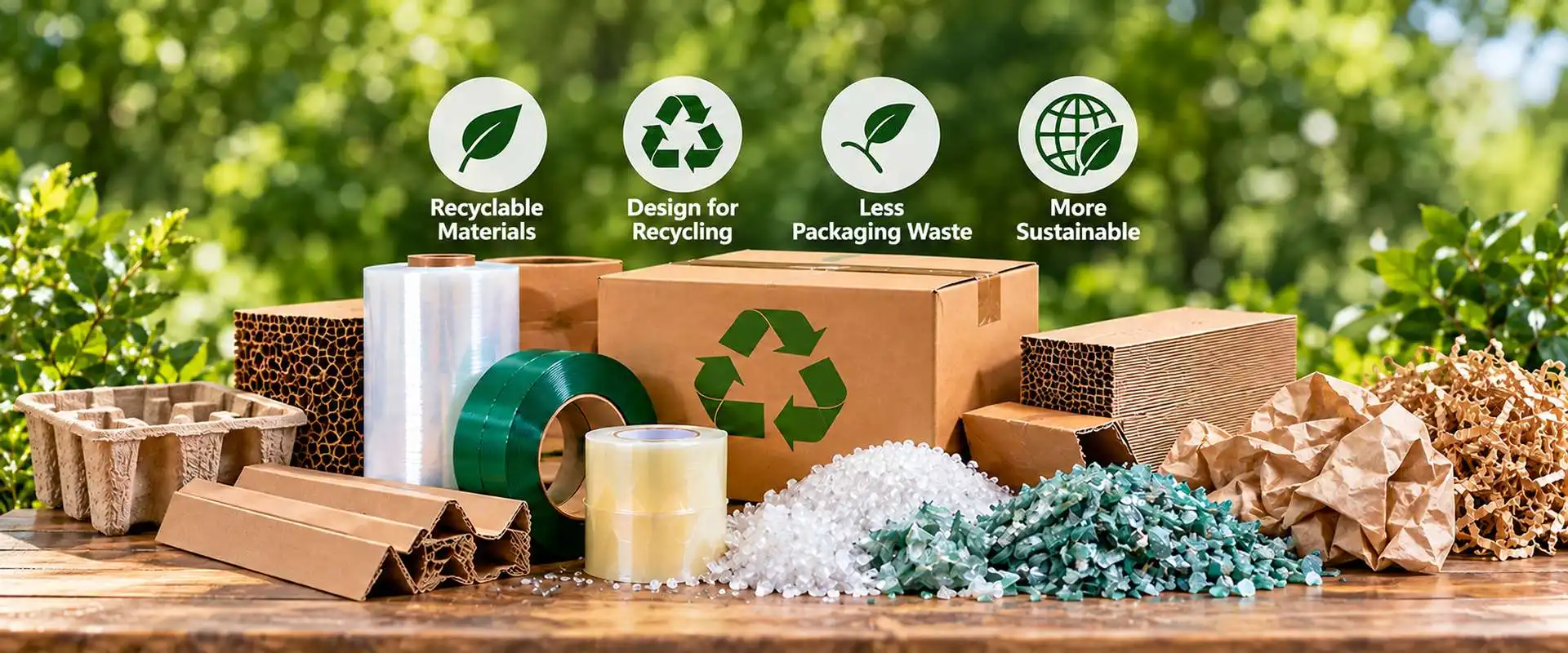
Recyclability is a core regulatory metric under the PPWR.
The regulation stipulates that, starting in August 2026, all packaging must meet basic recyclability requirements. More detailed design-for-recyclability standards and performance-based classification criteria will be introduced progressively according to an established timeline.
Exporters must take recyclability into account when selecting packaging materials and developing their overall packaging solutions. For instance, PE stretch wrap and PET strapping are made from different types of plastic. Whether they can be recycled depends not only on the material itself but also on the waste collection, sorting, and recycling infrastructure in the destination country.
Just because a material is theoretically recyclable does not mean that local recycling facilities have the capacity to process it.
Therefore, exporters must verify material labeling, packaging structure, and local recycling regulations with their European buyers.
3. How does the PPWR affect stretch wrap and plastic strapping?
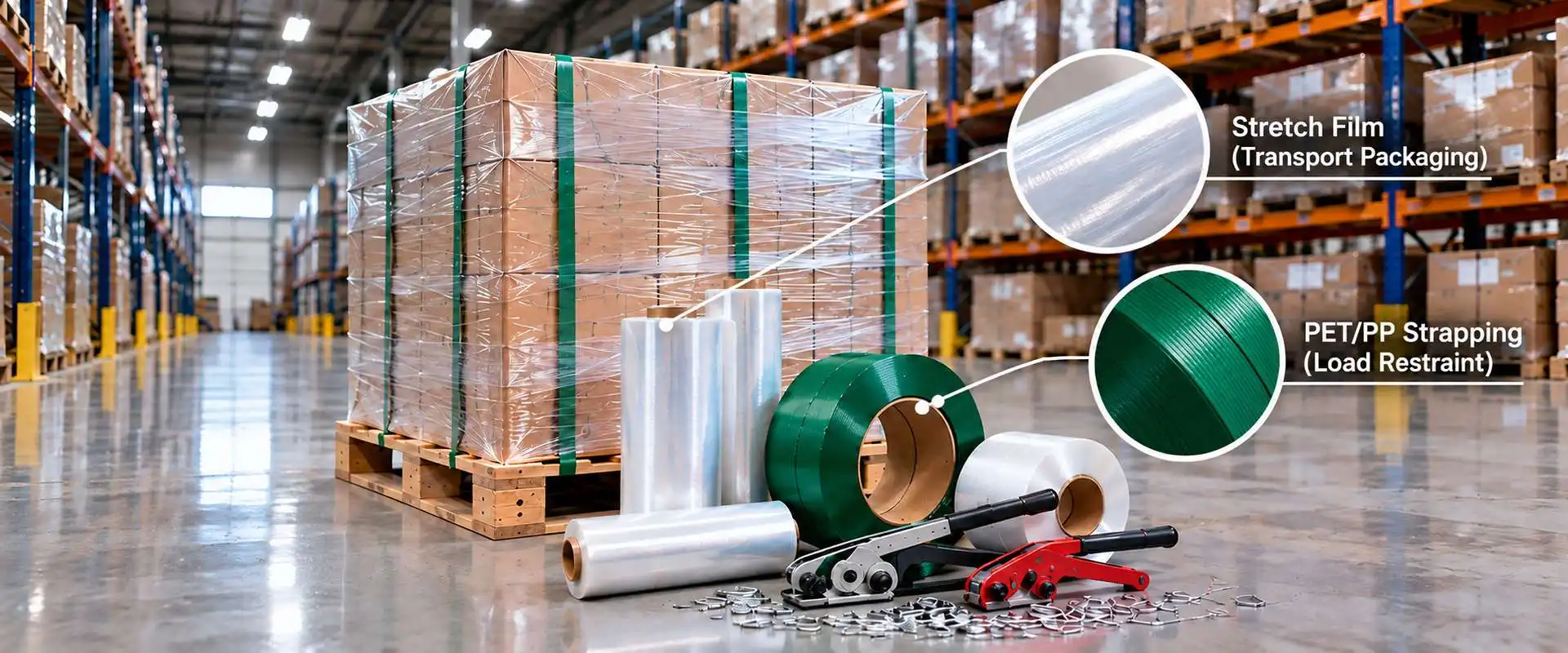
Stretch wrap and plastic strapping are common consumables used to secure palletized goods during transport.
Under the Packaging and Packaging Waste Regulation (PPWR), transport packaging is subject to various requirements, including future mandates related to reuse.
However, there is a specific exemption for pallet stretch wrap and strapping.
In February 2026, the European Commission will introduce new rules that exempt pallet stretch wrap and strapping from the strict requirement to be "100% reusable." This exemption does not mean these items are exempt from all other PPWR provisions, nor does it mean they are entirely exempt from future reuse-related targets.
Exporters should not assume that traditional stretch wrap or PET strapping will be outright banned by the regulation.
The correct approach is to consult with clients to determine which specific compliance requirements apply to your packaging solutions and logistics models.
For manufacturers and importers, a prudent optimization strategy—while ensuring the stability and safety of palletized goods—is to reduce the unnecessary use of plastic film.
4. Must plastic packaging contain recycled content?
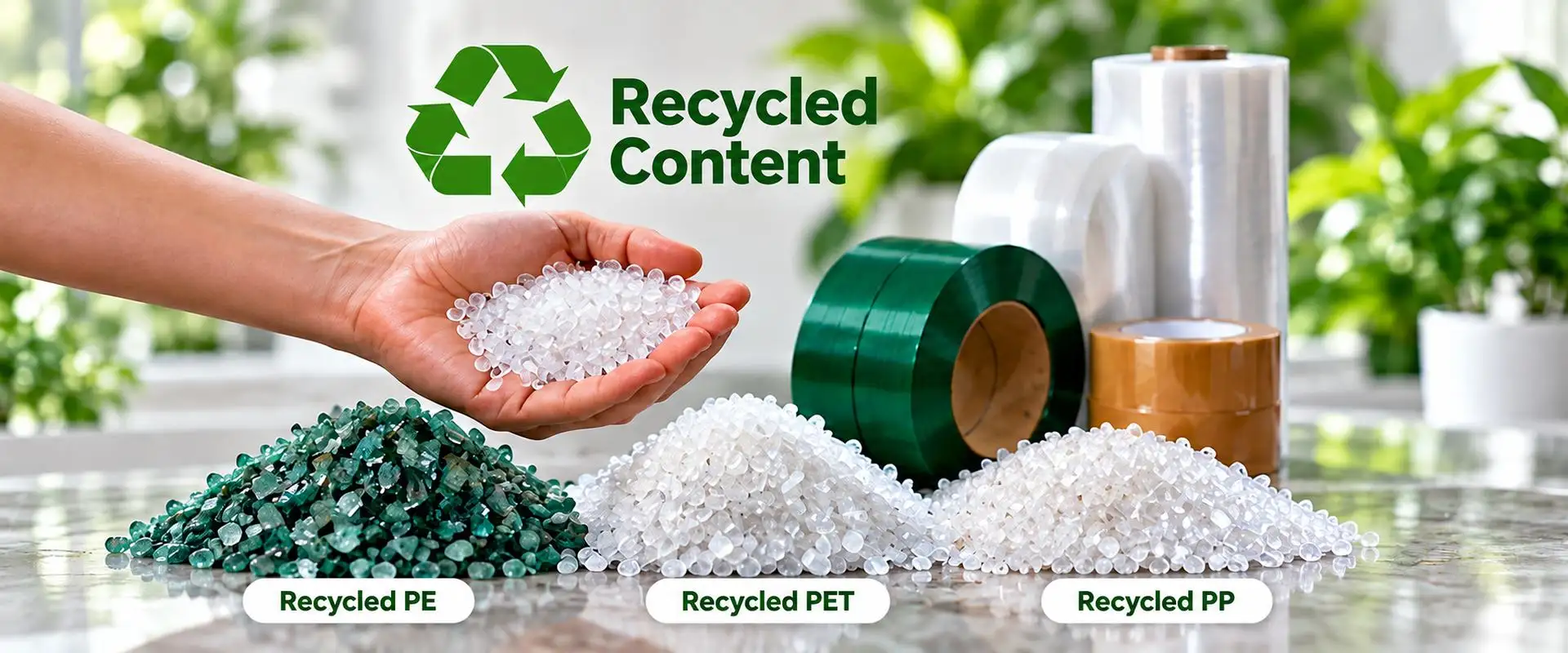
The PPWR establishes minimum recycled content requirements for certain types of plastic packaging. A key set of these targets will take effect in 2030, with additional regulatory requirements to follow.
However, these mandates vary by packaging category and include specific exemptions and special provisions.
Therefore, it would be incorrect to assume that all plastic packaging shipped to the EU as of 2026 will be required to contain recycled material. For products such as stretch film and plastic strapping, purchasers should first verify whether the specific packaging type and its intended application fall under the scope of regulations concerning recycled content.
If an order explicitly requires the use of products containing recycled material, it is essential to carefully assess the quality of the raw material, batch-to-batch consistency, and mechanical tensile properties to ensure suitability for the actual end-use scenario.
Purchasers may also request a declaration of recycled content from the supplier as supporting documentation.
It is important to note a distinction here: the Global Recycled Standard (GRS) is a voluntary certification; it should not be misconstrued as a mandatory legal requirement for all packaging exported to Europe.
5. Why is reducing packaging important for shipments to the EU?
Packaging reduction is a key focus of the European Union’s packaging policy.
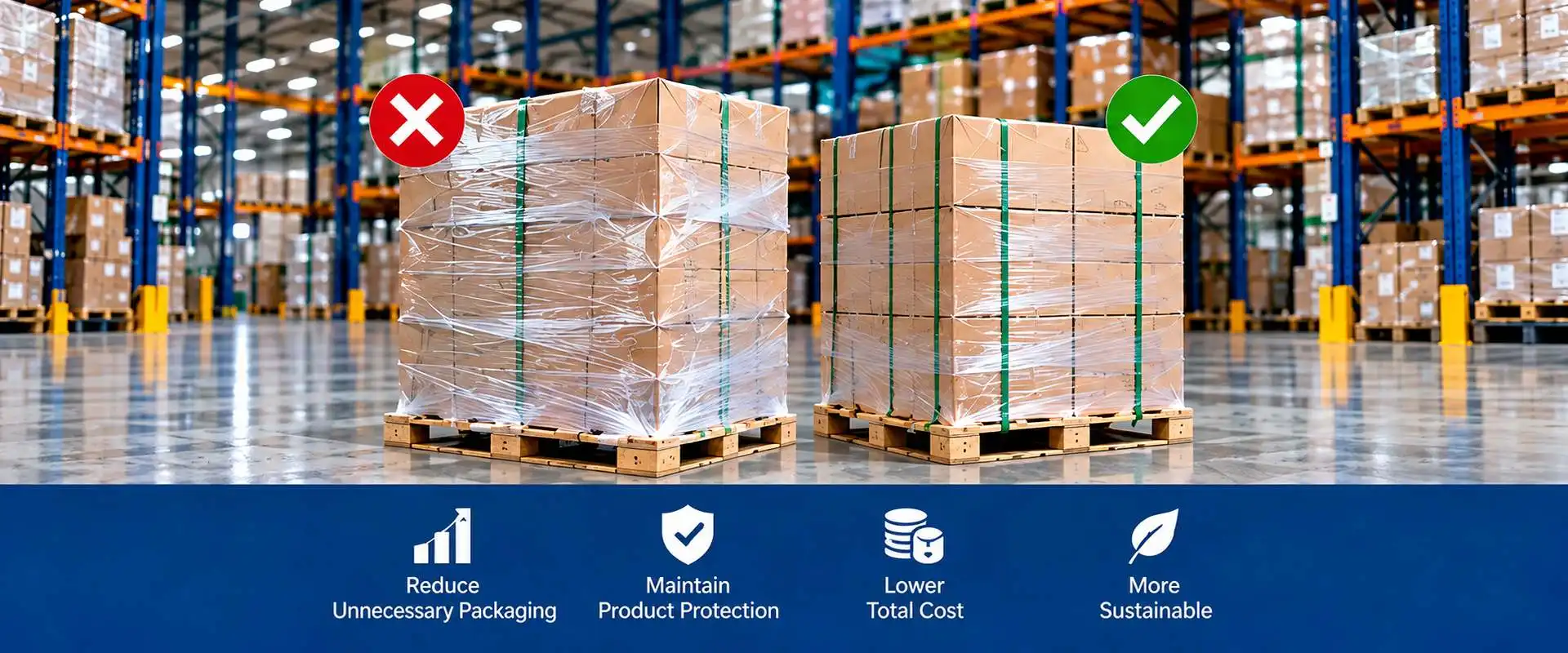
Excessive wrapping, the use of oversized cartons, and the addition of unnecessary packaging components all increase material consumption and generate more packaging waste.
However, reducing the weight or quantity of packaging materials must not come at the expense of product protection.
For example, while reducing the number of layers of stretch wrap saves on materials, it could cause the palletized load to become unstable, significantly increasing the risk of damage during transit.
Similarly, opting for thinner, cheaper cartons without considering their stacking strength makes goods more susceptible to damage during transport.
A well-developed packaging optimization strategy requires a comprehensive assessment of the following factors:
· Consumption of packaging materials
· Level of product protection
· Stability of the palletized load
· Transport and handling conditions
· Generation of packaging waste
· Total logistics costs
The core objective of optimization is not to reduce material usage indefinitely, but rather to eliminate redundant or ineffective packaging components while ensuring that the required level of protection is maintained.
6. What are the requirements for wooden pallets entering the EU?
Wooden pallets used in cross-border logistics must comply with phytosanitary regulations.
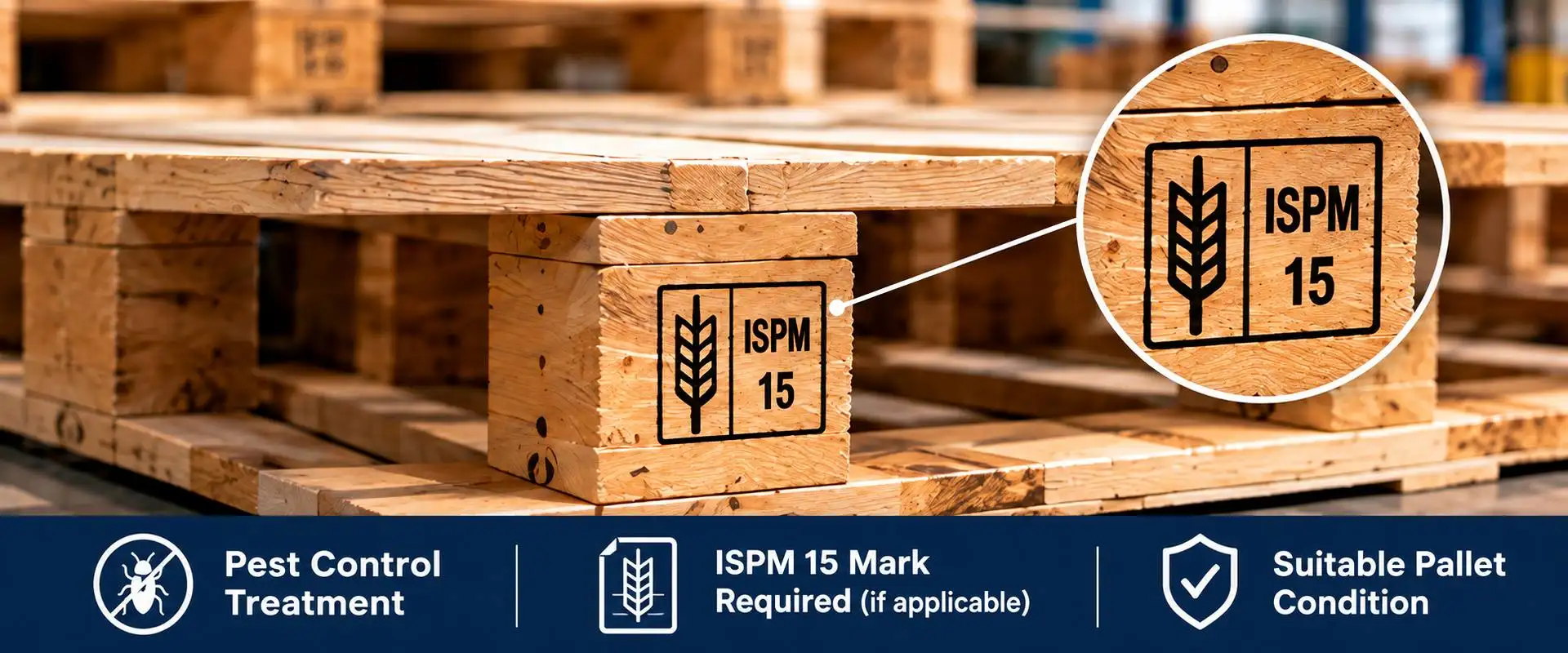
Under the International Standards for Phytosanitary Measures No. 15 (ISPM 15), wooden packaging entering the EU from outside the bloc must generally undergo approved phytosanitary treatment, have all bark removed, and bear the official IPPC mark.
Certain types of wooden packaging—specifically those that have undergone extensive processing—may be exempt from these requirements.
Exporters must verify that their wooden pallets meet the relevant standards before shipment.
The IPPC mark indicates only that the pallet has undergone the required phytosanitary treatment; it does not attest to the structural integrity of the pallet or its load-bearing capacity.
The maximum load capacity, physical condition, and compatibility with handling equipment (such as forklifts) must be assessed and confirmed separately.
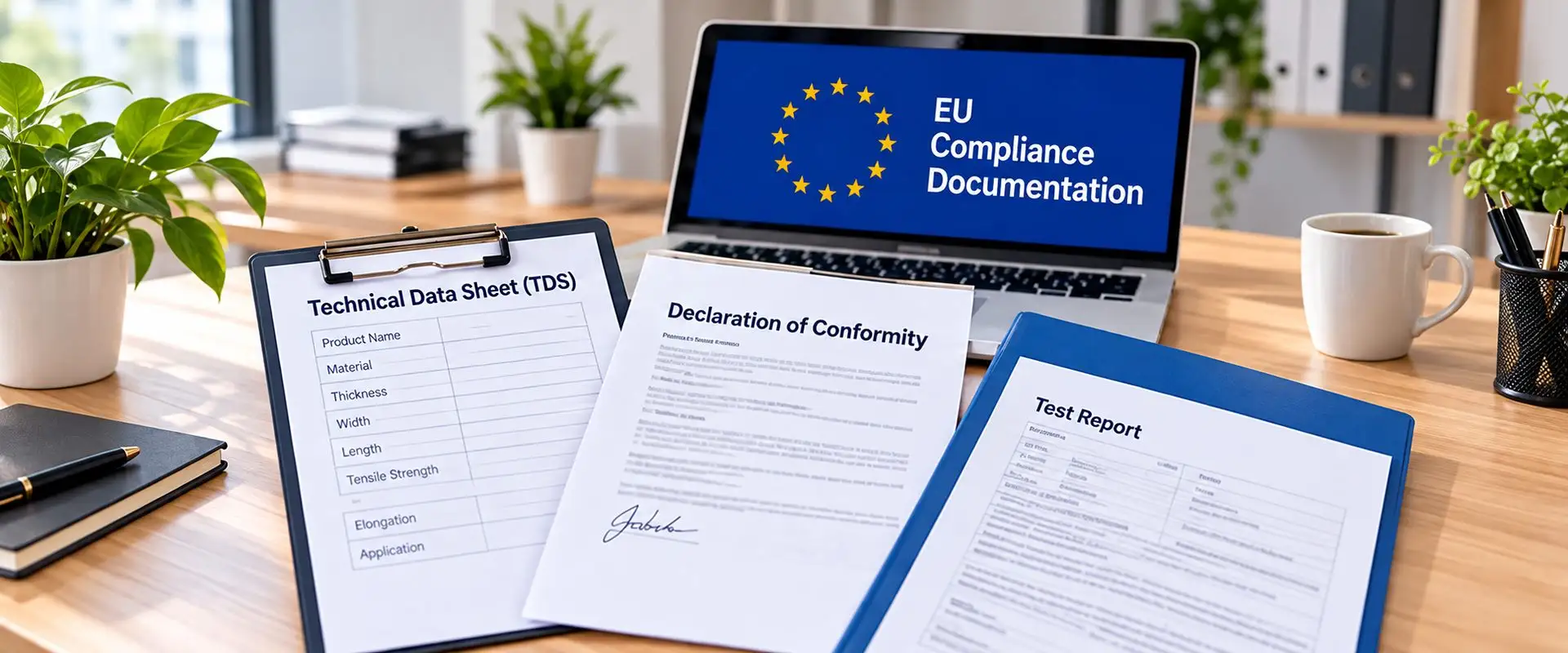
When European customers evaluate packaging suppliers, the availability of supporting technical documentation is becoming increasingly important. Depending on the product type and regulatory obligations, importers may request material specifications, composition details, test reports, declarations of conformity, and other technical documentation.
For stretch film, customers often request information such as film thickness, raw material composition, stretching parameters, and the percentage of recycled content.
For BOPP packing tape, it is generally necessary to provide the substrate type, adhesive type, total thickness, and various performance metrics. For PP/PET strapping, standard evaluation parameters include width, thickness, breaking strength, and elongation.
Exporters must distinguish between the following three categories of documentation and ensure they are not conflated:
Compliance documents: Proof required by mandatory regulations.
Product technical documents: Specifications and test data used for performance evaluation.
Voluntary certifications: Certifications obtained specifically to meet a customer’s tender or procurement requirements.
What should exporters verify before shipping packaging materials to the European Union?
A comprehensive self-assessment checklist for packaging compliance should cover the following key points:
| Packaging consideration | What exporters should confirm |
| PPWR applicability | Relevant requirements and implementation dates |
| Material composition | Plastic, paper, adhesive and other components |
| Recyclability | Applicable design and material requirements |
| Recycled content | Whether minimum-content rules apply |
| Packaging reduction | Avoid unnecessary materials without compromising protection |
| Wooden pallets | ISPM 15 compliance where required |
| Labeling | Applicable EU and destination-country requirements |
| Documentation | Technical information and required conformity evidence |
For companies sourcing packaging materials from overseas suppliers, clear and comprehensive product specifications can significantly enhance the efficiency of compliance reviews.
Yalan Pack offers a wide range of industrial and export-oriented packaging products, including stretch film (for both manual and machine application), BOPP carton sealing tape, PP/PET strapping, and paper edge protectors.
When submitting inquiries, European buyers should provide detailed information regarding required product dimensions, material standards, performance parameters, and any necessary supporting documentation.
The core approach to conducting a compliance assessment involves a holistic evaluation based on the product category, the specific packaging application, and the effective dates of relevant regulations. It is a mistake to assume that a single certification or a fixed set of specifications will automatically satisfy all EU regulatory requirements.


Contact Us
In This Article
Related Posts
PP Strapping for Cartons: Packaging Challenges in E-Commerce Logistics
Oct 21, 2026
Polypropylene Strapping Under Temperature Changes: Effects on Packaging Performance
Oct 21, 2026
PET Strapping Supplier: Heat-Seal Joint Strength and Sealing Reliability
Oct 21, 2026
PP Strapping Supplier Guide: Smooth vs Embossed Strapping for Automated Packaging
Oct 21, 2026


