







7 Key 2026 Packaging Trends Every Buyer Should Know
By hqt
Aug, 2026Related Posts
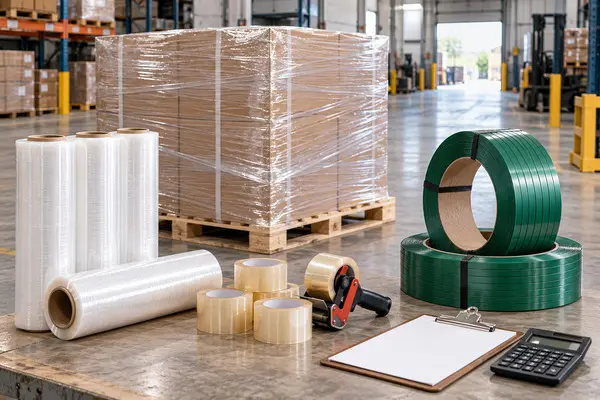
What Packaging Materials Are Commonly Used in North American Warehouses?
Oct 23, 2026
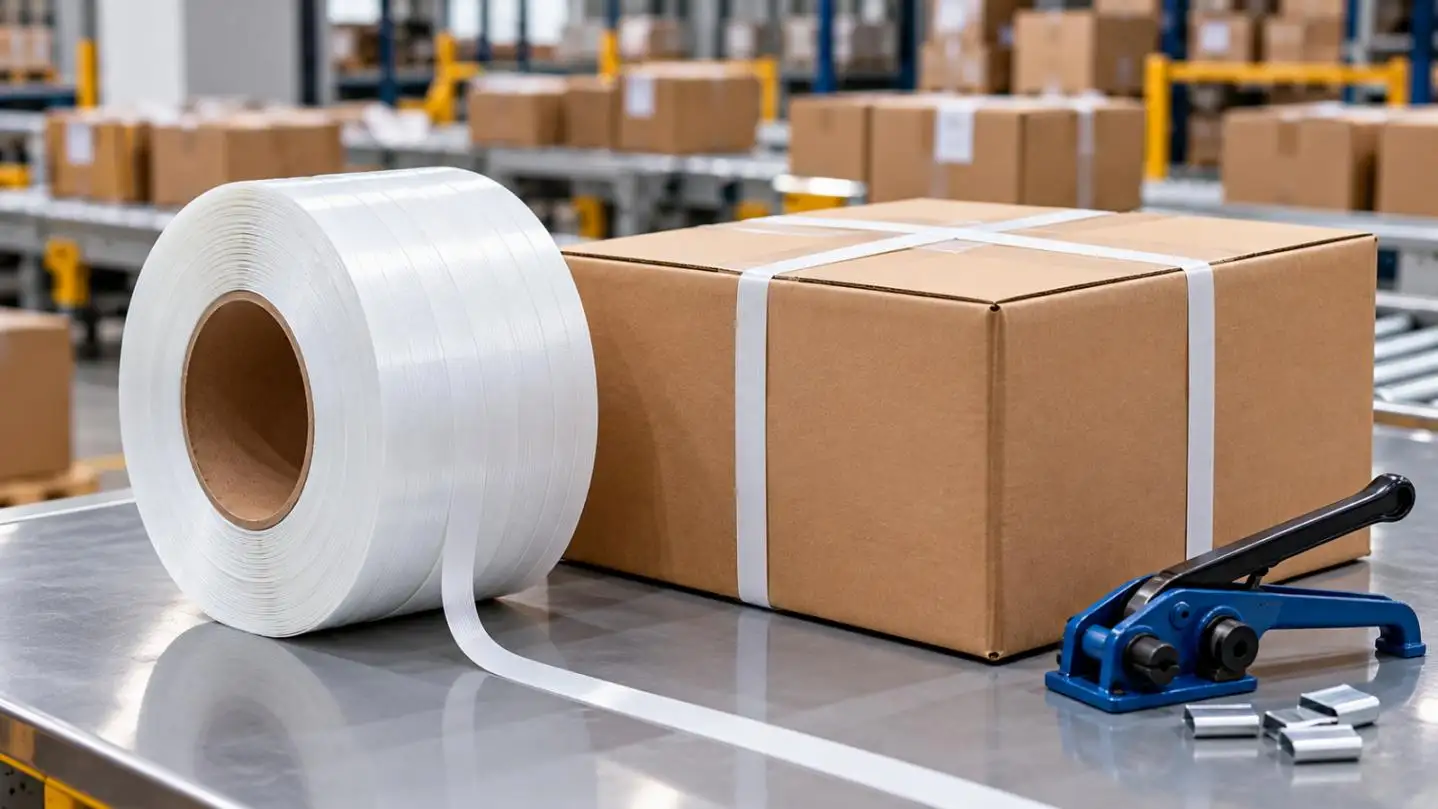
PP Strapping for Cartons: Packaging Challenges in E-Commerce Logistics
Oct 21, 2026

Polypropylene Strapping Under Temperature Changes: Effects on Packaging Performance
Oct 21, 2026

PET Strapping Supplier: Heat-Seal Joint Strength and Sealing Reliability
Oct 21, 2026
The packaging industry is evolving, often in ways that catch people by surprise.
For a long time, buyers primarily compared packaging products based on dimensions, thickness, and unit price. While these factors remain important, purchasing decisions in 2026 will be increasingly influenced by material usage, automation levels, recyclability, shipping efficiency, and other related factors.
For products such as stretch film, carton sealing tape, and strapping, this means that standard specifications alone are no longer sufficient to meet current demands.
Here are seven key packaging industry trends to watch in 2026, along with their practical implications for buyers:
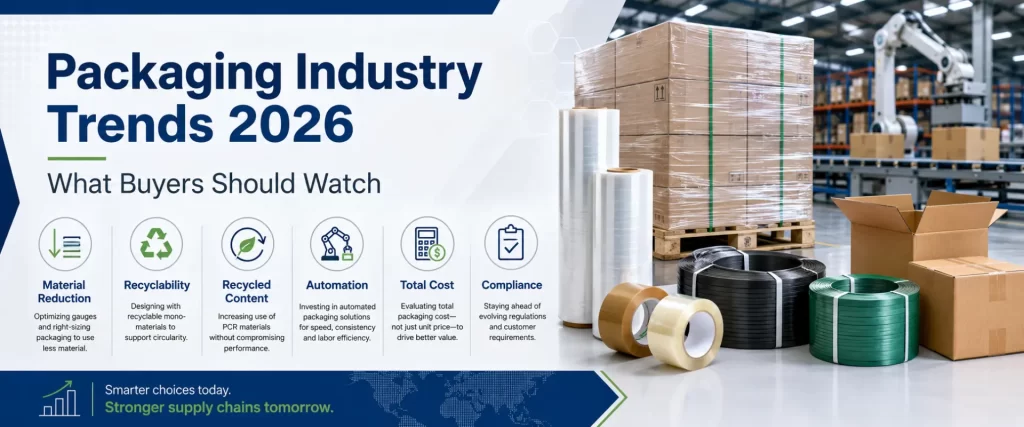
1. Reducing material usage without compromising performance
Reducing material consumption is one of the most prominent trends in the packaging sector. However, this does not simply mean a blind pursuit of thinner materials.
Take stretch film, for example: switching from a thick film to a thinner one can reduce plastic consumption, but only if the thinner film retains sufficient stretchability, holding force, and puncture resistance.
If a thinner film is more prone to tearing or requires extra wraps per pallet, the anticipated cost savings could easily vanish.
The same principle applies to tapes and strapping; reducing material usage is only viable if the packaging continues to perform its function effectively.
For buyers, the right question shouldn't be:
What is the thinnest material on the market?
Instead, it should be:
How much material do I need to safely package the goods or the entire pallet?
This shift in mindset—moving from purchasing based on specifications to purchasing based on actual consumption—is becoming increasingly important.
2. Recyclability is moving from marketing to actual procurement
In the past, recyclability was often confined to sustainability reports and marketing materials.
Today, it has become an increasingly critical factor in product development and purchasing decisions.
The EU's Packaging and Packaging Waste Regulation (PPWR) is one of the drivers behind this shift. The regulation imposes stricter requirements regarding recyclability, packaging waste reduction, and recycled content, with further provisions set to be implemented in phases over the coming years. This is crucial, even for relatively simple industrial packaging.
Purchasers are increasingly focused on the following questions:
· What materials is the packaging made of?
· Can the different components of the packaging be separated?
· Does the packaging contain recycled materials?
· Can the supplier provide detailed material information?
For suppliers, clear product information is becoming just as important as the product itself.
3. Recycled materials are increasingly important—but performance remains key
The packaging industry is paying growing attention to recycled plastics.
Regulations, particularly in Europe, are driving demand for packaging containing recycled content. The Packaging and Packaging Waste Regulation (PPWR) sets minimum recycled content targets for specific types of plastic packaging, though exact requirements depend on the packaging type and application.
For stretch film, this presents both opportunities and technical challenges.
Incorporating recycled content helps reduce the use of virgin plastic, yet the film must still maintain high performance in pallet wrapping applications.
Self-adhesion, stretchability, puncture resistance, and consistent performance are all critical.
This is why packaging containing recycled content should be evaluated through real-world application testing, rather than relying solely on percentages printed on specification sheets.
For many industrial buyers, the goal is to strike a balance between recycled content, performance, and cost.
4. End-of-line packaging is moving toward greater automation
Automation represents another major shift.
An increasing number of warehouses and factories are considering automated or semi-automated machinery for wrapping, case sealing, strapping, and pallet handling.
The reason is simple: automation enhances performance and consistency, reduces manual labor, and makes packaging output easier to control. Market research on end-of-line packaging confirms that automation and efficiency gains are the primary drivers of growth.
However, automation also changes the criteria for selecting packaging materials.
Take machine-grade stretch film, for example; it must perform consistently at the pre-stretch ratios set by the machine. A film suitable for manual wrapping may not yield the same results on an automatic wrapping machine.
The same applies to machine-grade strapping and carton sealing tape.
As packaging lines become more automated, the consistency of material performance becomes increasingly important.
If a material causes machine downtime, strap breakage, or inconsistent packaging results, any marginal cost savings on a single roll of film or tape will quickly be wiped out.
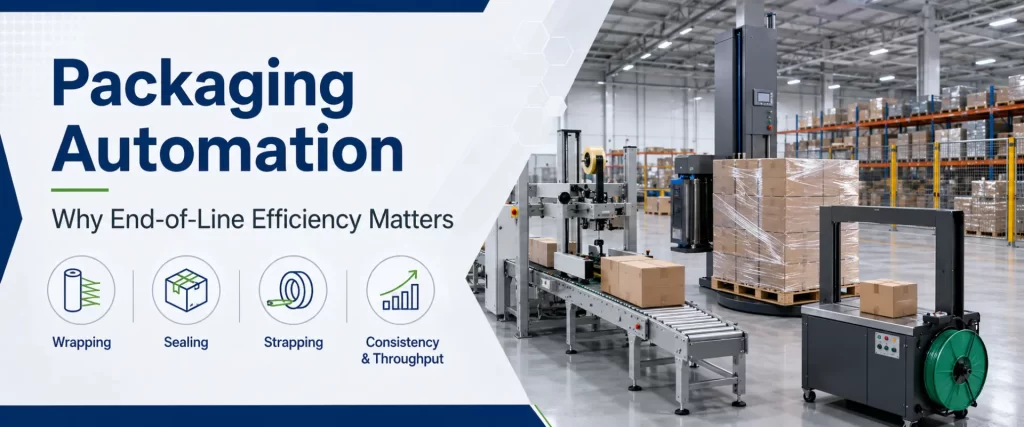
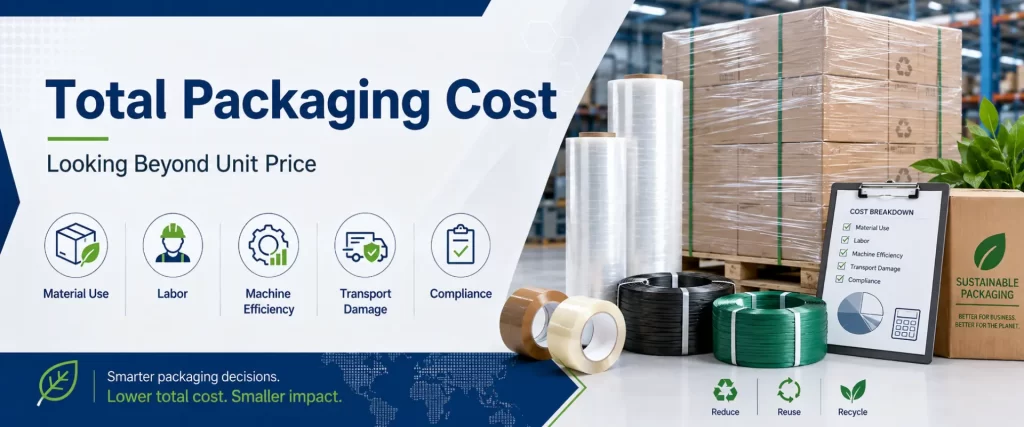
5. Buyers are increasingly focused on total packaging costs
While unit prices are easy to compare, calculating the total cost of packaging—though more complex—usually provides a more meaningful basis for decision-making. Take stretch wrap, for example:
Supplier A might offer a lower price per roll, yet Supplier B’s film—thanks to superior stretch properties or lower net consumption—could potentially wrap more pallets.
Which option is truly more cost-effective?
The answer lies in the packaging cost per pallet, not the price per roll. The same principle applies to packaging tape.
If one type of tape requires two or three strips to securely seal a carton while another requires only one, the tape with the lower unit price is not necessarily the more economical choice.
For strapping materials, factors such as material waste, load stability, and operational efficiency also impact the actual cost.
For this reason, experienced procurement professionals are shifting their focus beyond mere purchase price to consider a comprehensive set of factors:
Material consumption + labor costs + equipment efficiency + product damage + shipping performance.
6. Packaging specifications are becoming increasingly application-specific
Few packaging product specifications are perfectly suited for every market or product.
The performance requirements for stretch film used on standard lightweight carton pallets differ significantly from those for film used on heavy bagged goods, products with sharp edges, or irregularly shaped loads.
PP (polypropylene) strapping used for cartons differs from PET (polyethylene terephthalate) strapping used for heavier palletized loads.
Even carton sealing tape performs differently depending on factors such as the carton's surface material, recycled paper content, temperature, and storage conditions.
This means that packaging choices are increasingly tailored to specific application scenarios.
For buyers, providing information about the actual application scenario is far more effective for obtaining precise recommendations than simply providing dimensional data.
Useful information might include:
· Load weight
· Pallet dimensions
· Product shape
· Wrapping/packaging method
· Storage temperature
· Current packaging consumption
· Existing issues (e.g., breakage or load instability)
The better the application scenario is understood, the easier it is to avoid over-packaging or under-packaging.
7. Documentation and compliance data are now integral parts of the product
A packaging product is no longer just the roll of film, the strap, or the carton that arrives at the customer's warehouse.
In many markets, the information accompanying the product is becoming increasingly important.
Buyers may now require details such as material composition, recycled content, technical specifications, test reports, or declarations of conformity.
This trend is particularly evident in Europe, where packaging regulations are becoming increasingly detailed and harmonized. The EU also plans to implement unified packaging labeling requirements starting in 2028 to improve waste sorting.
For importers and exporters, this means that document management must be more standardized and organized.
If suppliers can clearly articulate product materials, specific specifications, and available supporting information, the procurement process can be greatly simplified.
In short, packaging compliance is becoming a key indicator of supplier capability.
What do these trends mean for packaging buyers?
Most of the trends mentioned above point in the same direction. Packaging is becoming increasingly sophisticated and scientifically driven.
Buyers are paying greater attention to material usage, performance, compatibility with machinery, recyclability, and relevant supporting documentation.
For stretch film, carton sealing tape, and strapping, this does not mean that traditional specifications have become obsolete; metrics such as thickness, width, length, and strength remain important.
However, these factors must now be evaluated in the context of actual packaging processes.
Before altering specifications or selecting a new supplier, it is essential to conduct a comprehensive review of the entire application scenario:
· What is being packaged?
· What is the specific packaging method?
· What is the current material consumption?
· Where will the products be shipped?
· And what performance or compliance requirements must be met?
The optimal packaging solution is often not the one with the most impressive specifications,
but rather the one that accomplishes the task using the right amount of material while ensuring a truly reasonable total cost.
Share on Social:


Contact Us
In This Article
Related Posts
What Packaging Materials Are Commonly Used in North American Warehouses?
Oct 23, 2026
PP Strapping for Cartons: Packaging Challenges in E-Commerce Logistics
Oct 21, 2026
Polypropylene Strapping Under Temperature Changes: Effects on Packaging Performance
Oct 21, 2026
PET Strapping Supplier: Heat-Seal Joint Strength and Sealing Reliability
Oct 21, 2026


