







About the European Packaging Market: Buyer's Guide for 2026
By hqt
Aug, 2026Related Posts


Europe has always been a very important packaging market, but European companies' perceptions of packaging are undergoing a significant shift.
Price and product performance remain crucial. Stretch film still needs to securely wrap pallets, packing tape still needs to seal cartons, and strapping still needs to be strong enough to withstand loads. However, European buyers are increasingly focusing on factors beyond these basic requirements.
Material usage, recyclability, recycled content, packaging waste, and compliance are slowly becoming part of everyday purchasing decisions.
For manufacturers, importers, and distributors working in the European market, this means choosing packaging is no longer simply about finding standard specifications, but rather about finding the right balance between performance, material consumption, cost, and environmental requirements.
What Changes Are Quietly Occurring in the European Market?
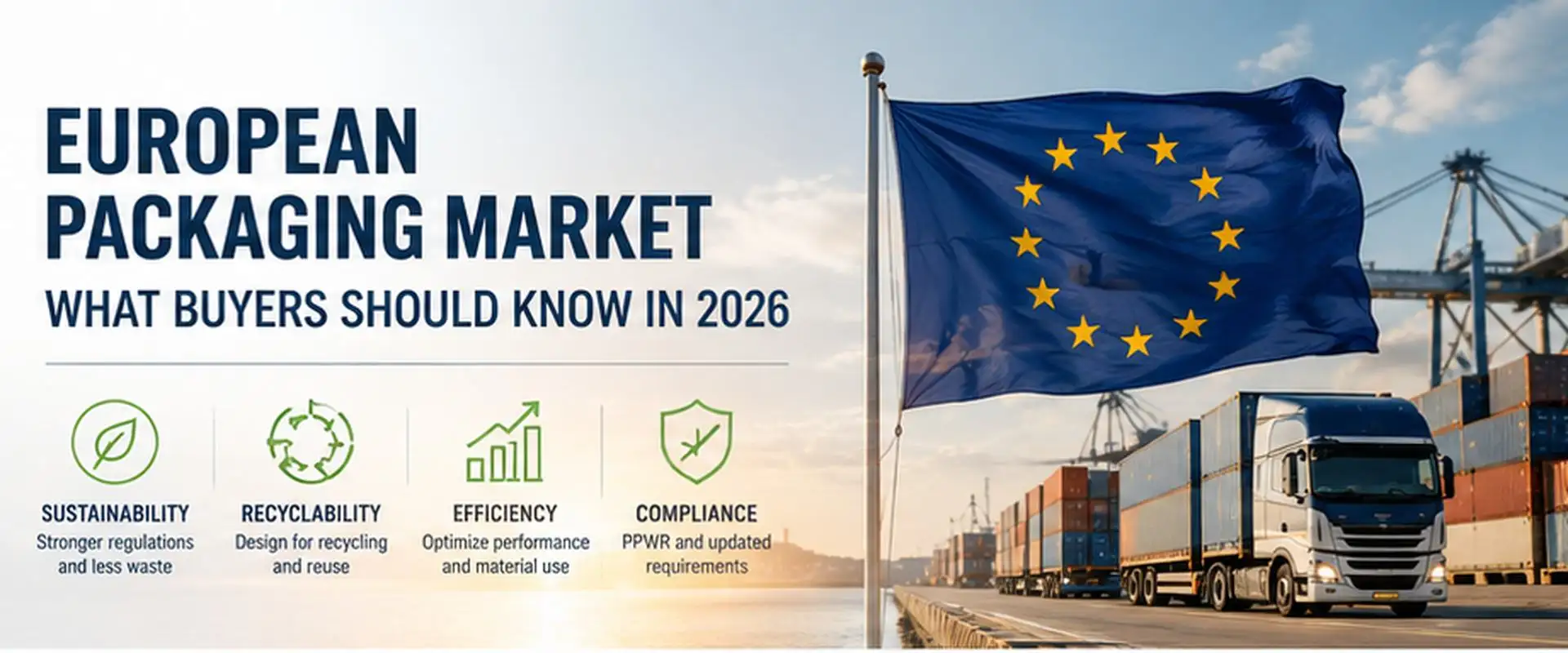
One of the biggest changes is the EU's new Packaging and Packaging Waste Regulation (PPWR).
This regulation aims to reduce packaging waste and drive the European packaging market towards greater recyclability, wider use of recycled materials, and more efficient packaging utilization.
One requirement of the Packaging and Packaging Waste Regulation (PPWR) is that packaging sold in the EU market must meet recyclability requirements. The regulation also sets minimum recycled material content targets for plastic packaging, with different requirements for different categories.
For plastic packaging outside certain specific categories, the regulation stipulates that from 2030, the minimum recycled material content target is 35%, subject to detailed rules, exceptions, and implementation measures outlined in the regulation.
This doesn't mean all packaging products need to change immediately. However, it does mean that European importers and packaging suppliers are already considering how their product lines might need to evolve in the coming years.
Reducing Material Usage Doesn't Mean Lowering Packaging Performance
Reducing packaging waste sounds simple: use less material.
But in reality, it's much more complex.
Take stretch film as an example. A company using 23-micron film might ask if it can switch to 17-micron or 15-micron film to reduce plastic consumption.
Sometimes it can.
However, simply reducing film thickness without considering its performance can create other problems. If thinner films are more prone to tearing, or if more layers of film need to be wrapped around each pallet, the anticipated material savings may not be achieved.
A more appropriate question is:
How much film is actually needed to secure a pallet?
Film thickness, tensile properties, puncture resistance, holding power, pallet weight, and wrapping equipment all influence the answer.
Therefore, reducing film thickness should be considered a packaging test, not just a change in specifications.
European Stretch Film Market
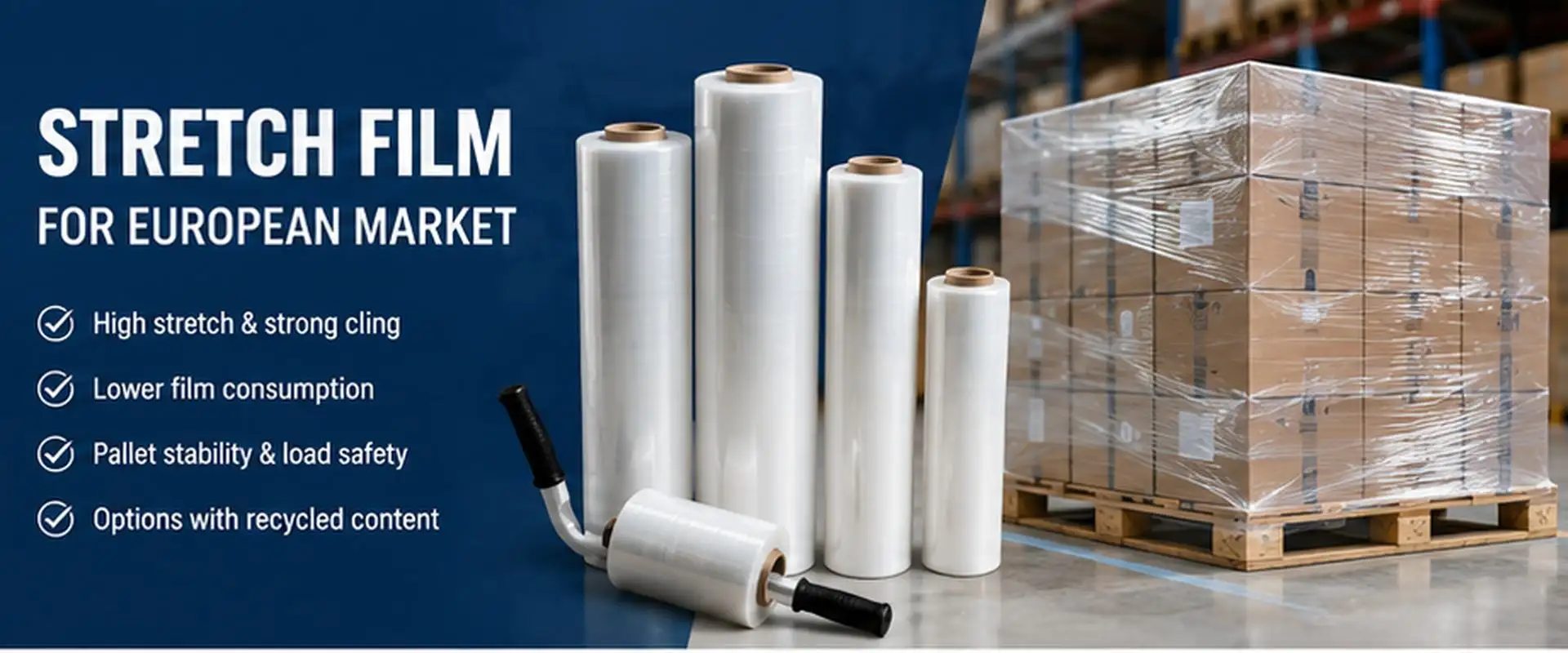
Stretch film is widely used in European warehouses, distribution centers, manufacturing plants, and logistics operations for pallet stabilization and transport protection.
For buyers, certain factors are becoming increasingly important.
Film consumption per pallet is one of them. The true cost of packaging is not simply a matter of comparing prices per kilogram or per roll.
A film with excellent tensile properties can reduce the amount of material required per pallet while maintaining the required load-bearing stability.
Machine compatibility is another important factor. For operations using automatic or semi-automatic wrapping equipment, the film needs to be consistent with the machine's pre-stretch settings and wrapping program.
Furthermore, there is the recycled material content . As European regulations become increasingly sophisticated, recycled stretch films are likely to become increasingly important for buyers supplying the EU market.
However, the recycled content should still be evaluated in conjunction with packaging performance. Our goal is not merely to add recycled materials, but to produce packaging that effectively fulfills its function.
What about packaging tape?
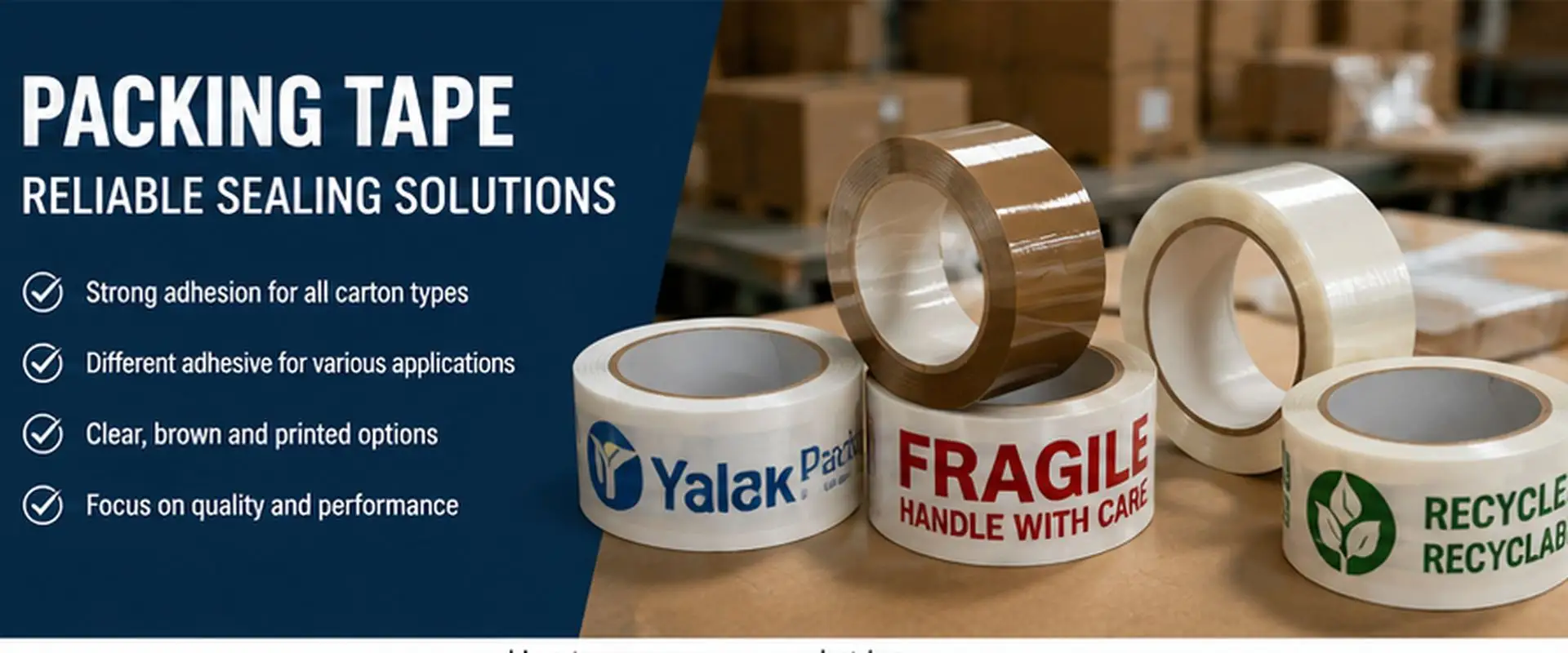
Packaging tape faces similar pressures, although the technical aspects may differ.
For European importers or distributors, tape selection typically begins with considerations such as carton weight, carton surface, storage conditions, and usage methods.
The tapes required for heavy-duty recycled cartons transported through complex logistics chains may differ from those required for lightweight cartons packaged and stored indoors.
This becomes especially important as recycled paperboard continues to be used in packaging. The surface characteristics of recycled cartons can vary, therefore, tape selection must consider its adhesive properties, not just its thickness.
Furthermore, as recyclability becomes increasingly important, buyers are paying closer attention to the material structure of packaging products.
Therefore, for suppliers, being able to clearly provide information about the tape substrate, adhesive properties, dimensions, and packaging is more valuable than simply providing product information.
Different Uses for PP and PET Strapping
Another common mistake when purchasing strapping is assuming that all plastic straps are interchangeable.
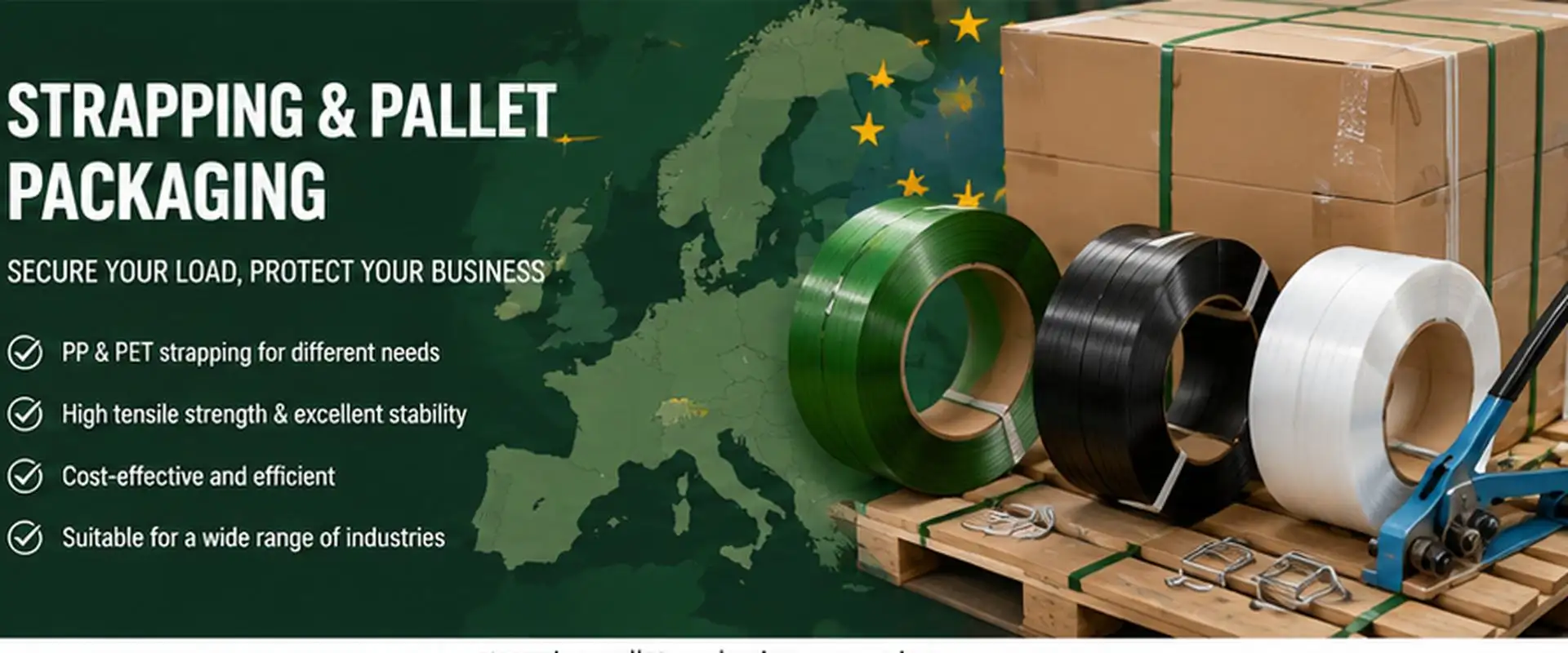
PP (polypropylene) strapping is typically used for lighter cartons, bundles, and general packaging applications. It is flexible and relatively cost-effective, making it suitable for securing many everyday goods.
PET (polyester) strapping is generally used when higher tension and load stability are required. It is commonly used for heavier palletized loads and industrial applications.
European buyers looking to reduce packaging materials should not simply opt for lighter strapping without careful consideration.
Factors such as load weight, transport conditions, required tension, and how the product behaves during storage and transit determine the appropriate type of strapping.
Reducing packaging material only makes sense if the load remains securely fastened.
Reuse is becoming a key topic in discussions about transport packaging.
The PPWR (Packaging and Packaging Waste Regulation) also raises the issue of reuse.
Starting in 2030, the regulation introduces reuse requirements for certain types of transport packaging used within the EU. These rules cover a range of transport packaging formats, specifically targeting flexible packaging, pallet stretch wrap, and strapping used to stabilize and protect palletized products.
Given that these rules involve specific scopes, responsibilities, and exemptions, this area warrants close attention—particularly regarding imported goods and intra-EU transport.
For international packaging buyers, the practical implication is straightforward: transport packaging should now be viewed as part of a compliance strategy, not just a logistics cost.
Companies importing products into Europe may need to pay closer attention to what happens to the packaging within the European supply chain after the goods arrive at the initial warehouse.
Cost remains important—but buyers are focusing on total packaging costs.
Sustainability does not mean European buyers are no longer concerned with price.
Quite the opposite.
The European Flexible Packaging Association reports that prices for various flexible packaging materials are facing significant upward pressure for the first quarter of 2026, driven by rising raw material and energy costs as well as geopolitical uncertainty. Consequently, raw materials, energy, freight, and labor all influence packaging costs.
This makes the total cost of packaging a more valuable metric than a simple comparison of unit prices.
For stretch film, this might mean calculating the cost per pallet wrapped.
For packaging tape, it might mean considering how many meters of tape are required to reliably seal each carton. For strapping, this means considering whether the chosen specification can securely hold the load without wasting material or causing damage during transit.
A lower price per roll does not always mean the cheaper packaging solution is the right choice.
What questions should European packaging buyers ask their suppliers?
When sourcing packaging for the European market, buyers should look beyond just the price.
First, it is essential to understand clear product specifications and material details. For stretch film, this might include thickness, width, net film weight, core weight, stretch properties, and intended use.
For packaging tape, buyers should understand the backing material, adhesive type, thickness, roll dimensions, and intended carton application.
For strapping, width, thickness, break strength, and application method are all critical metrics.
Compliance documentation is also becoming increasingly important. As EU packaging requirements evolve, buyers may need to obtain more reliable information from their supply chains regarding material composition, recycled content, and product specifications.
The clearer these details are before placing an order, the easier it is to compare products effectively and prepare for ever-changing market demands.
Where is the European packaging market heading?
The direction is becoming increasingly clear: reducing unnecessary packaging, improving recyclability, placing greater emphasis on recycled materials, and strengthening compliance documentation across the entire supply chain.
The Packaging and Packaging Waste Regulation (PPWR) also requires EU member states to reduce per capita packaging waste by at least 5% by 2030, 10% by 2035, and 15% by 2040, compared to 2018 levels.
However, this does not mean the fundamental purpose of packaging has disappeared.
Pallets still need to be delivered safely. Cartons still need to remain sealed. Heavy loads still need to be secured.
Finding ways to reduce unnecessary material—rather than simply shifting the problem elsewhere—will be a challenge for buyers of stretch film, packaging tape, and strapping in the coming years.
Testing, accurate specifications, and communication between buyers and packaging suppliers are becoming increasingly important. For companies sourcing packaging consumables for the European market, now is an opportune time to re-evaluate current packaging practices—considering factors such as material consumption, performance, and material composition, as well as whether relevant documentation meets future market expectations.
Share on Social:


