







LLDPE Stretch Film Wholesale: Cast vs Blown Film Technology
By hqt
Oct, 2026Related Posts
PP Strapping for Cartons: Packaging Challenges in E-Commerce Logistics
Oct 21, 2026
Polypropylene Strapping Under Temperature Changes: Effects on Packaging Performance
Oct 21, 2026
PET Strapping Supplier: Heat-Seal Joint Strength and Sealing Reliability
Oct 21, 2026
PP Strapping Supplier Guide: Smooth vs Embossed Strapping for Automated Packaging
Oct 21, 2026
LLDP Stretch Film Wholesale customers often find wide differences in pricing for film, puncture resistance, consistency in gauge (thickness) and pallet containment, even among films that are made with LLDPE. The main reason for these differences is the difference in the technologies used in extrusion, namely Cast and Blown extrusion.
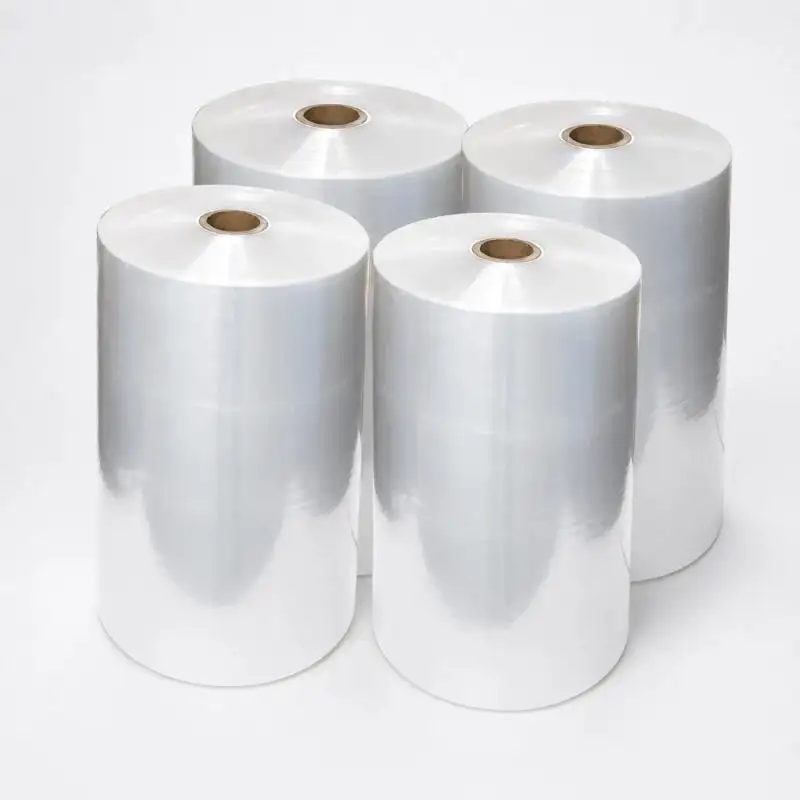
A knowledge of these technologies aids packaging distributors and industrial buyers to identify the films most suitable for their requirements, based on load and converting characteristics, as well as the film's actual packaging and utilization costs, instead of just its roll costs.
How Cast and Blown LLDPE Stretch Films are Produced
Cast Film Extrusion
Cast stretch films are made by extruding LLDPE, in a flat configuration, between a pair of chill rolls. As with blown films, the chill rolls control the final thickness of the films. Cast films typically show good clarity.
The critical manufacturing processes and characteristics include:
•Gauge Consistency: Uniform film formation requires a balanced interference from the cooling and supporting rolls and die flow.
•Optical Clarity: Rapid cooling reduces large crystalline structures and haze.
•Processing Stability: The winding stability downstream affects the slitting and rewinding upstream.
•Blown Film Extrusion: A cylindrical film is formed by extruding a molten polymer through an annular die and then collapsing the air blown cylindrical bubble.
The properties of blown films are largely influenced by the conditions of molecular orientation and cooling during the blowing and the film's use, as well as the properties of the polymers themselves.
While the difference in extrusion technology might influence performance, there are several other factors including the density of the resin, its molecular weight distribution, the presence of metallocene catalysts, and the use of other polymers and additives in the structure, that might greatly affect the film's performance.
Cast vs Blown LLDPE Stretch Film: Performance Comparison
| Property | Cast LLDPE Film | Blown LLDPE Film |
| Production method | Flat-die extrusion | Annular-die extrusion |
| Cooling | Chill rollers | Air cooling |
| Thickness uniformity | Well-controlled | Process-dependent |
| Puncture resistance | Well controlled | Often preferred for demanding loads |
| Unwind noise | Usually lower | Often higher |
| Tear resistance | Depends on film structure | Advantages in certain grades |
| Typical use | Regular pallets, converting | Irregular loads, demanding wrapping |
These tendencies are based on processing experience, not guaranteed performance.
Why Elongation Does Not Mean Load Containment
Three properties are to be assessed individually:
•Elongation at break: How far film stretches before breaking in a tensile test.
•Elastic recovery: Amount of tension retained by the film after it has been stretched.
•Containment force: Amount of force film exerts on a wrapped pallet.
Elongation is inversely proportional to containment force. Thus, a film with the highest elongation may not give the best containment in wrapping.
Tight adhesion of the layers during wrapping is critical to wrap integrity.
Which Film Works Best for Different Packaging Applications?
Film selection should follow the actual load profile rather than a fixed cast-versus-blown preference.
| Application | Recommended Evaluation |
| Uniform carton pallets | Cast film clarity, gauge consistency, consumption |
| Sharp-edged industrial goods | Puncture energy, tear propagation, edge protection |
| High-speed machine wrapping | Unwind stability, sustainable pre-stretch, break frequency |
| Manual wrapping | Handling characteristics, cling, operator control |
| Export pallet packaging | Containment retention, vibration exposure, damage risk |
For automatic wrapping, the machine's pre-stretch system must match the film's working range. Excessive stretching can create localized thinning and initiate film breaks.
Hand wrapping generally involves less controlled tension. Jumbo rolls, meanwhile, are upstream materials for converting into finished hand or machine rolls—not a separate extrusion technology.
LLDPE Stretch Film Wholesale: Manufacturing Precision and Specifications
At Yalan Pack, our cast-extruded LLDPE jumbo films are intended for industrial converting, bulk distribution, and finished stretch-film production.
Our published product information includes the following available specifications:
| Manufacturing Parameter | Yalan Pack Data |
| Film thickness | 10–80 μm |
| Film width | 100–1500 mm |
| Advertised stretch rate | Up to 350% |
| Core sizes | 25, 38, 50, 76 mm |
| Manufacturing process | Cast extrusion |
| Customization | Width, length, color, OEM labeling |
The advertised 350% stretch capability applies to suitable offerings. It should not be interpreted as a guaranteed operating pre-stretch ratio for every film grade.
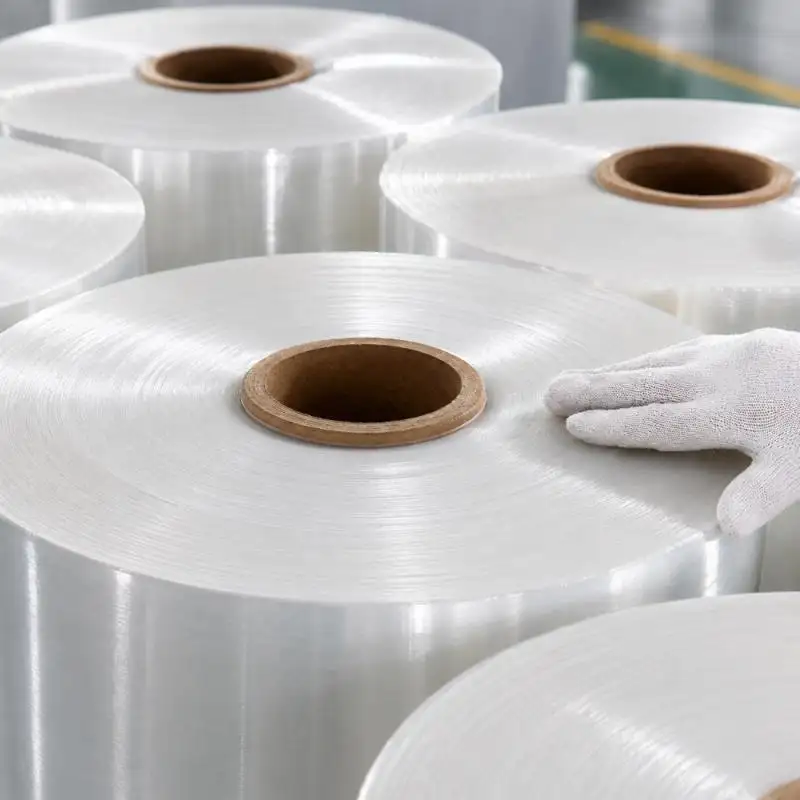
The Importance of Precision in Manufacturing
Thickness variation impacts roll winding tension and behavior during slitting, roll geometry and consistency of finished film.
In sensitive-precision purchasing, the following should be confirmed:
•Nominal gauge and permitted thickness variation
•Cross-web gauge profile and consistency roll-to-roll
•Net weight and quality of winding, and dimensions of core
•Batch inspection and documentation
•Traceability of batch
Establishing the criteria above can lead to measurable acceptance limits prior to bulk production.
How to Check Stretch Film Quality before Buying in Bulk
Documentation provided by the stretch film supplier should be supported by comparable tests from a recognized laboratory.
| Standard | Evaluation Purpose |
| ASTM D882 | Tensile strength and elongation |
| ASTM D5748 | Protrusion puncture resistance |
| ASTM D5458 | Peel cling performance |
| ASTM D5415 | Load containment under simulated vibration |
| ASTM D4649 | Stretch-film selection and application |
While sample thickness and conditioning should be uniform, other factors such as how a test sample is wound or rolled, and what methods are used to evaluate or measure the sample, should be consistent.
ASTM D5415 provides a basis for comparison of wrapping systems, but results from this test should not be relied upon for actual transportation performance.
When buying LLDPE Stretch Film in bulk, users should rely on documentation and sample testing provided by the supplier, as well as conduct a pallet trial.
Wholesale Film Cost: Price Per Roll vs. Cost Per Pallet
The least expensive roll of stretch film doesn't mean the lowest pallet cost.
A fair comparison starts with a pallet cost calculation:
Film Cost per Pallet = Film Consumption (kg) × Film Price per kg
Wholesale assessment should include consideration for film yield, net roll weight, pre-stretch settings, wrapping cycle time, downtime and transport damage.
For converters, master-roll utilization and rewinding waste must also be included.
Choosing a Reliable LLDPE Stretch Film Wholesale Supplier
When evaluating LLDPE stretch film, buyers should consider anti-slip properties, dimensional stability and hardness of the film. Other considerations should include tensile strength, stretch-break, elongation, prompt recovery, and humidity.
We supply cast LLDPE stretch film in jumbo rolls to converters and distributors, as well as to the industrial and bulk wholesale markets. We provide consultation for film evaluation and customization.
LLDPE Stretch Film has many excellent characteristics and is widely used in pallet wrapping and bundling. It is smooth, safe and strong. If you need LLDPE Stretch Film for pallet wrapping and bundling, and you are looking for a film that is of high quality and cost effective, you have come to the right place.
FAQs
Q1. What type of LLDPE stretch film does Yalan Pack supply?
Yalan Pack supplies cast-extruded LLDPE jumbo stretch film for industrial converting, wholesale distribution, and pallet packaging applications.
Q2. What thickness options are available from Yalan Pack?
Yalan Pack lists LLDPE stretch film thicknesses from 10 to 80 microns, depending on product specifications and application requirements.
Q3. What film widths does Yalan Pack offer?
Yalan Pack offers listed film widths ranging from 100 to 1500 mm, with custom width options available for different converting requirements.
Q4. What is the maximum stretch rate of Yalan Pack's LLDPE film?
Yalan Pack advertises stretch rates up to 350% for suitable film products. Actual operating pre-stretch depends on film grade and wrapping conditions.
Q5. Does Yalan Pack offer customized LLDPE stretch film?
Yes. Yalan Pack offers customization options for film width, length, color, and OEM labeling to accommodate wholesale requirements.


Contact Us
In This Article
Related Posts
PP Strapping for Cartons: Packaging Challenges in E-Commerce Logistics
Oct 21, 2026
Polypropylene Strapping Under Temperature Changes: Effects on Packaging Performance
Oct 21, 2026
PET Strapping Supplier: Heat-Seal Joint Strength and Sealing Reliability
Oct 21, 2026
PP Strapping Supplier Guide: Smooth vs Embossed Strapping for Automated Packaging
Oct 21, 2026


