







How to Reduce Cargo Damage During Overseas Transportation
By hqt
Aug, 2026Related Posts
What Packaging Materials Are Commonly Used in North American Warehouses?
Oct 23, 2026
PP Strapping for Cartons: Packaging Challenges in E-Commerce Logistics
Oct 21, 2026

Polypropylene Strapping Under Temperature Changes: Effects on Packaging Performance
Oct 21, 2026
PET Strapping Supplier: Heat-Seal Joint Strength and Sealing Reliability
Oct 21, 2026
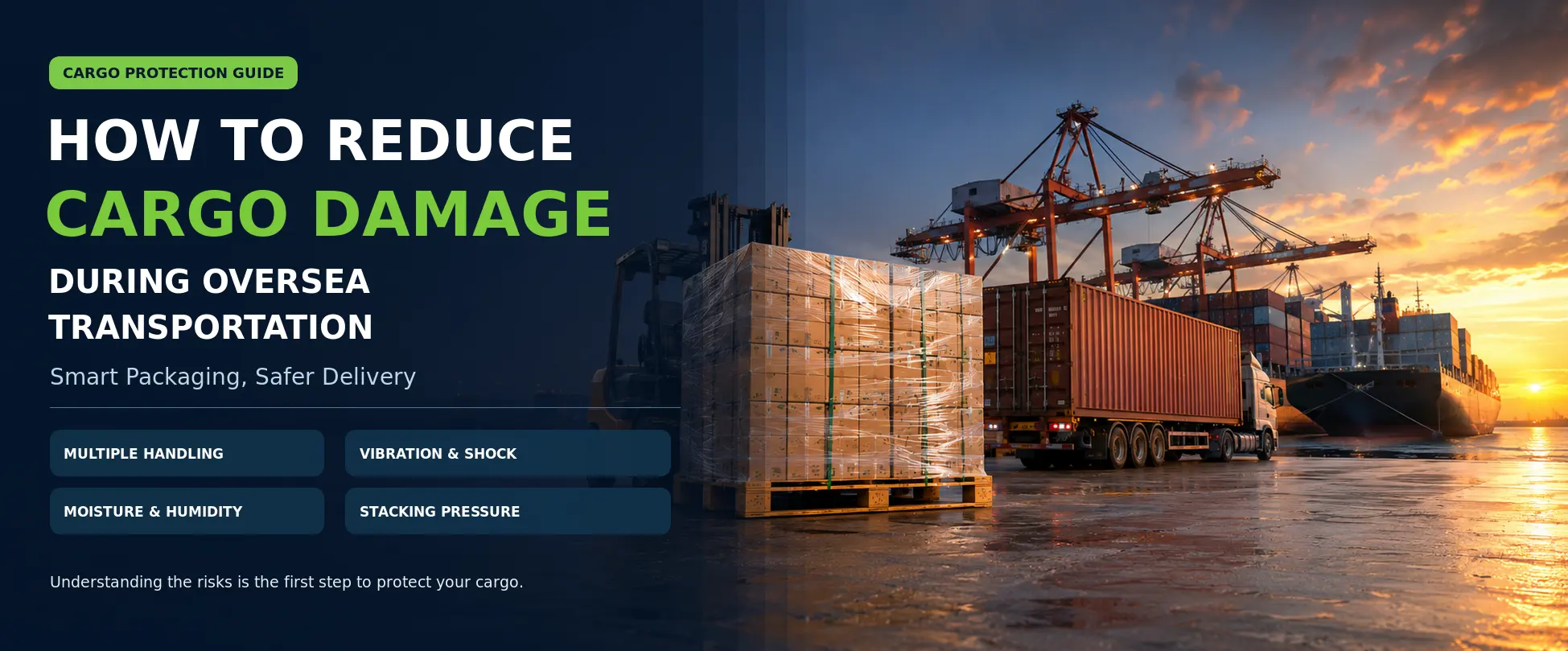
International freight transport is far more than the simple movement of goods from one warehouse to another. During cross-border transit, cargo undergoes multiple loading and unloading operations, container stacking, and weeks of continuous vibration; it is repeatedly transferred between ports, trucks, and distribution centers before finally reaching its destination.
If the packaging solution is not specifically designed for the entire transport chain, even cartons that are sturdy and intact upon leaving the factory may suffer from crushing, deformation, load shifting, or localized damage by the time they reach the customer.
Exporters should not rely solely on adding more packaging materials to solve these issues. A more scientific approach involves identifying the root causes of damage and utilizing a combination of suitable packaging materials to ensure the cargo remains stable throughout the entire transport cycle.
1. Focus on Full-Pallet Stability, Not Just Carton Protection
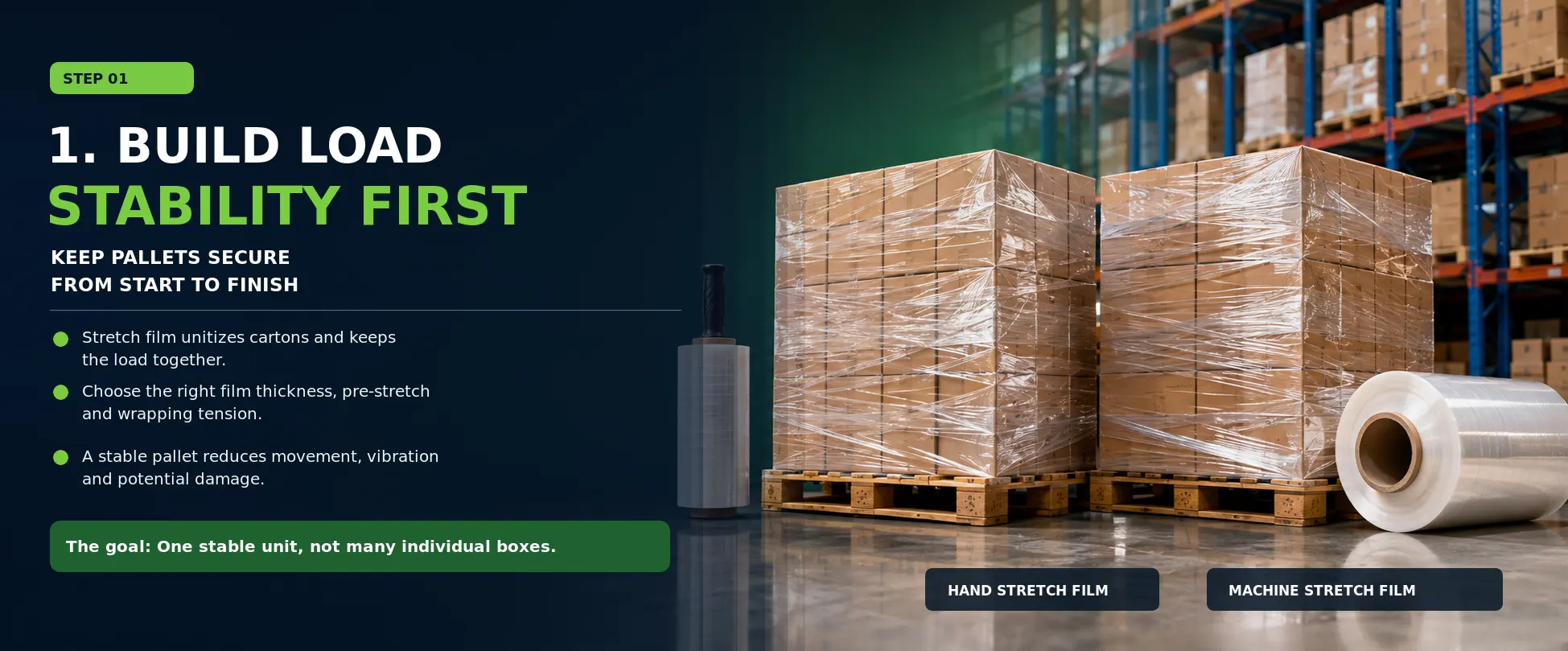
The most common cause of cargo damage is the shifting of goods within the pallet or container.
During truck transport and ocean shipping, cargo is constantly subjected to external forces from vibration, acceleration, braking, and handling operations. Even minute sliding between cartons can accumulate over time, causing the entire pallet load to tilt and lose stacking stability.
Therefore, we must evaluate the reinforcement and protection of the palletized load as a comprehensive system.
Stretch wrap serves to consolidate multiple cartons into a single, unified unit and secure them firmly to the pallet. However, simply increasing the number of wraps does not necessarily improve protection. Factors such as film thickness, stretchability, puncture resistance, wrapping tension, and the number of layers directly determine the final stability of the load.
For standard warehouse operations and routine export transport, manual stretch wrap is sufficient. However, for high-volume packaging or heavy palletized loads, machine-grade stretch wrap is preferable; it delivers more uniform and consistent tension, resulting in greater operational consistency.
The core objective is clear: the palletized load must form a solid, unified whole, rather than a loose pile of cartons sitting on a pallet.
2. Using Strapping for Additional Reinforcement
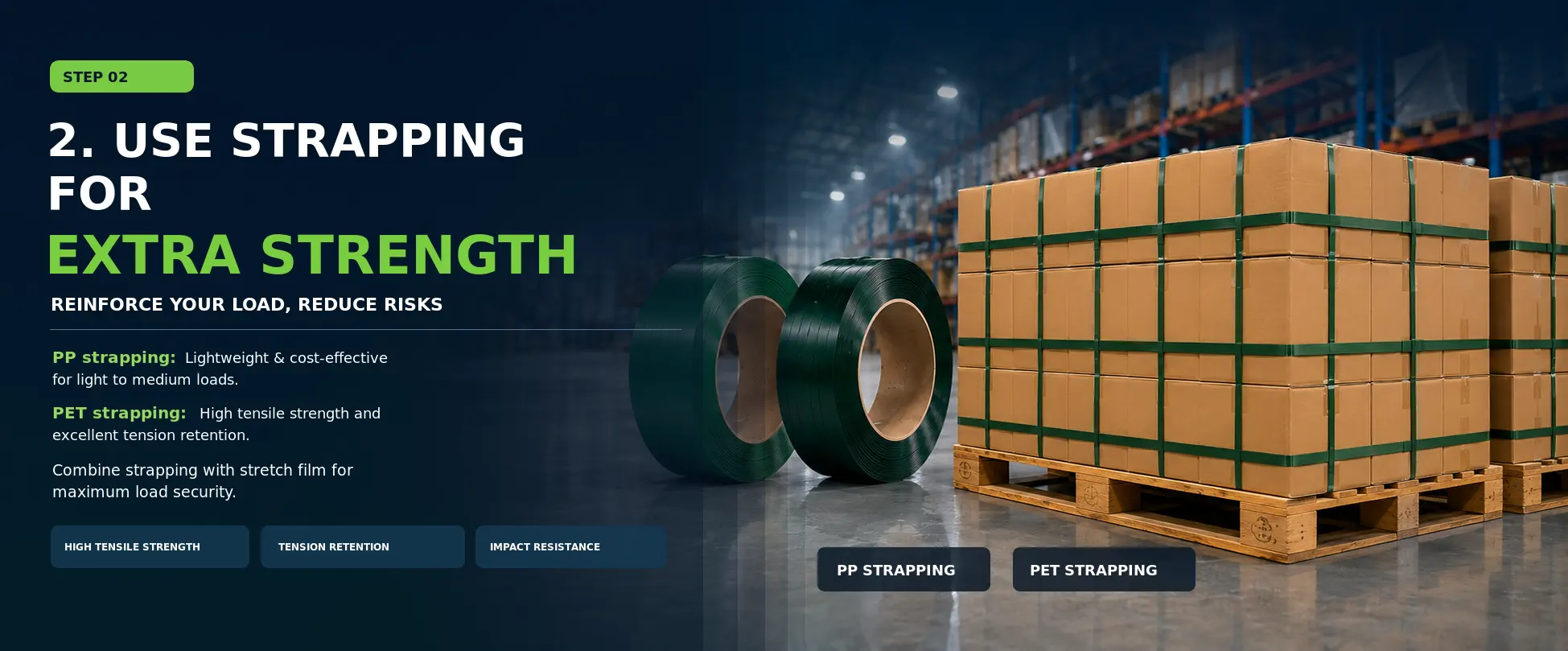
While stretch wrap helps prevent load shifting, certain goods require additional reinforcement measures.
PP (polypropylene) and PET (polyester) straps are commonly used for bundling cartons, securing goods, and reinforcing palletized loads. PP strapping is lightweight and cost-effective, making it suitable for cartons and light-to-medium loads that do not require extremely high tension. PET strapping offers superior tensile strength and excellent tension retention, making it better suited for heavy loads or palletized goods with stringent securing requirements.
For the vast majority of export shipments, stretch wrap and strapping are not mutually exclusive options; they serve different functions and can be used in combination. For instance, PET strapping ensures vertical load stability, while stretch wrap controls horizontal shifting, protects the entire palletized load from dust, and prevents impact damage during handling.
Therefore, selection should not be based solely on the lowest unit price; instead, decisions should be made by comprehensively considering factors such as load weight, pallet configuration, transport conditions, and the required strapping tension.
3. Protect carton corners and vulnerable areas
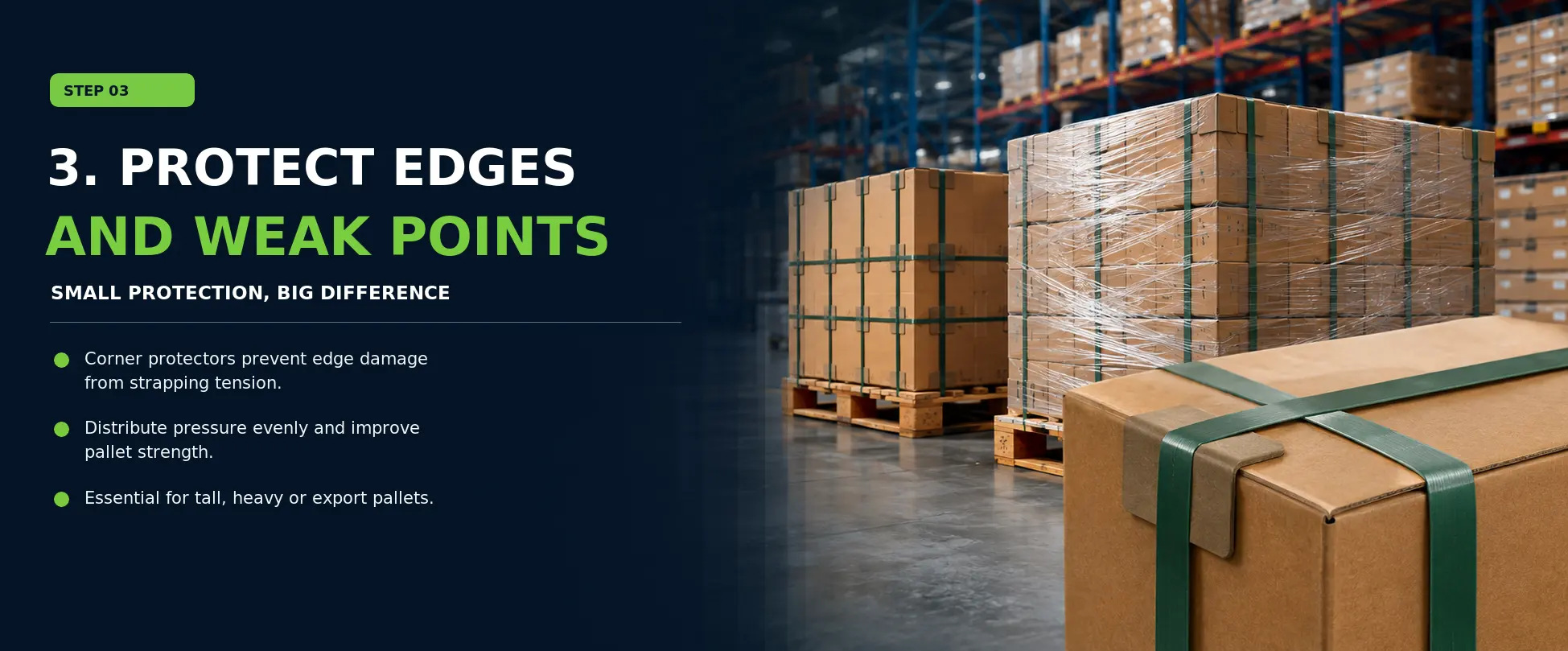
Cargo damage does not always stem from violent impacts; much of it begins at minor, vulnerable points.
The tension from strapping can crush carton corners—a problem particularly acute with heavy loads requiring high-tension strapping. Additionally, corners of palletized cartons are highly susceptible to crushing damage during warehousing, stacking, and loading/unloading operations. Corner and edge protectors can resolve these issues.
Corner protectors distribute strapping pressure over a larger contact area, reducing the localized stress on carton corners. When used in conjunction with stretch wrap or strapping, they further enhance the overall stability of the palletized load.
Using corner protection is particularly critical in the following scenarios:
· High-stacked palletized goods
· Heavy cartons
· Export goods requiring multiple loading, unloading, and transshipment steps
· Products with low compressive strength
· Palletized goods that must be stacked during warehousing or transit
A small investment in edge and corner protection can prevent costly cargo losses.
4. Do not overlook the critical step of carton sealing
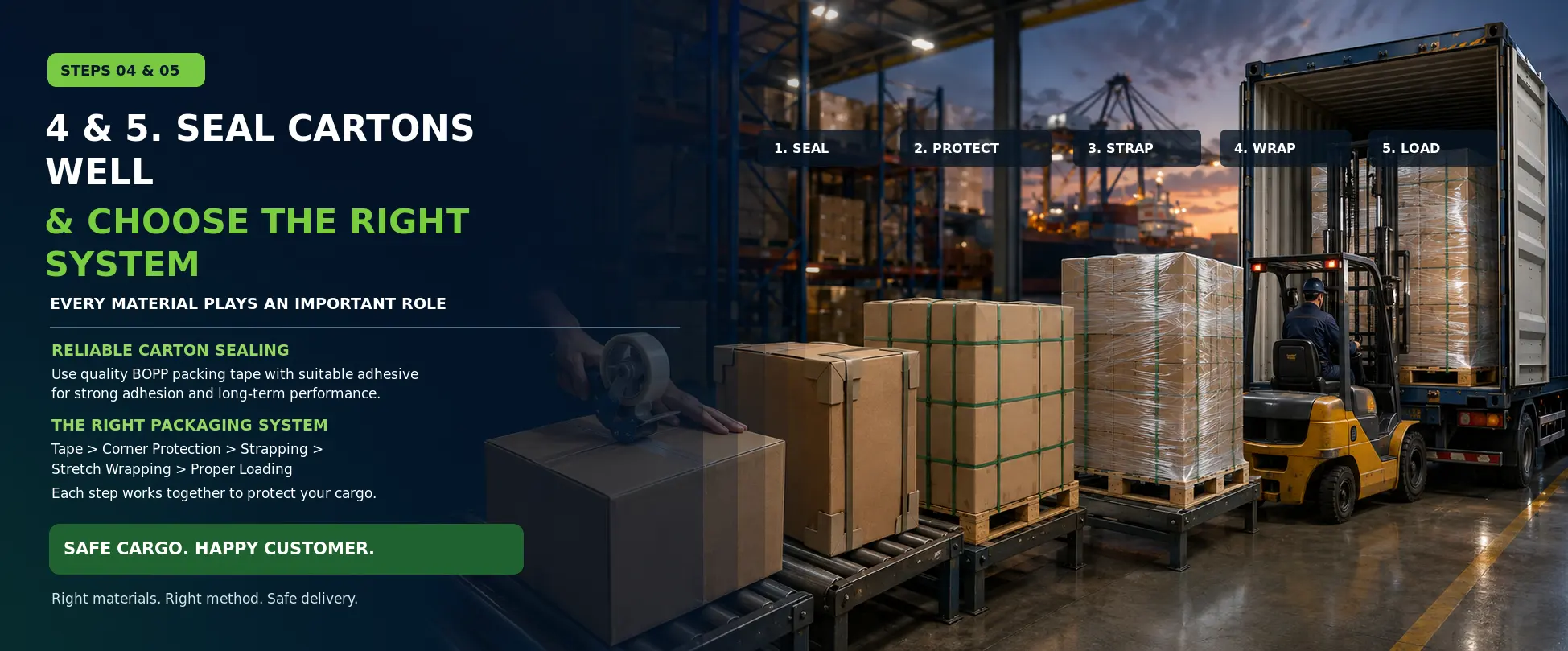
While the focus is often on the overall stability of the palletized load, the security of the individual carton seal is equally vital.
Even if a carton is securely fastened to the pallet, the entire protective system fails if the sealing tape loses adhesion during transit.
When purchasing BOPP sealing tape, one should look beyond just width and price. Factors such as backing thickness, adhesive type, bonding performance, carton surface condition, and storage environment all directly impact sealing reliability.
Acrylic tape is the standard choice for carton sealing due to its stable performance and excellent aging resistance. However, if there are specific requirements regarding initial tack or temperature resistance, other adhesive types may be selected.
Tape selection must also match the carton material. Bonding performance differs significantly between clean, smooth new cartons and recycled corrugated cartons, dusty surfaces, or rough cardboard. It is recommended to conduct actual packaging tests using real carton samples rather than relying solely on laboratory test specimens.
5. Tailor packaging solutions to the transport route
There is no single, universal export packaging standard that suits all types of cargo. Pallets used for short-haul trucking face a completely different transport environment compared to goods that undergo weeks of ocean freight and multiple transshipment or warehousing stages.
Before finalizing a packaging plan, exporters must comprehensively evaluate the entire logistics chain: container loading methods, pallet load weight, stacking height, frequency of loading and unloading, climatic conditions, and product characteristics. For most palletized exports, a proven packaging sequence involves: carton sealing tape → edge protectors → PP/PET strapping → stretch wrap → standardized pallet stacking.
Each packaging material serves a specific function: tape seals the cartons; edge protectors reinforce vulnerable corners and edges; strapping provides structural binding; and stretch wrap unitizes the entire pallet load, preventing shifting during transit.
A strategic combination of materials yields far better results than simply increasing the thickness of a single packaging component.
Balanced Packaging: Avoiding Over-packaging and Minimizing Damage Risks
Protecting goods does not mean piling on packaging materials without limit.
Over-packaging drives up material consumption, shipping weight, labor costs, and waste disposal burdens; conversely, under-packaging risks product damage, insurance claims, replacement shipments, and customer complaints.
The ideal approach is right-sized packaging: using the appropriate amount of materials to ensure the goods remain stable and secure throughout the entire distribution chain.
Yalan Packing offers a comprehensive range of pallet and export packaging consumables, including manual and machine-grade stretch wrap, PP and PET strapping, BOPP sealing tape, edge protectors, and integrated packaging solutions.
When designing export packaging plans, specifications can be flexibly selected based on cargo weight, pallet dimensions, carton type, wrapping technique, and transport conditions—there is no need to apply a single standard to all goods.
When managing overseas exports, evaluating packaging costs requires looking beyond the unit price of stretch wrap, tape, or strapping; the true cost encompasses the total expenditure required to deliver the goods safely and intact to their destination.


Contact Us
In This Article
Related Posts
What Packaging Materials Are Commonly Used in North American Warehouses?
Oct 23, 2026
PP Strapping for Cartons: Packaging Challenges in E-Commerce Logistics
Oct 21, 2026
Polypropylene Strapping Under Temperature Changes: Effects on Packaging Performance
Oct 21, 2026
PET Strapping Supplier: Heat-Seal Joint Strength and Sealing Reliability
Oct 21, 2026


