







REACH & PCR Packaging Requirements in Europe
By hqt
Jul, 2026Related Posts
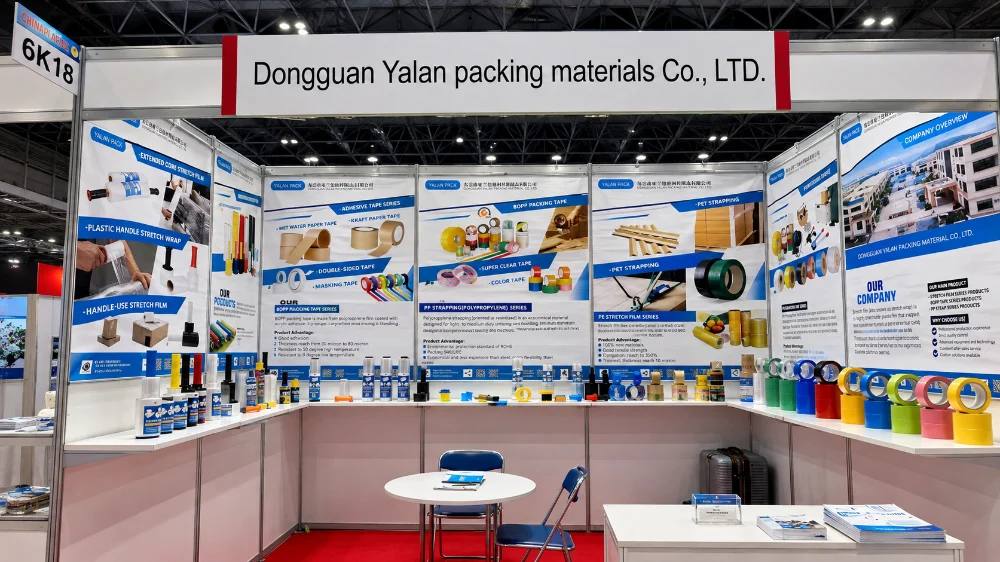
Meet YALAN Packaging in Korea: Connecting with Global Packaging Partners at K-PRINT 2026
Aug 10, 2026

When Should a Warehouse Automate End-of-Line Packaging?
Jul 29, 2026
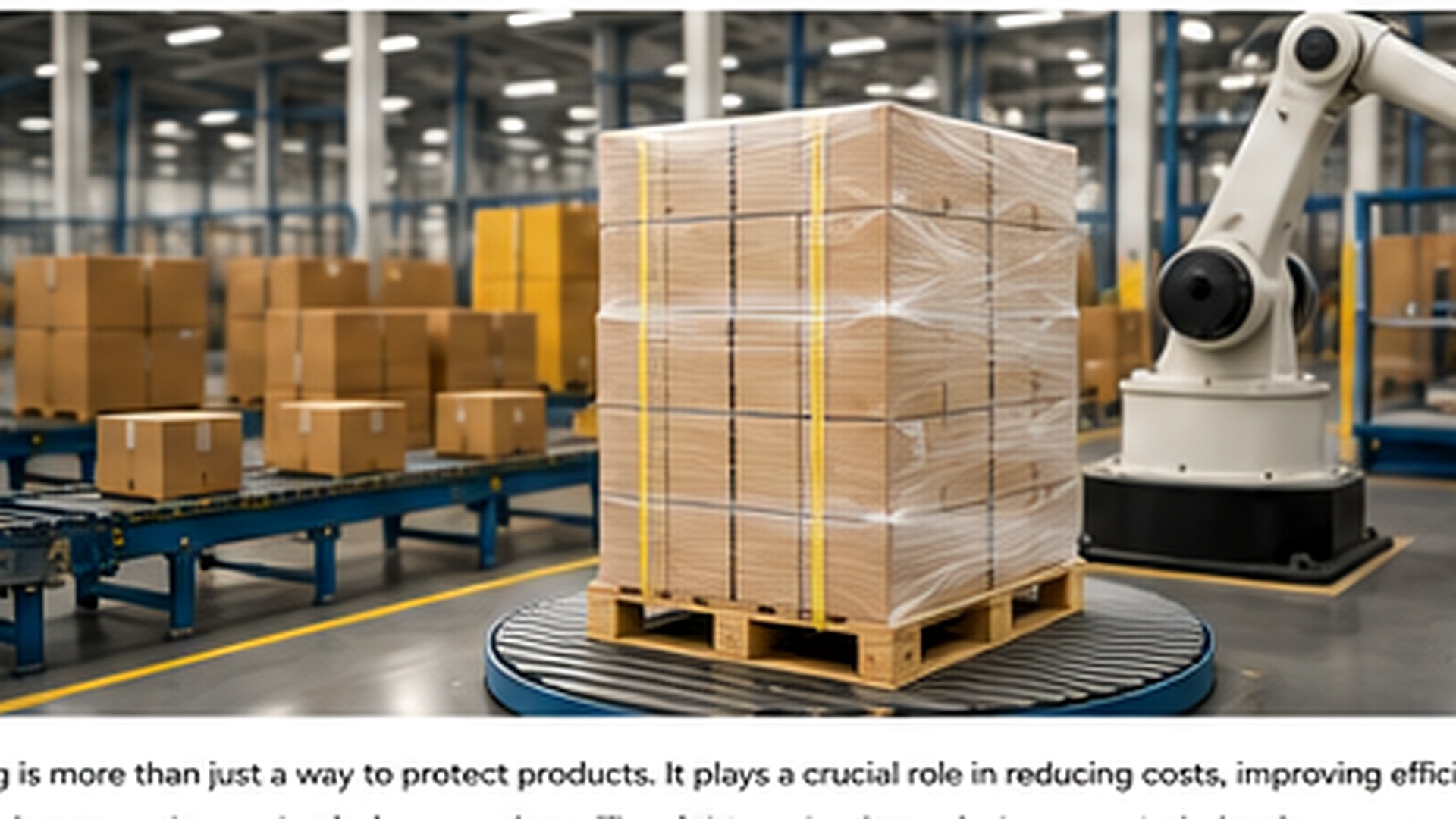
Total Packaging Cost: How to Cut Waste Without More Damage
Jul 29, 2026
Packaging Industry Trends 2026: What Buyers Should Watch
Jul 29, 2026
Packaging buyers in Europe are paying closer attention to two related but different issues: chemical compliance under REACH and the use of post-consumer recycled material, commonly called PCR.
For manufacturers and importers of stretch film, packaging tape, plastic strapping, food film, and other packaging materials, these requirements affect material selection, supplier documentation, product testing, packaging design, and long-term purchasing decisions.
REACH focuses mainly on chemicals that may be present in packaging materials. PCR requirements are part of Europe’s broader move toward recyclable packaging and lower consumption of virgin plastic. A packaging product may contain recycled material but still fail chemical requirements. It may also pass a REACH screening test while providing no verified recycled-content data.
European buyers should therefore evaluate these two areas separately.
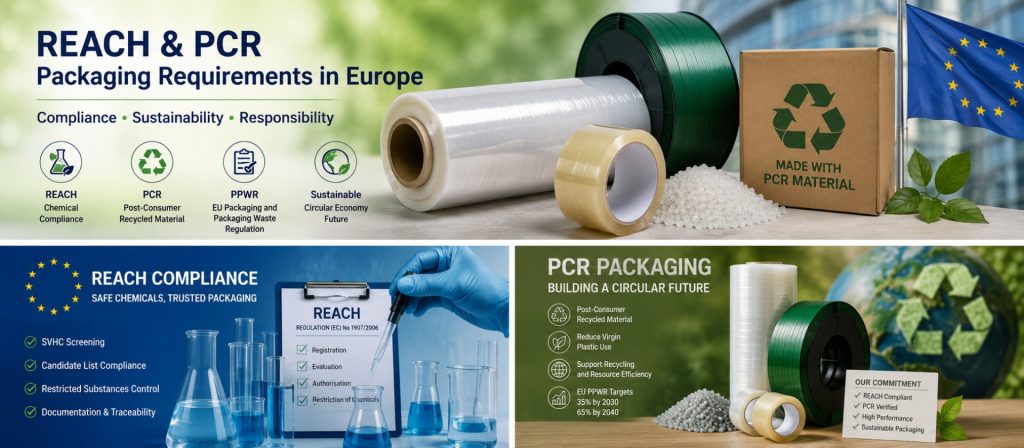
What Does REACH Mean for Packaging?
REACH is the European Union regulation concerning the Registration, Evaluation, Authorisation and Restriction of Chemicals.
Plastic packaging is generally treated as an “article” under REACH when its shape, surface, or design determines its function more than its chemical composition. ECHA specifically identifies plastic packaging as an example of an article.
The finished packaging material may contain polymers, pigments, adhesives, printing inks, processing aids, plasticisers, stabilisers, fillers, or other additives. Buyers must consider not only the main resin but also each component used to produce the finished packaging.
For example, a clear stretch film may have a relatively simple formulation, while printed packaging tape includes a BOPP backing, adhesive, ink, and possibly a release coating. Colored film and printed strapping may also contain pigments or additives that require additional review.
Check the REACH Candidate List
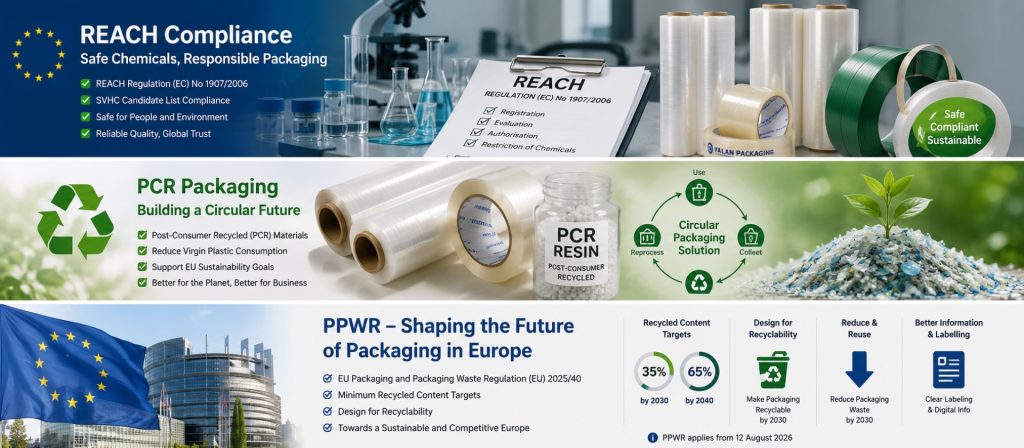
One of the most important REACH checks concerns Substances of Very High Concern, or SVHCs, included on the ECHA Candidate List.
When a Candidate List substance is present in an article above 0.1% by weight, communication and other legal obligations may apply to suppliers and EU importers. The Candidate List is updated over time, which means an old test report should not automatically be treated as permanent proof of compliance.
European packaging buyers should ask suppliers which Candidate List version was used during testing or assessment. A statement that simply says “REACH compliant” without identifying the tested materials, date, scope, or substances provides limited value.
A more useful compliance file may include:
- A signed REACH declaration
- A recent SVHC screening report
- Material and color identification
- Product model or specification
- Applicable Candidate List version
- Information about inks, adhesives, and additives
- Confirmation of relevant Annex XVII restrictions
Testing should represent the actual product being purchased. A report for clear stretch film may not automatically cover black film, colored film, printed tape, or a different adhesive formulation.
REACH Compliance Is Not a Single Certificate
REACH does not operate like a single product certification that remains valid for every order and every formulation.
Compliance depends on the substances used, the product structure, the supplier’s position in the supply chain, and the current legal list. Manufacturers need effective raw-material control and change-management procedures.
When a resin supplier, pigment supplier, ink supplier, or adhesive supplier changes, the packaging manufacturer should determine whether previous declarations and test reports are still representative.
Buyers can reduce risk by placing compliance requirements in the product specification and purchase agreement. The supplier should be required to report relevant material or formulation changes before production.
What Is PCR Packaging?
PCR means post-consumer recycled material. It comes from products that have already been used by consumers or businesses, collected as waste, sorted, cleaned, and processed into reusable raw material.
PCR is different from post-industrial recycled material, which usually comes from factory scrap generated during production. Internal edge trim or production waste may reduce factory waste, but it is not automatically considered post-consumer recycled content.
This distinction is important because European recycled-content targets generally refer specifically to recycled material recovered from post-consumer plastic waste.
A credible PCR claim should therefore explain:
- The percentage of PCR material
- The source or category of the recycled feedstock
- Whether the percentage is calculated by weight
- The manufacturing site covered
- The production period covered
- The chain-of-custody or verification method
- Whether additives, cores, adhesives, or other components are included

How the PPWR Changes Plastic Packaging
The EU Packaging and Packaging Waste Regulation, Regulation (EU) 2025/40, entered into force on February 11, 2025 and will generally apply from August 12, 2026. It covers packaging placed on the EU market and introduces requirements concerning composition, recyclability, recycled content, labeling, waste prevention, and producer responsibility.
Under the PPWR, plastic packaging must contain minimum levels of recycled content from post-consumer plastic waste according to its packaging category.
For plastic packaging that is not classified as contact-sensitive packaging or a single-use beverage bottle, the target is generally 35% recycled content by 2030 and 65% by 2040. The regulation calculates compliance as an average per manufacturing plant and year, rather than necessarily requiring every individual roll to contain exactly the target percentage. The final timing also depends on the implementing rules specified in the regulation.
Many industrial stretch films, pallet-wrapping films, and plastic transport-packaging products may fall within the non-contact-sensitive category. However, the final classification should be confirmed according to the product’s actual use and regulatory definition.
Food-Contact Packaging Needs Separate Review
PCR material should not be added to food-contact packaging without evaluating food-contact regulations and product safety.
Packaging intended to directly contact food may be subject to Regulation (EC) No 1935/2004 and other material-specific requirements in addition to REACH and the PPWR. Some contact-sensitive packaging categories have different recycled-content targets or exemptions where recycled material could create a health risk.
From August 12, 2026, the PPWR also introduces limits on PFAS in food-contact packaging.
A stretch film used only around the outside of palletized cartons is not necessarily regulated in the same way as cling film that directly touches food. Buyers should clearly communicate the intended application to the supplier.
Recycled Content Must Not Reduce Packaging Performance
Increasing PCR content can affect clarity, color, odor, stretch ratio, puncture resistance, tear propagation, thickness consistency, and load retention.
For pallet stretch film, reducing virgin resin use is only beneficial when the wrapped load remains stable. A film that breaks frequently or requires more material per pallet may increase waste rather than reduce it.
European buyers should test PCR stretch film under actual operating conditions. Useful evaluation points include:
- Film consumption per pallet
- Number of required wrapping cycles
- Film break frequency
- Puncture resistance at pallet corners
- Holding force during storage
- Load movement during transport
- Performance in cold or hot environments
- Compatibility with wrapping machines
The correct comparison is not simply virgin film versus PCR film at the same nominal thickness. Buyers should compare total material consumption and packaging performance per secured pallet.
Design for Recyclability Also Matters
The PPWR aims to make packaging placed on the EU market recyclable in an economically viable way by 2030.
Packaging manufacturers should therefore consider whether inks, labels, adhesives, pigments, multilayer structures, or incompatible materials interfere with collection, sorting, and recycling.
Clear mono-material stretch film may be easier to identify and process than highly colored or complex multilayer packaging. However, recyclability also depends on local collection systems, contamination levels, film thickness, sorting technology, and available recycling infrastructure.
Using PCR content does not automatically make packaging recyclable. Recyclability and recycled content are separate performance areas that should both be documented.
Prepare a Complete European Compliance File
Importers and distributors should request documentation before placing large orders. A practical file may include a technical data sheet, REACH declaration, SVHC report, material composition statement, PCR declaration, traceability information, quality-control plan, and packaging specification.
The PPWR also maintains a maximum combined concentration of 100 mg/kg for lead, cadmium, mercury, and hexavalent chromium in packaging or packaging components, subject to specified conditions and exemptions.
Documents should identify the actual product, color, thickness, adhesive system, and production site. Generic reports without a clear connection to the purchased goods may not satisfy customer audits.
Work With a Supplier That Controls Materials
Yalan Packaging supplies stretch film, packaging tape, strapping, food film, edge protectors, and packaging tools for distributors and industrial users. Its website also highlights OEM production, quality control, global supply experience, SGS testing, and REACH compliance.
For European projects, buyers should provide the intended market, packaging application, material requirements, target PCR percentage, printing requirements, food-contact status, and required compliance documents during the quotation stage.
This allows the supplier to review whether the requested structure, color, thickness, and recycled-content level are technically and legally appropriate.
Conclusion
REACH and PCR requirements address different parts of European packaging compliance.
REACH focuses on controlling chemicals and communicating information about substances of concern. PCR requirements focus on increasing the use of post-consumer recycled plastic and reducing dependence on virgin resources. The PPWR adds further requirements for recyclability, material composition, documentation, and packaging waste reduction.
European buyers should avoid relying on a simple “eco-friendly” or “REACH compliant” label. They should verify the actual formulation, test scope, PCR calculation method, production site, intended application, and supporting records.
A packaging supplier with controlled raw materials, consistent production, reliable testing, and clear documentation can help importers prepare for Europe’s changing packaging market while maintaining the performance needed for pallet wrapping, carton sealing, cargo securing, and industrial distribution.
Share on Social:


Contact Us
In This Article
Related Posts
Meet YALAN Packaging in Korea: Connecting with Global Packaging Partners at K-PRINT 2026
Aug 10, 2026
When Should a Warehouse Automate End-of-Line Packaging?
Jul 29, 2026
Total Packaging Cost: How to Cut Waste Without More Damage
Jul 29, 2026
Packaging Industry Trends 2026: What Buyers Should Watch
Jul 29, 2026


