







How to Strap a Pallet Securely for Shipping
By hqt
Jul, 2026Related Posts

Meet YALAN Packaging in Korea: Connecting with Global Packaging Partners at K-PRINT 2026
Aug 10, 2026

When Should a Warehouse Automate End-of-Line Packaging?
Jul 29, 2026

Total Packaging Cost: How to Cut Waste Without More Damage
Jul 29, 2026

Packaging Industry Trends 2026: What Buyers Should Watch
Jul 29, 2026
A pallet may look stable on the warehouse floor and still fail after repeated forklift movement, truck vibration, braking, cornering, or stacking. Secure pallet packaging depends on more than wrapping a few bands around the cartons. The load must be built correctly, the strap must match the cargo, and tension must be applied without damaging the products.
The following process gives warehouse teams a practical way to strap pallets more consistently for storage, domestic distribution, and export shipping.
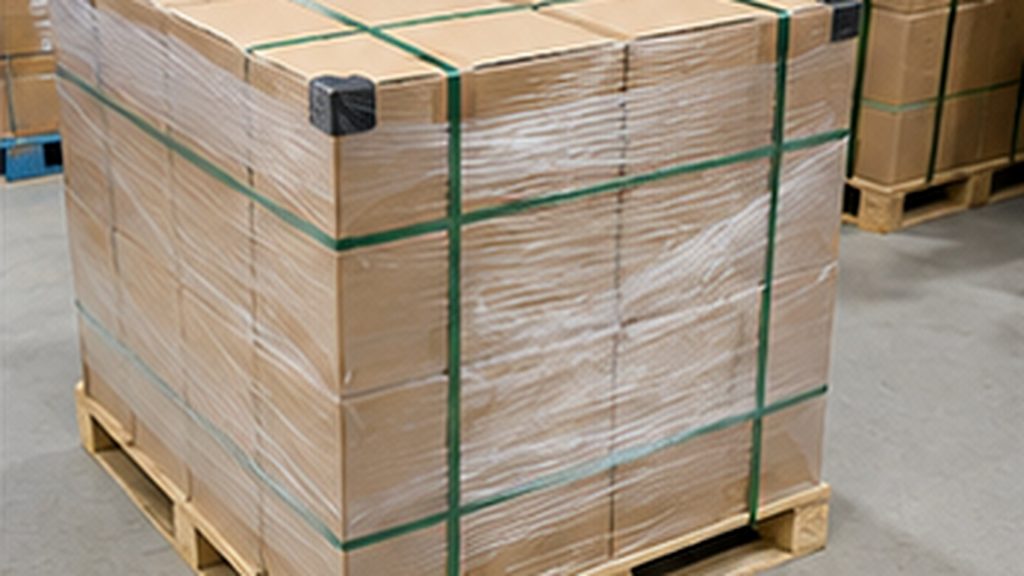
Start With a Sound Pallet and a Stable Load
Inspect the pallet before loading. Broken deck boards, loose blocks, protruding nails, and uneven surfaces can weaken the entire package or damage the strap. Replace a damaged pallet rather than trying to compensate with extra bands.
Stack cartons in aligned columns when possible, keep heavy items at the bottom, and avoid large overhangs. The load should have a reasonably flat top and balanced weight distribution. Strapping cannot fully correct a poorly built pallet.
Choose Strapping for the Actual Cargo
Light cartons and parcels may be secured with PP hand strapping, while heavier or more demanding pallet loads often require PET hand strapping. Machine-packed operations should use a grade designed for the applicable equipment and sealing method.
Confirm the strap width, thickness, breaking strength, joint type, and coil size before use. Do not assume that a wider strap is automatically better. A correctly specified strap applied at controlled tension is more effective than an oversized strap used inconsistently.
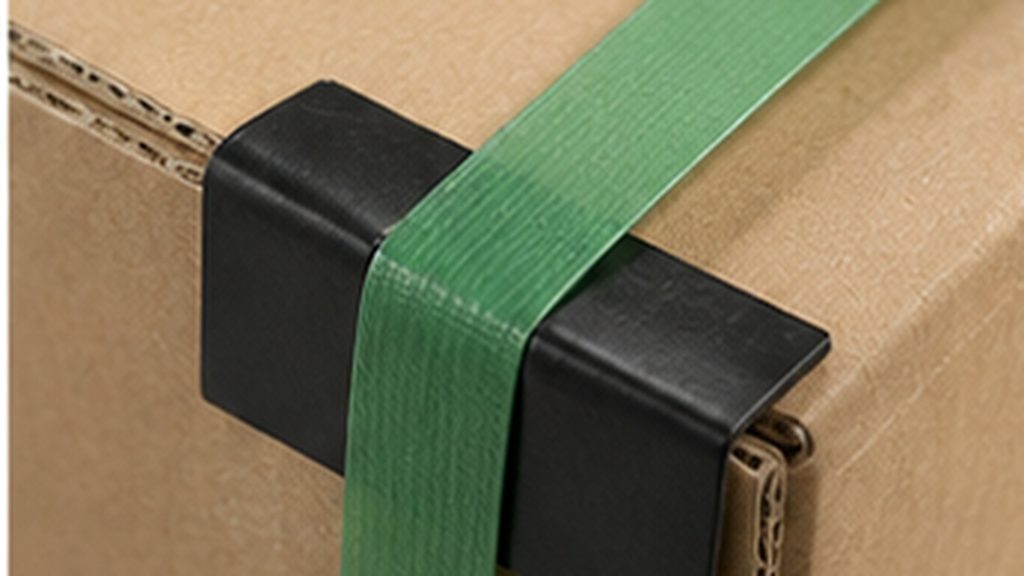
Use Edge Protectors Where Pressure Is Concentrated
Strapping creates pressure at the corners of the load. On corrugated cartons, this can lead to crushed edges, torn surfaces, or a loose strap after the carton compresses. Position paper edge protectors before applying final tension.
Edge protectors spread the force over a larger area and can help multiple cartons act as one unit. They are particularly useful on tall pallets, furniture, panels, appliances, and loads with soft outer packaging.
Run the Strap Around the Load Correctly
For unitized pallet shipping, vertical straps should pass around the load and through or beneath the pallet where the design allows. A band that only circles the cartons may hold the boxes together without securing them to the pallet.
Keep the strap flat and untwisted. Twisted banding reduces surface contact and can feed poorly through tools. Position straps away from weak carton openings and sharp edges. Use multiple bands when the load is tall, heavy, or likely to separate into sections.
Apply Controlled, Even Tension
Use suitable strapping tools and tensioners rather than pulling the band by hand. Tighten gradually while watching the carton corners and the overall shape of the load. The goal is to remove slack and hold the products together—not to visibly crush the packaging.
Apply similar tension to each strap. One very tight band beside a loose one does not distribute force evenly. Operators should follow the tool and strapping manufacturer's rated limits and keep hands and faces away from the line of a tensioned strap.
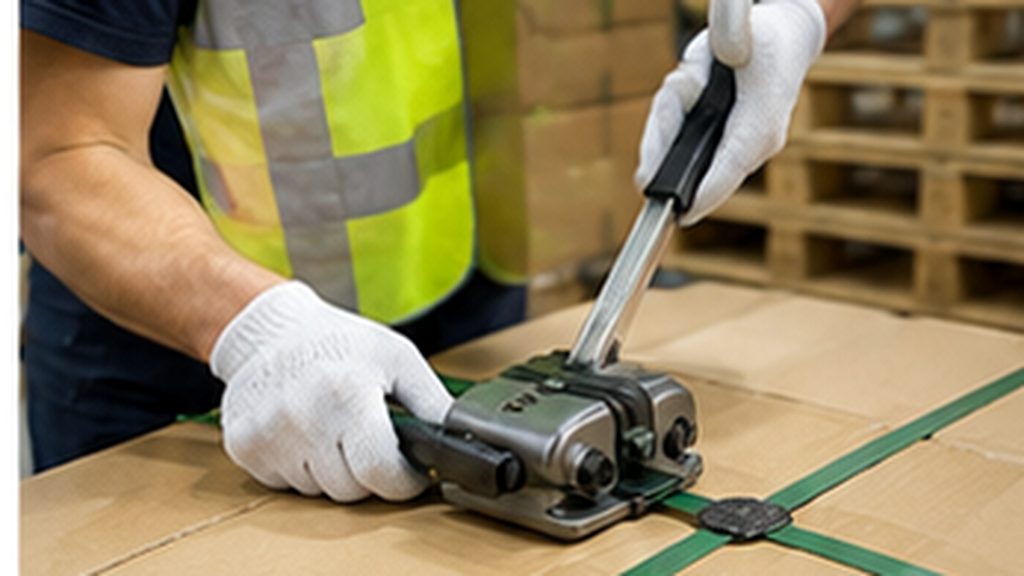
Create a Reliable Joint
The joint is often the most critical point in the strap loop. Depending on the system, the strap may be secured with a metal seal, buckle, heat weld, or friction weld. Use components designed for the strap material and size.
Inspect each joint before the pallet leaves the station. A weak seal, partial weld, misaligned overlap, or contaminated strap surface can reduce holding performance even when the band itself is strong.
Combine Strapping With Stretch Wrapping
Strapping and stretch film perform different jobs. Strapping provides concentrated restraint and can connect the load to the pallet. Stretch film contains loose cartons, protects surfaces from dust and moisture, and helps reduce small movements between packages.
For many mixed-carton and export pallets, the most dependable approach is to use both. Apply edge protection and strapping first, then wrap the pallet so the film does not prevent access to the strap path. High-volume facilities may use stretch wrapping machines for more consistent film application.
Inspect the Finished Pallet
| Inspection Point | What to Check |
|---|---|
| Pallet condition | No broken boards, exposed nails, or unstable blocks |
| Load shape | Balanced stack with minimal overhang |
| Strap position | Flat, untwisted, and placed on reinforced areas |
| Edge protection | Aligned beneath straps and covering vulnerable corners |
| Tension | Firm and even without crushing the package |
| Joint | Fully formed, aligned, and free from visible damage |
| Load-to-pallet connection | Straps secure the goods to the pallet where required |
Common Pallet Strapping Mistakes
Frequent problems include using the wrong strap grade, placing bands only around the cartons, skipping edge protectors, applying uneven tension, and relying on stretch film alone for a heavy load. Other failures come from damaged tools, poor seals, badly wound coils, and operators using different methods at each packing station.
A short written packing standard, regular tool inspection, and sample pallet checks can improve consistency without slowing the operation.
Conclusion
Secure pallet strapping begins with a stable pallet and a well-built load. The strap material, edge protectors, tensioning tool, joint, and wrapping method then work together to keep the cargo unitized. A repeatable process is more reliable than adding extra straps after problems appear. Test the complete package under real handling conditions and adjust the method before full-scale shipping.
Frequently Asked Questions
How many straps should be used on a pallet?
There is no universal number. The correct quantity depends on pallet weight, height, load shape, strap strength, transport conditions, and whether the cargo must be connected to the pallet.
Should pallet straps go under the pallet?
When the goal is to secure the load to the pallet, the strap should pass through or beneath a suitable structural part of the pallet. Avoid locations that can cut or damage the band.
How tight should pallet strapping be?
It should remove slack and hold the load firmly without crushing cartons or deforming products. Follow the rated settings of the strap and tool.
Can stretch film replace pallet strapping?
Stretch film can contain and protect many loads, but it does not always provide the concentrated restraint or pallet connection required for heavy cargo.
Why does strapping become loose after shipping?
Common causes include carton compression, product settlement, insufficient initial tension, poor tension retention, weak joints, or using a strap that does not suit the load.


Contact Us
In This Article
Related Posts
Meet YALAN Packaging in Korea: Connecting with Global Packaging Partners at K-PRINT 2026
Aug 10, 2026
When Should a Warehouse Automate End-of-Line Packaging?
Jul 29, 2026
Total Packaging Cost: How to Cut Waste Without More Damage
Jul 29, 2026
Packaging Industry Trends 2026: What Buyers Should Watch
Jul 29, 2026


