







How to Reduce Stretch Film Packaging Costs
By hqt
Jul, 2026Related Posts
Meet YALAN Packaging in Korea: Connecting with Global Packaging Partners at K-PRINT 2026
Aug 10, 2026

When Should a Warehouse Automate End-of-Line Packaging?
Jul 29, 2026
Total Packaging Cost: How to Cut Waste Without More Damage
Jul 29, 2026

Packaging Industry Trends 2026: What Buyers Should Watch
Jul 29, 2026
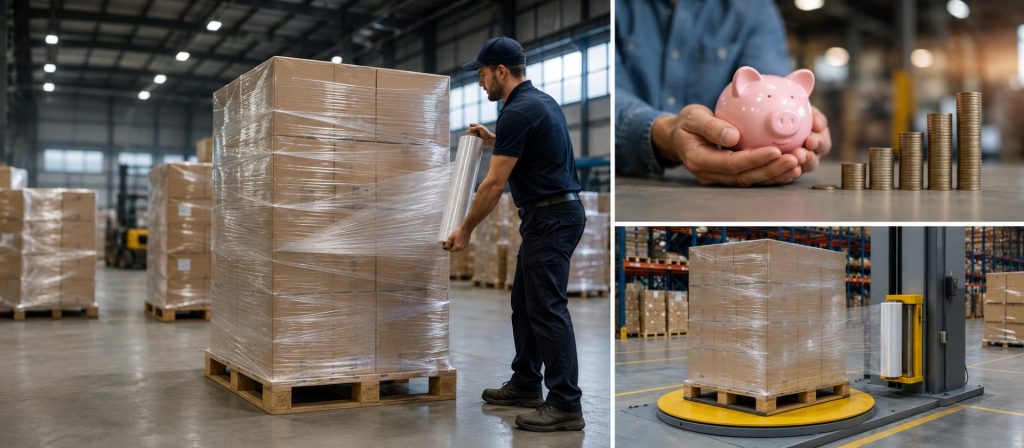
Stretch film is inexpensive when viewed as a single roll, but the annual cost can become significant when a warehouse wraps hundreds or thousands of pallets. Film waste also increases disposal costs, roll-change frequency, labor time, and the amount of plastic entering the waste stream.
Reducing stretch film costs does not mean using the thinnest film or applying fewer wraps without testing. An under-wrapped pallet may shift during handling, resulting in crushed cartons, rejected deliveries, and damaged products. These losses can quickly exceed any savings made on film.
The better approach is to secure each pallet with the minimum amount of film required for safe storage and transportation.
Measure Film Consumption Before Making Changes
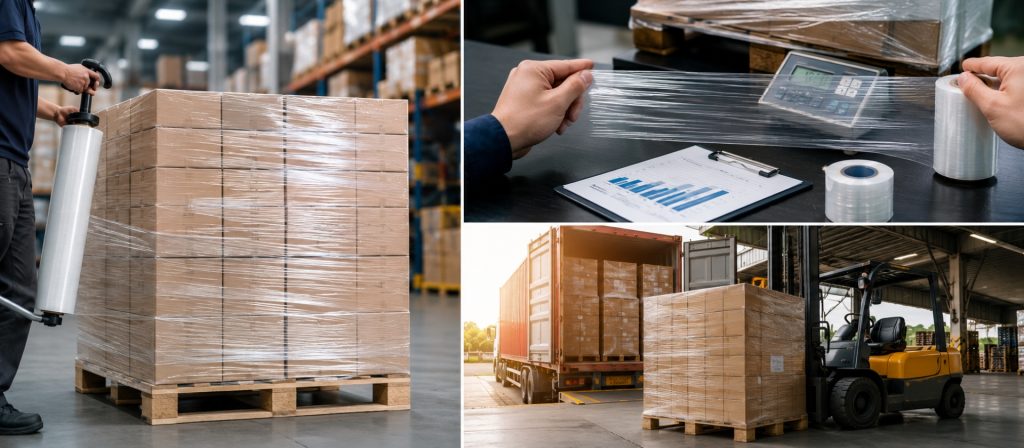
A warehouse cannot improve what it does not measure. Start by recording the current wrapping process for each major load type.
Useful data includes:
- Film weight used per pallet
- Number of bottom, middle, and top wraps
- Film thickness and roll length
- Pre-stretch setting
- Time required to wrap one pallet
- Number of film breaks
- Damaged loads or customer complaints
- Net film weight per roll
- Number of pallets wrapped per roll
Do not calculate performance only from the number of rolls purchased. Roll length, net film weight, core weight, film thickness, and production consistency can vary between suppliers.
Cutting and weighing the film removed from a wrapped pallet provides a practical baseline. Repeat the measurement on several similar pallets because one load may not represent normal production.
ASTM D4649 provides guidance for selecting, specifying, and applying stretch film used for unitizing and palletizing loads in indoor storage and transportation environments. It also supports clearer technical discussions between buyers and suppliers.
Calculate Cost Per Safely Wrapped Pallet
The price per kilogram or roll does not show the complete packaging cost.
A cheaper film may require additional wraps because it has limited stretch, poor puncture resistance, inconsistent thickness, or weak load retention. It may also break more frequently, interrupting production and leaving unusable film at the end of a roll.
A more meaningful calculation is:
Film cost per pallet = film weight used per pallet × film cost per kilogram
The complete operating cost should also include labor, equipment downtime, rejected rolls, damaged goods, waste handling, and customer claims.
A higher-performance film may have a higher purchase price per kilogram but use less material on each pallet. The goal is therefore the lowest total cost for a safely delivered load, not simply the lowest roll price.
Match the Film to the Load
Using one film specification for every pallet often creates unnecessary cost.
A low, stable pallet of uniform cartons may need less film than a tall load containing mixed box sizes. Heavy products, sharp corners, slippery cartons, bags, bottles, and irregular components place different demands on the film.
Before selecting a film, review:
| Load Condition | Film Requirement |
|---|---|
| Uniform lightweight cartons | Controlled tension and efficient coverage |
| Tall or unstable pallets | Strong load retention and balanced wrapping |
| Sharp corners | Higher puncture and tear resistance |
| Heavy products | Adequate containment force |
| Mixed carton sizes | Flexible film with a suitable wrap pattern |
| Cold or hot storage | Film tested under the actual temperature |
Thickness is only one performance factor. Stretch capability, puncture resistance, tear propagation, cling, elastic recovery, and holding force also affect how much film is needed.
Focus on Containment Force
Containment force is the holding force created by the applied film layers. It is determined by the wrapping force and the number of film layers around the load.
A pallet needs enough containment force at the top, middle, and bottom. Applying extra film to one area does not correct insufficient containment elsewhere. Lantech describes containment force as the result of wrap force multiplied by film layers and emphasizes that adequate force must be present throughout the load.
Measure containment at several heights on a stable pallet that has already completed transportation without damage. The result can provide a starting target for similar loads.
Once the required level is understood, unnecessary wraps may be removed carefully. Each change should be tested rather than applied to every pallet immediately.
Optimize Pre-Stretch Settings
Pre-stretch extends the film before it is applied to the load. When the film and machine are properly matched, this increases the usable length from each roll and can reduce the film weight applied per pallet.
However, setting the pre-stretch ratio as high as possible is not a complete cost-saving strategy.
The film must tolerate the machine’s rollers, speed, tension, corners, and load profile. Excessive pre-stretch can cause breaks or reduce the film’s ability to handle sharp edges. Research has also shown that pre-stretch percentage alone does not determine final load containment. The load design, wrapping configuration, distribution conditions, and film application work together as a system.
Change pre-stretch settings gradually. After each adjustment, check film breaks, containment force, film weight, corner performance, and load condition after handling.
Standardize the Wrapping Pattern
Manual operators often use different wrapping techniques. One operator may apply six bottom wraps, while another applies ten. Film tension can also decrease as the operator becomes tired.
Create a written wrapping standard for each common load type. It should define:
- How the film is attached
- Required bottom wraps
- Spiral overlap
- Top wraps
- Film tension
- Reinforcement areas
- How the film is cut and secured
A dispenser can make hand wrapping easier and improve tension control. Pre-stretched hand film may also reduce operator effort in suitable applications.
Machine operations should use saved programs for repeatable pallets. Avoid allowing operators to add wraps whenever a load appears unstable. Frequent manual adjustments may indicate a problem with pallet stacking, film selection, machine settings, or containment-force targets.
Improve the Pallet Before Adding Film
Many film problems begin with the pallet rather than the film.
Cartons that extend beyond the pallet can be punctured by handling equipment and create sharp corners that tear the wrap. Large gaps between cartons allow products to move independently. A narrow base, uneven stacking, or crushed lower cartons can make the load lean.
Improve pallet stability by:
- Keeping cartons within the pallet footprint
- Placing heavier cartons at the bottom
- Reducing large internal gaps
- Aligning layers where appropriate
- Replacing damaged pallets
- Using suitable slip sheets or anti-slip materials
- Avoiding excessive pallet height
A stable load generally requires less corrective wrapping than a poorly constructed pallet.
Use Edge Protection for Difficult Loads
Adding more stretch film is not always the most efficient solution for sharp or compressible products.
Paper edge protectors can distribute pressure, support corners, reduce carton crushing, and provide a smoother surface for wrapping. Strapping may be appropriate for heavy goods that need vertical or horizontal reinforcement.
Stretch film, edge protection, and strapping should be treated as complementary packaging components. Yalan Packaging supplies these materials together with wrapping tools and equipment, supporting pallet wrapping, cargo securing, and warehouse applications through a one-stop product range.
The correct combination may use less film while delivering better pallet stability.
Maintain the Stretch Wrapper
A well-specified film will still perform poorly on a neglected machine.
Dirty or worn pre-stretch rollers can create uneven film delivery. Incorrect roller gaps, damaged bearings, worn belts, poor brake settings, and inaccurate load-height sensors may increase film consumption or cause repeated breaks.
Include these points in routine maintenance:
- Clean pre-stretch rollers
- Inspect rollers for damage
- Check film threading
- Test film-carriage movement
- Confirm turntable or arm speed
- Inspect height sensors
- Review tension and pre-stretch settings
- Check cut-and-clamp operation
After maintenance, measure the film used on a standard pallet. A machine may continue running while gradually applying more material than the approved wrapping program requires.
Test Down-Gauging Carefully
Down-gauging means changing to a thinner film. It can reduce material consumption, but the replacement film must provide suitable puncture resistance, stretch, holding force, and consistency.
Do not compare two films only by micron or gauge. Wrap identical pallets using controlled machine settings and record the film weight, wrap time, breaks, containment force, and transport results.
WRAP’s pallet-film guidance found that improved film technology and optimized application can create substantial material-saving opportunities, but changes must preserve pallet stability and avoid increasing product waste.
A failed pallet costs more than the film saved by an untested thickness reduction.
Control Roll and Core Specifications
Ask the supplier to state net film weight, gross roll weight, core weight, width, thickness, length, and tolerance.
A low roll price may hide a heavy paper core or reduced film length. Inconsistent thickness can also cause unexpected breaks and make consumption difficult to predict.
For machine film, confirm the roll diameter, core dimensions, winding quality, and compatibility with the film carriage. For hand film, consider whether lighter rolls or extended cores could improve operator control without increasing total material use.
Yalan Packaging positions its stretch film and related packaging products around stable manufacturing, raw-material control, bulk supply, OEM customization, and consistent quality for distributors and industrial users.
Review Results Regularly
Film optimization is not a one-time project. New products, pallet patterns, operators, machines, suppliers, and shipping routes can change the required wrapping performance.
Review film usage monthly and investigate sudden increases. Track kilograms of film per 100 pallets rather than relying only on total purchasing volume.
A successful program should reduce material consumption without increasing film breaks, pallet failures, labor time, or transport damage.
Conclusion
The most effective way to reduce stretch film packaging costs is to manage the complete pallet-wrapping system.
Measure current consumption, calculate cost per safely wrapped pallet, match the film to the load, optimize pre-stretch, standardize wrapping patterns, improve pallet construction, maintain equipment, and test every material change under actual transport conditions.
Using less film is valuable only when the pallet still arrives safely. The best packaging program combines controlled film consumption with consistent load containment, lower labor requirements, and fewer damaged shipments.
Share on Social:


Contact Us
In This Article
Related Posts
Meet YALAN Packaging in Korea: Connecting with Global Packaging Partners at K-PRINT 2026
Aug 10, 2026
When Should a Warehouse Automate End-of-Line Packaging?
Jul 29, 2026
Total Packaging Cost: How to Cut Waste Without More Damage
Jul 29, 2026
Packaging Industry Trends 2026: What Buyers Should Watch
Jul 29, 2026


