







How to Choose Stretch Film for the USA Market
By hqt
Jul, 2026Related Posts
Meet YALAN Packaging in Korea: Connecting with Global Packaging Partners at K-PRINT 2026
Aug 10, 2026

When Should a Warehouse Automate End-of-Line Packaging?
Jul 29, 2026
Total Packaging Cost: How to Cut Waste Without More Damage
Jul 29, 2026

Packaging Industry Trends 2026: What Buyers Should Watch
Jul 29, 2026
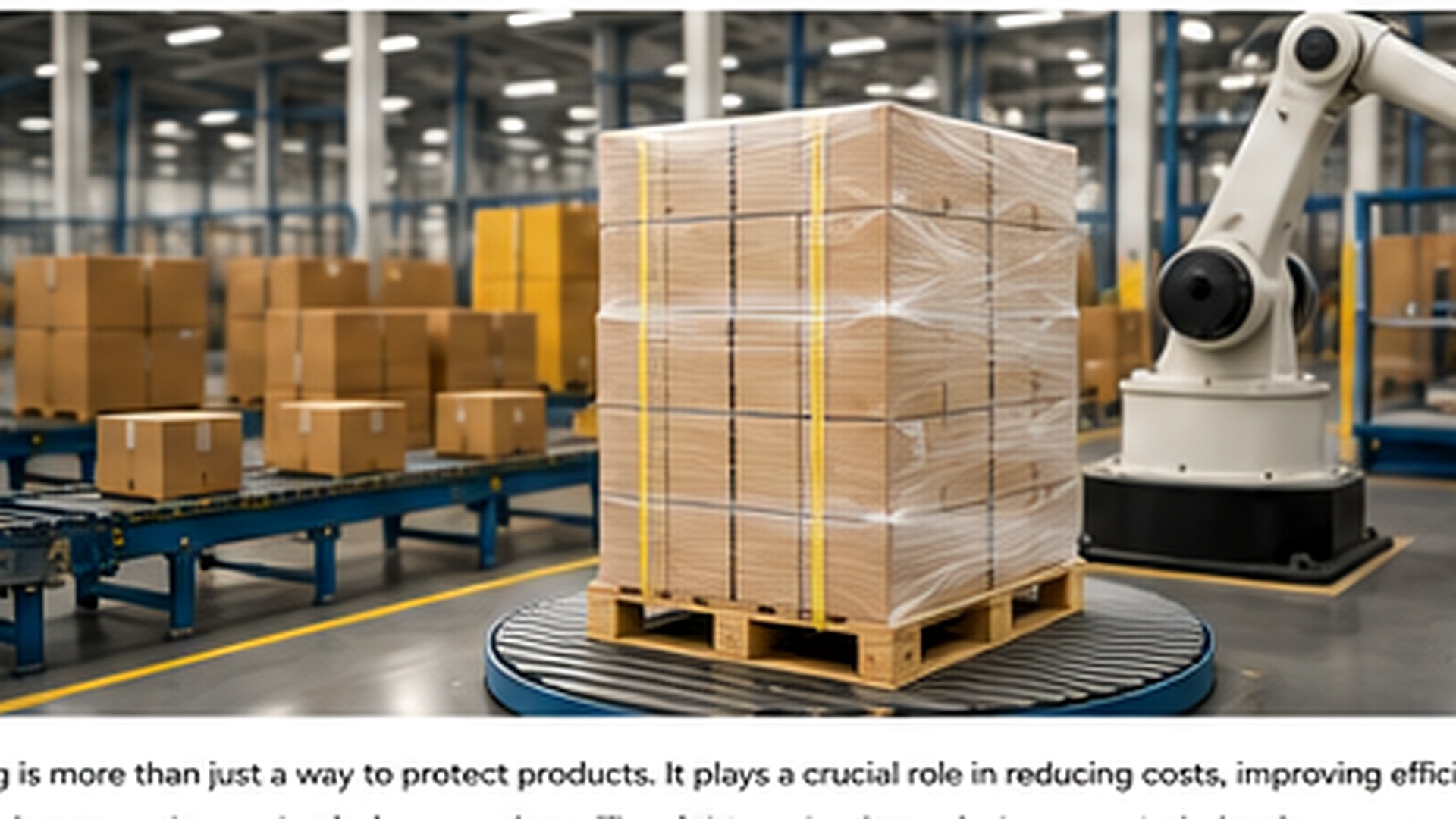
The United States is a leading consumer of stretch film for pallet wrapping, for handling products in the warehouse, for freight protection and for industrial packaging. There's more to deciding on which film to use than just the price of a film per roll. The wrapping technique, size, shape of the load, storage, and transport risk should be taken into account by the buyer.
A film which works well on uniform cartons could tear up on a pallet with sharp corners. Film that is too heavy will also be more expensive for packaging. The most suitable is the film which provides an efficient, stable material utilization and load containment.
Become familiar with standard USA stretch film specifications
So, when it comes to buying stretch film in the USA, it's typically described in inches, feet, gauge, mil, and pounds. These measurements apply in degrees: Width (inches), length of roll (feet) and thickness (gauge or mil). 100 gauge is roughly 1 mil and 80 grade is 0.8 mil or 20 microns.
The dimensions of a common or standard hand stretch film include 18” width, 1,000 or 1,500ft length and 80 gauge. Machine stretch film is usually sold in 20” width and with roll length almost 5,000’. This may vary depending on the equipment and load.
If importing film, double check metric and US measurements. The supplier might refer to a like roll as being 450 mm wide, 20 microns thick and about 457 meters long. A check of the converted numbers avoids the confusion of the actual product supplied.

There are 3 materials of film to choose: hand, machine and pre-stretched film
Hand stretch film suits warehouses with low pallet volumes, oddly shaped pallets, mobile wrapping points and non-automated facilities.
Machine stretch film is designed to be used on semi-automatic and Automatic Pallet Wrap applications. It is more suitable to high-volume applications, however, as there is flexibility with machine settings that can increase the consistency of product, control film tension and decrease the amount of film used.
Pre-stretched film is applicable in situations where manual handling is required and made easier. It is a stretched polymer, requiring less manpower for its use, harnessing less fatigue and maintaining consistent wrapping.
Check that the film grade is also correct for the process all the time. Machine film should be tested using all of the wrapper's pre-stretch factors, speed and tension.
Choose the appropriate gauge and performance rating for the cable
Gauge plays a major part in puncture resistance, tear resistance, containment of loads, and the cost of material. In the U.S. market, an 80 gauge general use guide is often used, but may not apply to all pallets.
Thinner film can be used, or higher performing film, for light, uniform loads. Thicker film, greater puncture resistance and/or other materials, like edge protectors and strapping, may be necessary for heavy, tall, unstable and/or sharp edged loads.
Comparing with gauge is not the only one. Modern "multilayer films" can offer improved holding power in reduced thickness as compared to a conventional film. Stretch, cling, puncture resistance, tear propagation, load retention and thickness consistency should also be considered by the buyer.
A controlled pallet test is the best practical test. Document the number of wraps/breaks film used per pallet, number of moves, the corners affected and condition of the pallets after the transportation. This provides a better comparison than roll price alone.

Compare casted stretch film with blown stretch film.Compare cab casted stretch film with blown stretch film.
Cast stretch film is a popular choice for warehouses and distribution centres. Generally, it gives great clarity, a quiet unwind, uniform thickness and a smooth application.
Stretch film is thought of for irregular or sharp-edged loads due to its puncture resistance and is frequently blown inside the package as well. Although it can be achieved at a higher noise level than cast film or with less accuracy, it can still handle the more severe use for industrial applications.
The type of choice would be determined by the loads, equipment used for wrapping materials, and conditions of transport, visibility and operator preferences.
Select the right colour and stick to it!
Stretch film companies were put in a difficult position when the 2012 fiscal budget of the Los Angeles port complex resulted in a suite of measures to improve the efficiency and maximize the capacity of the terminals.In the 2012 fiscal budget the Los Angeles port complex introduced a series of measures to increase the terminals' capacities and efficiency, creating a dilemma for the stretch film companies.
Black or opaque film can be an obtrusion of worthwhile or confidential products. Colored film can also aid with zoning in a warehouse, inventory identification, shipment classification or even be used for customers specific packaging.
Stretch film may be either one- or two-sided clinging. Cling can be one-side or two-side to help remove any sticky points of film to film or wrapped-pallets to adjoining loads. The buyer must agree on either side whether cling or non-cling, also on any kind of roll winderations.

Cross Reference the Film to the Application
Clear film and visibility of labels, plus uniform carton wrapping efficiency, are common to e-commerce and retail distribution. The food and beverage industry relies on pallets with a strong load retention system as the cases can be heavy and go through numerous touchpoints. Other materials like furniture, metal components, building materials and industrial products may need enhanced puncture resistance or edge protection.
Condition of storage and transportation are also of importance. Performance can be impacted by cold rooms, hot warehouses, moisture, dust, outdoor staging and long haul freight. Although stretch film is resistant to light water moisture and dirt, it should not be considered waterproof outdoor packaging unless the entire system is intended for that purpose.
Compare the cost of pallets in the wrapped pallet system.
Price is not always the best indicator of the packaging cost for the lowest price roll. Low cost film may need more wraps, break easily, slow players or may not hold the load.
Instead, calculate the cost by securely wrapped pallet. Add film used, manpower, machine downtime, lost film and damaged and rejected film and transportation claims. Distributors also need to make sure that net weight of film, size of cores, number of rolls per case, carton labeling, private labeling and efficiency of pallet loading are all the same.
This figure is important when comparing conventional film to thinner, high performance products. More expensive per roll could be less expensive per pallet due to less wraps used.
It is never a wise idea to make a bulk order without first testing.
A quality supplier will cater for hand film, machine film, pre-stretched film, coloured film, and other sizes in width, length, thickness, cores and packaging.
Samples should be ordered prior to volume orders, and tested with the customer-installed equipment and loads. Verify technical specification, net film weight, quality control for verifications, type of packaging, time of delivery and repeat order.
Large importers and distributors should also review the representation of the specifications on the carton. Private label information, quantity, pallet information, film thickness, film weight and roll dimensions need to be confirmed prior to production.
Conclusion
Stretch film USA market selection begins with a true packaging application. Identify application requirements and compare width, length, gauge, puncture resistance, cling, stretch, load retention and cost per pallet.
Under these actual warehouse and shipping conditions, testing helps reduce the unnecessary use of material and optimises the stability of pallets. US distributors and industrial users can develop a sound long-term packaging program with a supplier that has a sound quality assurance system, OEM support and a reliable production capacity.
Share on Social:


- PREV: Null
-
NEXT:
REACH & PCR Packaging Requirements in Europe
Contact Us
In This Article
Related Posts
Meet YALAN Packaging in Korea: Connecting with Global Packaging Partners at K-PRINT 2026
Aug 10, 2026
When Should a Warehouse Automate End-of-Line Packaging?
Jul 29, 2026
Total Packaging Cost: How to Cut Waste Without More Damage
Jul 29, 2026
Packaging Industry Trends 2026: What Buyers Should Watch
Jul 29, 2026


