







Full Container Stretch Film Loading Guide
By hqt
Jul, 2026Related Posts
Meet YALAN Packaging in Korea: Connecting with Global Packaging Partners at K-PRINT 2026
Aug 10, 2026

When Should a Warehouse Automate End-of-Line Packaging?
Jul 29, 2026
Total Packaging Cost: How to Cut Waste Without More Damage
Jul 29, 2026

Packaging Industry Trends 2026: What Buyers Should Watch
Jul 29, 2026
Ordering stretch film by full container load can reduce the freight cost allocated to each roll, but only when the shipment is planned correctly. A container that appears full may still carry too little usable film because of oversized cartons, heavy paper cores, inefficient pallets, or poorly arranged loading.
The opposite problem is equally common. Stretch film is relatively dense, so a container may reach its permitted cargo weight before all available cubic space is used. Trying to solve that problem by adding more cartons can create overloading, poor weight distribution, customs delays, or additional port charges.
For distributors and industrial buyers, the objective is not simply to place the largest possible number of rolls inside the container. The real goal is to maximize the amount of saleable film while protecting the products and keeping the shipment within every applicable weight limit.
Start With the Correct Container Type
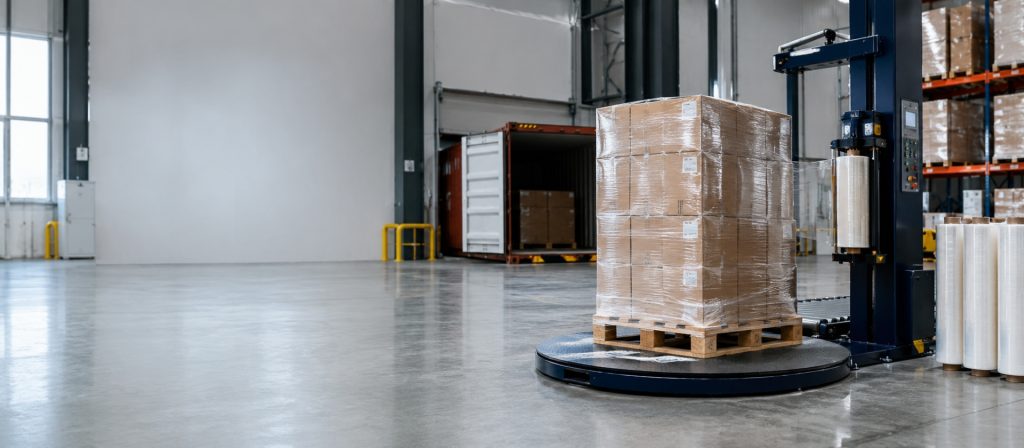
The three most common dry-container options are the 20-foot standard container, 40-foot standard container, and 40-foot high-cube container.
As a general reference, Maersk lists approximate cargo capacities of 33.2 cubic meters for a 20-foot standard container, 67.7 cubic meters for a 40-foot standard container, and 76.4 cubic meters for a 40-foot high cube. Listed maximum payloads are approximately 28,300 kg, 28,870 kg, and 28,690 kg respectively. Actual limits can vary according to the container, shipping route, country, terminal, and inland transportation rules.
| Container Type | Approximate Capacity | Listed Maximum Payload |
|---|---|---|
| 20-foot standard | 33.2 m³ | 28,300 kg |
| 40-foot standard | 67.7 m³ | 28,870 kg |
| 40-foot high cube | 76.4 m³ | 28,690 kg |
These figures explain why a high-cube container is not automatically the best choice for stretch film. It provides more vertical space, but its payload is similar to that of a standard 40-foot container. Heavy machine rolls may reach the weight limit before the additional height is fully used.
Before confirming an order, the supplier and freight forwarder should check the actual container data plate, carrier limits, road restrictions, and permitted gross weight at the destination.
Calculate Usable Film, Not Just Roll Quantity
A stretch film roll includes the film, paper core, label, and sometimes plastic end protection. The shipping carton, pallet, stretch wrapping, edge protectors, and securing materials add more weight.
Buyers should therefore separate four figures:
- Net film weight
- Gross roll weight
- Gross carton weight
- Total shipment weight
A quotation based only on the gross roll weight can make a product look cheaper than it really is. Two rolls may both weigh 3 kg, but one may use a 300-gram core while another uses a much heavier core. The second roll contains less usable film and raises the transportation cost per kilogram of film.
The same principle applies to machine rolls. A heavier core may improve winding stability for certain applications, but it should be selected for a technical reason rather than used to increase the advertised roll weight.
The most useful purchasing calculation is:
Landed transportation cost per kilogram of net film = total freight and handling cost ÷ total net film weight
This gives distributors a clearer comparison between different roll formats, core weights, carton quantities, and loading methods.
Optimize the Carton Before the Container
Container optimization begins with the product and carton design, not at the loading dock.
The roll diameter, roll height, number of rolls per carton, carton board thickness, and internal arrangement determine how efficiently the cartons can be stacked. Even a small amount of unused space around each roll can become several cubic meters of wasted capacity across a full container.
Cartons should be strong enough to resist vertical compression without using excessive board. The bottom cartons may support several layers for weeks during ocean transportation, so weak cartons can collapse and cause the loading pattern to shift.
The supplier should perform a carton layout calculation using the actual internal dimensions of the selected container. It is better to test several carton configurations before production than to discover during loading that the final row does not fit.
Yalan Packaging supplies stretch film for pallet wrapping, warehouse protection, logistics, and industrial packaging. Its website also emphasizes bulk-order production, stable supply, quality control, and OEM customization, allowing roll and carton specifications to be adjusted for different distributor markets.
Compare Pallet Loading With Floor Loading
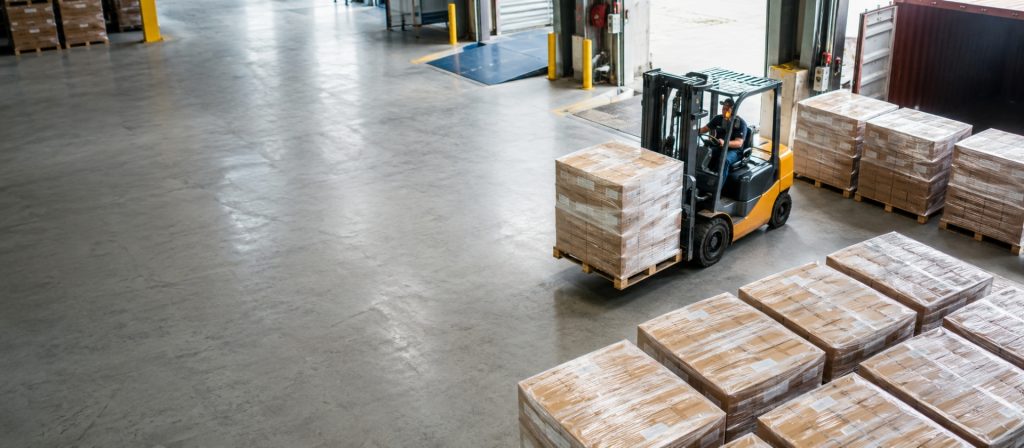
Palletized loading makes handling faster and reduces manual work at the destination. It is often preferred by customers with loading docks, forklifts, organized warehouse systems, or strict receiving procedures.
However, pallets occupy floor area and height. They also add weight and may leave gaps that reduce the quantity of stretch film in the container.
Floor loading, sometimes called loose carton loading, generally allows better use of the container’s internal volume. It may be suitable for distributors that prioritize maximum carton quantity and have sufficient labor or unloading equipment at the destination.
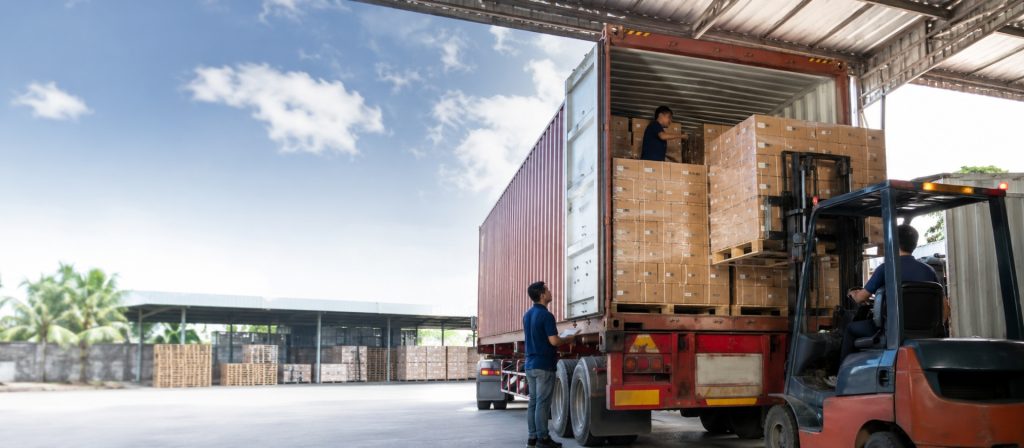
The correct method depends on more than freight cost. Buyers should compare:
- Cartons and net film per container
- Loading and unloading labor
- Warehouse receiving time
- Risk of carton damage
- Forklift availability
- Local worker-safety requirements
- Pallet treatment or import requirements
- Customer delivery format
A mixed method can also work. For example, high-volume standard products may be floor loaded, while selected SKUs are palletized for easier separation after arrival.
Build a Stable Loading Pattern
Heavy cartons should be distributed across the container floor rather than concentrated near the doors or at one end. The loading plan should also keep the center of gravity reasonably low and prevent tall stacks from leaning.
Cartons should be arranged tightly where practical. Where unavoidable gaps remain, suitable dunnage, blocking, bracing, or airbags may be needed to prevent movement.
The UNECE CTU Code notes that cargo can be exposed to longitudinal, transverse, and vertical acceleration during transport. It also warns that cargo weight alone does not prevent movement. Stretch wrapping, bundling, and strapping are auxiliary measures and should be combined with appropriate direct or friction-based securing when required.
This distinction is important. Stretch film can hold cartons together on a pallet, but it should not be treated as the only method securing the entire shipment inside the container.
Protect the Shipment From Moisture
Stretch film is normally packed in corrugated cartons, which can lose strength when exposed to moisture. Long sea routes also create a risk of container condensation.
Temperature changes can cause moisture to condense on the container ceiling and walls. Water may then drip onto cartons or collect near the floor. The CTU Code identifies wet pallets, packaging, timber, and humid loading conditions as possible moisture sources.
Before loading, the team should check that:
- The container is clean, dry, and free from holes
- The floor has no standing water or strong odor
- Cartons and pallets are dry
- Loading is not performed during rain without protection
- Products are separated from wet container surfaces where necessary
- Desiccants are calculated according to route and moisture risk
- Container doors and seals close correctly
Using more desiccant cannot compensate for loading wet cartons or wet pallets. Moisture control must begin before the container is closed.
Use Mixed-SKU Loading Carefully
A distributor may want to combine hand film, machine film, pre-stretched film, colored film, packaging tape, and strapping in one container. Mixed loading can reduce inventory risk and simplify sourcing, but it also makes loading more complicated.
Heavy machine-film cartons should not be placed on top of lighter hand-film or tape cartons. Product codes should remain visible, and each SKU should be arranged in identifiable blocks to simplify unloading and stock counting.
Before production, confirm the quantity of each SKU, carton dimensions, carton weight, loading sequence, pallet requirements, and unloading priority. A final loading diagram can reduce mistakes when several products look similar.
Yalan Packaging positions itself as a one-stop supplier of stretch film, packaging tape, strapping, edge protection, and packaging equipment for distributors and industrial users. This wider product range can support mixed-container purchasing, provided the loading plan is prepared around the different carton strengths and weights.
Verify Weight and Shipping Documents
The shipper must provide the verified gross mass of a packed container before it is loaded onto a vessel covered by SOLAS requirements. The weight can be established by weighing the packed container or by adding the certified weights of the cargo, packaging, pallets, dunnage, securing materials, and container tare weight.
Commercial invoices, packing lists, carton quantities, net weights, gross weights, container numbers, seal numbers, and product descriptions should all agree.
A few hundred kilograms of unexplained difference may cause questions during weighing, customs inspection, or customer receiving. Accurate production and loading records are therefore part of cost control, not merely administrative paperwork.
Conclusion
Efficient full-container stretch film loading requires coordination between product design, packaging, production, logistics, and warehouse operations.
Start by checking whether the shipment will be limited by weight or volume. Then optimize net film weight, core design, carton dimensions, pallet use, SKU arrangement, load distribution, moisture protection, and internal securing.
The lowest freight quotation does not always create the lowest landed cost. A better measurement is the transportation cost per kilogram of usable film delivered in saleable condition.
Working with a supplier that controls roll specifications, carton design, production consistency, and container loading can help distributors carry more useful product, reduce damage, simplify unloading, and build a more predictable packaging supply chain.
Share on Social:


Contact Us
In This Article
Related Posts
Meet YALAN Packaging in Korea: Connecting with Global Packaging Partners at K-PRINT 2026
Aug 10, 2026
When Should a Warehouse Automate End-of-Line Packaging?
Jul 29, 2026
Total Packaging Cost: How to Cut Waste Without More Damage
Jul 29, 2026
Packaging Industry Trends 2026: What Buyers Should Watch
Jul 29, 2026


