







Why Does Stretch Film Break During Pallet Wrapping?
By hqt
Sep, 2026Related Posts
What Is the Difference Between Net Weight and Gross Weight of Stretch Film?
Sep 10, 2026
How Much Stretch Film Is Needed to Wrap One Pallet?
Sep 09, 2026
Why Does Stretch Film Break During Pallet Wrapping?
Sep 08, 2026
15 Micron vs 17 Micron vs 20 Micron Stretch Film: What Is the Difference?
Sep 07, 2026
Stretch film breakage during pallet wrapping is typically caused by the following factors: sharp edges of goods, excessive film tension, mismatched film thickness, defects in the film itself, incorrect equipment parameter settings, damaged roll material, and improper wrapping techniques.
To quickly troubleshoot, observe the location and timing of the film breakage. If the film consistently tears at pallet edges, it's often due to puncture stress. If the film breaks during stretching, it's likely due to excessive tension, insufficient film performance, or improper machine parameter settings.
Below are seven common breakage causes for your reference:
Sharp corners or protrusions puncturing the film: Sharp, irregularly shaped edges are one of the most common causes of stretch film breakage.
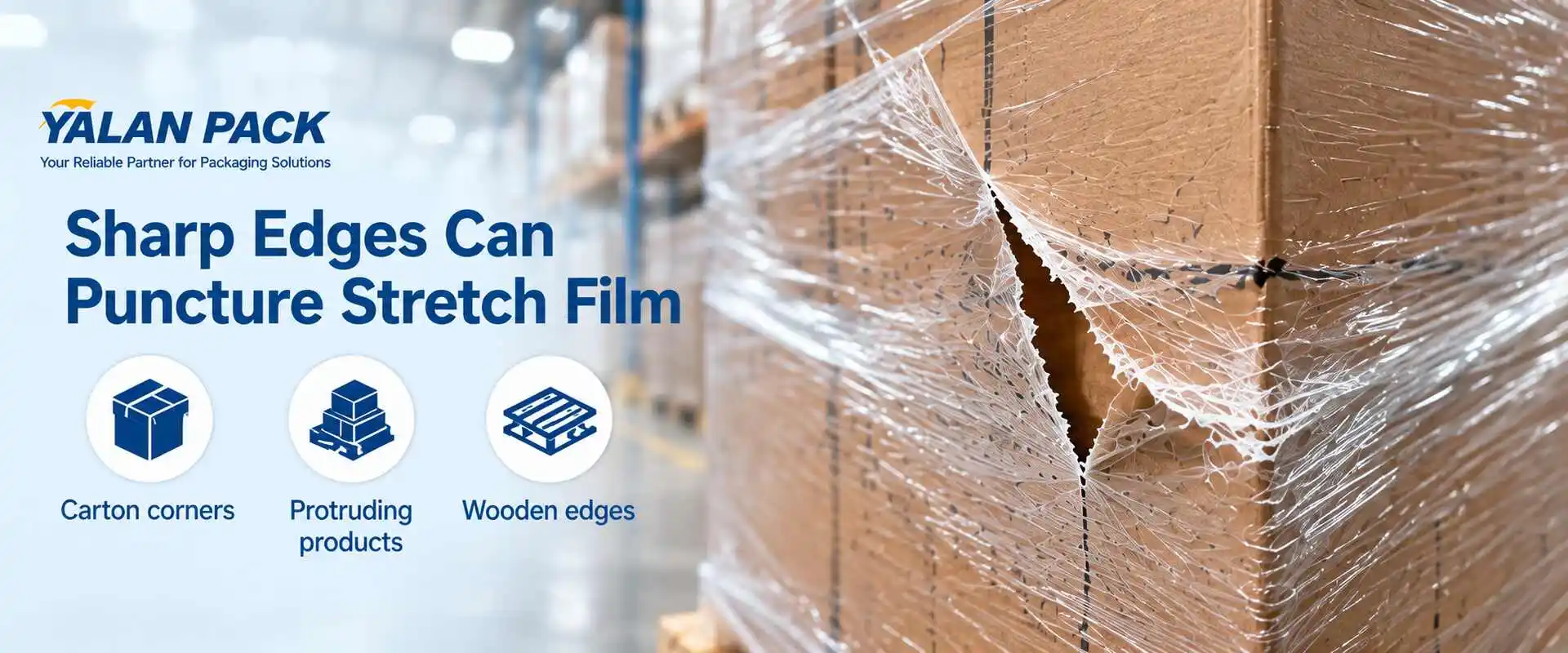
Carton edges, metal components, wooden pallet edges, and various protrusions can create concentrated pressure on the film. Once a small hole is punctured, the tension from wrapping quickly widens the tear.
This type of damage can occur even with a light pallet load.
Feasible solutions: Adjust placement to avoid protruding parts of the product. Install corner protectors and edge protectors. Select film products with stronger puncture resistance. Test and try different film specifications. Avoid overstretching the film for vulnerable areas.
This also illustrates that when selecting stretch film, the shape of the goods is sometimes more critical than the weight of the pallet.
Film overload: Stretch film itself allows for moderate stretching, but greater stretching force does not necessarily mean better results.
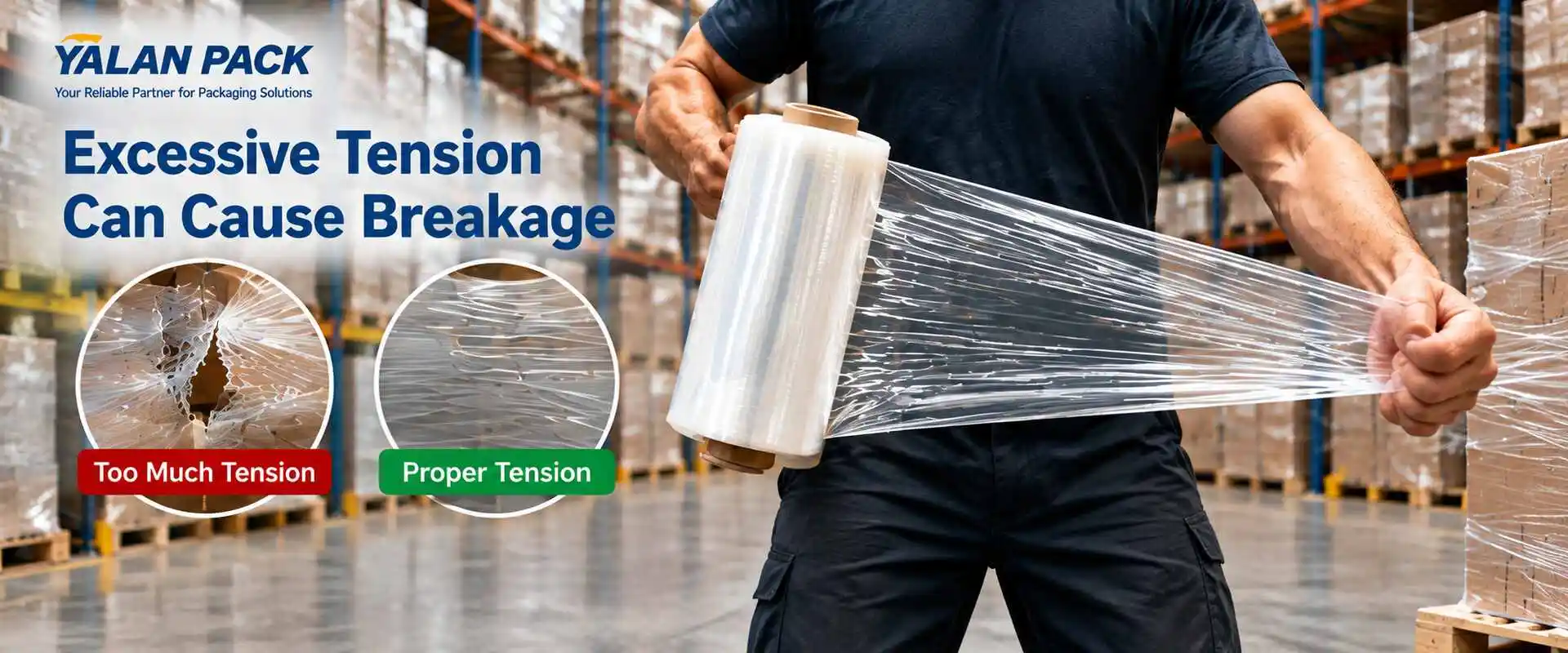
Once the stretching exceeds the film's performance limit, it will be more prone to tearing. This problem can occur in both manual and machine wrapping.
In manual wrapping scenarios, operators may apply excessive tension to achieve a tighter binding. In machine wrapping scenarios, setting the pre-stretch ratio and film tension parameters too high can cause frequent film breakage during wrapping.
If adjusting equipment settings or wrapping methods worsens the breakage problem, the tension parameters should be checked first. Core objective: To effectively secure the goods without overloading the film.
Mismatch between selected stretch film thickness and operating conditions: Thinner films can reduce material consumption, but only if they meet the actual load requirements.
For example, 15-micron stretch film is suitable for lightweight, flat-stacking cardboard pallets, but it will be insufficient for pallets with uneven edges and high puncture resistance requirements. Switching to 17-micron, 20-micron, or other suitable specifications can provide more film protection at stress points.
However, simply choosing the thickest film is not the optimal solution. Before increasing film thickness, the purchaser must identify the true root cause of the problem: is it insufficient film thickness, poor puncture resistance, excessive tension setting, pallet/cargo structure issues, or wrapping process problems?
Often, high-performance thin films will outperform thick films with substandard mechanical properties.
Film quality defects and poor thickness uniformity: Even with smooth, flat goods, if the film still tears irregularly, the quality of the film itself should be thoroughly checked.
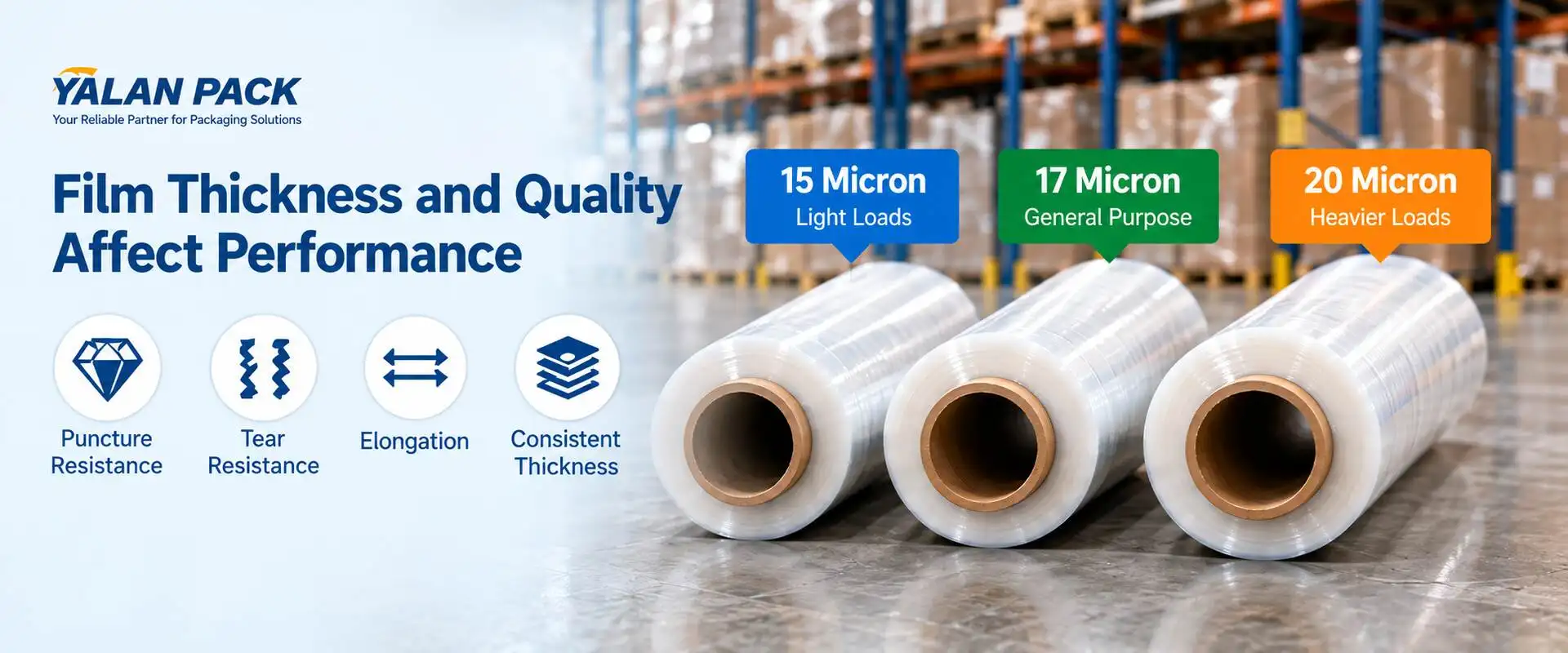
The actual performance of stretch film cannot be judged solely by the micron parameter indicated on the label. Key factors to consider include: thickness uniformity, raw material resin formulation, elongation, puncture resistance, tear resistance, self-adhesion, and production process stability.
During film stretching, areas with weaker material and uneven thickness will break first. This explains why two rolls of stretch film labeled 500mm × 17 microns can have different pallet wrapping effects.
Micron thickness is an important reference specification, but it cannot be used alone to judge the overall quality of stretch film.
Incorrect winding equipment parameter settings. When machine-made stretch film breaks frequently, the winding equipment should be checked first, rather than directly attributing it to a quality problem with the film itself.
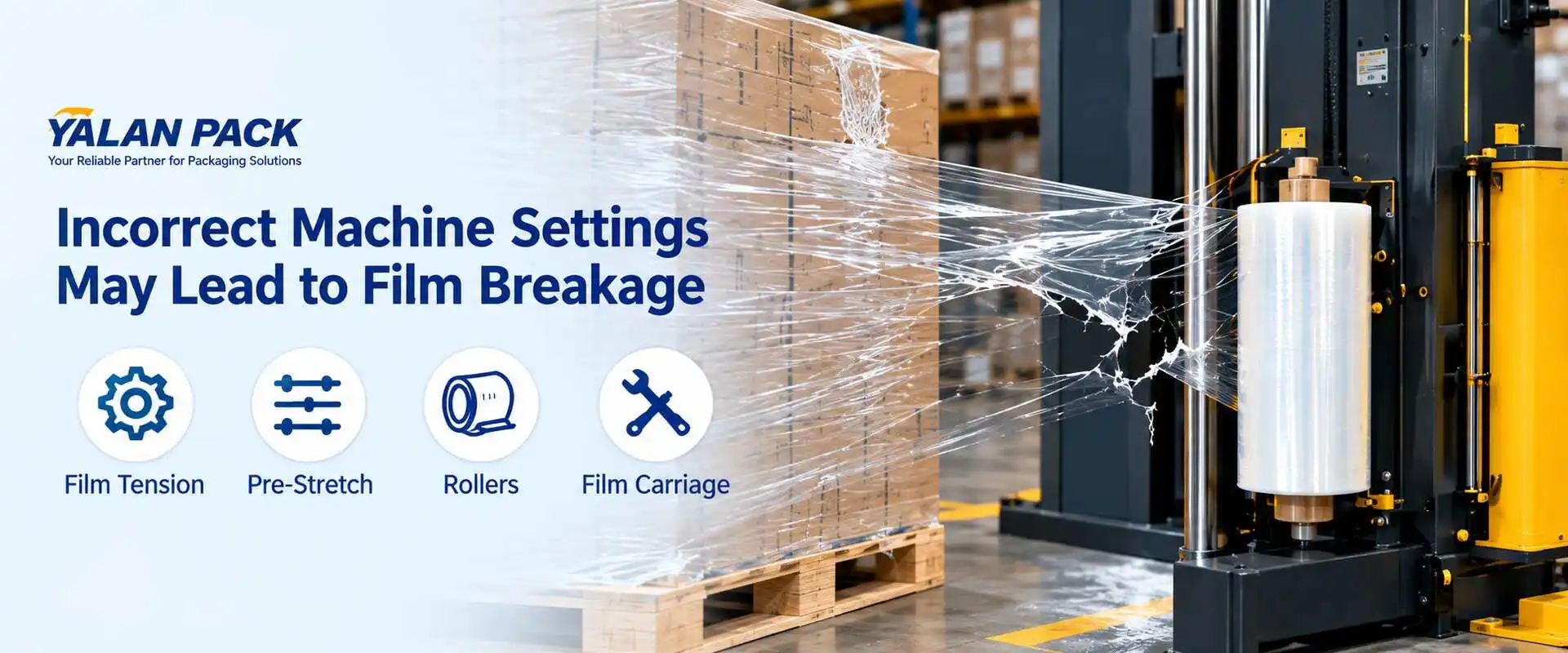
Common causes include: excessively high film tension, unreasonable pre-stretching parameter settings, sudden equipment acceleration, incorrect film threading path, or malfunctions in the rollers or film conveying mechanism.
Troubleshooting can be done using this approach: Does the film always break at the same stage of the winding cycle?
If so, focus on checking the equipment's operating status at that stage. For example, if the film breaks at the bottom of the pallet, it could be due to a puncture from the pallet's corner or excessively high tension during the initial wrapping stage. Breakage during equipment acceleration is mostly related to tension and equipment parameters.
For warehouses with high shipment volumes, maintaining stable equipment parameters is particularly crucial.
Damage to the Stretch Film Roll Itself: Some defects occur before the film even touches the pallet.
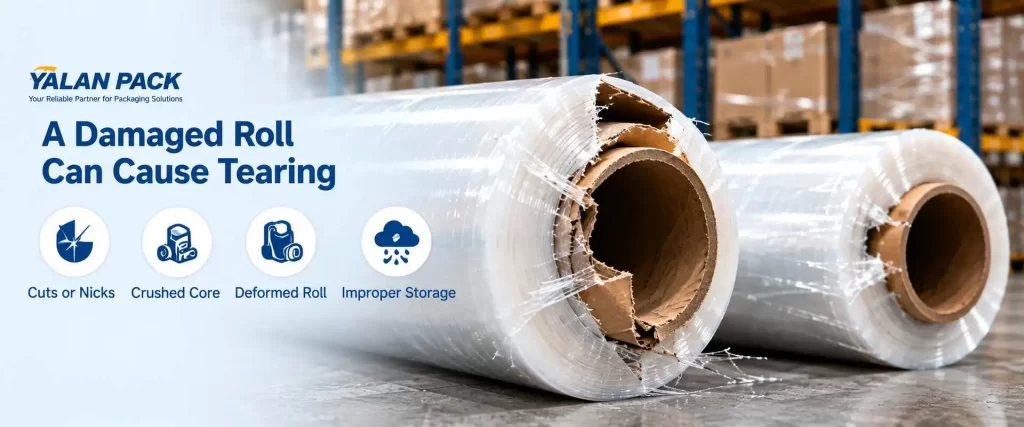
If the film roll is dropped or crushed during transportation or storage, defects will appear at the edges. Even a small tear at the edge can develop into a tear when the film is unwound and subjected to tension.
Before use, check the roll condition: Are there any bumps or damage to the edges? Is the paper core flattened? Are there any cuts, dents, or visible deformation?
The roll should be stored properly, avoiding high temperatures, direct sunlight, and impacts. If only a single roll of film breaks frequently, while other rolls of the same specification work normally, focus on inspecting that particular roll.
Improper Winding Techniques Leading to Uneven Stress Distribution: The manual winding technique directly affects the probability of film breakage.
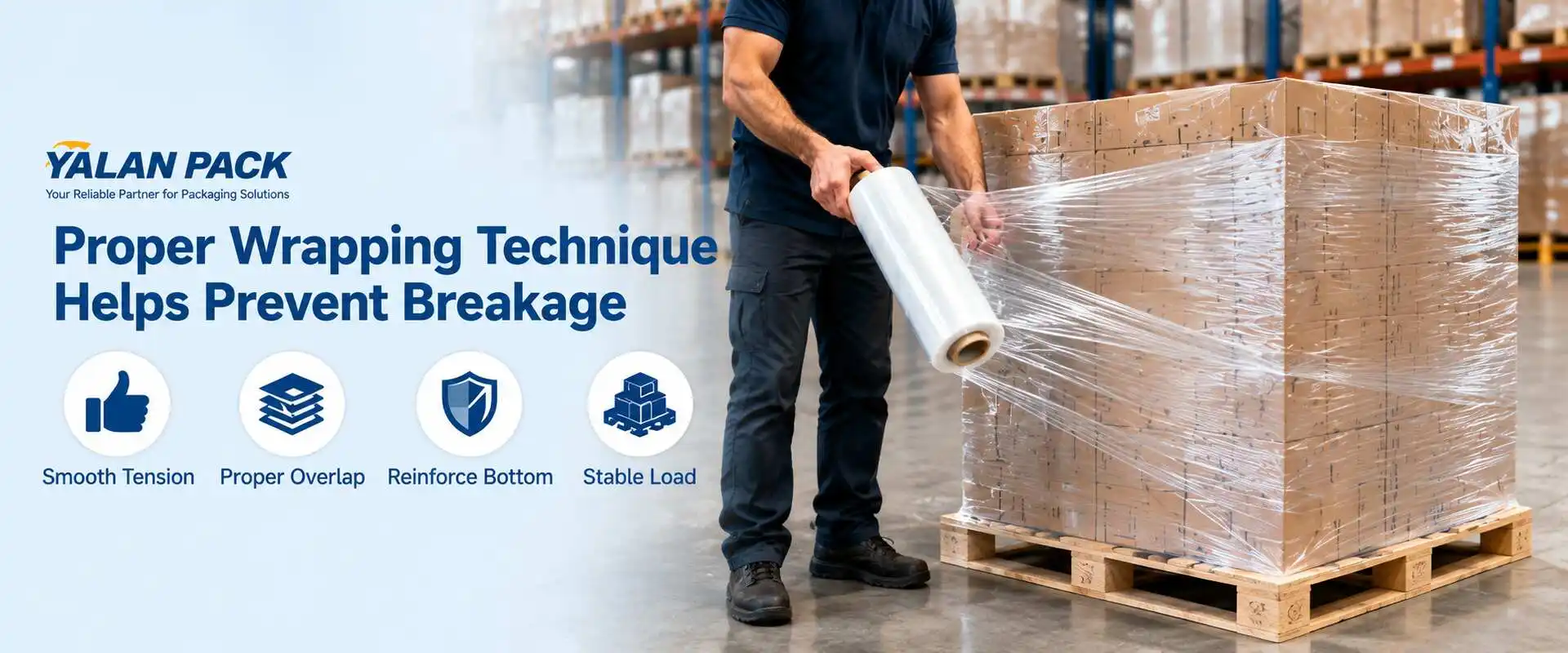
Sudden pulling of the film, inconsistent tension, insufficient overlap between layers, and abrupt changes in winding direction can all cause localized stress concentration, leading to film breakage.
When winding, the operator should apply steady pressure, maintain uniform tension, and ensure appropriate overlap between each layer. Special attention should be paid to the edges and corners of the pallet, the bottom of the pallet, and the transition area where the goods meet.
When different personnel use the same film, and there are significant differences in consumable usage and breakage rates, it is highly likely that the problem stems from the wrapping technique.
How to pinpoint the root cause of repeated stretch film breakage?
The location and timing of the film breakage can provide crucial clues for investigation.
Damage Phenomena and Corresponding Potential Causes:
· Tearing concentrated at the corners of cartons: puncture stress from sharp edges.
· Direct breakage during film stretching: excessive tension or mismatched film specifications.
· Breakage occurring at fixed points during machine operation: equipment parameter settings issue or goods shape/structure problem.
· Tearing starting from the edge of the roll: damage to the film roll itself.
· Frequent, irregular breakage: insufficient film quality stability or on-site operating conditions.
· Higher breakage rate due to individual operators: personnel wrapping process issues.
· Significantly increased breakage when goods are heavy or irregularly shaped: inappropriate film specifications.
Do not blindly replace with thicker film. It is recommended to record the starting location of the film cracks and the type of goods on the pallet to confirm whether the problem is an isolated roll failure or occurs with every roll. This information can significantly improve troubleshooting efficiency.
Is it necessary to replace with thicker stretch film to reduce breakage?
Effective in some scenarios, but not a universal solution.
If the existing film's puncture and tear resistance truly fails to meet operational requirements, upgrading from 15 microns to 17 or 20 microns can improve the damage situation.
However, if the root cause is damage from roll impacts, sharp corners of goods, or excessively high equipment tension settings, simply increasing the film thickness will only raise consumable costs without solving the core problem.
We recommend troubleshooting in this order: Check the load status of the goods → Check the integrity of the film roll → Verify the winding tension → Confirm equipment parameters and personnel operating procedures → Evaluate the overall performance of the film → Finally, consider changing the film specification.
This process can avoid unnecessary film waste.
What information should be provided when reporting the problem to the film supplier?
If the damage persists, don't just simply describe the film keeps breaking; try to provide information about the actual on-site operating conditions.
Valid information includes: film width and thickness (in microns), roll length or net weight, whether it's suitable for manual or machine operation, pallet size and weight, type of goods, and location of the tear; if it's for machine use, also attach the current equipment parameters. Attaching photos or short videos of the damaged area can help suppliers pinpoint the problem more quickly.
Yalan Packaging supplies hand-held stretch film, machine-made stretch film, pre-stretch film, colored stretch film, and custom LLDPE stretch film suitable for various pallet wrapping applications.
When faced with recurring film damage, don't simply choose thicker film. Instead, identify the root cause of the damage, select the appropriate film product and packaging solution, ensuring stable protection for palletized goods while rationally controlling film consumption and overall packaging costs.


Contact Us
In This Article
Related Posts
What Is the Difference Between Net Weight and Gross Weight of Stretch Film?
Sep 10, 2026
How Much Stretch Film Is Needed to Wrap One Pallet?
Sep 09, 2026
Why Does Stretch Film Break During Pallet Wrapping?
Sep 08, 2026
15 Micron vs 17 Micron vs 20 Micron Stretch Film: What Is the Difference?
Sep 07, 2026


