







How Much Stretch Film Is Needed to Wrap One Pallet?
By hqt
Sep, 2026Related Posts


How Much Stretch Film to Wrap a Pallet depends on load dimensions, film width, wrap layers, and pre-stretch settings. Using too little film can reduce load stability, while excess wrapping increases packaging costs and material waste. This guide explains how to estimate film consumption for a standard pallet, calculate cost per pallet, and adjust wrapping methods for different shipment needs. You’ll also learn practical ways to balance secure pallet containment with efficient stretch film use in everyday warehouse packaging operations.
What factors determine stretch film consumption per pallet?
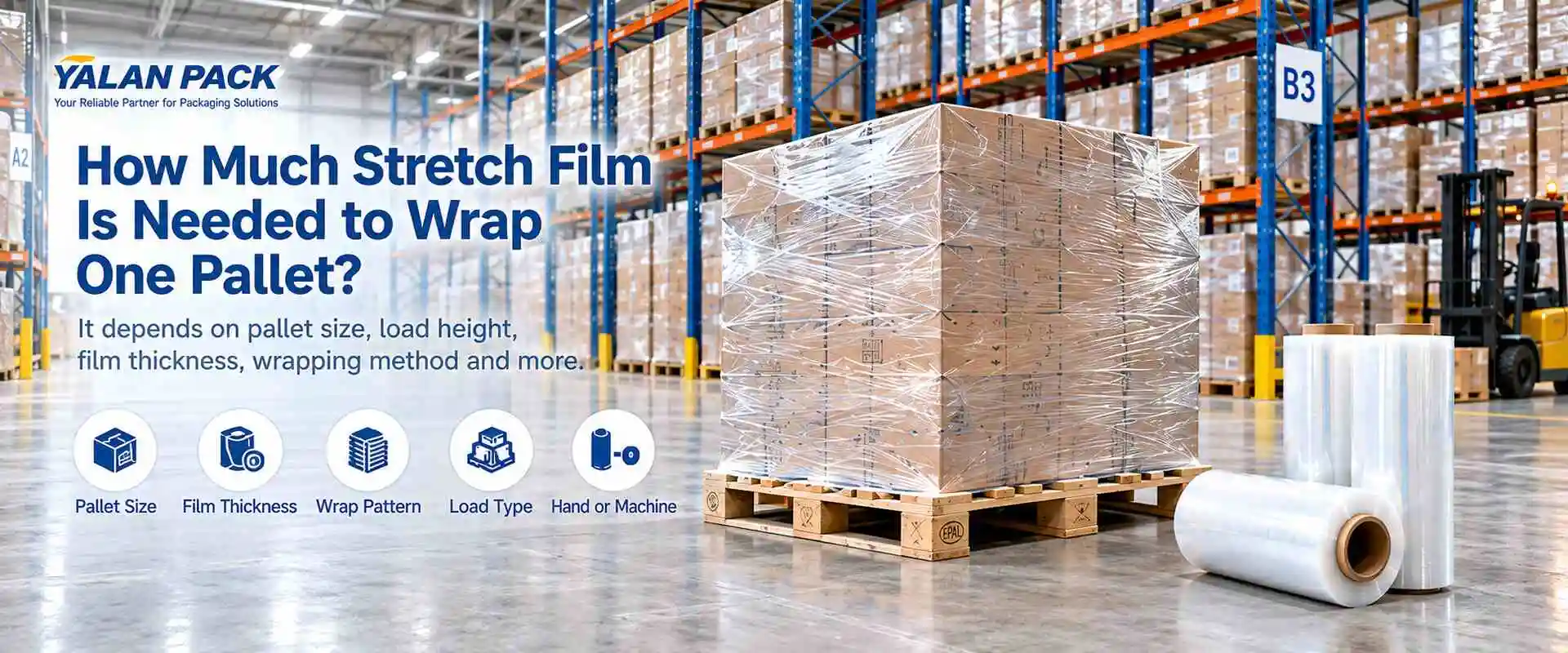
Even if two pallets have identical external dimensions, the actual amount of stretch film used can vary significantly. Key influencing factors include:
· Pallet length and width
· Total height of the loaded pallet
· Film width
· Film thickness
· Number of wraps
· Overlap ratio between layers
· Reinforcement wrapping at the top and bottom of the pallet
· Stretch / pre-stretch ratio
· Load shape and stacking stability
· Manual vs. machine wrapping
Generally, taller pallets consume more film than shorter ones. If the load is unstable or irregularly shaped, additional wraps may be required for reinforcement, even if the pallet dimensions are relatively small.
Therefore, without specifying the actual pallet conditions and wrapping process, it is difficult to provide an accurate answer to the question, How many meters of stretch film are needed for one pallet?
How can stretch film consumption per pallet be estimated?
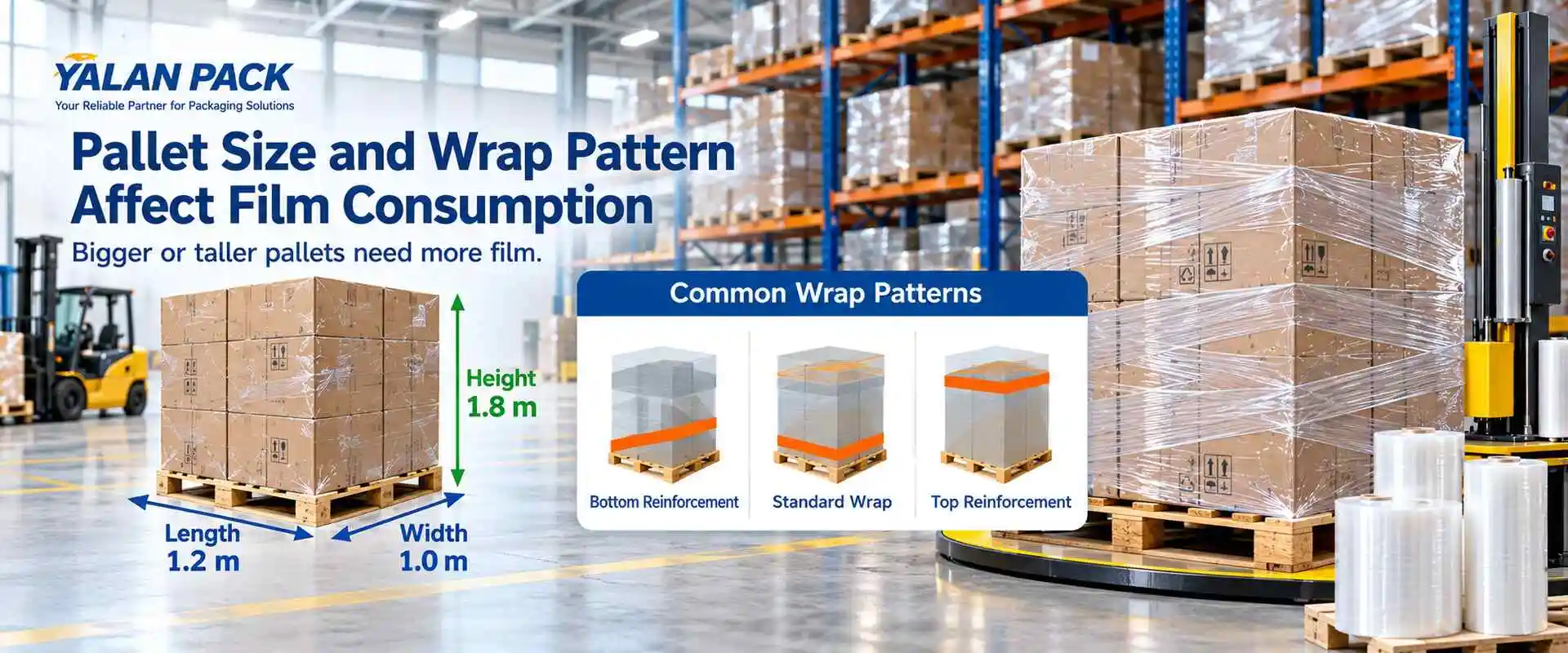
A simple estimation method: Calculate the length of film required to wrap around the pallet once, then multiply that figure by the effective number of wraps. Formula for calculating the length of a single wrap around a rectangular pallet: Distance per wrap = 2 × (Pallet Length + Pallet Width).
Example: Loaded pallet base dimensions of 1.2 m × 1.0 m. Calculation: 2 × (1.2 + 1.0) = 4.4 m/wrap. If the wrapping plan requires 20 wraps, the theoretical total length of unstretched film is: 4.4 × 20 = 88 m.
However, this is merely a rough estimate based on geometric dimensions. Actual film consumption will vary because stretch film elongates during application; additionally, factors such as layer overlap, corner reinforcement, and the shape of the load affect the total amount of film consumed from the roll.
Therefore, this formula is suitable only for preliminary planning and general comparisons; actual consumption must be verified through on-site wrapping tests using typical pallets.
How does film width affect material consumption?
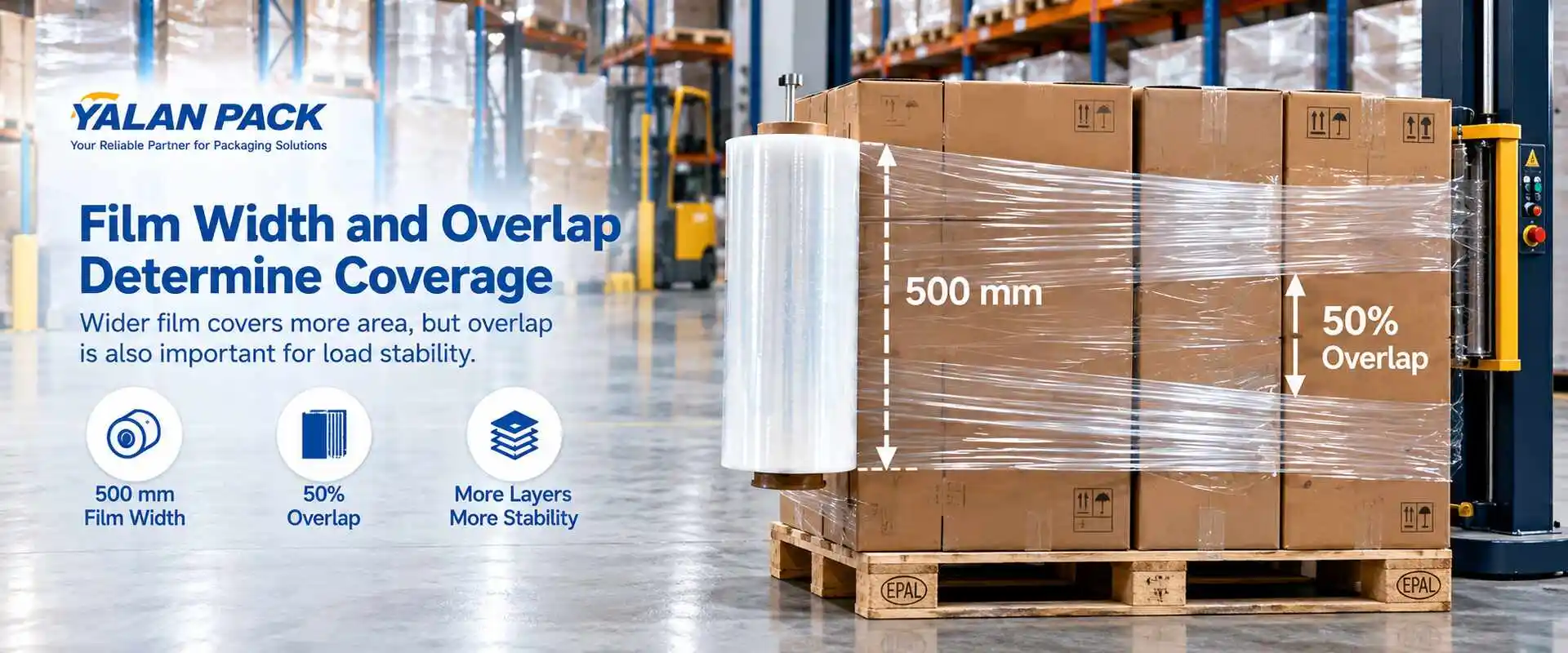
Film width determines the vertical height of the pallet covered by each wrap. The standard width for stretch film is 500 mm, though other widths may be selected based on specific operational requirements.
If a new layer of film overlaps the previous one by approximately 50%, the effective vertical height covered per wrap is only about half the film's width. Example: 500 mm film width × 50% effective advance rate = approximately 250 mm of vertical coverage per wrap.
Consequently, taller pallet loads require more wraps to achieve full coverage. Reducing the overlap ratio can lower film consumption, but insufficient overlap compromises load stability. The goal of selection and operation is not simply to minimize overlap, but to determine a wrapping strategy that ensures the load remains secure.
Does film thickness affect the amount of material used per pallet?
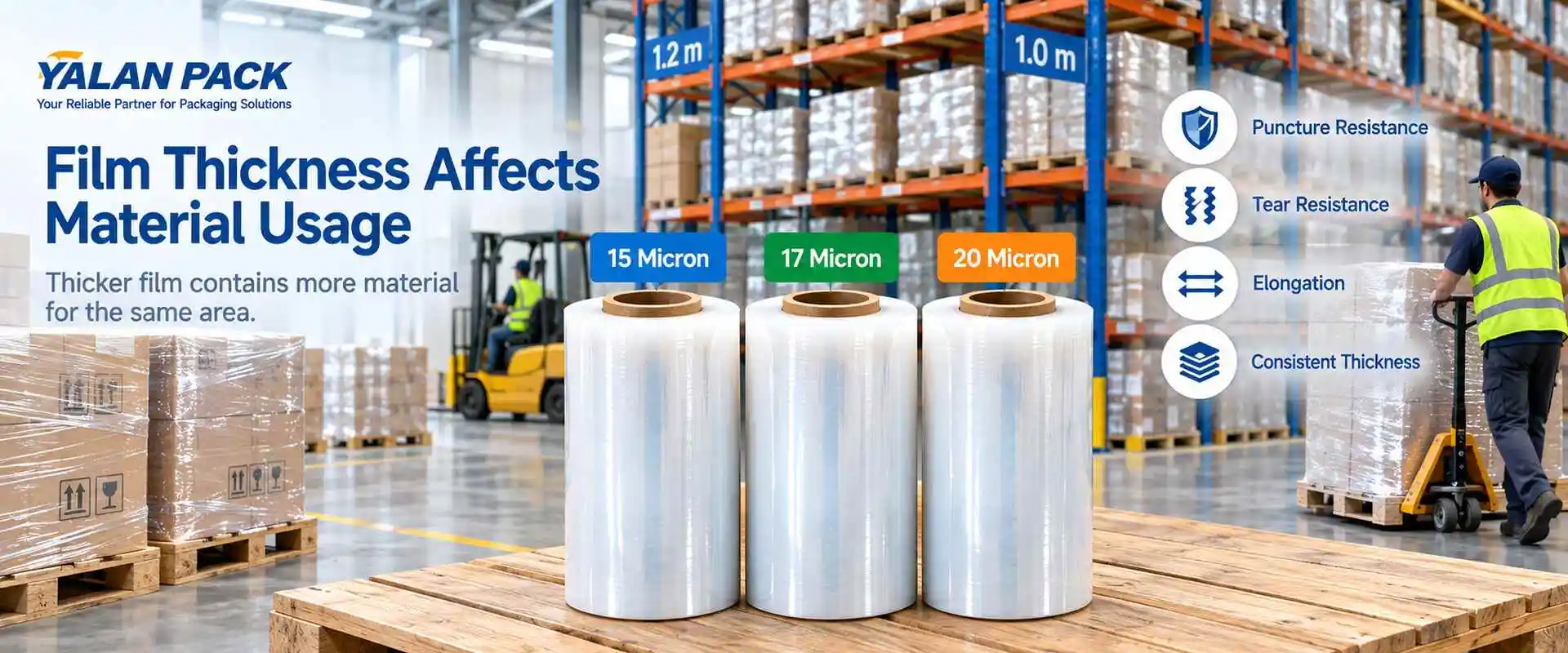
Yes. When wrapping a load of the same surface area, film thickness directly determines the weight of the material used. When film width, coverage area, and material density remain constant, the amount of material required for a 20-micron film is higher than that for 15-micron or 17-micron films.
Relative material usage for the same theoretical film area:
• 15 microns: 100%
• 17 microns: approx. 113%
• 20 microns: approx. 133%
Simply put, for the same film area, a 17-micron film uses about 13% more material than a 15-micron film, while a 20-micron film uses about 33% more.
However, choosing a thinner film does not necessarily reduce the packaging cost per pallet. If a thinner film requires more wrapping revolutions or tears frequently during the wrapping process, the anticipated material cost savings may be offset.
How does pre-stretching affect stretch film consumption?
Pre-stretching is particularly critical in machine wrapping operations. If the stretch film is pre-stretched before wrapping the pallet, a roll of a fixed length can cover a longer wrapping path.
Example: A film with 100% pre-stretch roughly doubles in length after stretching (excluding losses and elastic recovery). However, setting the machine's pre-stretch ratio to 200% or 250% does not mean the warehouse saves 200% or 250% in film usage.
Actual consumption is determined by a combination of factors: film properties, machine parameter settings, wrapping techniques, load containment requirements, and pallet characteristics.
Over-stretching increases the risk of film breakage and may reduce the film's protective effectiveness for specific loads. Therefore, the goal should be to manage film consumption effectively rather than blindly pursuing the highest pre-stretch ratio.
Is the film consumption the same for manual and machine wrapping?
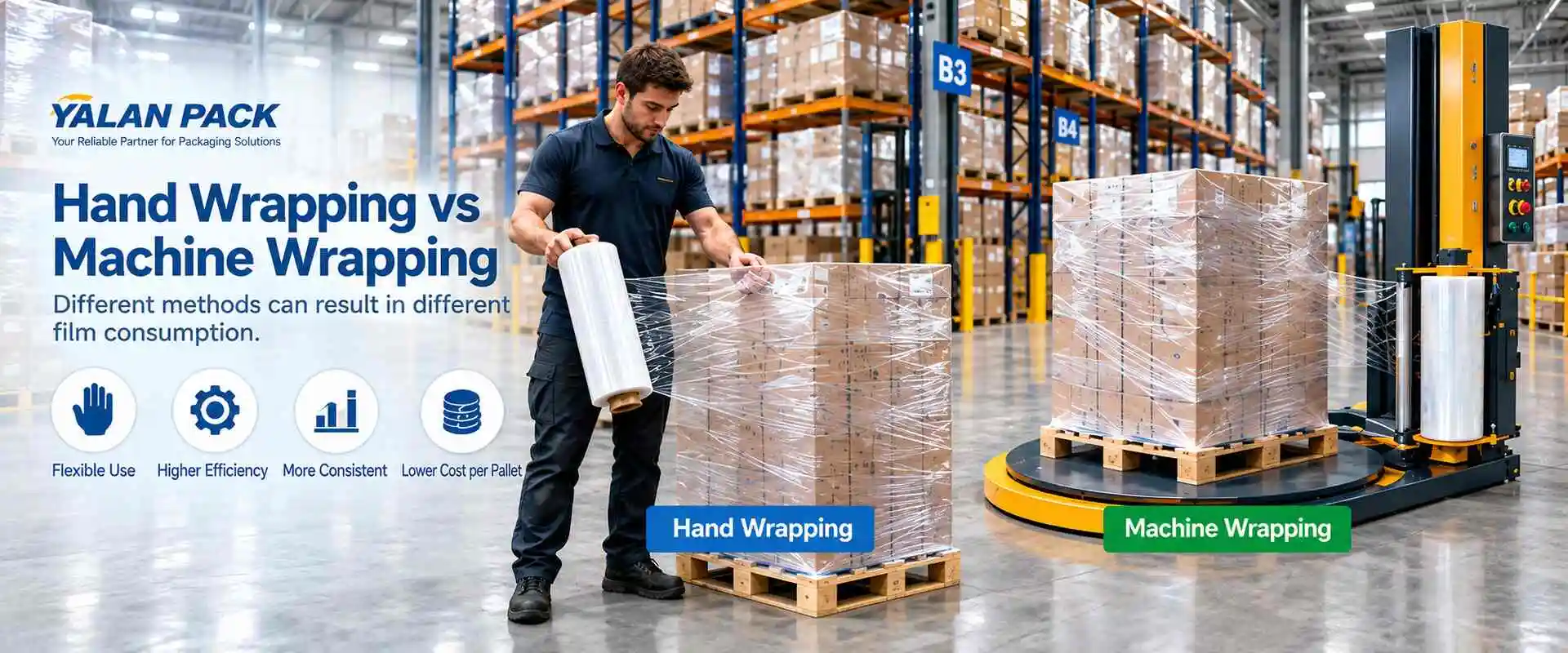
Usually, it is not.
With manual wrapping, film consumption varies significantly depending on the operator; for instance, some workers may apply more tension or wrap more layers than others. These differences manifest across several dimensions: film consumption, wrapping time, pallet stability, and packaging costs.
Machine wrapping allows for consistent control over the pre-stretch ratio, film tension, layer overlap, and the entire wrapping cycle. For warehouses handling large volumes of pallets, this consistency simplifies the process of measuring and optimizing film consumption per pallet.
However, machine wrapping is not necessarily the most economical choice in every scenario; factors such as pallet throughput, equipment investment costs, product types, and production requirements must also be considered.
How do I measure actual stretch film consumption?
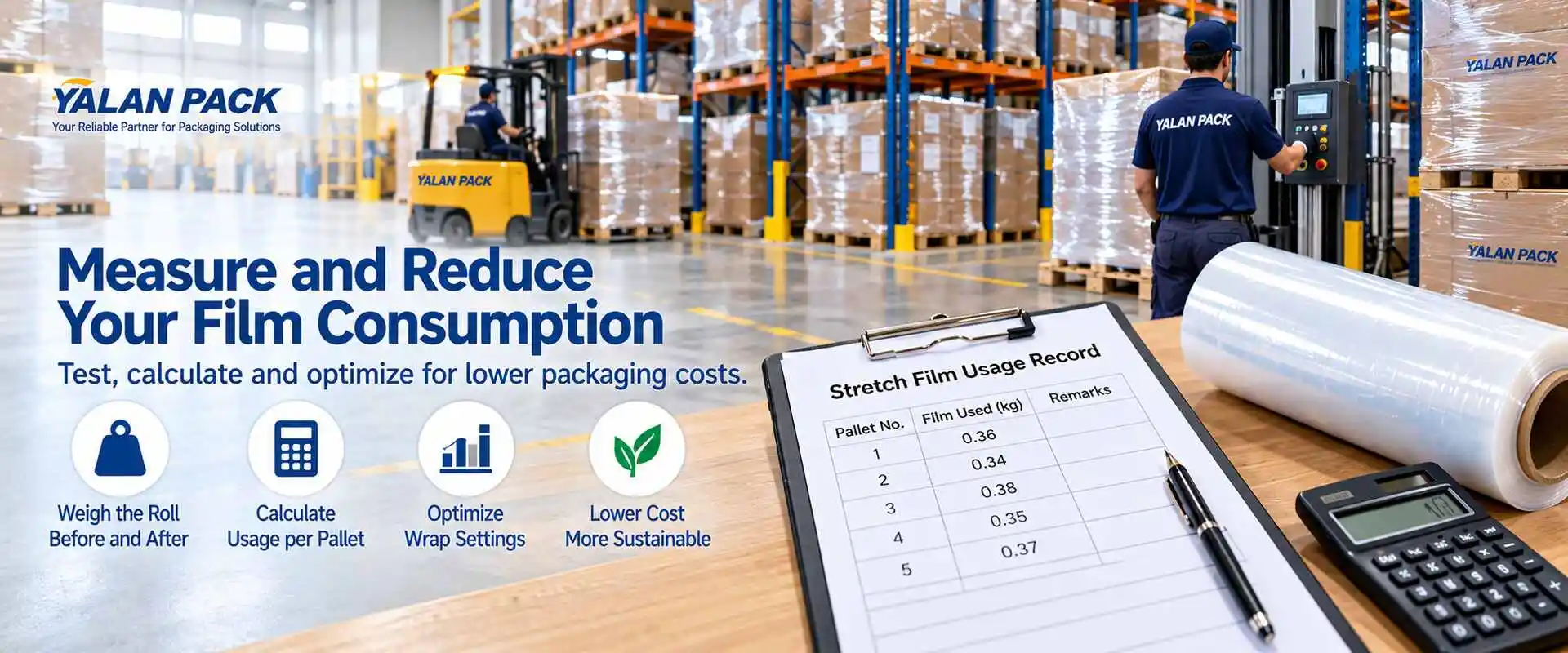
For existing warehouse operations, measuring actual consumption provides much more useful data than relying solely on theoretical formulas. You can follow this simple test procedure:
Step 1: Weigh the full roll of stretch film before wrapping.
Step 2: Wrap the pallet according to standard operating procedures.
Step 3: Weigh the remaining roll.
Step 4: Subtract the remaining weight from the initial weight to determine the amount of film consumed.
Example: Initial roll weight: 3.20 kg; Weight after wrapping: 2.82 kg; Film consumed: 0.38 kg.
It is recommended to repeat the test on several representative pallets rather than drawing conclusions based on data from a single pallet. You can then calculate: Average film consumption per pallet = Total film consumed ÷ Total number of pallets wrapped.
The resulting average can serve as a baseline for comparing different film specifications or wrapping techniques.
How do I calculate the stretch film cost per pallet?
Once you have determined the actual film consumption, calculating the material cost becomes much simpler. Reference formula: Cost of stretch film per pallet = Film consumption per pallet × Unit price of film per kilogram.
Example: A warehouse consumes 0.35 kg of film per pallet, with a unit price of $2.00/kg. Film material cost calculation: 0.35 × $2.00 = $0.70 per pallet.
Consider another type of film: although the price per kilogram is higher, it reduces average consumption to 0.27 kg. Using this film actually results in a lower overall packaging cost per pallet.
This is why professional purchasers compare the total cost per pallet after the load is securely wrapped, rather than simply looking at the price of a single roll of film.
How can stretch film consumption be reduced?
To reduce film consumption, simply cutting the number of wraps is not enough; the key is to optimize the entire wrapping process.
First, verify that the film specifications match the load requirements. Then, evaluate factors such as film tension, layer overlap, number of wraps, bottom reinforcement methods, and operational consistency. Warehouses with high shipment volumes can also test different film thicknesses, high-performance films, or pre-stretched films, or adjust equipment settings.
The core criterion is always: can film consumption be reduced while maintaining load stability? If reducing film usage increases the risk of cargo damage or pallet tipping, the savings on material costs are not true savings.
What information should be provided when consulting a stretch film supplier?
To receive recommendations on suitable film specifications and estimates of material consumption, please provide detailed information about the palletized load.
Key information required: pallet dimensions (length and width), load stacking height, approximate pallet weight, type of goods, thickness and width of currently used film, wrapping method (manual or machine), current roll specifications, and the number of pallets wrapped daily or monthly. Attaching photos or videos of actual pallets helps the supplier identify issues such as sharp corners, unstable stacking, or areas requiring excessive wrapping.
Yalan Pack offers a wide range of stretch films—including hand-grade, machine-grade, pre-stretched, and custom LLDPE options—available in various widths, thicknesses, roll lengths, net weights, and core specifications.
For standard pallet wrapping operations, the optimal approach is to conduct on-site tests using representative loads to comprehensively calculate film consumption per pallet, pallet stability, and overall packaging costs.
Final Answer:Exactly how much stretch film is needed?
There is no universal standard regarding a fixed length (meters) or weight (kilograms) that applies to every pallet. Accurate calculation requires considering multiple factors: pallet dimensions, load height, film width, overlap ratio, number of wraps, film thickness, actual stretch rate, and load stability.
For established workflows, the most practical method is to measure the actual weight of film consumed on several representative pallets and calculate the average. This figure offers greater value to purchasers than the unit price of the roll itself; it also establishes a quantitative baseline, enabling a reduction in film usage without compromising pallet stability.
FAQ
1. How much stretch film is typically needed to wrap one pallet?
The amount of stretch film needed depends on pallet dimensions, load height, film thickness, and the number of wrapping layers. Taller or irregular loads generally require more film. For an accurate estimate, consider the wrapping pattern, overlap percentage, and pre-stretch ratio rather than relying on a fixed amount per pallet.
2. How do I calculate stretch film consumption per pallet?
Start by measuring the pallet's length, width, and load height. Estimate the number of film revolutions based on the effective film width, overlap, and required wrapping layers. Multiply the number of revolutions by the approximate wrapping perimeter, then account for pre-stretch to estimate the original film length consumed.
3. Does stretch film thickness affect pallet wrapping costs?
Yes. Thicker stretch film generally uses more material by weight for the same unstretched length and width, which can increase packaging costs. However, thinner film is not always more economical if additional layers are required. Compare film performance, load stability, and total material consumption before choosing a thickness.
4. What is the difference between hand wrapping and machine wrapping film consumption?
Hand wrapping depends on operator technique, applied tension, and overlap consistency. Machine wrapping can provide more controlled film application and repeatable pre-stretch settings. This may reduce material consumption for suitable loads, although actual savings depend on the equipment, film grade, and wrapping program.
5. How can I reduce stretch film usage without compromising pallet stability?
Optimize film tension, overlap, wrapping layers, and pre-stretch settings according to the load requirements. Choose a suitable film grade and maintain consistent wrapping patterns. Regularly measuring film consumption and checking load stability can help identify unnecessary material use while maintaining appropriate shipment protection.


