







Common Export Packaging Compliance Requirements for Different Regions
By hqt
Sep, 2026Related Posts

What Is the Difference Between Net Weight and Gross Weight of Stretch Film?
Sep 10, 2026

How Much Stretch Film Is Needed to Wrap One Pallet?
Sep 09, 2026

Why Does Stretch Film Break During Pallet Wrapping?
Sep 08, 2026
15 Micron vs 17 Micron vs 20 Micron Stretch Film: What Is the Difference?
Sep 07, 2026
The criteria for evaluating export packaging go beyond mere protection of goods during transit. For many overseas buyers, packaging must also meet a range of requirements regarding material safety, recyclability, labeling, waste management, and compliance documentation.
The practical challenge lies in the absence of a universally accepted standard for packaging compliance. The same stretch film, sealing tape, or plastic strapping might be compliant in one market yet face entirely different documentation requirements and environmental regulations in another. Applicability depends on the entity placing the product on the market, the packaging category, and the actual usage scenario.
By fully understanding regional regulatory differences during the production phase, exporters can avoid the high costs associated with remedial work or reworking caused by non-compliant packaging later on.
European Union: Recyclability and Packaging Waste Management Are Increasingly Critical
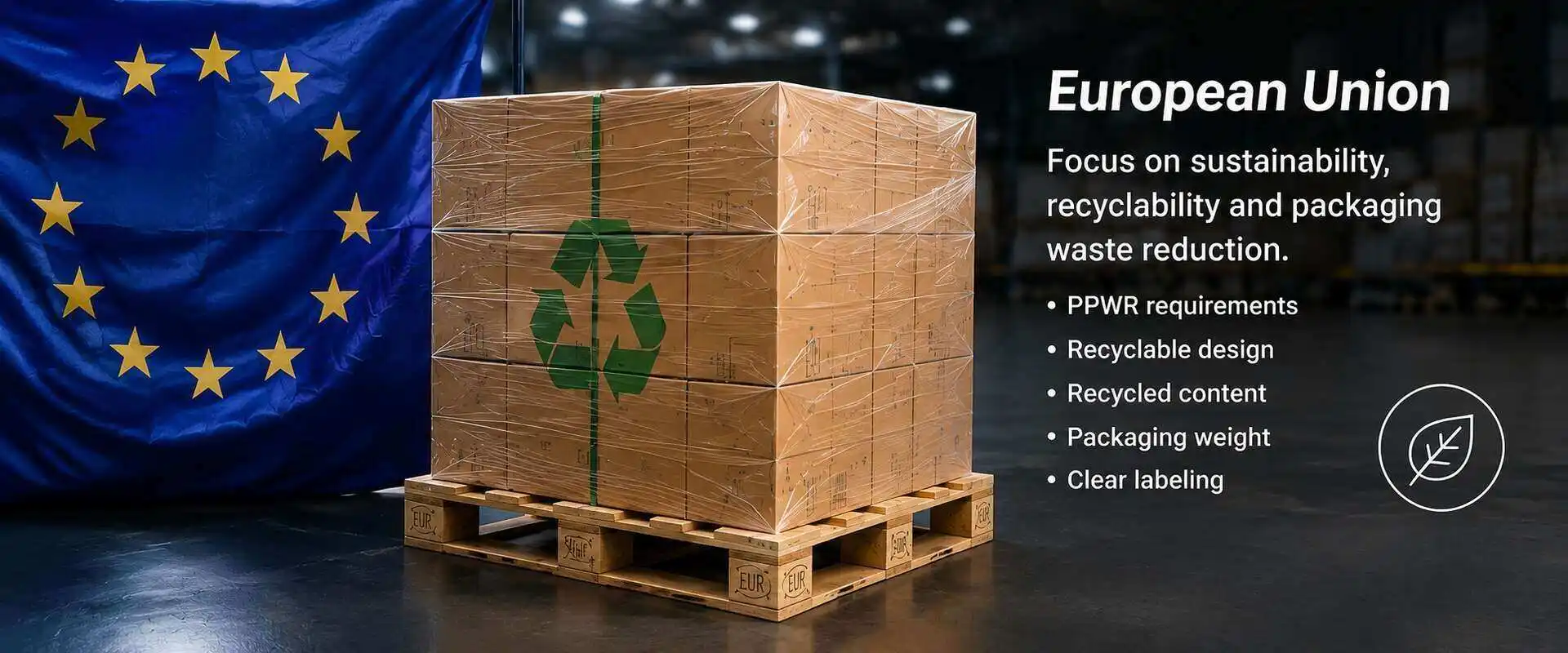
Europe is one of the most heavily regulated packaging markets. The EU’s Packaging and Packaging Waste Regulation (PPWR) has introduced increasingly detailed rules regarding packaging design, recyclability, recycled content, labeling, and waste reduction. This means exporters must approach packaging selection by considering the entire packaging system rather than viewing individual materials in isolation.
Consequently, when evaluating plastic transport packaging such as stretch film or strapping, one must consider not only mechanical performance but also material composition and end-of-life disposal.
Buyers are increasingly requesting the following information: material composition details, recyclability data, recycled content, packaging weight specifications, product technical specifications, and declarations of conformity or supporting test reports.
However, this does not mean every roll of stretch film requires the same set of certifications. Actual requirements depend on the packaging category, operating conditions, and the division of responsibilities within the supply chain. For suppliers dealing with European clients, compiling and maintaining comprehensive, clear material and technical dossiers has become a crucial task.
United Kingdom: Broad Alignment, Yet Independent Regulations
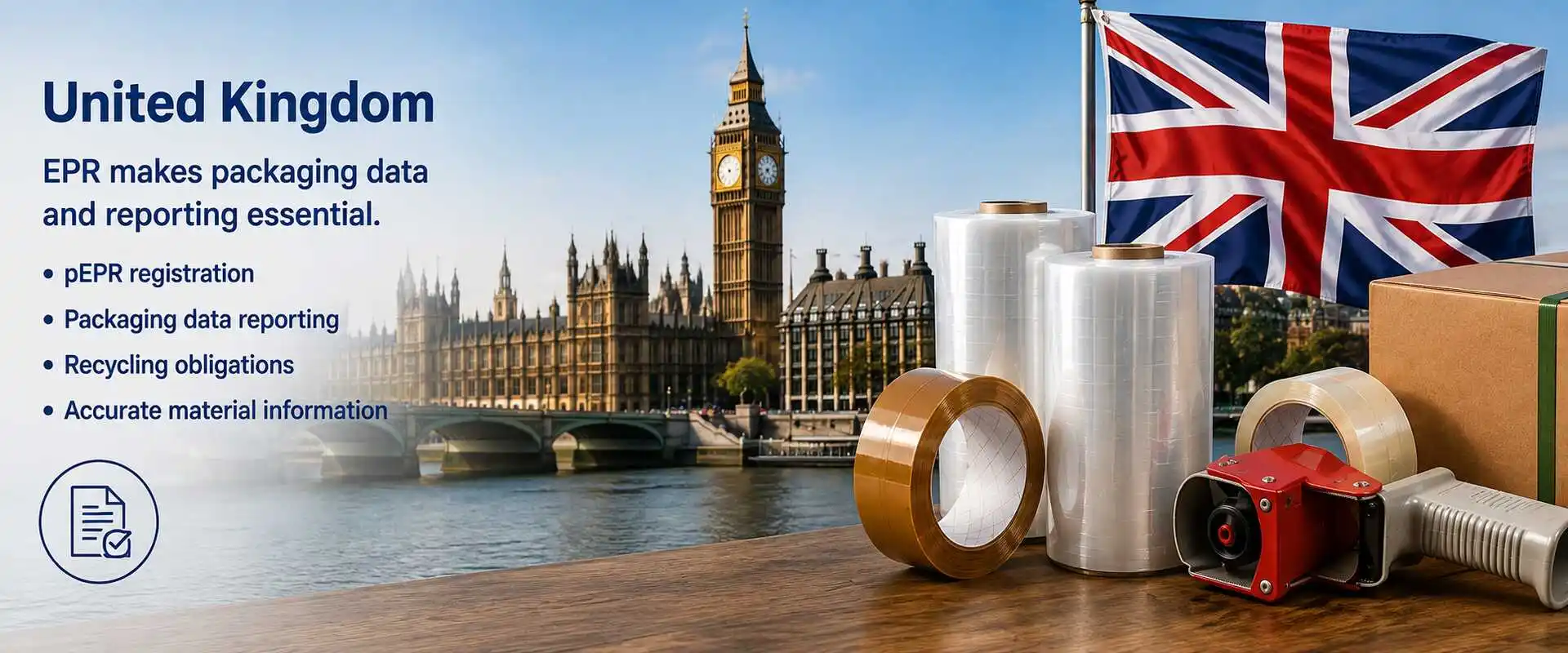
Following Brexit, exporters cannot assume that EU packaging regulations apply directly to the UK market. The UK maintains its own independent framework for Extended Producer Responsibility (EPR) regarding packaging. Enterprises that supply or import packaged goods or finished products in packaging must fulfill statutory obligations—such as registration, packaging data reporting, recycling, and waste disposal—based on their company size and role in the supply chain.
Consequently, overseas packaging suppliers are frequently asked by clients to provide precise data on packaging materials and weights to facilitate local compliance reporting. This is particularly critical when supplying large quantities of stretch film, sealing tape, or strapping.
A practical rule of thumb: Compliance requirements for the EU and the UK must be verified and confirmed separately.
United States: Regulatory variations across states
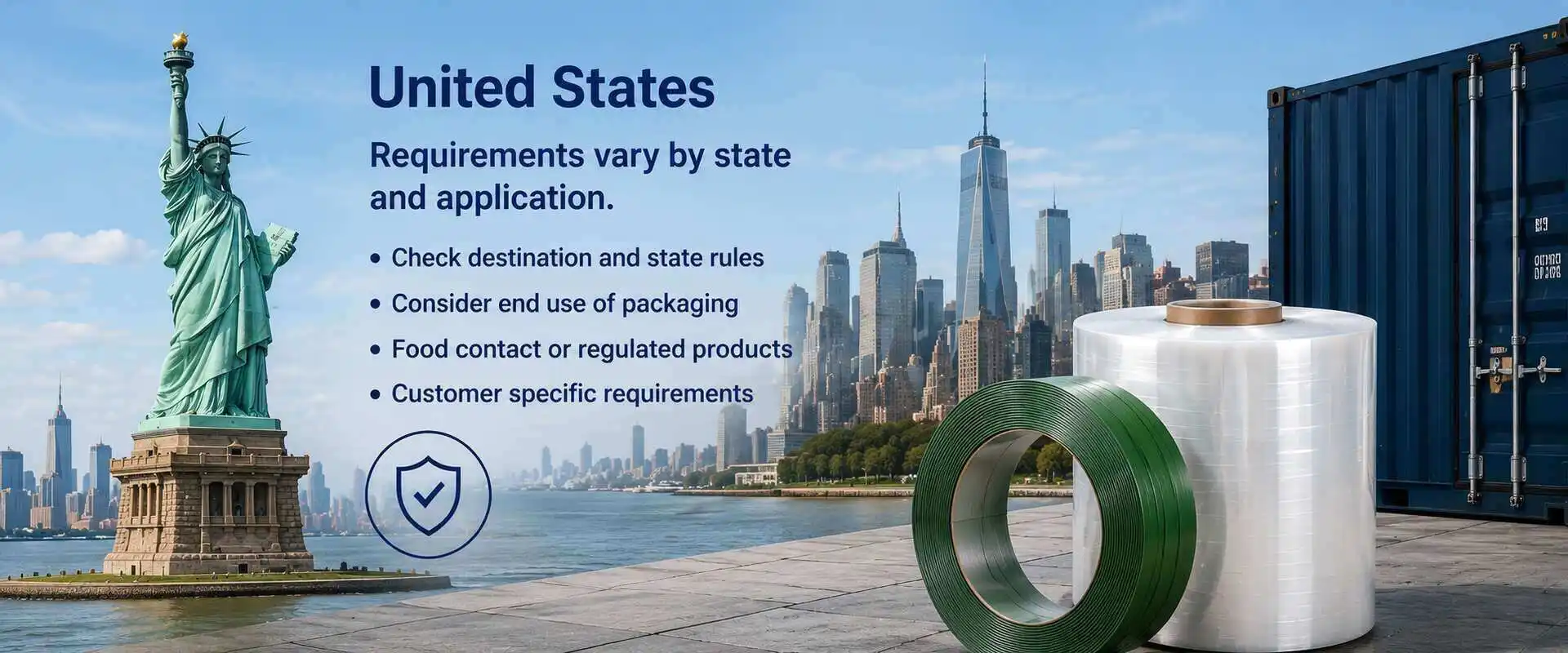
There is no single, unified packaging regulation in the U.S. that covers all packaging scenarios nationwide in the same way as the EU’s PPWR. While federal regulations govern specific products and materials, individual states may enact additional rules regarding packaging waste, recycling, chemical substances, and producer responsibility.
For industrial packaging buyers, the primary focus usually lies on product specifications, material declarations, and safety documentation.
Exporters must verify the specific state of sale and the intended end-use scenario for their goods. Verification is especially crucial for custom packaging or packaging intended for regulated categories such as food or chemicals.
When conducting compliance assessments for standard pallet consumables like stretch film or PET strapping, prioritize the actual application rather than simply asking, "Does this product meet U.S. standards?"
Japan: Consistency between documentation and materials is crucial

Japan has established a highly mature management system for containers, packaging, and recycling.
When dealing with overseas suppliers, Japanese buyers place extremely high demands on specification consistency, product traceability, and the accuracy of documentation.
Take stretch wrap, for example: beyond basic parameters like width and thickness, buyers often specify detailed metrics such as net film weight, paper core dimensions, outer packaging methods, and material composition.
This highlights a key insight regarding export compliance: regulatory compliance and meeting customer specifications are not the same thing.
Even if a product meets mandatory local legal requirements regarding materials, it will still be rejected if the actual parameters do not match the specifications confirmed and approved by the customer. Exporters must manage both sets of requirements effectively.
Australia: Packaging sustainability is increasingly a key procurement consideration
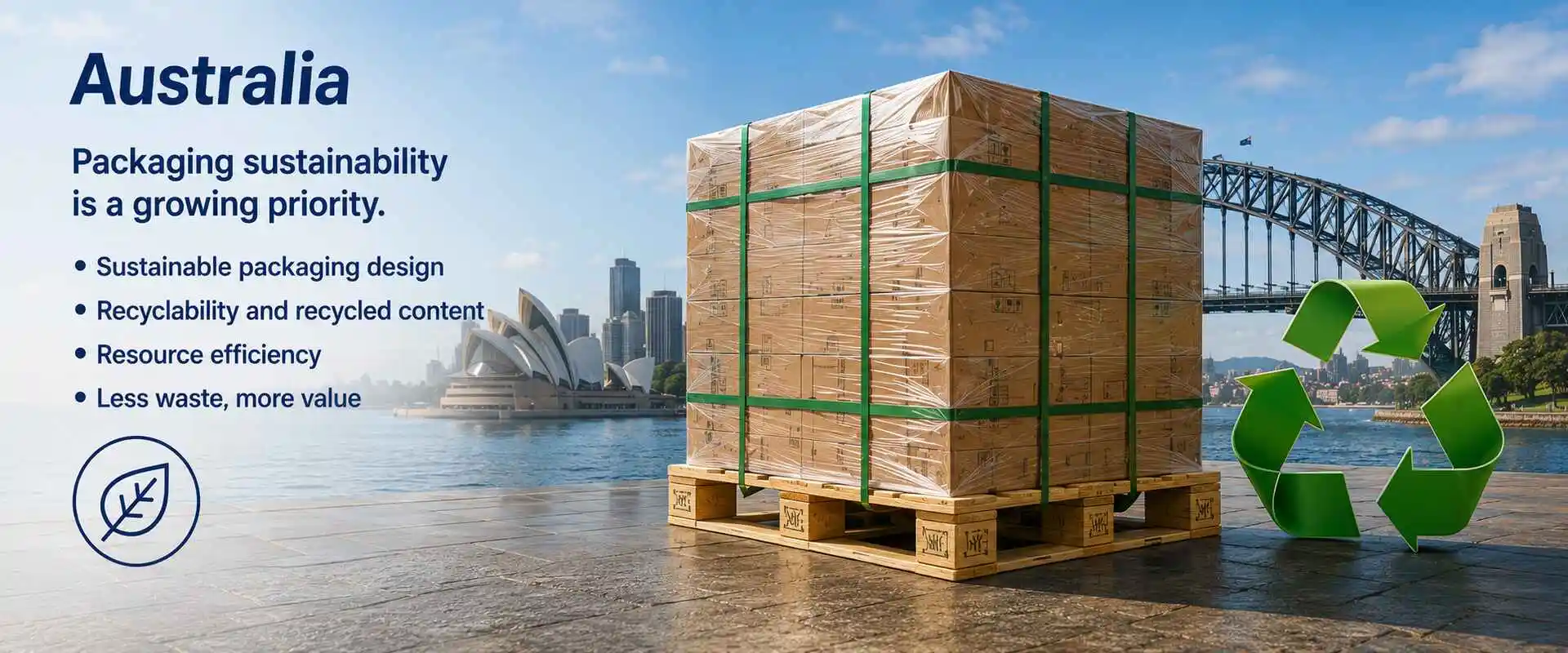
Australia has also been actively working to reduce the environmental impact of packaging.
The Australian Packaging Covenant framework encourages businesses to improve packaging sustainability; national-level targets promote reusable, recyclable, or compostable packaging while enhancing resource efficiency.
Consequently, plastic packaging suppliers will find that customers increasingly inquire about product recyclability, the percentage of recycled content, and the potential to eliminate redundant packaging materials.
It is important to distinguish between mandatory compliance requirements and sustainability goals: not all environmental objectives translate directly into mandatory regulations, yet such industry trends still influence procurement choices and supplier evaluations.
Wooden pallets require specific, focused verification
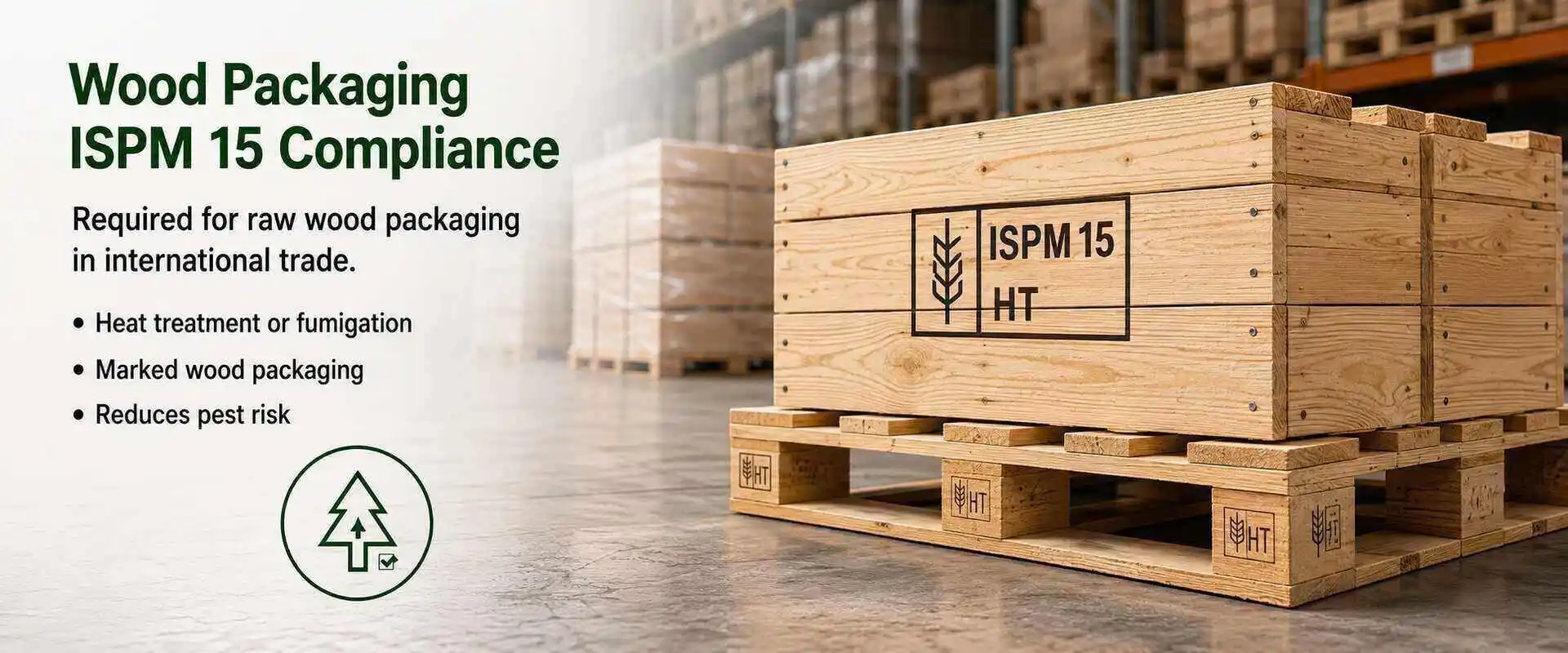
Packaging compliance extends beyond plastic packaging consumables.
International trade involving solid wood pallets, wooden crates, or wooden supports triggers phytosanitary regulations; the standard exporters encounter most frequently is ISPM 15, which governs wood packaging.
Phytosanitary requirements for wood packaging operate under a different regulatory framework than compliance standards for stretch wrap, adhesive tape, and strapping.
Depending on destination country regulations and load-bearing requirements, exporters may opt for pallets made of plywood, composite materials, or other specially treated, quarantine-exempt alternatives. Pallets themselves must be included in compliance reviews; they cannot simply be treated as ordinary shipping accessories.
Establish compliance dossiers for various packaging products
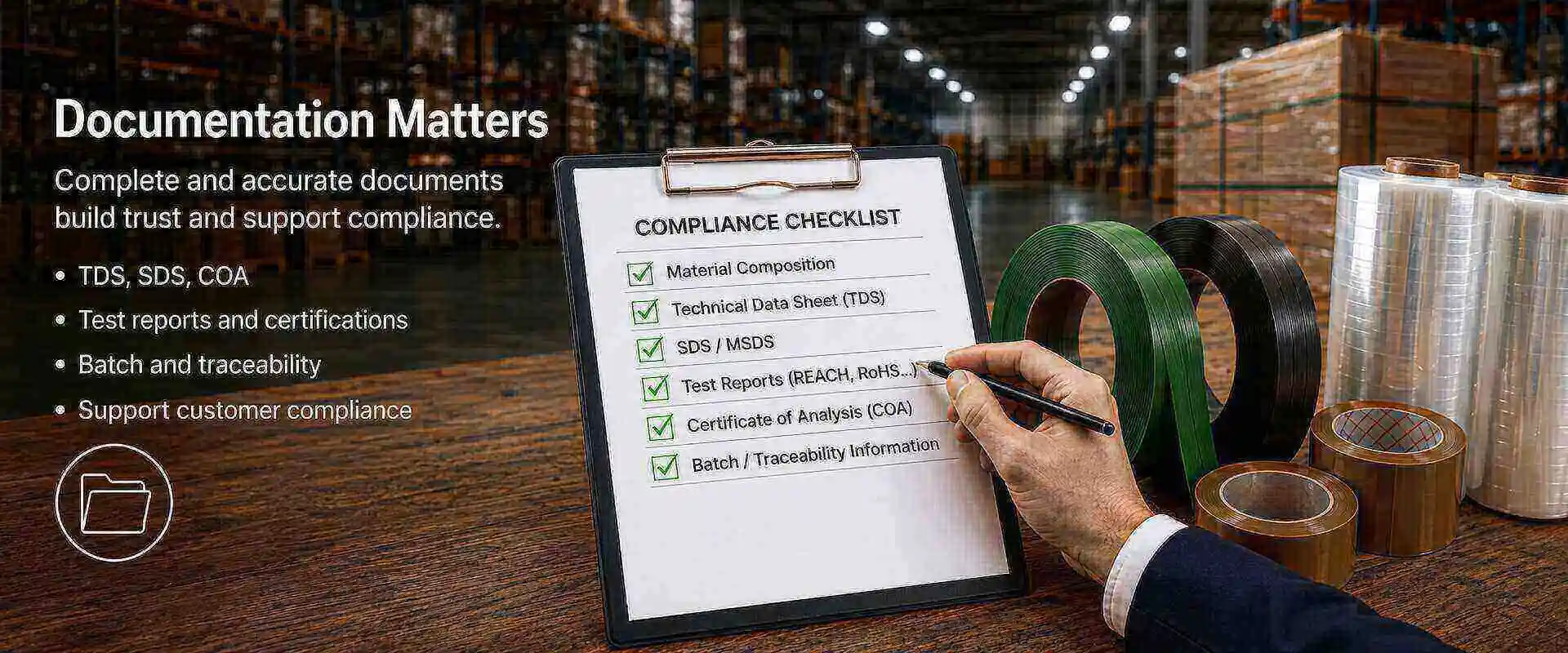
For enterprises engaged in frequent export operations, an efficient and practical approach is to compile and organize a complete set of documentation for each category of packaging material.
For stretch film, carton sealing tape, strapping, and other pallet packaging consumables, the standard documentation package typically includes:
· TDS (Technical Data Sheet): Product technical specifications and physical performance parameters
· MSDS/SDS (Safety Data Sheet): Material composition and safety information (provided where applicable)
· Material composition statement: Listing primary raw materials and components
· Test reports: REACH, RoHS, and other relevant compliance test documents
· COA (Certificate of Analysis): Provided upon request for quality verification of specific batches or shipments
· Traceability data: Production information and batch numbers
Not every customer requires the full set of documents. Providing excessive irrelevant certificates can cause as much confusion as missing information. The specific documentation to be provided should be determined based on the target market, product usage scenarios, and the compliance responsibilities borne by the buyer.
Complete compliance confirmation before finalizing packaging solutions
Compliance assessments for export packaging are best addressed and finalized before mass production begins.
Yalan Packing can provide technical documents and compliance data for stretch wrap, carton sealing tape, and strapping based on product specifications and customer requirements.
However, exporters and importers must still verify the latest regulations applicable to their specific destination markets.
A practical procurement checklist: Which market is the packaging destined for? → What is the product material? → How is it actually used? → Which party is responsible for placing the product on the market? → What documentation is required?
These questions offer more practical value than a vague inquiry about whether a product holds internationally recognized certification.
There is no single universal certificate in the global export packaging industry. True compliance is achieved by effectively aligning material properties, operating conditions, target markets, and supporting documentation before the goods leave the factory.


Contact Us
In This Article
Related Posts
What Is the Difference Between Net Weight and Gross Weight of Stretch Film?
Sep 10, 2026
How Much Stretch Film Is Needed to Wrap One Pallet?
Sep 09, 2026
Why Does Stretch Film Break During Pallet Wrapping?
Sep 08, 2026
15 Micron vs 17 Micron vs 20 Micron Stretch Film: What Is the Difference?
Sep 07, 2026


