







Why Do Pallets Collapse During Transportation? 7 Common Packaging Mistakes
By hqt
Oct, 2026Related Posts
PP Strapping for Cartons: Packaging Challenges in E-Commerce Logistics
Oct 21, 2026

Polypropylene Strapping Under Temperature Changes: Effects on Packaging Performance
Oct 21, 2026

PET Strapping Supplier: Heat-Seal Joint Strength and Sealing Reliability
Oct 21, 2026
PP Strapping Supplier Guide: Smooth vs Embossed Strapping for Automated Packaging
Oct 21, 2026
Palletized loads often collapse during transport due to unstable stacking, uneven weight distribution, unsuitable pallets, insufficient stretch wrapping, improper strapping, inadequate carton strength, or insecure load stabilization.
While a palletized load may appear stable when leaving the warehouse, it is subjected to vibrations, braking, acceleration, and repeated handling during transit. These forces can cause product shifting and carton deformation, ultimately compromising the stability of the entire load.
Understanding common packaging errors helps exporters reduce cargo damage without relying solely on adding more stretch wrap or strapping.
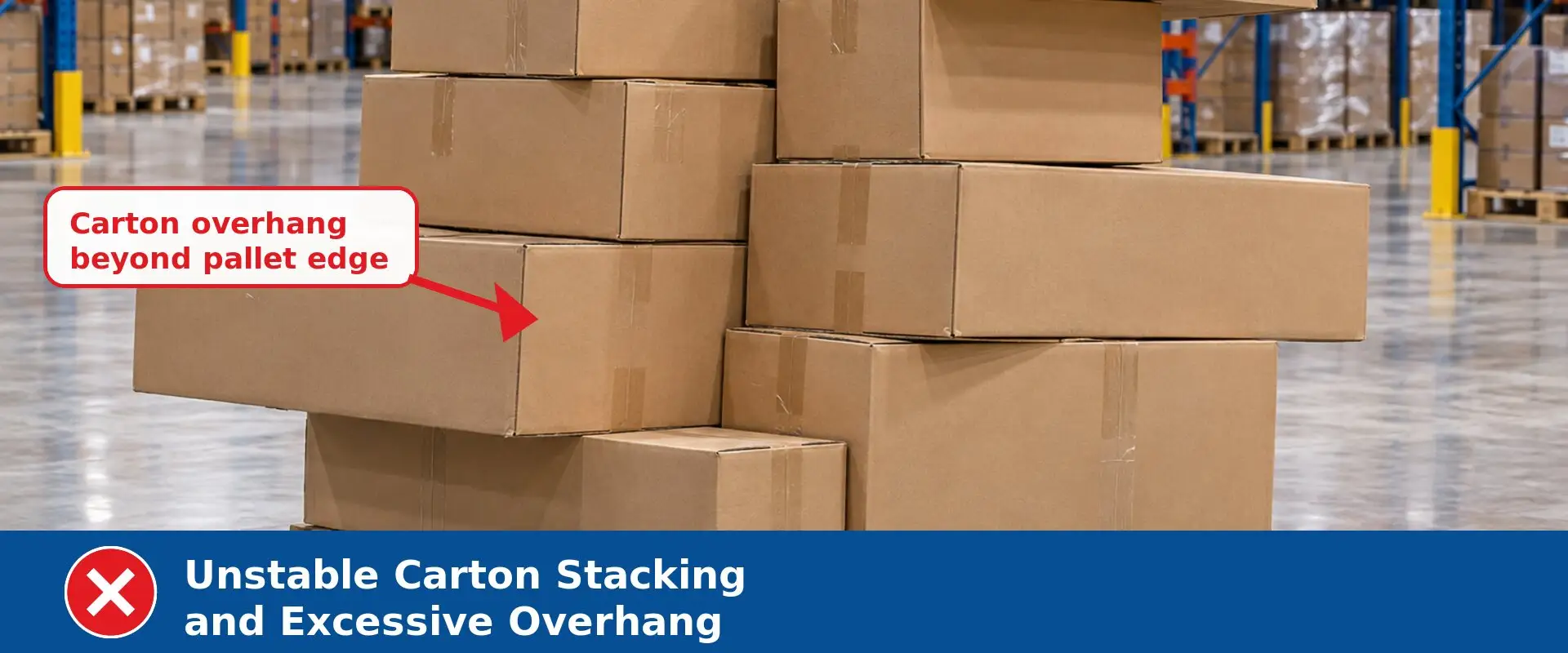
1. Unstable Carton Stacking and Excessive Overhang
One of the most common errors is failing to consider overall load stability when stacking cartons.
If cartons are misaligned, loosely stacked, or extend beyond the pallet edges, they are more susceptible to damage from movement or crushing.
Excessive overhang is particularly problematic because the edges of the cartons lack support from below.
Repeated vibrations during transport can cause uneven load settling, while acceleration and braking increase the risk of cargo shifting.
Proper stacking methods should take into account carton dimensions, pallet specifications, product weight, and packaging strength.
However, there is no universal stacking method suitable for all products. In some scenarios, column stacking (vertical alignment) helps maximize the compressive strength of the cartons, whereas in others, interlocking stacking (cross-stacking) enhances load stability.
The specific arrangement should be determined based on the actual characteristics of the cartons and products.
Best practice: Ensure the load is adequately supported, minimize unnecessary overhang, and select a stacking method that maintains stability during handling and transport.
2. Uneven Weight Distribution and High Center of Gravity
Even if cartons are neatly arranged, a palletized load can still become unstable.
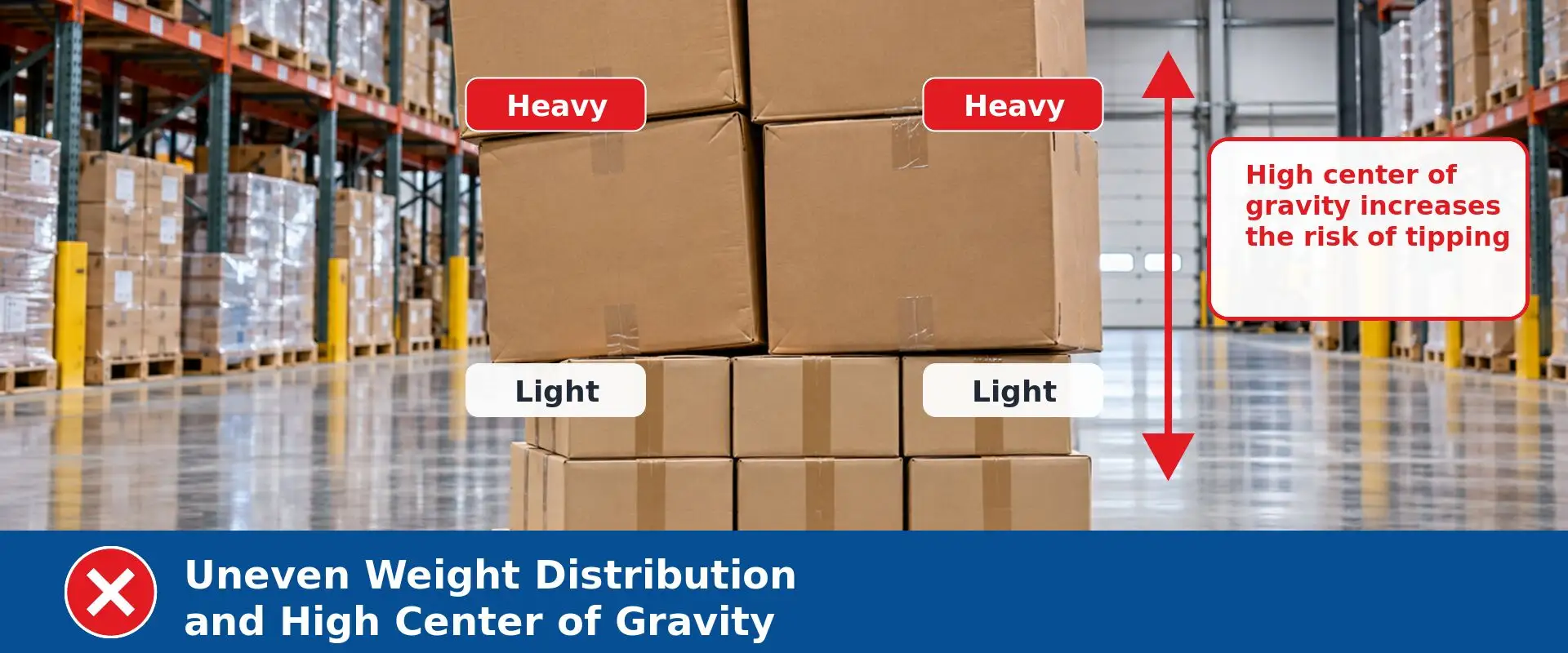
If heavier products are placed primarily at the top or concentrated on one side, the load's center of gravity may become too high or off-center. This increases the risk of tipping during forklift handling, braking, or turning.
Tall, narrow pallet loads are more sensitive to lateral movement than short, wide ones.
Weight distribution is particularly critical for pallets containing mixed products.
Whenever packaging design and product characteristics allow, heavier cartons should generally be placed at the bottom of the stack.
The goal is to create a balanced unit load with an appropriate center of gravity. Best practice: distribute weight evenly, position heavier items strategically, and avoid excessive stacking heights or unstable centers of gravity.
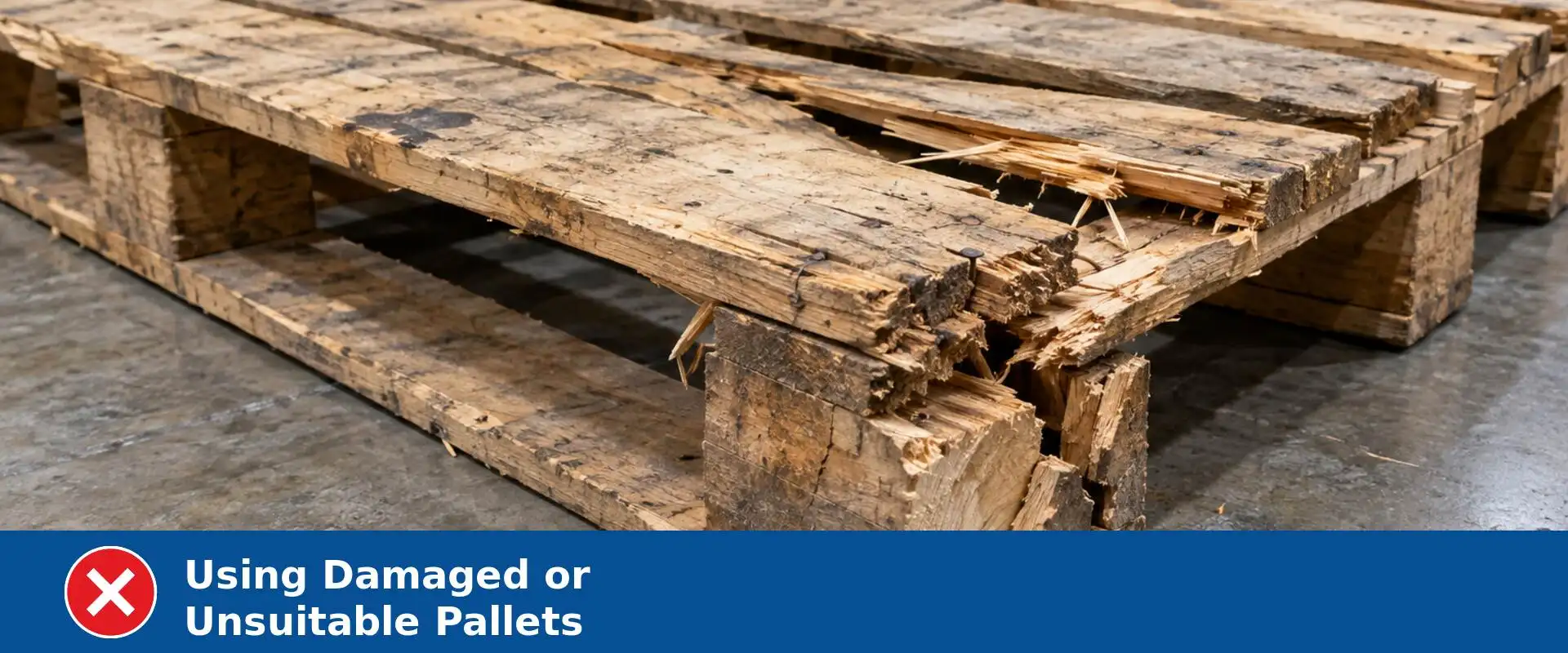
3. Using damaged or unsuitable pallets
The pallet itself is part of the packaging system.
A damaged, broken, or poorly designed pallet compromises its ability to support the load.
Even if the product packaging is intact, the overall structure can become unstable if the pallet bends, breaks, or fails to withstand expected handling conditions.
Buyers should consider pallet dimensions, condition, rated load capacity, and compatibility with forklifts or other handling equipment.
For international shipments involving wooden pallets, relevant phytosanitary requirements (such as ISPM 15 compliance, where applicable) must also be verified.
However, note that ISPM 15 treatment does not guarantee specific structural load-bearing capacity.
Best practice: use pallets matched to the actual load and handling method, and inspect them before loading.
4. Insufficient or improper stretch wrapping
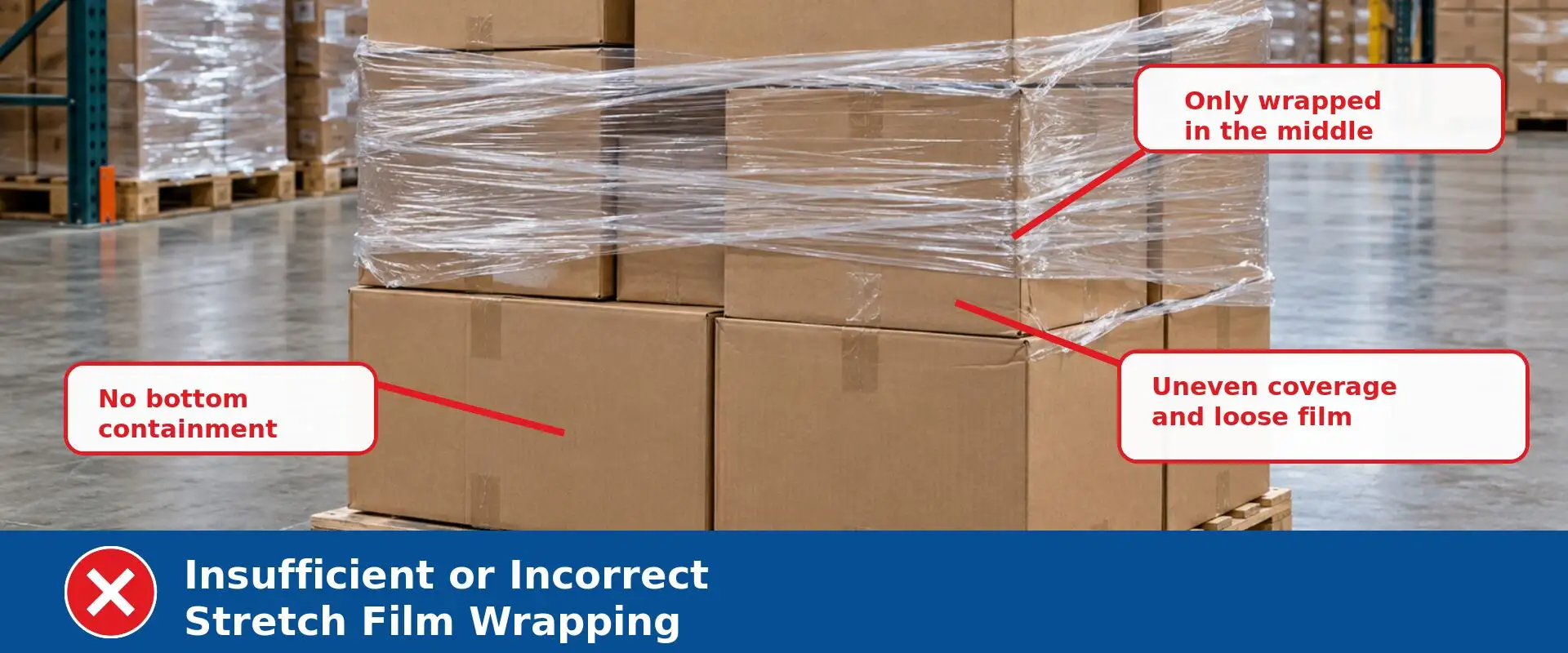
Stretch wrap helps secure palletized products into a single unit, but effectiveness depends on more than just the number of layers.
Common errors include inadequate anchoring at the base, uneven film overlap, inconsistent tension, and the use of unsuitable film.
For example, wrapping only the middle of the pallet may leave bottom cartons insufficiently secured.
Similarly, excessive tension can deform fragile cartons or cause the film to snap.
Film thickness alone does not guarantee stability. Two films of the same thickness (in the micron range) may exhibit different performance characteristics due to variations in formulation and stretching properties.
Inconsistent manual wrapping techniques can also lead to inconsistent results.
Best practice: Establish standardized wrapping protocols covering proper base anchoring, overlap patterns, reinforcement measures, and wrapping tension. Validate the wrapped loads under typical handling conditions.
5. Improper Use of PP or PET Strapping
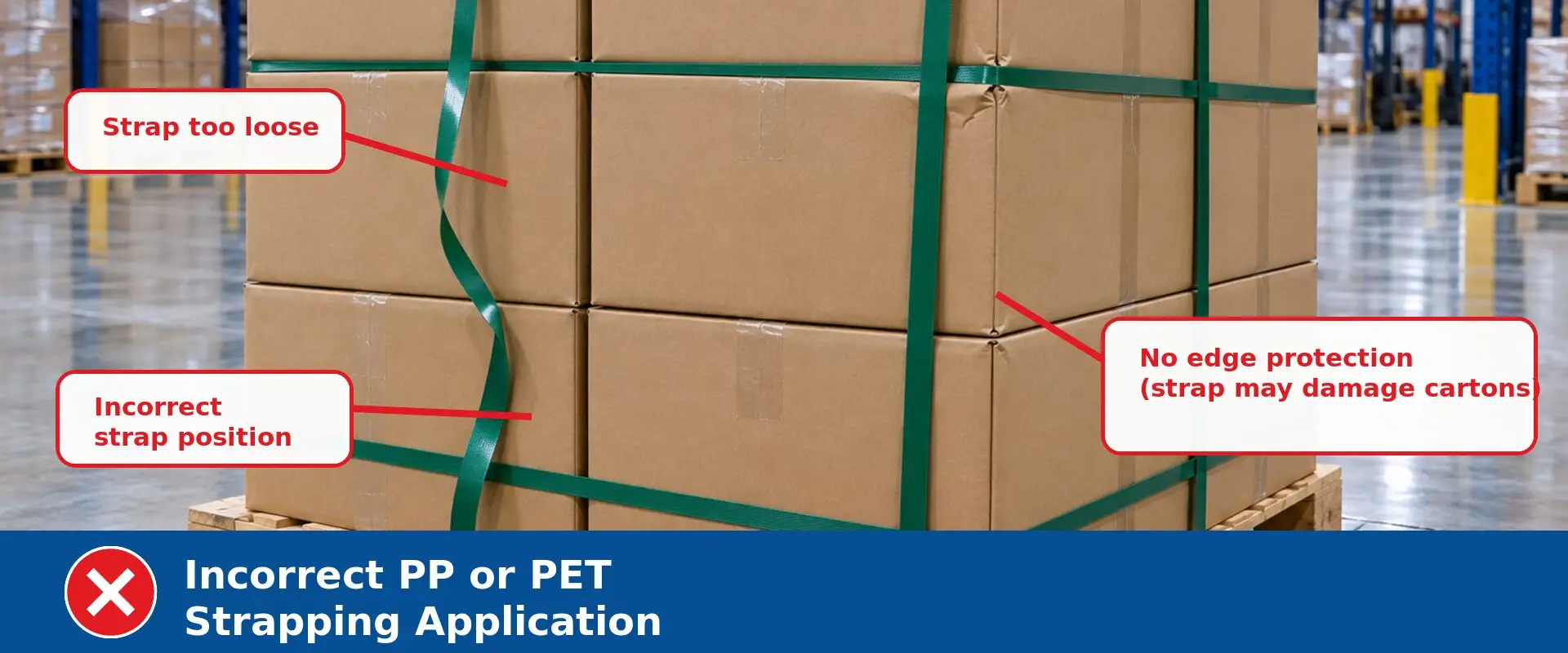
While PP and PET strapping provide additional securing force, improper use can lead to new issues.
Strapping that is too loose may fail to provide the intended stability, whereas excessive tension can damage cartons or the products themselves.
The selected strapping must match the specific requirements of the application.
For instance, common PET strapping specifications include 13 mm × 0.9 mm, 16 mm × 0.9 mm, and 19 mm × 1.0 mm, each offering different breaking strengths.
However, a high nominal breaking strength does not guarantee a stable pallet load.
Factors such as strap placement, joint strength, applied tension, and the shape and structure of the load are all critical.
Sharp edges can also damage the strapping through concentrated pressure or friction.
Best practices: Select the appropriate strapping specifications, verify equipment settings, and use suitable paper edge protectors when necessary.
6. Insufficient Carton Strength and Inadequate Edge Protection
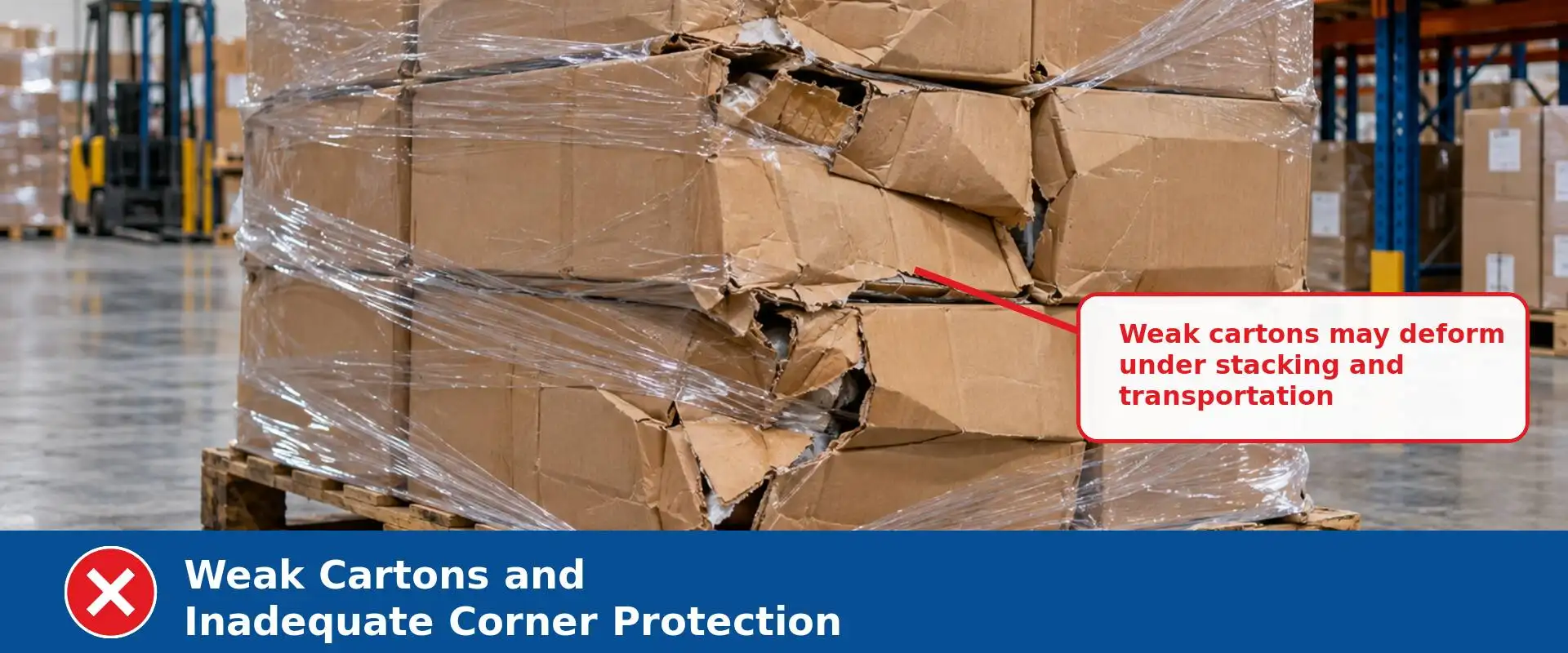
If cartons cannot maintain their shape under expected stacking and transport conditions, the palletized load may collapse.
A carton's compressive strength depends on factors such as board structure, dimensions, internal product support, and environmental conditions.
High humidity, prolonged stacking, and repeated handling can compromise the actual performance of certain corrugated cartons.
If bottom-layer cartons deform, the load may settle unevenly and lose stability; improper sealing can exacerbate issues if cartons come apart during transit.
Therefore, BOPP packaging tape should be selected based on carton surface characteristics, adhesive performance, and anticipated storage conditions.
While paper edge protectors help distribute forces and safeguard vulnerable corners, they cannot compensate for a lack of inherent carton strength.
Best practices: Ensure carton strength matches stacking conditions, employ reliable sealing methods, and use edge protectors where appropriate.
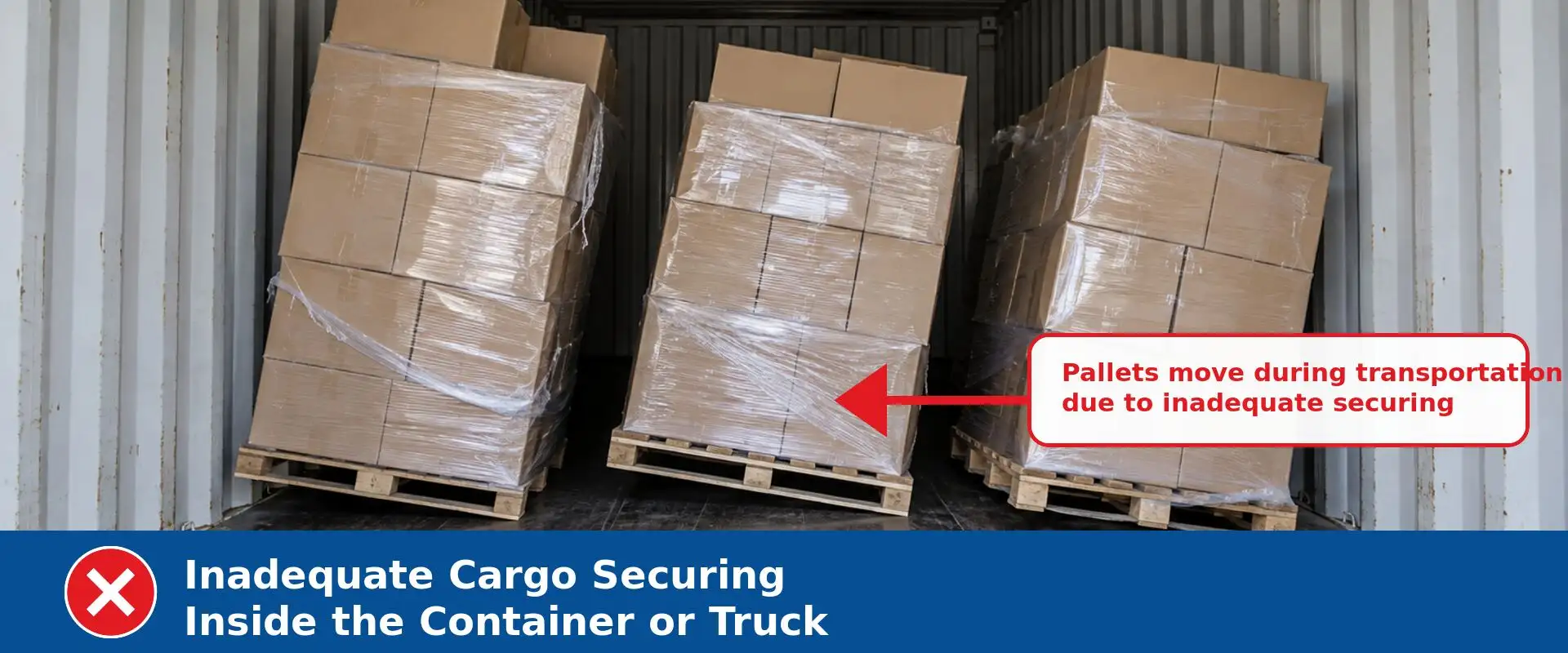
7. Improper securing of cargo within containers or trucks
A securely wrapped pallet does not equate to the cargo being properly secured for transport.
This is particularly critical in international shipping.
While stretch wrap and strapping help secure products into a single unit, they do not automatically prevent the entire pallet from shifting inside a container or transport vehicle.
Braking, acceleration, vibration, and turning maneuvers during transit can cause unsecured pallets to shift.
If a pallet shifts or collides with surrounding cargo, the resulting impact forces can damage cartons, stretch wrap, strapping, or the pallet itself.
Depending on the cargo type and mode of transport, appropriate measures—such as blocking, bracing, lashing, friction control, or other cargo-securing techniques—may be required.
Loading layouts should also take into account weight distribution and relevant transport requirements.
Best practice: Assess the stability of individual pallets as well as the security of the entire shipment within the transport unit.
How can exporters prevent pallet collapse?
Preventing pallet collapse requires a comprehensive packaging strategy rather than reliance on a single material.
| Packaging component | Main function |
| Suitable pallet | Supports the load during storage and handling |
| Stable stacking | Maintains load balance and distributes weight |
| Corrugated cartons | Protect and support packaged products |
| BOPP packing tape | Keeps cartons properly sealed |
| Stretch film | Unitizes and stabilizes palletized goods |
| PP/PET strapping | Provides additional restraint where required |
| Paper edge protectors | Protect vulnerable edges and distribute pressure |
| Cargo securing | Restrains cargo movement inside the transport unit |
Before shipment, exporters should inspect finished pallets and confirm that the packaging is suitable for the anticipated handling and transport conditions.
For recurring shipments, adopting standardized packaging specifications helps ensure consistency across different operators, production batches, and warehouses.
Where applicable, conducting representative load stability and transport simulation tests verifies packaging performance more effectively than visual inspection alone.
Yalan Pack offers a range of products for industrial and export packaging, including manual and machine-grade stretch film, BOPP sealing tape, PP/PET strapping, and paper edge protectors.
For buyers experiencing issues such as pallet collapse or transit damage, the following information is invaluable: pallet dimensions, load weight, carton specifications, wrapping method, strapping layout, and photographs of the damaged goods.
The core principle is simple:
Pallet stability depends on the entire packaging system, not just the amount of stretch film or strapping used.
Share on Social:


Contact Us
In This Article
Related Posts
PP Strapping for Cartons: Packaging Challenges in E-Commerce Logistics
Oct 21, 2026
Polypropylene Strapping Under Temperature Changes: Effects on Packaging Performance
Oct 21, 2026
PET Strapping Supplier: Heat-Seal Joint Strength and Sealing Reliability
Oct 21, 2026
PP Strapping Supplier Guide: Smooth vs Embossed Strapping for Automated Packaging
Oct 21, 2026


