







What Thickness of Stretch Film Should I Use for Pallet Wrapping?
By hqt
Sep, 2026Related Posts
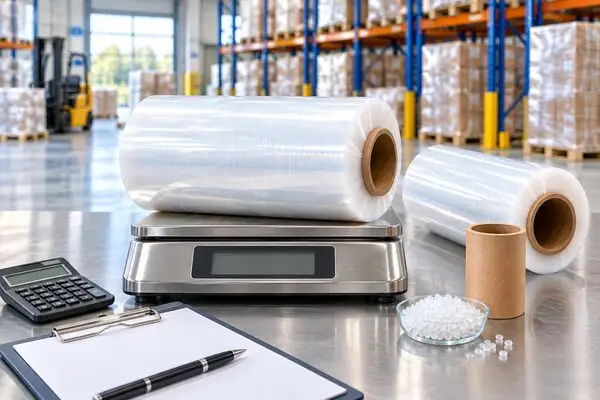
What Is the Difference Between Net Weight and Gross Weight of Stretch Film?
Sep 10, 2026
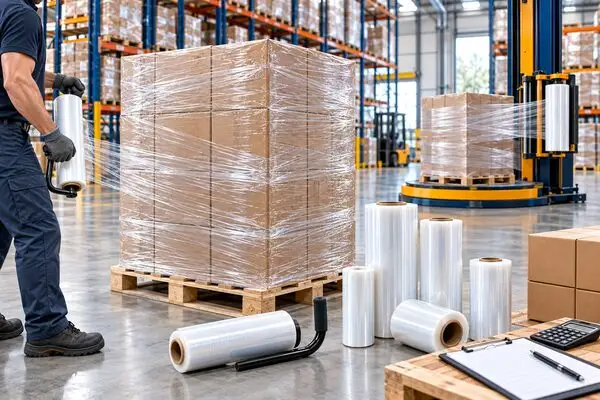
How Much Stretch Film Is Needed to Wrap One Pallet?
Sep 09, 2026
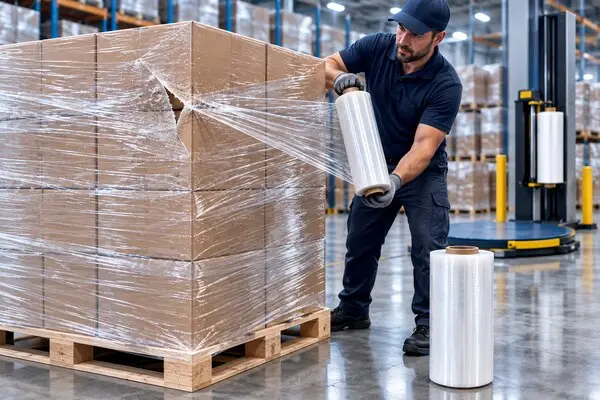
Why Does Stretch Film Break During Pallet Wrapping?
Sep 08, 2026
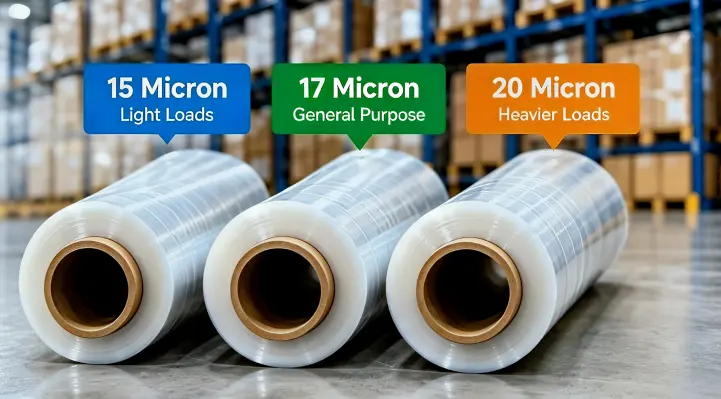
15 Micron vs 17 Micron vs 20 Micron Stretch Film: What Is the Difference?
Sep 07, 2026
Stretch film thickness plays an important role in pallet stability, load protection, and overall packaging efficiency. For many standard pallet wrapping applications, a common starting range is around 15–23 microns (μm). Lightweight, uniform loads can often use thinner film, while heavier pallets, irregular products, or loads with sharp edges may require thicker or higher-performance stretch film to provide better puncture resistance and holding strength.
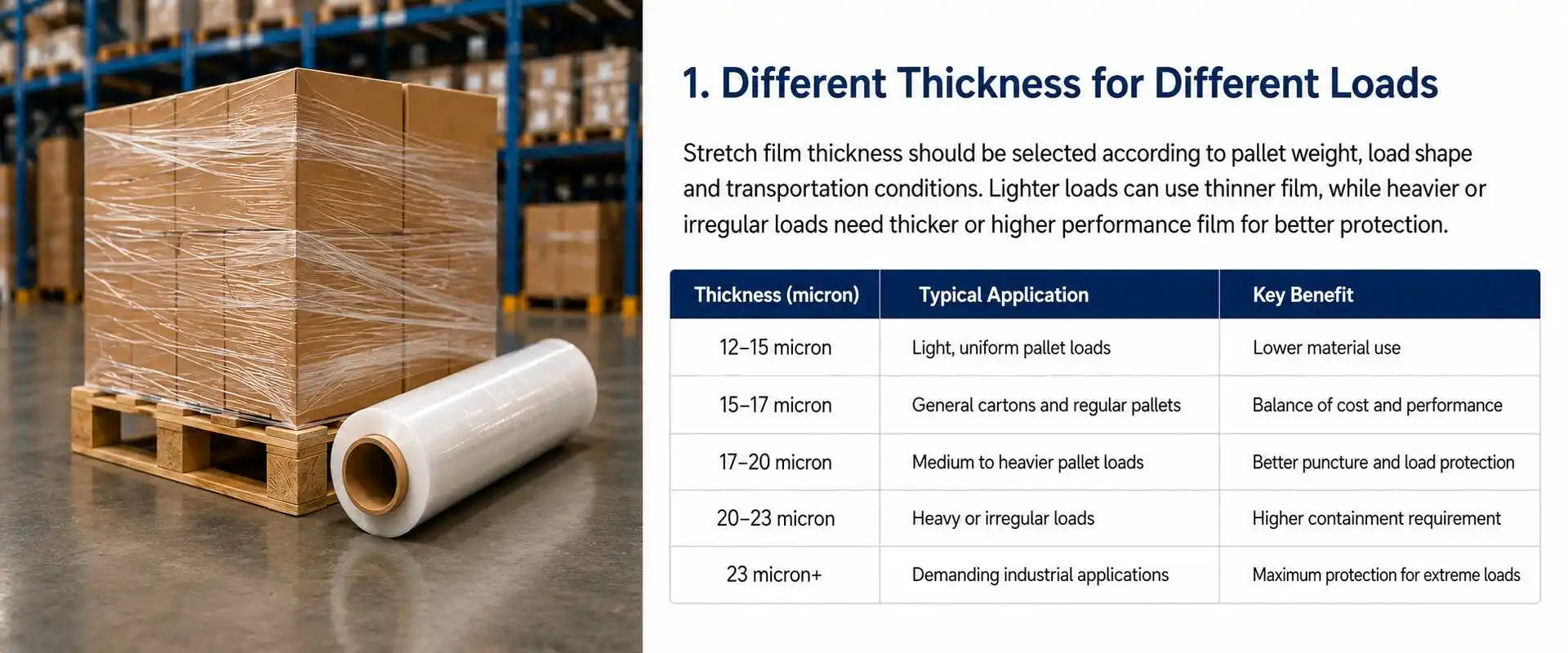
However, film selection involves more than just thickness; other influencing factors include pallet weight, load shape, puncture risk, film formulation, stretch properties, and whether the wrapping method is manual or machine-based.
Quick Guide to Stretch Film Thickness Selection
| Stretch Film Thickness | Typical Application | Main Consideration |
| 12–15 micron | Light, uniform pallet loads | Lower material use |
| 15–17 micron | General cartons and regular pallets | Balance of cost and performance |
| 17–20 micron | Medium to heavier pallet loads | Better puncture and load protection |
| 20–23 micron | Heavy or irregular loads | Higher containment requirement |
| 23+ micron | Demanding industrial applications | Should be selected according to actual load conditions |
The ranges above serve as a reference for selection rather than a fixed standard. In some cases, a scientifically engineered thinner film may outperform a thicker film that has inferior mechanical properties.
Is 15-micron stretch film sufficient for pallet wrapping?
Yes. 15-micron stretch film can meet the wrapping needs of many lightweight pallet loads with regular shapes.
For instance, when palletizing lightweight cartons with flat surfaces and few sharp edges, there is no need to use a thicker film.
The key criterion is not merely the strength of the 15-micron film itself, but whether it can provide adequate load containment and puncture resistance throughout the entire process of handling, warehousing, and transportation.
If the cartons are heavy, the pallet edges are uneven, or the load has points of concentrated stress, it is advisable to switch to a higher-gauge film with greater toughness.
Is 17-micron stretch film a preferred general-purpose specification?
17-micron stretch film is a highly practical, mid-range, general-purpose specification for pallet wrapping applications.
In many warehouse operations and export packaging scenarios, it strikes an excellent balance between material costs, puncture resistance, and load stability.
However, when comparing prices, keep in mind that two rolls labeled 500mm x 17 microns may not perform identically. Film quality is influenced by factors such as: raw material formulation, stretchability and elongation, puncture resistance, tear resistance, cling (self-adhesion), thickness uniformity, and applied wrapping tension.
Relying solely on thickness (microns) when evaluating products from different suppliers can easily lead to misjudgment.
In what scenarios should 20–23 micron stretch film be used?
The 20–23 micron specification is suitable when palletized loads are heavy, stacking stability is poor, or the wrapping process is particularly challenging.
Typical scenarios include: irregularly shaped cartons, loads with sharp edges, heavy total pallet weight, or harsh transportation conditions.
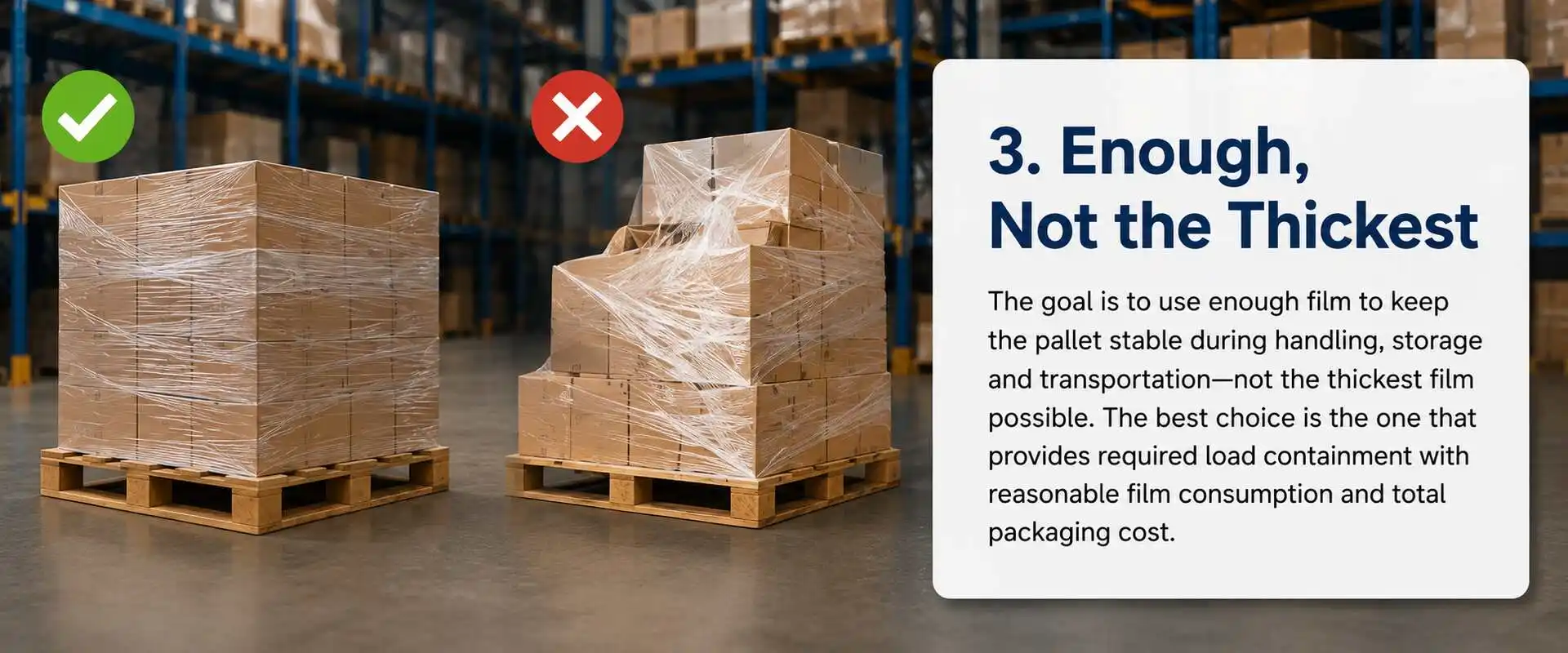
Thicker film offers better protection for vulnerable areas, but simply increasing thickness is not necessarily the most economical solution.
Before upgrading to thicker film, buyers should identify the root cause of the issue: determine whether the problem stems from incorrect wrapping techniques, insufficient overlap, mismatched film selection, or inherent instability in the pallet stacking itself.
Does thicker stretch film guarantee more secure packaging?
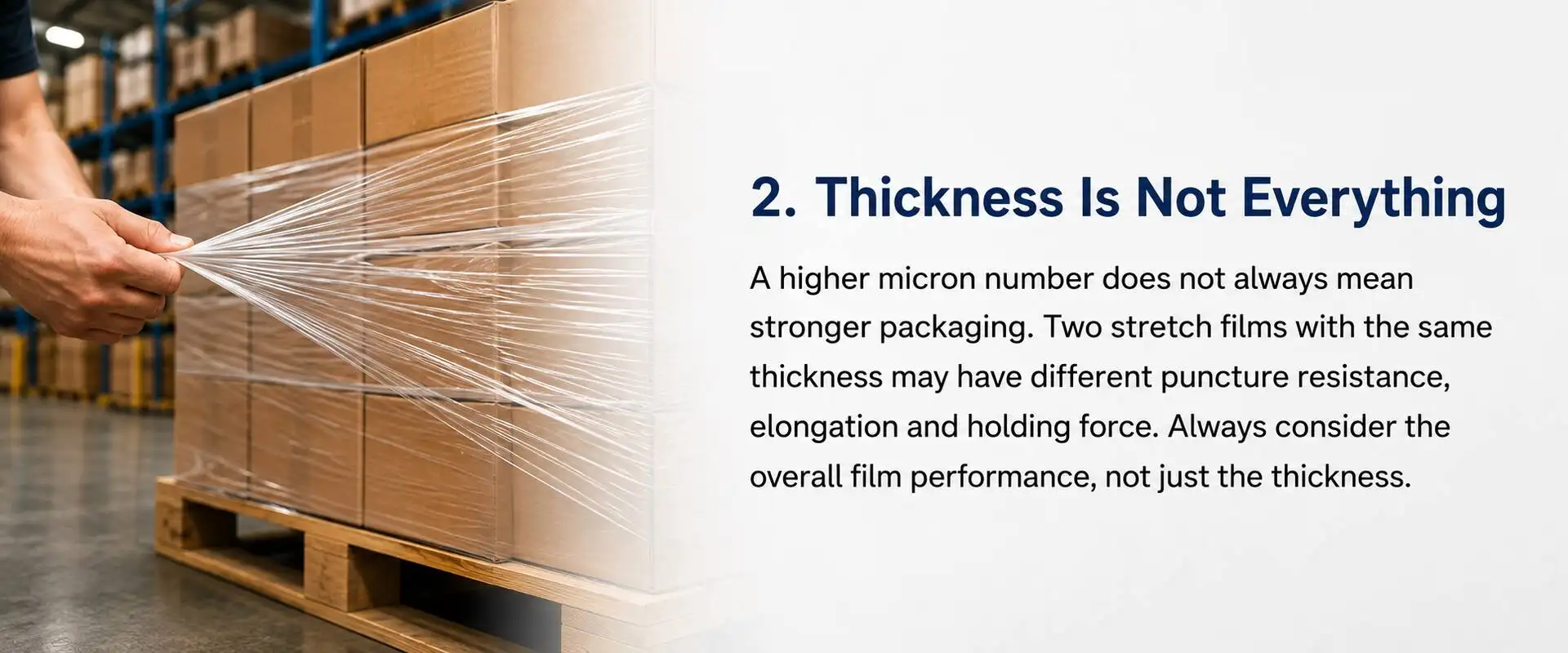
Not necessarily. A higher micron rating does not automatically equate to better pallet protection.
Thickness refers only to the film's physical dimensions and does not fully reflect its actual performance under stress.
Even if two films have the same thickness, differences in resin formulations and manufacturing processes can lead to significant variations in puncture resistance, elongation, holding force, and tear resistance.
Therefore, purchasing evaluations should focus on a key question: How much film is actually consumed to wrap and secure an entire pallet? In many cases, opting for high-performance, thinner films results in lower material consumption per pallet, making the overall packaging cost lower than that of thicker films.
Should hand-wrap and machine-wrap films be of the same thickness?
Not necessarily.
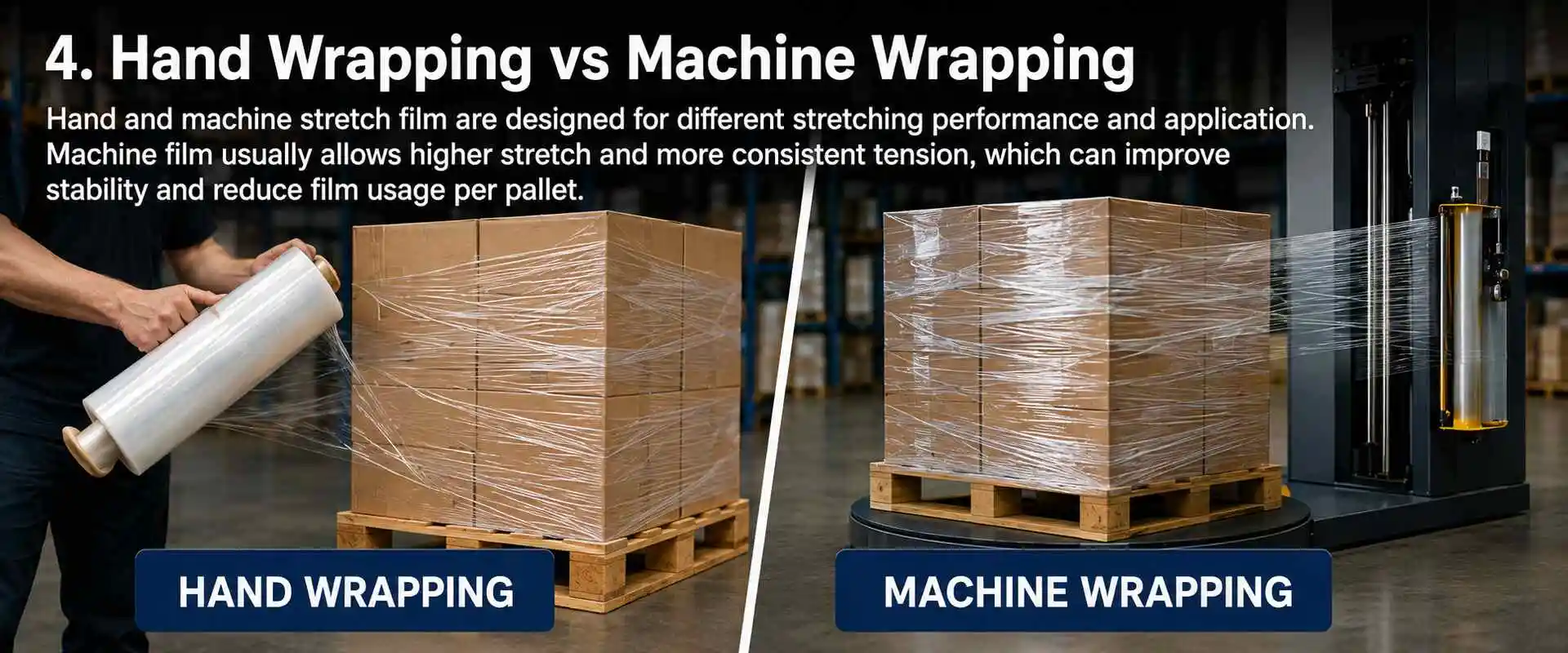
Hand-wrapping relies on manual operation; factors such as the operator's technique, the weight of the film roll, and the ease of stretching all influence the final result.
Machine-grade stretch film is designed for use with wrapping equipment, which can consistently control tension and stretching parameters.
The same film may perform far better on a machine than in manual wrapping; however, the choice of specifications must still take into account the specific pallet conditions and equipment parameters.
When requesting a quote, be sure to specify whether the film is intended for manual wrapping or machine use.
How should pallets with sharp corners or irregular shapes be handled?
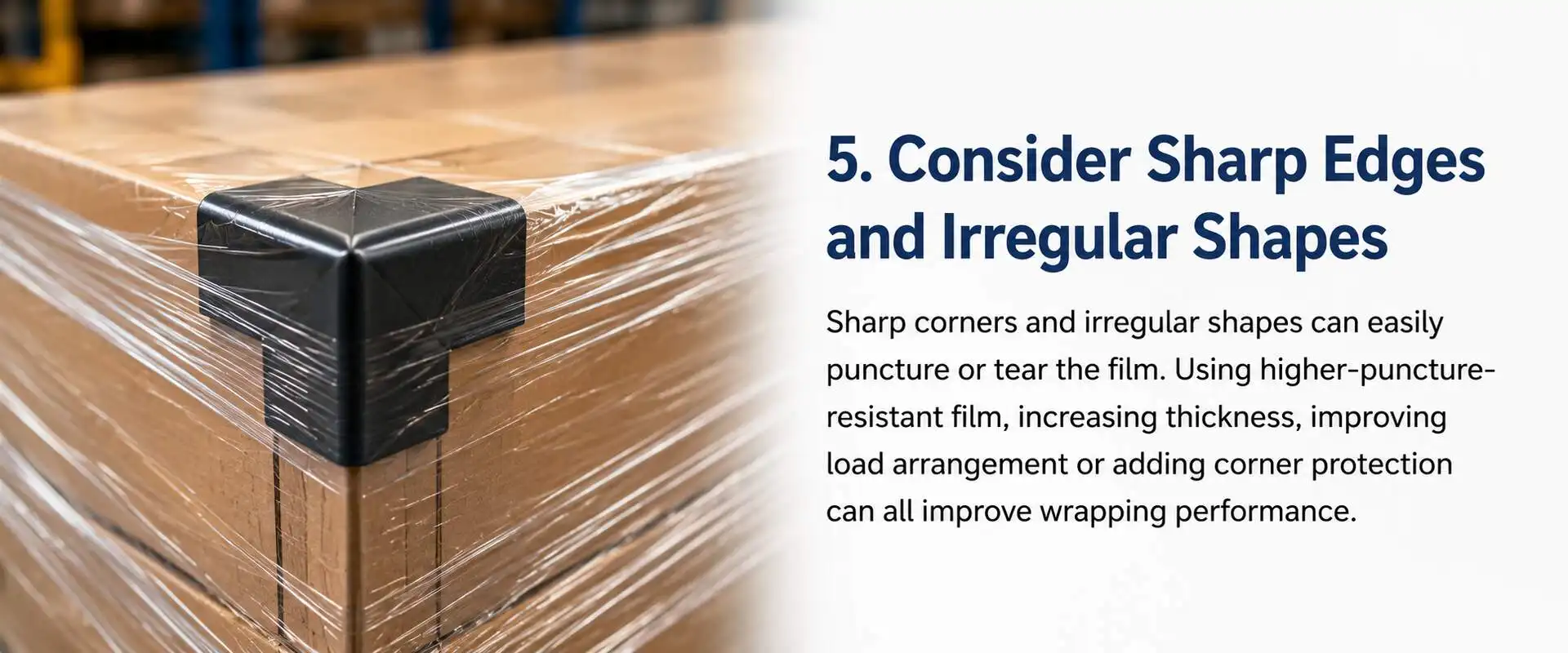
When goods have sharp corners, relying solely on film thickness for selection often leads to packaging failure.
Pallets loaded with smooth, regularly shaped cartons face completely different stress conditions compared to those loaded with metal parts, irregularly shaped cartons, or goods with protruding edges.
If the film consistently tears in the same spot, consider these solutions: choose a film with superior puncture resistance, upgrade the film specifications, optimize the stacking method, or add edge protectors or corner guards.
Simply increasing the amount of film used is not necessarily the best solution, nor does it guarantee cost savings.
How can I choose stretch film to minimize material waste?
The most effective evaluation method is to calculate the actual film consumption required to securely wrap a single pallet, rather than simply comparing the price per roll.
For example: Film A has a lower price per roll but requires more wraps to secure a pallet; Film B has a slightly higher price per roll but achieves the same level of stability with less film. Ultimately, the packaging cost per pallet for Film B turns out to be lower.
For high-volume warehouse operations, even saving a small amount of film per pallet adds up to significant overall cost savings when scaled across thousands of pallets.
What specifications should be provided when requesting a quote from a stretch film supplier?
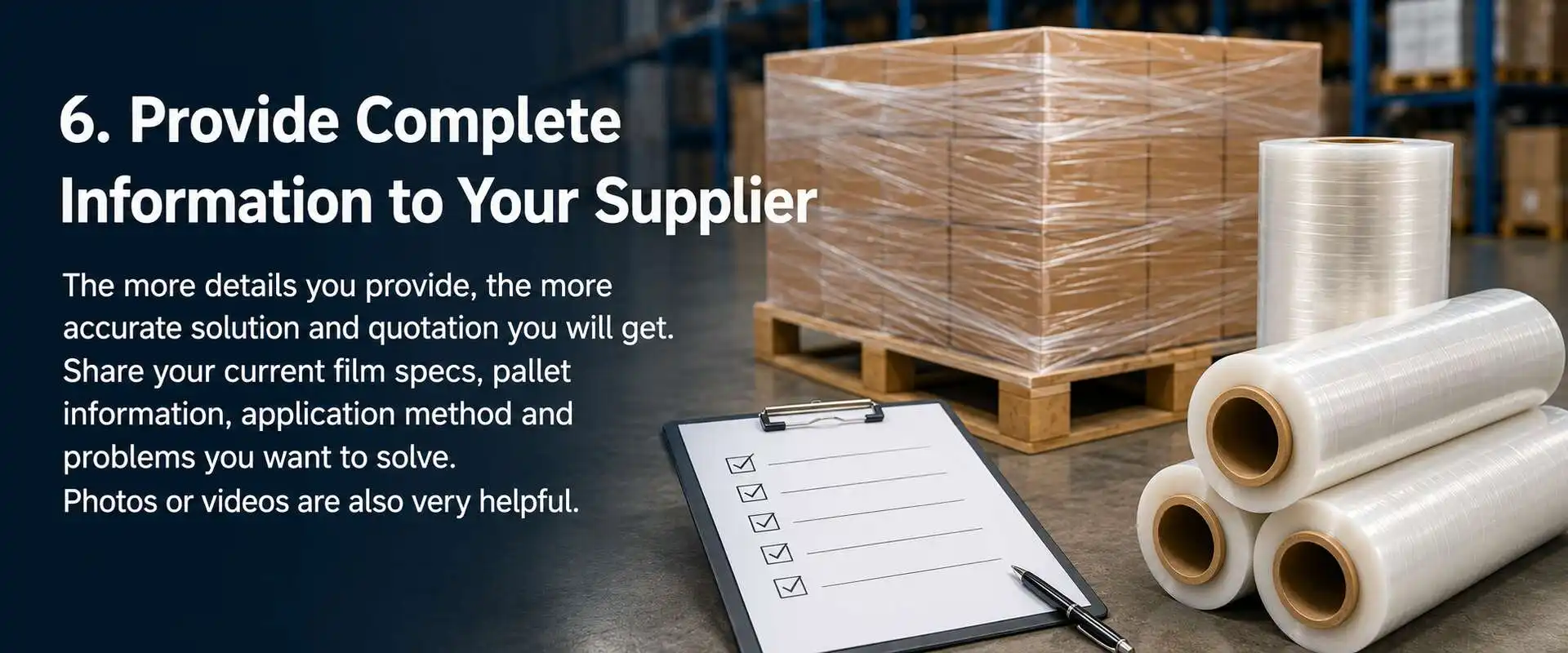
During the inquiry stage, please provide as much detailed information as possible regarding actual operating conditions. Buyers may refer to the following checklist:
・Film width
・Current or target film thickness
・Manual vs. machine wrapping
・Roll length or weight requirements
・Net film weight
・Paper core dimensions and weight
・Approximate total pallet weight
・External pallet dimensions
・Type of goods to be wrapped
・Presence of sharp corners or irregular edges
・Current film specifications ・
Key packaging issues to be resolved
If possible, providing on-site photos, videos, or samples of the film currently in use is highly beneficial. Such details enable suppliers to recommend the most suitable product far more effectively than a vague request for the best quality stretch film.
What is the optimal thickness for stretch film used on export pallets?
There is no single universal thickness suitable for every export pallet scenario.
For the vast majority of standard applications, films in the 15–20 micron range serve as a good baseline; however, for heavy loads or applications with rigorous packaging requirements, films in the 20–23 micron range—or those with higher performance ratings—are necessary.
Final selection requires a comprehensive assessment of: cargo weight → pallet shape → risk of puncture/damage → transport environment → wrapping method → required load stability → film consumption per pallet.
The core objective of export packaging is not simply to choose the thickest film, but to balance material consumption and overall packaging costs while ensuring pallet stability.
Selecting the right stretch film for your specific needs
Yalan Pack offers a wide range of stretch films—including manual, machine-grade, pre-stretched, and colored films, as well as custom LLDPE stretch films—to meet diverse pallet packaging requirements.
When selecting a product, do not focus solely on thickness (microns); instead, evaluate thickness, width, roll length, net weight, and core specifications in conjunction with actual pallet packaging conditions.
For routine procurement, conducting on-site wrapping tests using representative pallets from your actual operations is the most practical way to verify whether a product strikes the right balance between load stability, material consumption, and packaging costs.


Contact Us
In This Article
Related Posts
What Is the Difference Between Net Weight and Gross Weight of Stretch Film?
Sep 10, 2026
How Much Stretch Film Is Needed to Wrap One Pallet?
Sep 09, 2026
Why Does Stretch Film Break During Pallet Wrapping?
Sep 08, 2026
15 Micron vs 17 Micron vs 20 Micron Stretch Film: What Is the Difference?
Sep 07, 2026


