







Pallet Packaging Materials for Humid Seaport Shipping: How to Choose the Right Options
By hqt
Sep, 2026Related Posts
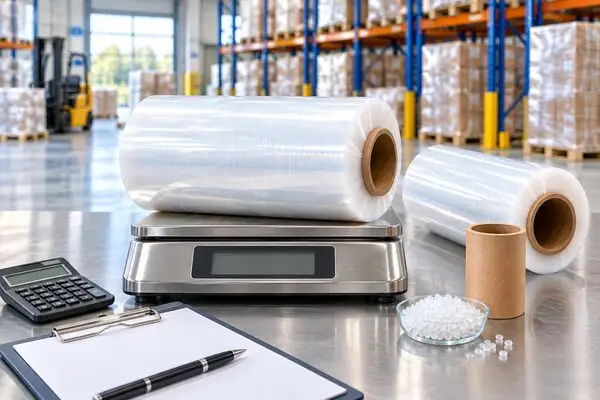
What Is the Difference Between Net Weight and Gross Weight of Stretch Film?
Sep 10, 2026
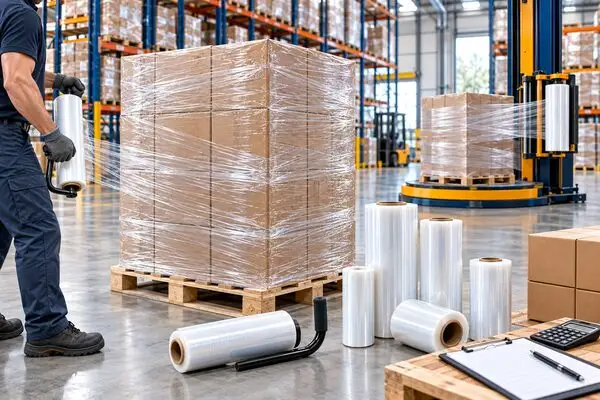
How Much Stretch Film Is Needed to Wrap One Pallet?
Sep 09, 2026
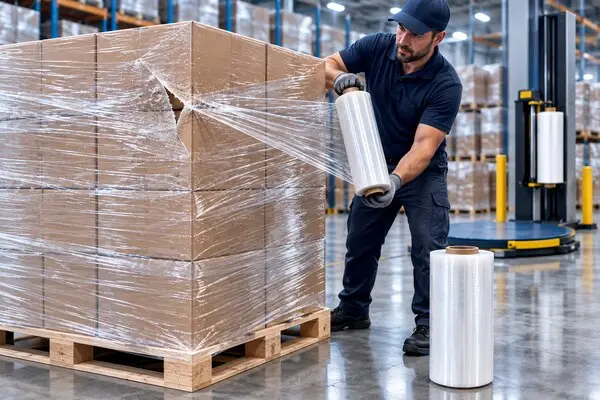
Why Does Stretch Film Break During Pallet Wrapping?
Sep 08, 2026
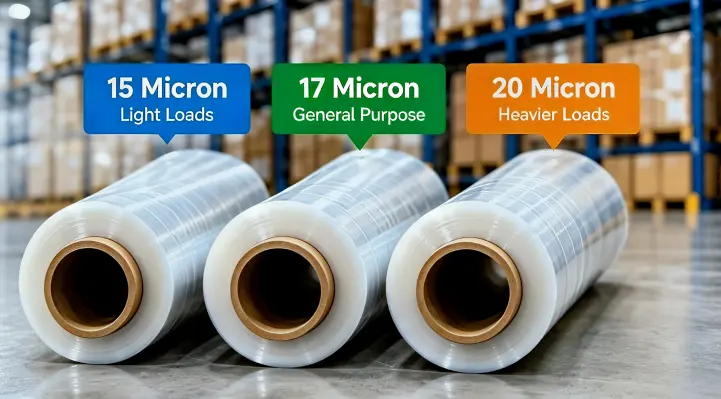
15 Micron vs 17 Micron vs 20 Micron Stretch Film: What Is the Difference?
Sep 07, 2026
Understanding moisture risks in ocean shipping
A humid port environment is just one source of moisture. When goods are loaded into a container in high-temperature and high-humidity conditions, moisture enters the container via cardboard cartons, wooden pallets, and even the air inside the unit. As the ambient temperature drops later during transit, water vapor condenses on the container walls, ceiling, or the surface of the cargo—a phenomenon commonly known in the industry as container condensation or container rain.
Long shipping durations combined with fluctuating temperatures further exacerbate moisture-related issues.
Before selecting packaging materials, exporters must comprehensively consider the shipping route, the season of shipment, the duration of transit, the cargo's moisture sensitivity, and the moisture content of the cartons and pallets prior to loading.
While packaging materials cannot fundamentally alter the internal container environment, they can maximize the overall stability of the cargo when faced with harsh conditions.
Prioritize cargo stability when selecting stretch film; do not focus solely on full coverage
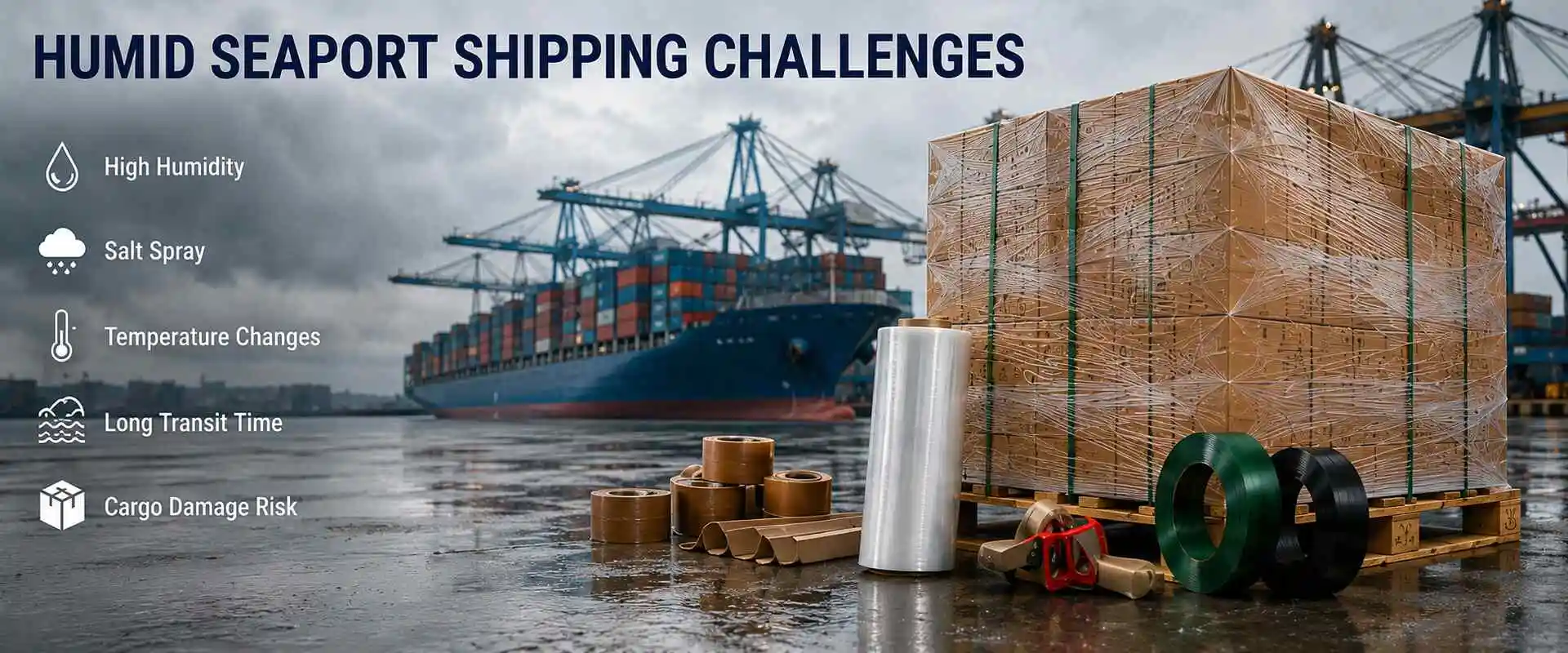
The primary function of using stretch film on pallets is to bind loose items into a single, secure unit.
This is particularly crucial in humid environments, where the structural integrity of corrugated cardboard cartons can weaken after absorbing moisture. Properly wrapped pallets prevent individual cartons from shifting or sliding during forklift handling, container repositioning, or transit-related vibrations.
Stretch film selection should align with the cargo's characteristics: standard, uniform cartons can be secured with ordinary hand-grade stretch film; for high-volume warehouses, machine-grade stretch film is recommended, as it offers more uniform tension and consistent film consumption. Heavy or irregularly shaped pallet loads require high-grade films with superior puncture and tear resistance.
Simply using thicker film or increasing the number of wraps does not necessarily yield the optimal solution. The core objective is to achieve reliable cargo securing and protection while maintaining reasonable material consumption.
Remember: Stretch film is not a complete water or moisture barrier
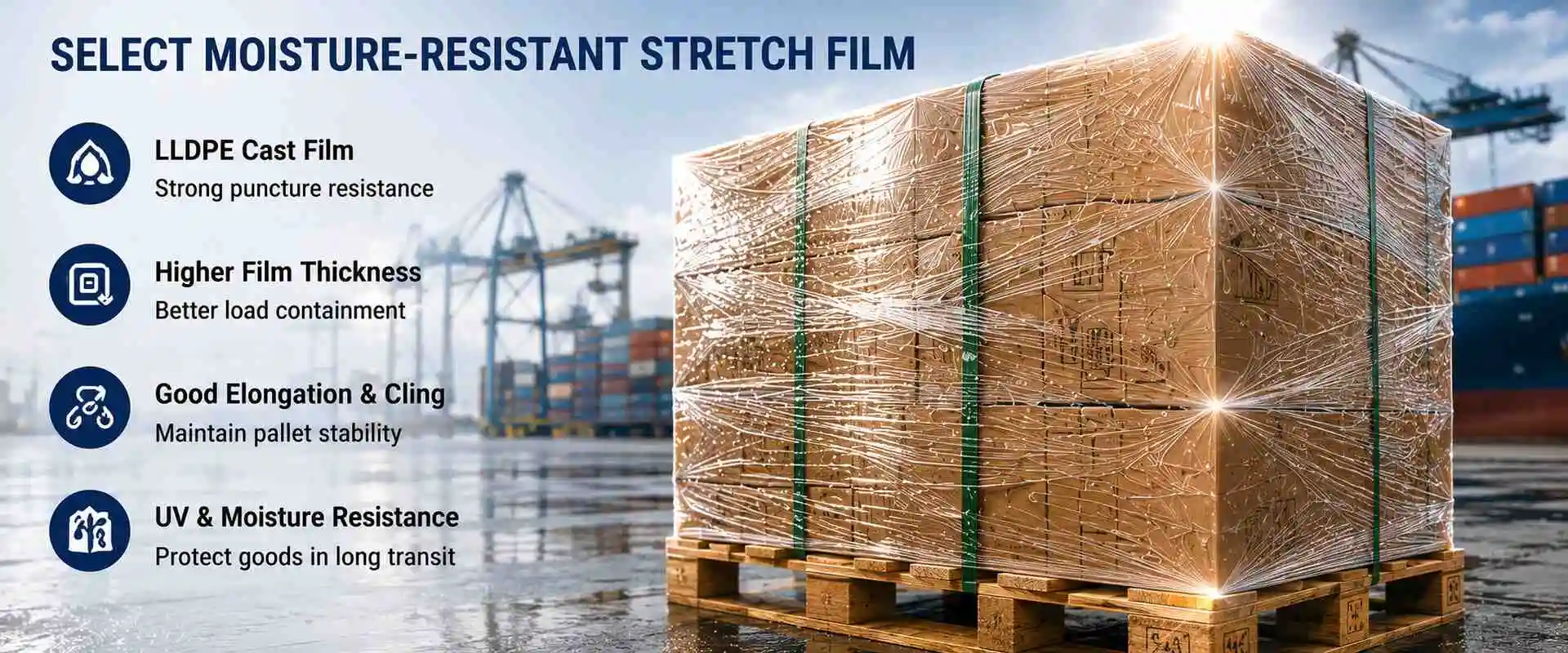
A pallet fully wrapped in stretch film may appear well-protected, but standard stretch film packaging is not equivalent to waterproof packaging. While stretch film offers protection against dust, splashes, and brief external exposure, its primary function remains securing palletized loads.
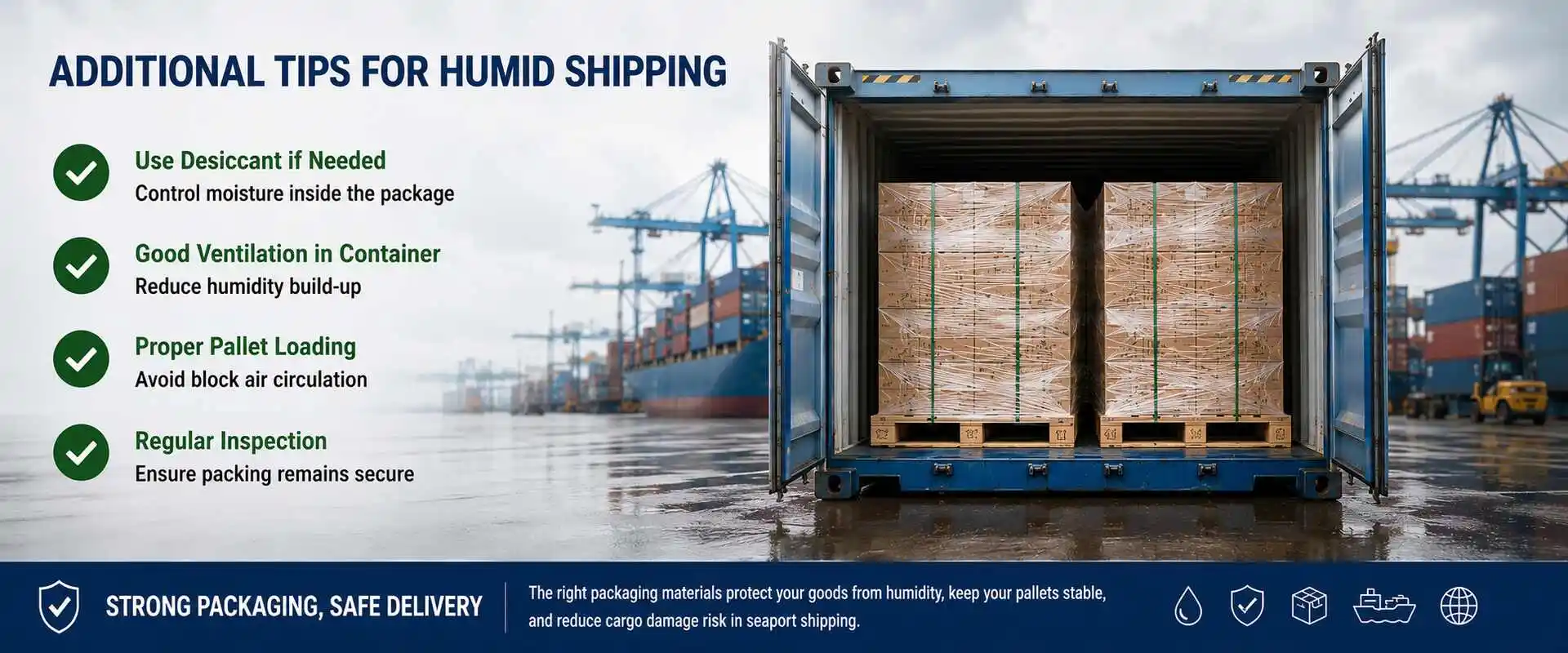
Goods susceptible to moisture damage require additional protective measures. Depending on product characteristics and the specific ocean shipping route, solutions such as moisture-proof liners, protective bags, or desiccants may be employed.
At the same time, avoid wrapping goods that are already damp or have excessive moisture content. Trapping moisture inside the palletized load can lead to further damage during long-haul ocean transport.
This approach also helps exporters avoid a common pitfall: attempting to mitigate all moisture-related risks simply by increasing the number of stretch film layers.
Selecting BOPP Sealing Tape Based on Carton Characteristics
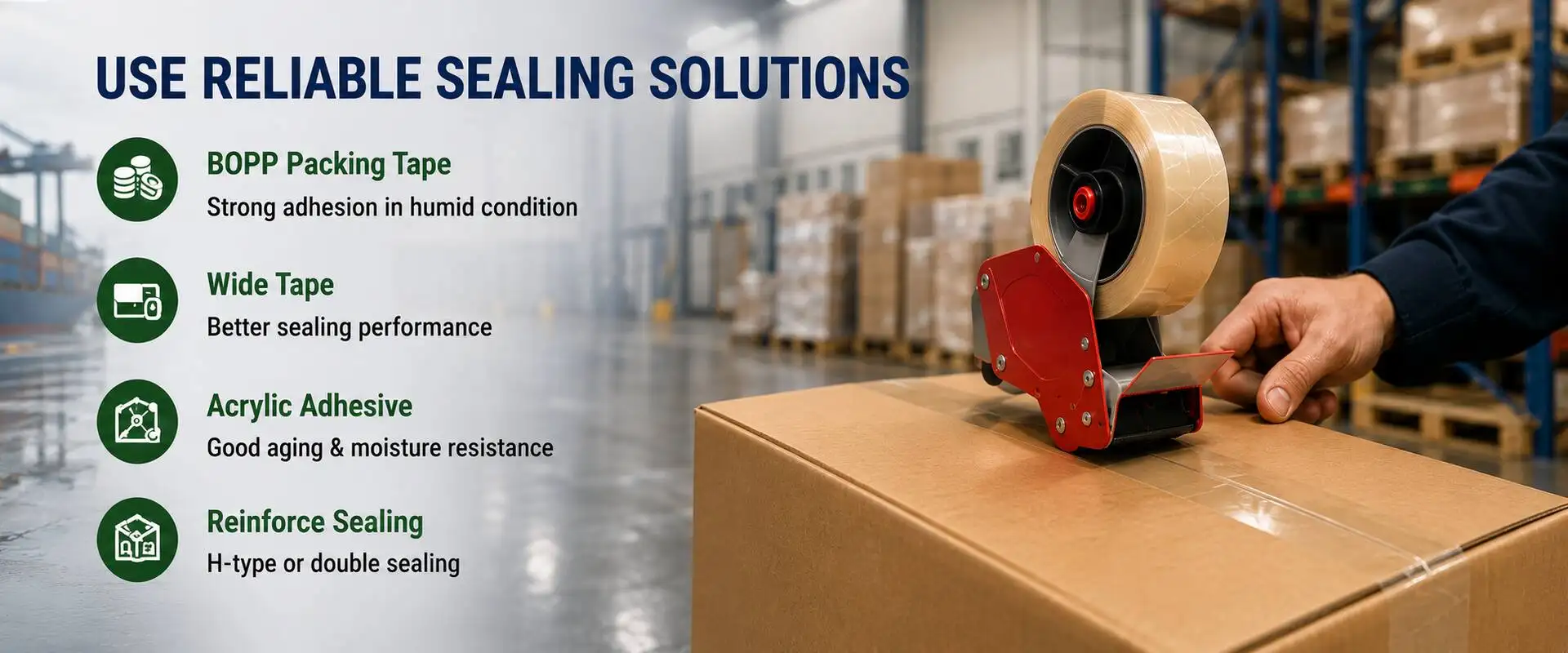
Effective carton sealing is a crucial aspect of protection during ocean transport.
Humidity alters the surface condition and structural integrity of corrugated cardboard; cartons with high recycled fiber content or rough surfaces are particularly susceptible to these effects.
Standard export cartons typically utilize BOPP sealing tape with a water-based acrylic adhesive; however, if specific requirements exist regarding initial tack or bonding performance, hot-melt or solvent-based adhesive tapes may be used.
When sourcing tape, do not rely solely on total thickness; comprehensively evaluate the following factors: carton surface characteristics and recycled material content; carton load weight; adhesive type and coating process; tape width; operating environment temperature; and application pressure.
When cargo frequently travels along routes characterized by high heat and humidity, it is essential to conduct adhesion tests using the actual cartons intended for shipment.
Use PP or PET strapping for additional cargo reinforcement
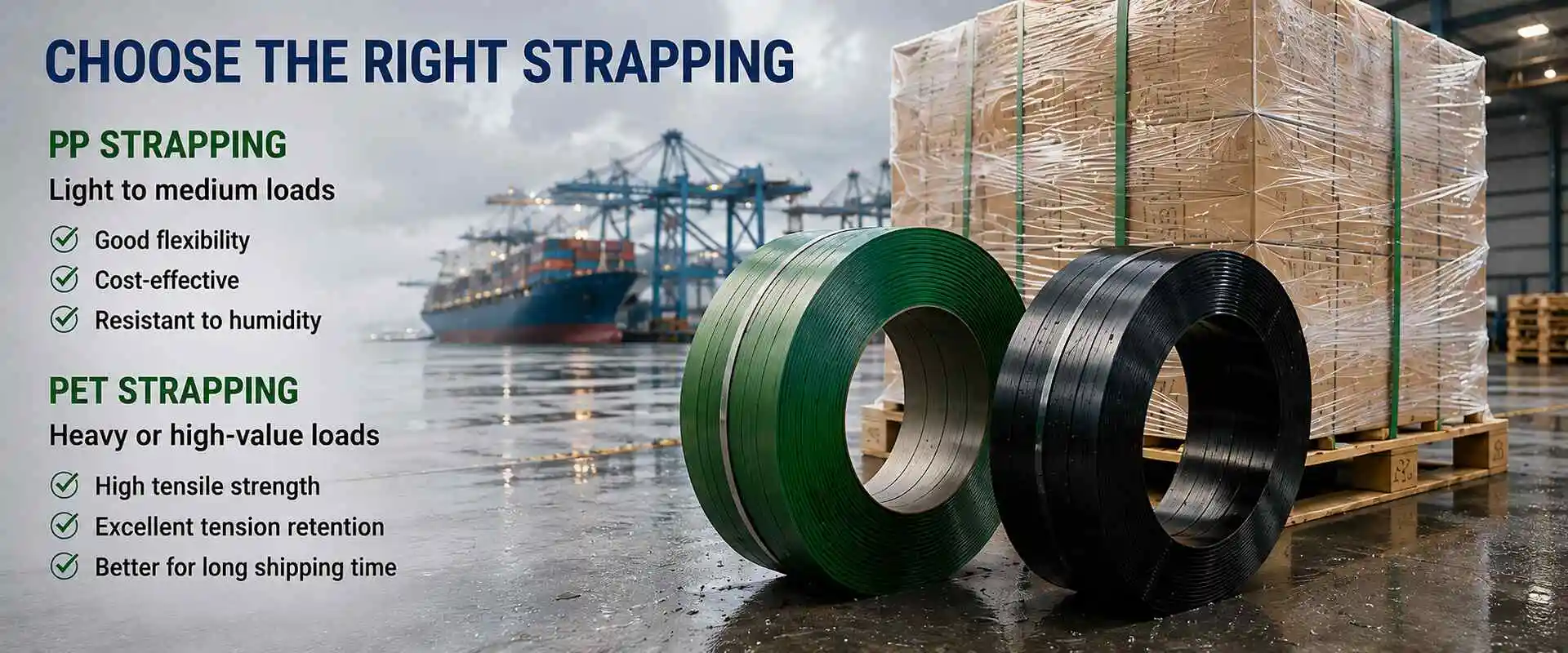
Stretch wrap and strapping serve different purposes and cannot replace one another. Stretch wrap provides flexible containment for palletized goods, whereas PP and PET strapping offer rigid mechanical reinforcement.
PP strapping is generally suitable for light to medium-weight cargo, while PET strapping—offering higher strength and superior tension retention—is better suited for most heavy palletized loads.
Ocean shipping environments are often humid, causing cardboard cartons to soften; in such conditions, the additional reinforcement provided by strapping becomes crucial.
However, strapping tension must be carefully controlled. Excessive tension can crush carton corners, thereby compromising the overall stability of the pallet. A stronger strap is not necessarily better; the choice must align with the specific characteristics of the cargo.
Install edge protectors to safeguard carton corners
When strapping is applied directly to corrugated cartons, pressure concentrates on small contact points. Edge protectors distribute this pressure, reducing crushing damage and keeping the straps in place, while also providing extra structural support for high-stacked pallets.
An effective export pallet packaging solution often combines multiple materials: Cartons → Edge Protectors → PP/PET Strapping → Stretch Wrap.
Each material plays a specific role. This combined approach offers more reliable protection than relying on a single packaging material to ensure stability.
Conduct comprehensive pallet packaging tests before final shipment
Packaging materials should be evaluated as an integrated system. For instance, some tapes may perform well in laboratory tests but fail to adhere effectively to cartons containing high levels of dust or recycled content; similarly, certain stretch films may have excellent elongation properties yet fail to provide sufficient binding force for specific pallet stacking configurations.
Before finalizing packaging standards for long-term export operations, it is essential to conduct handling simulation tests on fully wrapped pallets. Focus on identifying issues such as carton shifting, crushed corners, loose or detached strapping, torn stretch wrap, peeling tape, and cargo overhanging the pallet edges. Conducting trial packing and test shipments for key projects or large-volume orders allows for valuable, real-world feedback on packaging performance under actual transport conditions.
Designing a comprehensive packaging system tailored to the transport environment
No single pallet packaging material can provide complete moisture protection for all types of cargo.
In the high-humidity environments typical of maritime ports, a more pragmatic approach is to understand the specific function of each material: BOPP sealing tape (sealing individual cartons); edge protectors (reinforcing vulnerable carton corners); PP or PET strapping (providing mechanical reinforcement); and stretch wrap (unitizing and securing the entire pallet load).
Yalan Packing offers a full range of export packaging consumables, including manual and machine-grade stretch wrap, BOPP sealing tape, PP/PET strapping, and various pallet protection accessories.
The optimal packaging combination must be determined by considering factors such as cargo weight, carton quality, pallet stacking patterns, shipping routes, and environmental conditions.
The core of maritime packaging lies not in simply piling on more materials, but in strategically applying the right consumables to critical points, ensuring the pallet remains stable and intact throughout the entire journey—from container loading to final customer delivery.


Contact Us
In This Article
Related Posts
What Is the Difference Between Net Weight and Gross Weight of Stretch Film?
Sep 10, 2026
How Much Stretch Film Is Needed to Wrap One Pallet?
Sep 09, 2026
Why Does Stretch Film Break During Pallet Wrapping?
Sep 08, 2026
15 Micron vs 17 Micron vs 20 Micron Stretch Film: What Is the Difference?
Sep 07, 2026


