







What Packaging Materials Does the Global E-commerce Logistics Market Need?
By hqt
Aug, 2026Related Posts
What Packaging Materials Are Commonly Used in North American Warehouses?
Oct 23, 2026
PP Strapping for Cartons: Packaging Challenges in E-Commerce Logistics
Oct 21, 2026
Polypropylene Strapping Under Temperature Changes: Effects on Packaging Performance
Oct 21, 2026
PET Strapping Supplier: Heat-Seal Joint Strength and Sealing Reliability
Oct 21, 2026
Global e-commerce has not only revolutionized sales models but also reshaped the processes of product packaging, handling, and transportation.
In traditional retail distribution, goods typically move in large volumes from factories to distributors and brick-and-mortar stores. In contrast, e-commerce logistics involves small-batch orders, higher sorting frequencies, and complex handling stages, culminating in direct delivery to the consumer. Before reaching the recipient, a single package passes through multiple nodes, including fulfillment centers, conveyor systems, freight trucks, and "last-mile" delivery networks.
As the scale of e-commerce operations expands, packaging materials face new performance requirements. Industry research indicates a steadily rising demand for lightweight protective packaging, corrugated boxes and flexible packaging, sealing tapes, cushioning materials, and automated packaging systems.
For packaging procurement companies and manufacturers, the following five key factors are becoming increasingly important.
1. Reducing packaging materials while simultaneously enhancing protection
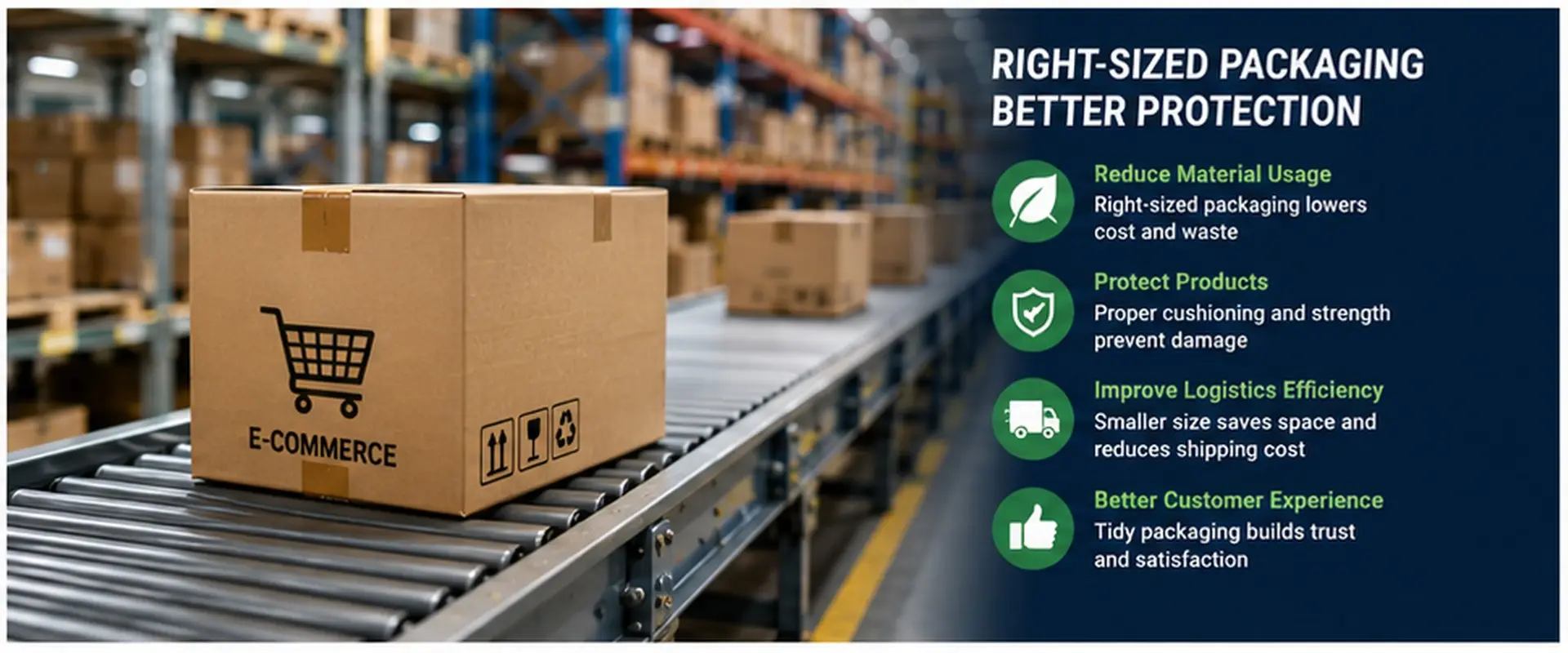
The most notable shift in e-commerce packaging is the move toward right-sized packaging.
Oversized cartons not only consume excessive cushioning material but also take up valuable shipping space. Conversely, overly minimal packaging significantly increases the risk of product damage.
Therefore, the industry's challenge is not merely to cut material usage, but to determine the optimal amount of material based on specific products and delivery workflows.
Research has long confirmed that packaging dimensions and material consumption are key factors determining logistics efficiency and environmental impact. In recent years, automated right-sizing packaging systems have emerged as a major industry trend, effectively addressing over-packaging issues while boosting overall transport efficiency.
This approach applies to more than just individual parcels.
For e-commerce pallet inventory moving between factories, warehouses, and fulfillment centers, using optimized stretch wrap reduces film waste while maintaining sufficient binding force to ensure pallet stability. The goal is not simply to use the thinnest material possible, but to reduce material consumption to a reasonable level while ensuring cargo safety.
2. Carton sealing tape must suit high-speed fulfillment operations
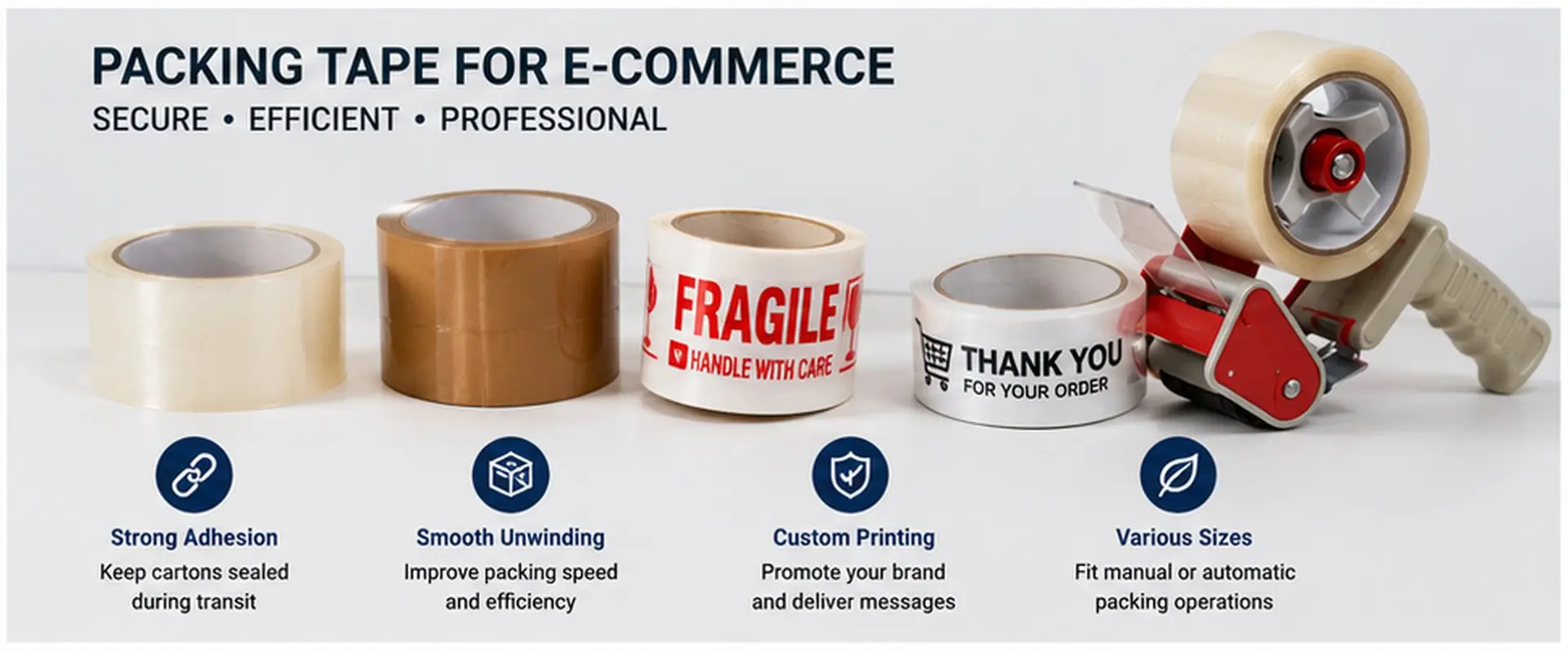
Carton sealing remains a fundamental step in e-commerce logistics, yet the pace of warehouse operations continues to accelerate.
For warehouses processing thousands of parcels daily, issues such as tape breakage, insufficient adhesion, or cartons bursting open during transit are completely unacceptable.
When evaluating BOPP sealing tape, procurement teams should look beyond the unit price per roll.
Factors such as tape thickness, adhesive performance, roll length, carton surface material, and operational methods all influence actual material consumption and sealing reliability. Manual packing stations require tape that dispenses smoothly and is easy to handle to boost efficiency, whereas automated sealing lines demand consistent quality across the entire roll.
Custom-printed tape offers added value: it allows for the printing of brand logos, handling warnings, or safety notices while sealing the carton. For e-commerce sellers, packaging must serve the dual purpose of providing logistical protection and conveying brand information; this type of tape is highly practical.
The booming e-commerce industry has further driven market demand for various tape products, such as pressure-sensitive tapes and custom-printed tapes.
3. Stretch Film: Playing a Critical Role Beyond Individual Parcel Wrapping
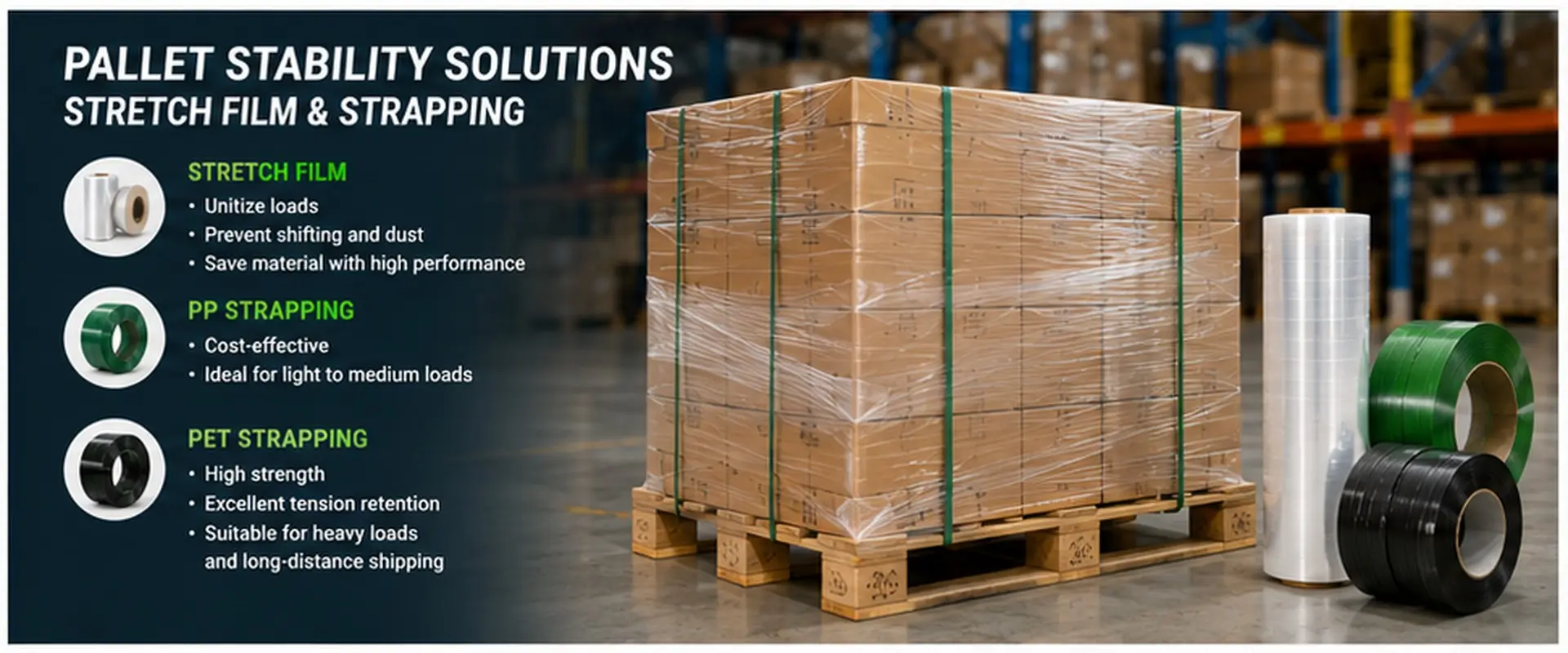
When discussing e-commerce packaging, people often first think of the small cardboard boxes or courier bags delivered to consumers.
However, behind these final-mile packages lies a vast and complex logistics network. Goods must travel from manufacturers to distribution centers, move between warehouses, and finally reach order fulfillment facilities; much of this transport occurs in the form of palletized loads. It is during these intermediate stages that stretch film—a vital tertiary packaging material—plays an indispensable role.
For smaller-scale warehouse operations, manual stretch film is often sufficient; however, for facilities prioritizing high throughput and consistent packaging quality, machine-grade stretch film is the more suitable choice.
Its core performance requirements are clear: the film must securely hold cartons in place to minimize the risk of pallet load shifting while avoiding excessive material waste.
In high-volume operational scenarios, purchasers evaluating stretch film products increasingly prioritize film consumption per pallet and actual protective performance over simple metrics like the unit price per roll or film thickness. As logistics companies pursue both material and operational efficiency, this evaluation logic has become increasingly important.
4. PP and PET Strapping: Fortifying the E-commerce Supply Chain for Heavy Goods
Not all goods sold via e-commerce are lightweight or small. Online sales of heavy items—such as furniture, home appliances, large electronics, and building materials—continue to rise. Before reaching the consumer, these goods often traverse industrial logistics channels, requiring palletized loads to undergo additional reinforcement. This drives sustained market demand for PP (polypropylene) and PET (polyester) strapping.
PP strapping is commonly used for bundling cartons and lighter-to-medium-weight goods, whereas PET strapping offers superior strength and tension retention, making it better suited for heavy palletized loads.
The expansion of logistics, e-commerce, and industrial transport sectors has significantly fueled global demand for strapping materials.
When selecting PP or PET strapping, purchasers should look beyond strap width or product quotes. Selection decisions must be based on a comprehensive assessment of factors including total pallet weight, load stability, transport distance, and required strapping tension. In many practical logistics scenarios, strapping and stretch film work in tandem rather than serving as substitutes for one another: strapping provides structural reinforcement and restraint, while stretch film consolidates and secures the entire palletized load, maintaining overall stability.
5. Sustainability Reshapes Buyer Demands for Suppliers
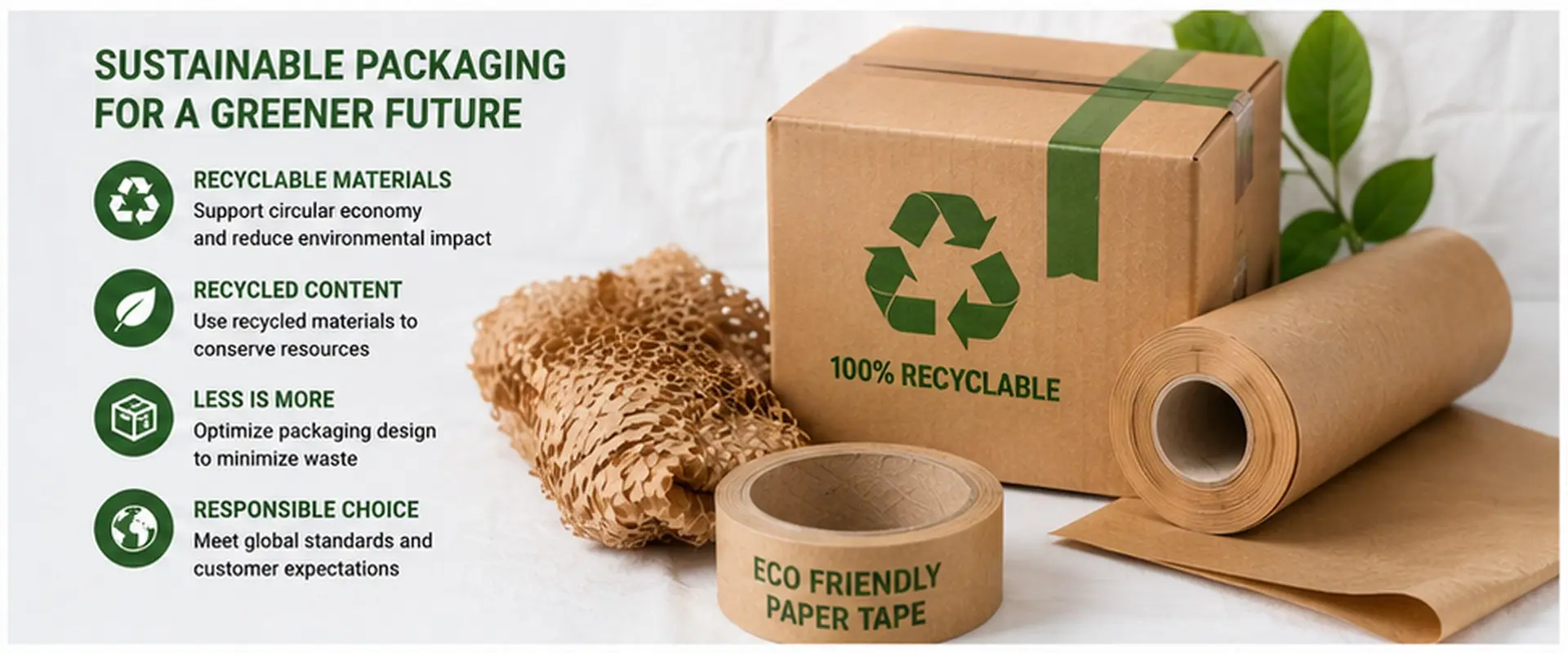
E-commerce generates significant, highly visible packaging waste; packaging reaches consumers directly, who are then responsible for its disposal. Consequently, issues such as recyclability, the proportion of recycled content, and the excessive use of materials are attracting increasing attention.
Driven by stricter regulations and the growth of online orders, market demand for recyclable, low-environmental-impact packaging continues to rise, fueling the expansion of the sustainable e-commerce packaging sector. Industry research indicates that corrugated packaging remains the dominant format, with recyclability serving as a key sustainability metric.
For companies procuring packaging, the focus of communication with suppliers has shifted. Inquiries are no longer limited to questions like "What are the product price and minimum order quantity?"
Buyers now also verify details such as: What raw materials are used? Can material consumption be reduced? Are versions with recycled content available? Does the packaging meet recycling requirements in the target market? Can the supplier provide the necessary material certifications and compliance documentation?
These questions are particularly critical for cross-border sellers, as packaging regulations vary across major markets such as Europe, North America, and Asia-Pacific.
E-commerce packaging has evolved into an integrated system rather than a collection of isolated materials.
A fundamental shift in global e-commerce logistics is the need for various packaging materials to work in concert.
A typical supply chain workflow involves: sealing tape → carton → pallet → edge protectors → PP/PET strapping → stretch wrap → warehouse → fulfillment center → final parcel delivery.
Each type of packaging material plays a specific role: sealing tape secures the carton; stretch wrap stabilizes palletized goods; PP and PET strapping further enhance load safety; and edge protectors mitigate compression and prevent damage to corners and edges.
Meanwhile, the widespread adoption of automation demands higher standards for material consistency. Packaging designed for high-speed fulfillment environments must not only protect the product but also integrate seamlessly with automated equipment to ensure efficient warehouse operations. Industry reports for 2026 highlight appropriately sized packaging, automation, recyclability, and scenario-specific custom designs as key trends in the evolution of e-commerce packaging. For packaging suppliers like Yalan Packing that serve the e-commerce logistics sector, the business has long since evolved beyond merely supplying specific stretch films or carton sealing tapes. Different stages of the supply chain require varying specifications of stretch film, BOPP sealing tape, PP/PET strapping, and a full range of pallet packaging consumables.
Consequently, the question buyers should be asking is no longer, "Which packaging material has the lowest price?"
Instead, the focus should be: What packaging combination offers adequate cargo protection while minimizing the total cost of materials and logistics?
This reflects the prevailing trend in the global e-commerce packaging market.


Contact Us
In This Article
Related Posts
What Packaging Materials Are Commonly Used in North American Warehouses?
Oct 23, 2026
PP Strapping for Cartons: Packaging Challenges in E-Commerce Logistics
Oct 21, 2026
Polypropylene Strapping Under Temperature Changes: Effects on Packaging Performance
Oct 21, 2026
PET Strapping Supplier: Heat-Seal Joint Strength and Sealing Reliability
Oct 21, 2026


