







8 Things to Check Before Shipping a Pallet Overseas
By hqt
Oct, 2026Related Posts

PP Strapping for Cartons: Packaging Challenges in E-Commerce Logistics
Oct 21, 2026

Polypropylene Strapping Under Temperature Changes: Effects on Packaging Performance
Oct 21, 2026

PET Strapping Supplier: Heat-Seal Joint Strength and Sealing Reliability
Oct 21, 2026
PP Strapping Supplier Guide: Smooth vs Embossed Strapping for Automated Packaging
Oct 21, 2026
Before shipping palletized goods overseas, exporters must verify the condition of the pallets, the stability of the stacked cargo, the strength of the cartons, the quality of the stretch-wrap, the adequacy of strapping and corner protectors, moisture-protection measures, labeling, and the container loading plan.
International transport involves multiple rounds of loading and unloading, moving through various stages—from factory warehouses and ports to ocean vessels and, finally, the destination warehouse. Even minor packaging flaws can lead to cargo damage, delays during handling, or additional costs.
Conducting a rigorous pre-shipment inspection before goods leave the factory helps identify and mitigate such risks.
1. Is the pallet’s load-bearing capacity sufficient?
Pallets serve as the foundational base for the entire shipment.
Before loading, ensure that the pallet can support the total weight of the cargo, that its dimensions are appropriate for the products, and that it is compatible with the intended handling methods.
For wooden pallets, check for broken boards, loose components, significant deformation, or any other visible damage.
For plastic pallets, inspect for cracks or structural defects.
If wooden pallets are used for cross-border trade, verify whether the destination country or the specific shipment requires compliance with the International Standards for Phytosanitary Measures No. 15 (ISPM 15). If required, the pallets must bear the appropriate heat-treatment mark.
Note: The presence of an ISPM 15 mark does not guarantee that the pallet’s structural strength meets the required load capacity.
The pallet must still be strong enough to support the actual weight of the cargo.

2. Are the cartons stacked correctly?
Cargo stacks that appear stable in a warehouse can easily become unstable during long-distance transport.
Before shipment, ensure that the cartons are aligned and properly supported.
Cartons must not overhang the edges of the pallet significantly; a lack of edge support increases the risk of damage due to pressure.
Weight distribution is also critical.
Whenever product and packaging design allow, place heavier cartons at the bottom to lower the overall center of gravity.
If a single pallet contains a mix of different items, avoid concentrating heavy objects on one side of the pallet. The stacking configuration must account for both the compressive strength of the cartons and potential cargo displacement during loading, unloading, and transit.
The stability of a palletized load should not rely solely on stretch wrap for support.

3. Are the cartons properly sealed?
The sealing status of cartons is frequently overlooked during pallet inspection.
Even if a pallet is tightly wrapped, inadequate sealing can still lead to cartons bursting open or sustaining damage during handling or ocean freight. It is essential to ensure that the chosen sealing tape is compatible with both the carton material and the storage environment.
BOPP (biaxially oriented polypropylene) sealing tape is widely used for corrugated cartons, though adhesive performance can vary significantly between different products.
Water-based acrylic adhesives and hot-melt adhesives are the two primary types available on the market.
Selection should be based on factors such as carton material, ambient operating temperature, initial tack requirements, and other specific on-site conditions.
When sealing cartons for export, sufficient pressure must be applied to the tape to ensure the flaps are held firmly and securely in place.
If the tape begins to peel or lift before shipment, it must be repaired immediately; one should not attempt to mask such defects simply by adding more stretch wrap.

4. Is the stretch wrap applied securely and evenly?
Stretch wrap binds cartons together, creating a stable, unified pallet load.
Before shipment, focus on verifying the wrapping process rather than merely counting the number of layers applied.
Check how securely the load is anchored to the pallet base and ensure that the overlapping sections of the film are uniform.
Inspect for any tears in the film, loose ends, or areas that remain uncovered.
Film tension is also critical.
Insufficient tension can lead to cargo slippage, while excessive tension may crush weaker cartons or cause the film to snap.
The thickness of the film should be matched to the specific application requirements.
Common thicknesses include 15, 17, 20, and 23 microns; however, thickness is not the sole indicator of how effective the wrapping will be.
For recurring shipments, establish a standardized wrapping procedure to ensure consistent packaging quality, regardless of which operator performs the task.

5. Are strapping and edge protectors used correctly?
Some palletized goods require additional reinforcement beyond just stretch wrap.
Depending on the product type, stacking configuration, and performance requirements, you may use either polypropylene (PP) or polyester (PET) strapping.
Before shipment, verify the placement of the straps and ensure they are applied with the appropriate tension.
Straps should be neither too loose nor too tight (excessive tension can crush cartons or damage the products).
Also, inspect the joints (seals/buckles) of the straps.
Even if the strapping material itself meets the specified break strength, a weak joint can still lead to failure.
For items with vulnerable edges or corners, use appropriate paper edge protectors to distribute the strapping pressure and reduce the risk of localized damage.
Ensure that edge protectors are correctly positioned and securely fixed in place.
For heavy industrial cargo, strapping solutions must be validated through testing under actual operating conditions; do not rely solely on the weight of the palletized load to determine the specifications.

6. Have moisture-protection measures been considered?
During ocean transit, cargo is subject to fluctuations in temperature and humidity.
In certain environments, condensation can form inside a shipping container, potentially damaging cartons and moisture-sensitive products.
Before shipment, assess whether the goods require additional moisture protection.
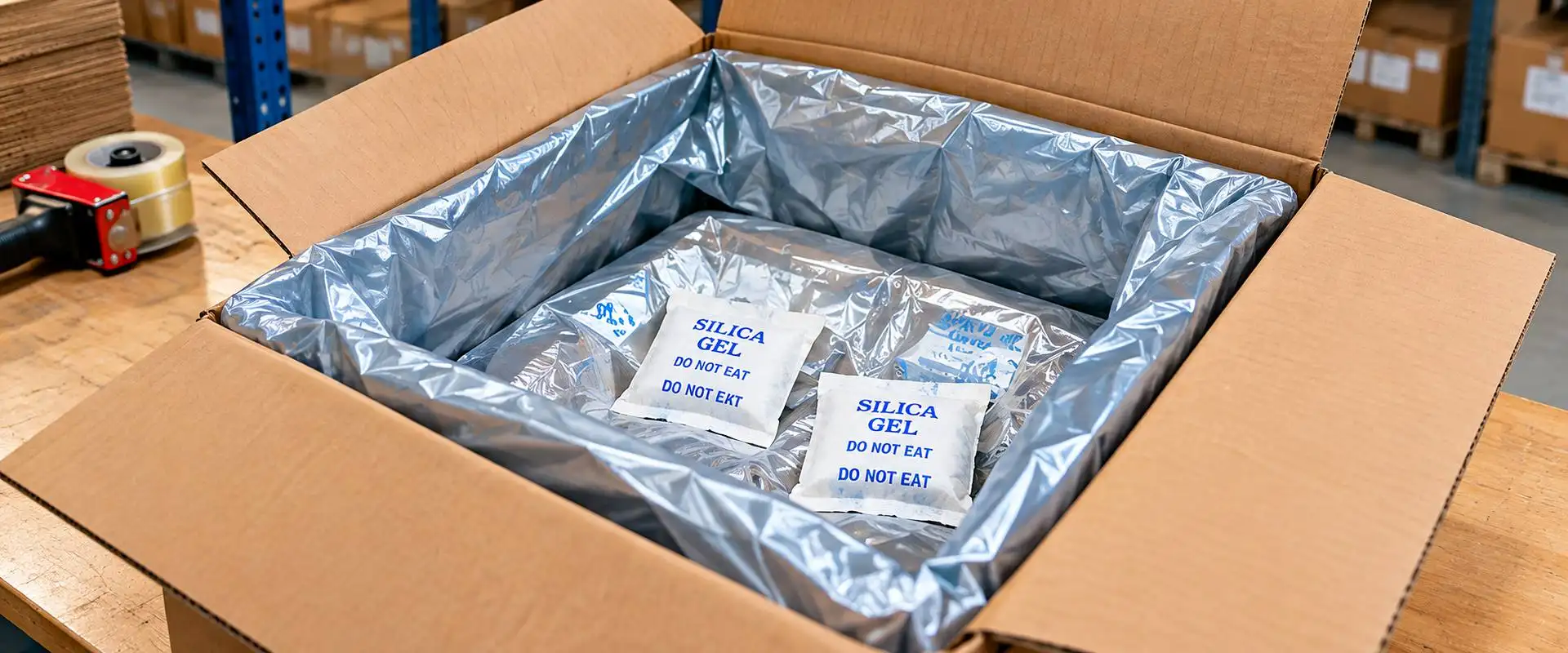
Depending on the product characteristics, options include barrier packaging, inner liners, desiccants, and other moisture-control materials.
Ensure that both the cartons and the pallets are completely dry before loading them into the container.
If the packaging materials themselves contain moisture, the cargo may still sustain damage, even if tightly secured with outer stretch wrap.
Standard stretch wrap is designed primarily for dust protection and surface safeguarding; it does not serve as a comprehensive moisture barrier.
The appropriate moisture-protection strategy should be selected based on the product's sensitivity to moisture and the anticipated transport environment.
7. Are the shipping marks and labels correct?
Incorrect or missing shipping marks can hinder the identification of cargo during handling and transit in international logistics.
Before shipment, verify the labels on cartons and pallets to ensure the information aligns with shipping requirements. Depending on the order, labels typically include:
Consignee or destination details
Product identification
Carton or pallet numbers
Gross and net weights
Handling warning symbols/instructions
Purchase order (PO) numbers or shipment reference numbers
Specific details should be determined based on customer requirements, destination country regulations, and the chosen shipping method.
Labels must be clearly legible, correctly positioned, and securely affixed to the surface of the goods.
Labels must not be covered by opaque packaging materials, as this would make them difficult to identify.
Exporters should also verify that the shipping marks and the total number of packages match the information provided in the packing list and other shipping documentation.

8. Are the container loading and cargo securing plans ready?
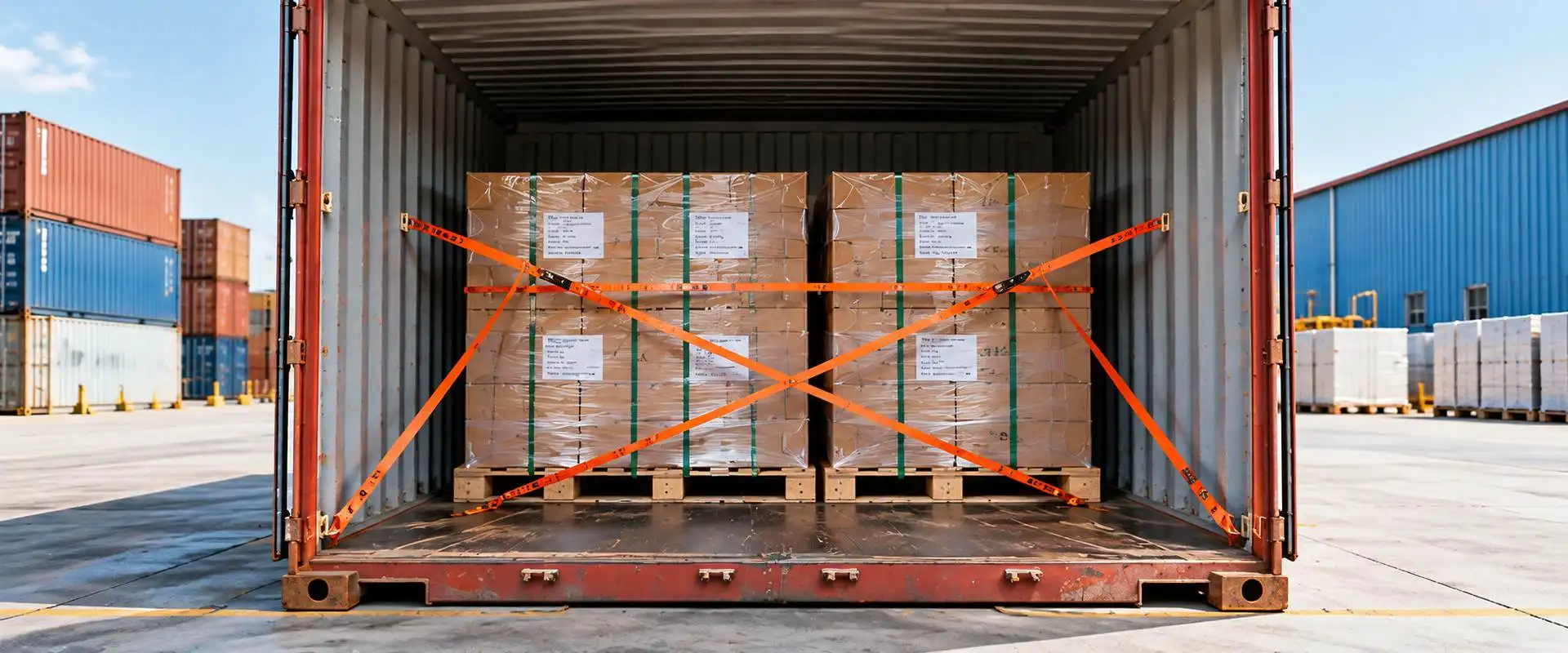
During the final inspection stage, plan how pallets will be arranged and secured inside the container.
Even if the packaging of an individual pallet is intact, it does not mean the cargo is adequately secured and protected within the container.
During transit, cargo is subject to constant vibration as well as forces from braking and acceleration, which can easily cause it to shift.
If pallets are not sufficiently secured, they may slide or collide with other items.
Before loading, inspect the condition of the container—including the floor, walls, and doors—to check for signs of water leakage, damage, or defects.
The loading plan should account for pallet dimensions, weight distribution, available space, and appropriate securing methods.
Depending on the type of cargo, securing measures such as blocking and bracing, dunnage (cushioning/padding), or strapping may be used.
The total weight of the cargo and its distribution must comply with the limits set for the container and applicable transport regulations.
For critical shipments, take photographs after the cargo has been loaded and secured to serve as documentation of its condition.
Pre-shipment Pallet Checklist
Warehouse staff can use a simple checklist before releasing goods to ensure that all core packaging requirements have been met.
| Inspection item | What to confirm |
| Pallet condition | Suitable capacity, no visible structural damage |
| Carton stacking | Stable arrangement, balanced weight, minimal overhang |
| Carton sealing | Secure tape adhesion and closed flaps |
| Stretch film | Consistent wrapping, no tears or loose sections |
| PP/PET strapping | Correct positioning, tension and joints |
| Edge protection | Suitable protectors installed where required |
| Moisture protection | Appropriate for the cargo and shipping conditions |
| Labels and shipping marks | Accurate, readable and consistent with documents |
| Container loading | Suitable weight distribution and cargo securing |
A pre-shipment checklist is most effective when integrated into a warehouse’s standard operating procedures (SOPs).
For companies with regular export operations, maintaining records of packaging specifications and loading inspections helps identify recurring issues and ensures consistent improvement in packaging quality.
Yalan Pack supplies a wide range of industrial and export packaging materials, including stretch film (for both manual and machine application), BOPP carton sealing tape, PP/PET strapping, and paper edge protectors.
For buyers planning to ship goods on pallets, verifying that packaging materials and methods meet compliance standards prior to shipment helps minimize unnecessary cargo damage and handling complications.
Successful overseas transport begins with properly prepared pallets—not just a well-packed shipping container.
Share on Social:


Contact Us
In This Article
Related Posts
PP Strapping for Cartons: Packaging Challenges in E-Commerce Logistics
Oct 21, 2026
Polypropylene Strapping Under Temperature Changes: Effects on Packaging Performance
Oct 21, 2026
PET Strapping Supplier: Heat-Seal Joint Strength and Sealing Reliability
Oct 21, 2026
PP Strapping Supplier Guide: Smooth vs Embossed Strapping for Automated Packaging
Oct 21, 2026


