







How to Wrap a Pallet With Stretch Film: Step-by-Step Guide
By hqt
Jul, 2026Related Posts
Meet YALAN Packaging in Korea: Connecting with Global Packaging Partners at K-PRINT 2026
Aug 10, 2026

When Should a Warehouse Automate End-of-Line Packaging?
Jul 29, 2026
Total Packaging Cost: How to Cut Waste Without More Damage
Jul 29, 2026
Packaging Industry Trends 2026: What Buyers Should Watch
Jul 29, 2026
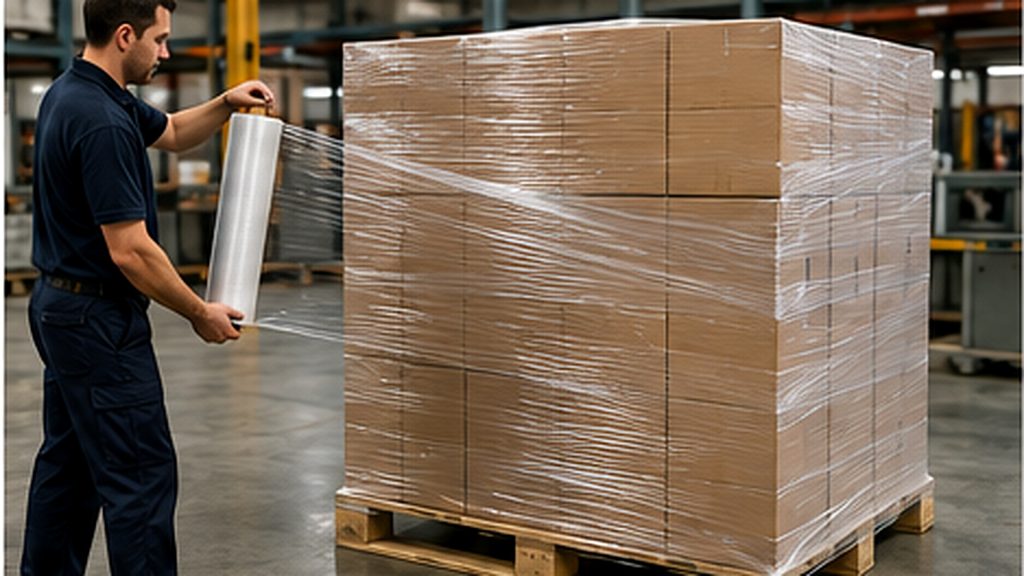
Learning how to wrap a pallet with stretch film is not simply a matter of circling the load several times. The film must connect the goods to the pallet, apply enough containment force, reinforce vulnerable areas, and remain secure throughout handling and transportation.
Too little film allows cartons to shift. Too much film wastes material and can crush lightweight packaging. The following method gives warehouse teams a practical starting point for manual pallet wrapping while also explaining how the same principles apply to machine wrapping.
Prepare the Pallet Before Wrapping
Begin with a sound pallet. Broken deck boards, exposed nails, and damaged corners can puncture the film or weaken the load during forklift handling. Place heavier cartons at the bottom and lighter cartons above them.
Keep the boxes inside the pallet footprint. Overhanging cartons are more likely to be crushed, while large gaps between boxes reduce stability. When possible, use an interlocking stacking pattern and keep the top surface reasonably level.
Irregular products may need paper edge protectors, top sheets, anti-slip sheets, or strapping before stretch wrapping begins.
Choose the Correct Stretch Film
Select the film according to load weight, shape, edge condition, storage environment, and wrapping method. Light cartons may use a thinner film, while heavy or irregular products often need better puncture resistance and higher containment force.
For manual work, use film designed for hand application. A suitable hand stretch film should unwind smoothly, cling consistently, and provide enough stretch without requiring excessive effort.
Machine film should be matched to the equipment's pre-stretch system. Using hand film on a powered wrapper can lead to poor stretching, film breaks, or inefficient consumption.
Anchor the Film to the Pallet
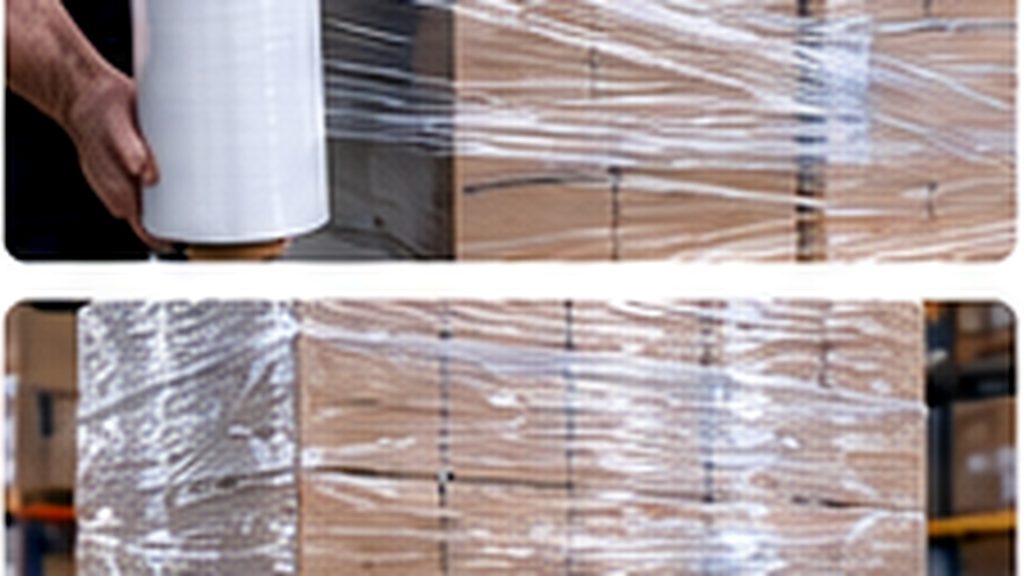
Do not rely on a loose knot around one carton. The film should connect the load to the pallet so the goods cannot slide independently of the base.
Start by twisting the film into a narrow rope and securing it around a pallet corner, or tuck the film under the pallet deck. Apply two or three wraps around the bottom section while keeping the film low enough to capture the pallet.
Avoid wrapping completely under the pallet where forklift openings may be obstructed. The finished load must remain easy and safe to handle.
Build a Strong Base
The bottom portion of the pallet often carries the highest stress when a forklift accelerates, stops, or turns. Reinforce this area with several overlapping wraps.
Keep the roll close to the load and walk forward rather than backward. Maintain stable body position and avoid twisting at the waist. A stretch film dispenser can improve control, reduce friction on the hands, and help maintain more consistent tension.
Wrap Upward With Consistent Overlap
Move upward in a spiral pattern. A common starting point is approximately 50 percent overlap, meaning each new layer covers half of the previous layer. This creates an even film structure without leaving weak horizontal gaps.
Pull enough to activate the film's stretch and recovery, but do not pull so hard that the film necks down excessively or damages the cartons. The correct tension should hold the load firmly while allowing the film to stay intact around corners.
Reinforce High-Stress Areas
Not every part of a pallet needs the same number of layers. Add reinforcement where the load changes shape, where cartons meet sharp edges, and around the top and bottom thirds of the pallet.
For tall loads, use a rope technique by narrowing the film into a band and applying it around a critical level. This creates concentrated holding force without adding many complete layers across the entire pallet.
Heavy products may also require vertical straps. Stretch film stabilizes the load and protects against dust and moisture, while strapping provides additional unitization for demanding transport conditions.
Secure the Top of the Load
Once the film reaches the top, cover the upper corners and apply enough layers to prevent the top cartons from separating. For moisture or dust protection, place a top sheet before completing the final wraps.
Do not pull thin carton flaps inward. If the upper boxes deform, reduce the tension or use corner protection to distribute the force.
Return to the Bottom
After reinforcing the top, wrap downward toward the pallet base. The downward pass cross-links the layers and helps create a stable film web around the entire load.
Finish with additional wraps around the base. Cut the film cleanly and press the end against the wrapped surface so the cling layer holds it in place. Avoid leaving a long loose tail that could catch during handling.
Check the Finished Pallet
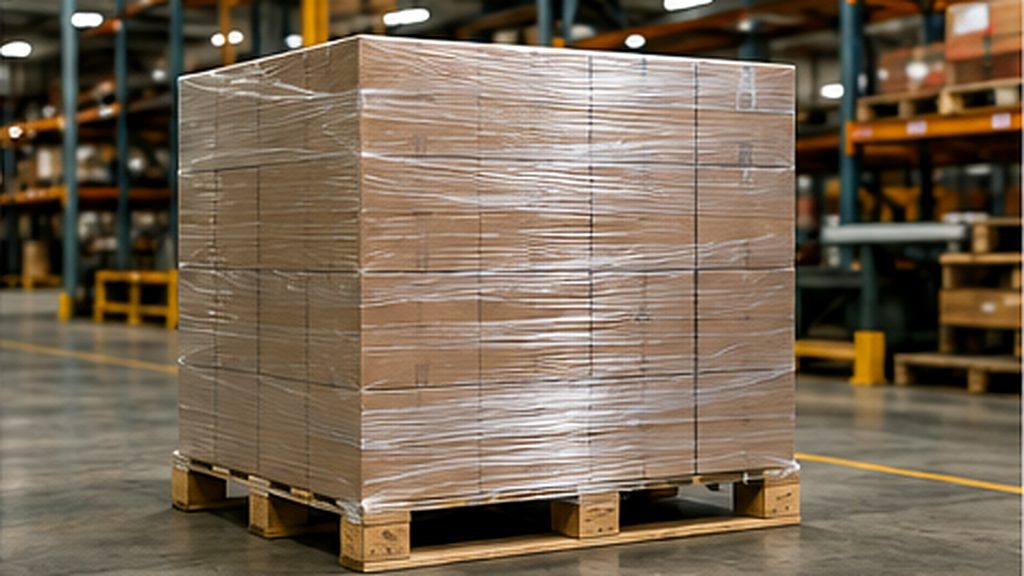
Push gently against the upper cartons. The load should behave as one unit rather than allowing individual boxes to move. Check for exposed corners, horizontal gaps, punctures, and loose film.
Confirm that labels remain visible when required and that forklift access is clear. A well-wrapped pallet should be stable without showing crushed cartons or excessive film buildup.
Using a Stretch Wrapping Machine
Businesses with repetitive pallet volume can improve consistency using stretch wrapping machines. The operator still needs to prepare the pallet correctly, but the machine can control rotation speed, film tension, overlap, top wraps, and bottom wraps.
Review the program whenever the load changes. A setting developed for uniform beverage cartons may not work for irregular industrial goods. Film breaks, loose tops, and excessive film consumption are often programming issues rather than film defects.
Common Pallet Wrapping Mistakes
- Failing to connect the load to the pallet
- Wrapping only the middle of the load
- Using uneven tension from bottom to top
- Ignoring sharp edges and damaged cartons
- Walking backward while wrapping
- Using more layers instead of improving the wrapping pattern
- Applying machine settings without testing the actual pallet
Conclusion
Knowing how to wrap a pallet with stretch film correctly improves safety, load stability, and material efficiency. Prepare the pallet, anchor the film to the base, create a strong lower section, wrap upward with consistent overlap, reinforce stress points, and finish securely at the bottom.
The process should be tested on actual loads rather than judged only by appearance. Record film consumption and check the pallet after internal handling or transport trials. This makes it easier to adjust the film specification and wrapping pattern before bulk use.
Frequently Asked Questions
How many layers of stretch film should be used on a pallet?
The correct number depends on load weight, film performance, and transport conditions. Begin with reinforced bottom and top sections, then validate stability through a handling test.
Should I wrap a pallet from the bottom or the top?
Start at the bottom so the load is connected to the pallet, move upward, and then return to the base for the final reinforcement.
How much should stretch-film layers overlap?
About 50 percent overlap is a useful starting point for many loads. Adjust it according to film thickness, pallet height, and stability requirements.
Can stretch film alone secure a heavy pallet?
Sometimes, but very heavy or difficult loads may also require strapping, anti-slip material, edge protection, or other unitization methods.
Why does the film keep tearing while I wrap?
Check for sharp edges, damaged rolls, excessive tension, incorrect film orientation, and unsuitable film gauge. The wrapping method and film specification should be evaluated together.
Share on Social:


Contact Us
In This Article
Related Posts
Meet YALAN Packaging in Korea: Connecting with Global Packaging Partners at K-PRINT 2026
Aug 10, 2026
When Should a Warehouse Automate End-of-Line Packaging?
Jul 29, 2026
Total Packaging Cost: How to Cut Waste Without More Damage
Jul 29, 2026
Packaging Industry Trends 2026: What Buyers Should Watch
Jul 29, 2026


