







How to Choose BOPP Packaging Tape for Carton Sealing
By hqt
Jul, 2026Related Posts
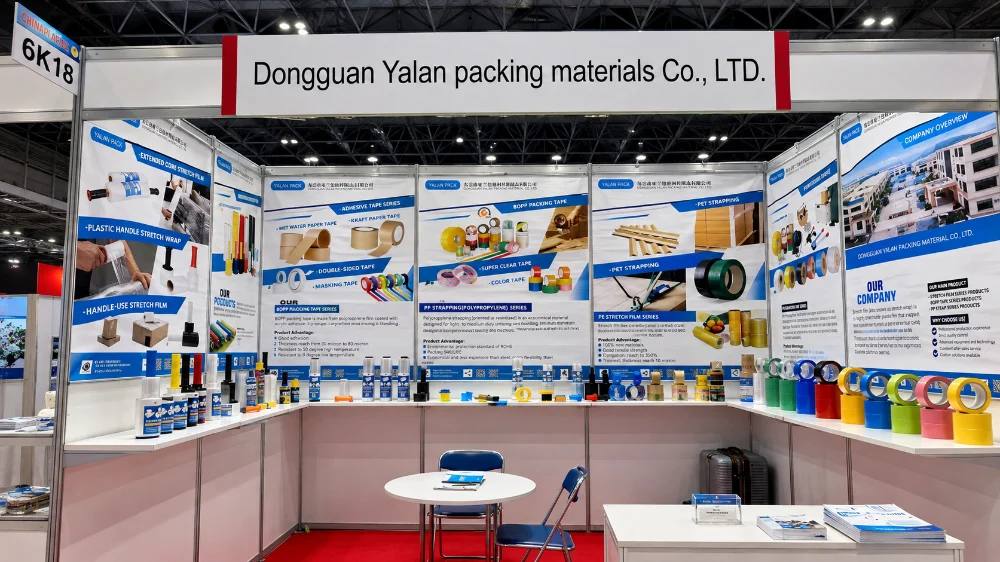
Meet YALAN Packaging in Korea: Connecting with Global Packaging Partners at K-PRINT 2026
Aug 10, 2026

When Should a Warehouse Automate End-of-Line Packaging?
Jul 29, 2026
Total Packaging Cost: How to Cut Waste Without More Damage
Jul 29, 2026

Packaging Industry Trends 2026: What Buyers Should Watch
Jul 29, 2026
How to choose BOPP packaging tape becomes a practical question when a carton must stay closed through packing, stacking, warehousing, delivery, and customer handling. Buyers often start with tape thickness, but successful carton sealing depends on several connected factors: backing strength, adhesive type, width, roll length, unwind behavior, carton surface, and application equipment.
A specification that is unnecessarily heavy increases material cost. A specification that is too light creates rework, open cartons, damaged goods, and complaints. The goal is not to buy the thickest roll. It is to find the lightest reliable specification for the actual package.
Understand What BOPP Tape Is
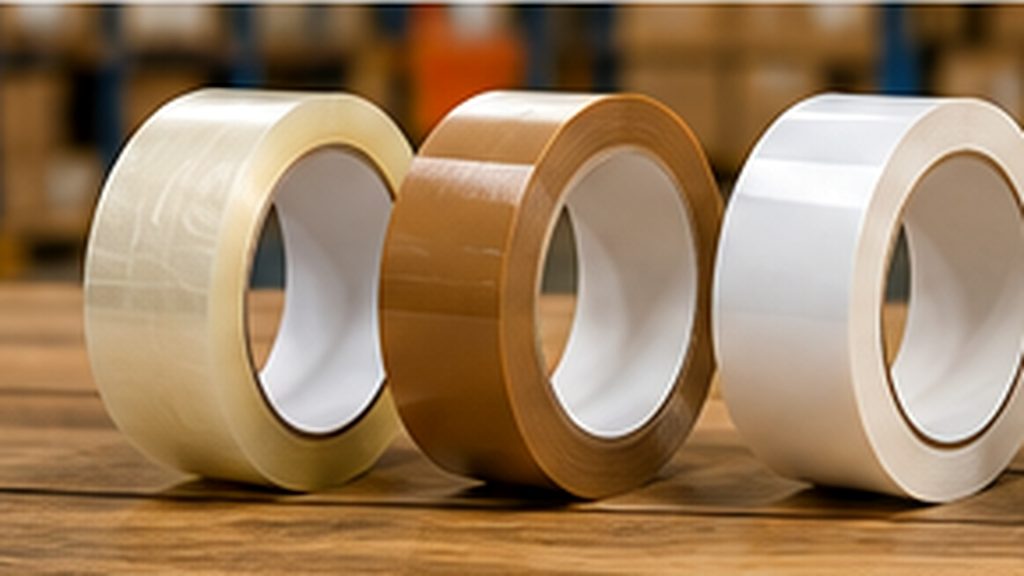
BOPP stands for biaxially oriented polypropylene. The film is stretched in two directions during production, giving it useful tensile strength and dimensional stability. After surface treatment, an adhesive coating is applied and the jumbo roll is slit into finished widths and lengths.
BOPP tape is popular for corrugated carton sealing because it combines strength, clarity, printability, and efficient production. It can be made in clear, brown, colored, printed, low-noise, hand-use, and machine-use formats.
Start your selection with the BOPP packaging tape category, then narrow the specification according to the carton and operating conditions.
Define the Carton and Load
Record the box dimensions, board grade, gross weight, contents, and closure design. A compact carton containing dense metal parts places different stress on the center seam than a large carton filled with lightweight textiles.
Check whether the flaps sit flat after filling. Overfilled cartons push upward against the tape and can cause flagging at the ends. Underfilled cartons may collapse when the tape is tensioned. Correct carton sizing improves tape performance before any specification change is made.
Choose the Adhesive Type
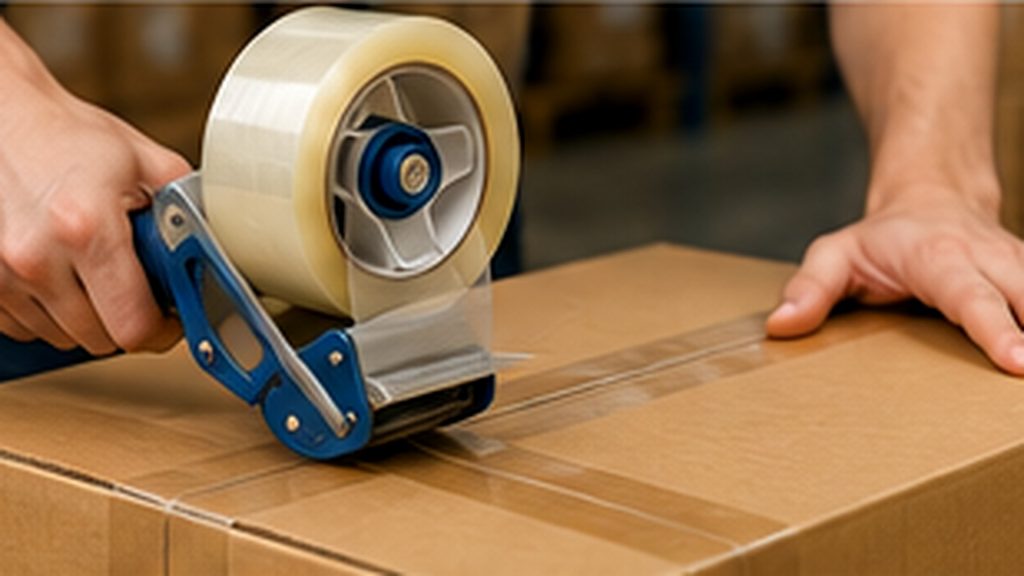
Water-based acrylic tape is widely used for general carton sealing and storage. Hot melt tape is valued for quick initial tack and fast packing. Solvent adhesive is often considered for more demanding loads and environments.
Do not select adhesive by name alone. Ask the supplier to test it on your linerboard, especially when the carton is recycled, coated, dusty, or heavily printed. Adhesion to a clean kraft sample does not guarantee the same result on the production box.
Decide the Total Tape Thickness
Total thickness usually combines the BOPP backing and adhesive coating. A thicker backing generally offers greater resistance to splitting and tearing, while sufficient adhesive coating helps the tape contact an uneven board surface.
However, two tapes with the same total thickness can perform differently. One may use a stronger film and a controlled adhesive layer, while another may rely on more backing but insufficient adhesive. Request both total thickness and the relevant construction details instead of comparing one number only.
Select the Correct Width
The tape must cover the center seam with enough contact on both flaps. Standard cartons often use a common general-purpose width, while larger or heavier boxes may need a wider tape for more bonding area.
When a carton has wide gaps, uneven flaps, or bulky contents, increasing width may be more effective than applying several narrow strips. The tape should also fit the dispenser or machine head without side movement.
Match Roll Length to the Operation
Shorter rolls are convenient for manual packing and reduce the weight held by the operator. Longer rolls reduce changeovers on high-volume lines, but they need the correct core, dispenser, and tape head.
Calculate cartons sealed per roll using the actual H-seal or center-seam pattern. A lower-priced roll may deliver fewer sealed cartons if its length is short or if operators need extra passes to achieve a reliable closure.
Hand Tape or Machine Tape?
Hand tape should unwind smoothly from a pistol-grip dispenser and cut cleanly without stretching excessively. Operator comfort matters because high unwind force can slow packing and create inconsistent tension.
Machine packaging tape needs stable unwind, accurate roll dimensions, reliable backing strength, and compatibility with the tape head. A film that works on a hand dispenser may break or track poorly at production speed.
Consider Noise in the Packing Area
Conventional tape can create a sharp unwinding sound. In fulfillment centers, retail backrooms, offices, and mixed-use warehouses, repeated noise can become distracting.
Low noise packaging tape is designed to unwind more quietly while still providing carton-sealing performance. Evaluate both noise and adhesion because a quiet tape still needs to meet the load requirement.
Use Color and Printing for Control
Color can identify product families, destinations, inspection status, or handling routes. Colored packaging tape provides a simple visual signal in warehouses where cartons otherwise look identical.
Printed packaging tape can carry a logo, warning, handling instruction, or security message. Confirm print repeat, ink adhesion, background color, artwork direction, and whether the tape will be applied manually or by machine.
Check the Carton-Sealing Pattern
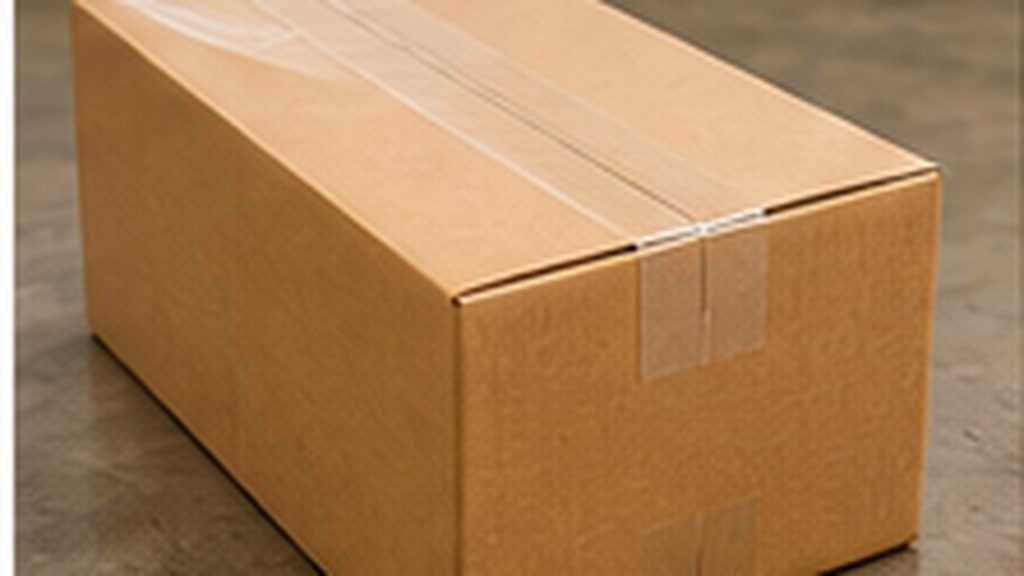
A single strip across the center seam may be adequate for a light carton. Heavier boxes often benefit from an H-seal, with one strip along the center seam and additional strips across both end seams.
The pattern should be consistent on the top and bottom. Many failures occur because the top is sealed carefully while the bottom receives only a short strip. Use a suitable carton sealing tool to improve pressure and placement.
BOPP Tape Buying Checklist
| Information to confirm | Why it matters |
|---|---|
| Carton size and gross weight | Determines seam stress and required holding power |
| Board type and recycled content | Affects adhesive contact |
| Storage and shipping environment | Helps select adhesive performance |
| Hand or machine application | Changes unwind and roll requirements |
| Tape width, length, and core size | Ensures tool and equipment compatibility |
| Clear, brown, colored, or printed | Supports presentation and warehouse control |
| Trial quantity and acceptance test | Confirms performance before bulk purchase |
Run a Practical Approval Test
Seal representative cartons under normal production conditions. Include the heaviest package and the most difficult board. Store the cartons for the expected period, stack them as they will be shipped, and check both the top and bottom seals.
Measure more than peel strength. Record tape breaks, operator comments, machine stoppages, edge lifting, cartons sealed per roll, and any need for double taping. A controlled trial reveals the real cost per secure carton.
Conclusion
Choosing BOPP packaging tape requires more than selecting a familiar thickness. Define the carton, load, board surface, environment, sealing pattern, and application method. Then match the adhesive, backing, width, roll length, and unwind performance to those conditions.
Request samples before a bulk order and test them on production cartons. A clear specification and a practical approval test help prevent both over-engineering and costly sealing failures.
Frequently Asked Questions
What thickness of BOPP tape should I buy?
The correct thickness depends on carton weight, board quality, transport stress, and adhesive performance. Test several constructions rather than choosing by thickness alone.
Is wider packaging tape always stronger?
Wider tape provides more bonding area, but the adhesive must still grip the board. Correct width and correct adhesive should be selected together.
Can hand tape be used on an automatic carton sealer?
It may fit physically but can create breaks, poor tracking, or inconsistent unwind. Use tape specified for the machine and production speed.
When should I choose printed packaging tape?
Printed tape is useful for branding, handling messages, tamper awareness, and private-label programs. Confirm artwork and application direction before production.
How should BOPP tape samples be tested?
Apply them to real cartons at normal speed, then inspect the seals after storage, stacking, and handling under expected conditions.
Share on Social:


Contact Us
In This Article
Related Posts
Meet YALAN Packaging in Korea: Connecting with Global Packaging Partners at K-PRINT 2026
Aug 10, 2026
When Should a Warehouse Automate End-of-Line Packaging?
Jul 29, 2026
Total Packaging Cost: How to Cut Waste Without More Damage
Jul 29, 2026
Packaging Industry Trends 2026: What Buyers Should Watch
Jul 29, 2026


