







How Can You Reduce Cargo Damage During Container Shipping?
By hqt
Oct, 2026Related Posts
PP Strapping for Cartons: Packaging Challenges in E-Commerce Logistics
Oct 21, 2026

Polypropylene Strapping Under Temperature Changes: Effects on Packaging Performance
Oct 21, 2026
PET Strapping Supplier: Heat-Seal Joint Strength and Sealing Reliability
Oct 21, 2026
PP Strapping Supplier Guide: Smooth vs Embossed Strapping for Automated Packaging
Oct 21, 2026
Cargo damage during containerized transport is usually the result of a combination of factors. Common causes include flawed packaging design, poor pallet load stability, moisture exposure, inadequate securing of cargo within the container, insufficient carton strength, and improper handling during loading or unloading.
Even if goods are in perfect condition when they leave the factory, they face numerous risks throughout the international logistics chain—such as those arising from forklift operations, port handling, container transshipment, continuous vibration, humidity fluctuations, and long transit times.
To reduce the likelihood of cargo damage, a comprehensive packaging solution is required—one that protects the product itself, stabilizes the palletized load, and ensures that cargo is effectively secured within the container.
Selecting Packaging Materials Based on the Transport Environment
The first step in minimizing cargo damage is to select packaging materials tailored to the specific transport conditions.
There are significant differences between the environments encountered in ocean freight and short-haul domestic transport. Goods destined for export may remain in a container for weeks, enduring temperature swings, humidity changes, and multiple rounds of loading, unloading, and transshipment.
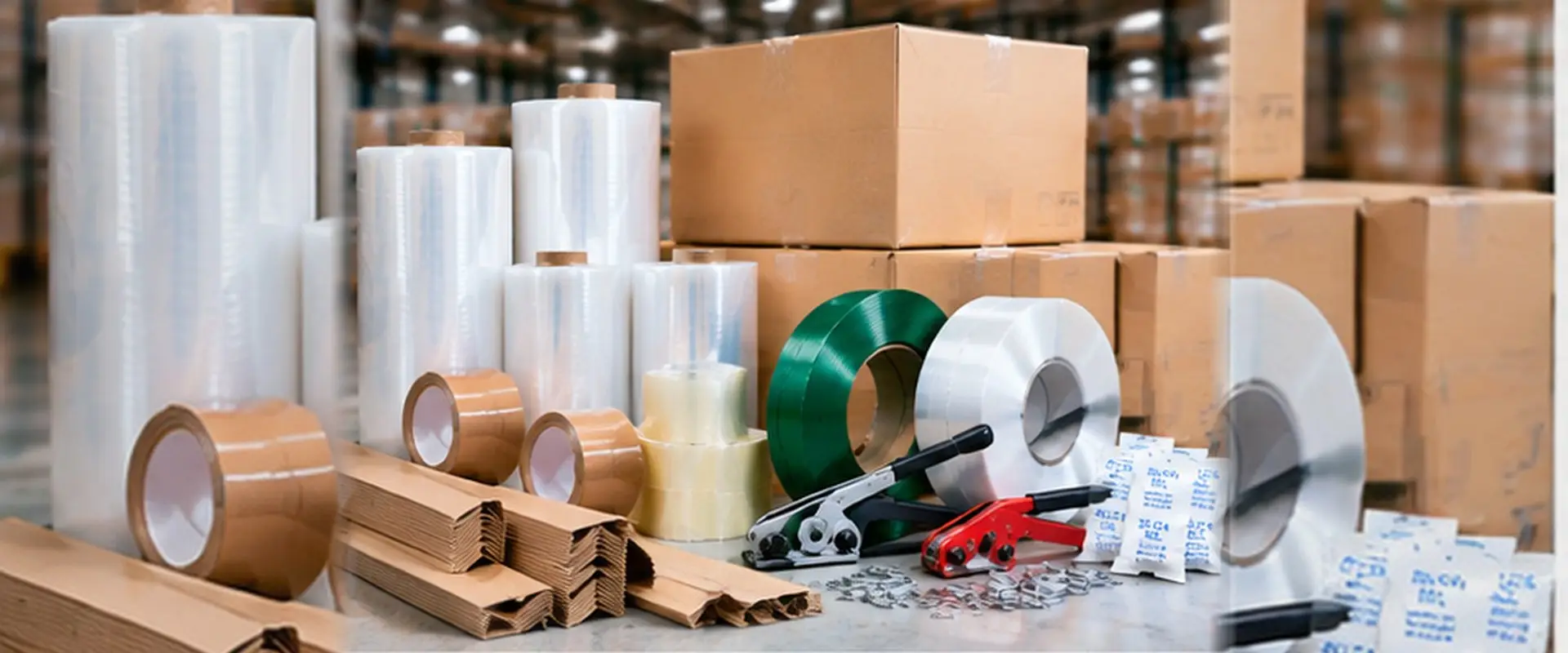
A typical export packaging solution generally includes:
· Corrugated cartons to hold the products
· BOPP packing tape for sealing cartons
· Stretch wrap to stabilize palletized loads
· PP or PET strapping for additional reinforcement
· Paper edge protectors to safeguard corners
· Specialized moisture-proof materials for sensitive goods
Each material serves a specific purpose.
For instance, while stretch wrap can bind items on a pallet into a single, cohesive unit, it cannot replace the methods required to secure cargo within the container itself.
Similarly, although PET strapping provides strong binding force, it cannot compensate for risks caused by an unstable stacking configuration.
An ideal packaging solution combines various materials, strategically selected to address the specific risks involved.
Ensuring Pallet Load Stability Before Shipment
Many transport-related risks originate even before the cargo is loaded into the container.
Even if high-quality packaging materials are used, the goods remain vulnerable to damage if the palletized load itself is unstable. Common issues affecting pallet stability include:
· Uneven stacking heights of cartons
· Cartons extending significantly beyond the pallet edges
· A center of gravity that is too high
· Loose or shifting items inside the cartons
· Uneven weight distribution
A properly prepared pallet load must have balanced weight and stable stacking.
Generally, heavier cartons should be placed at the bottom and lighter ones on top to reduce the risk of tipping.
Additionally, the pallet size must be appropriate for the dimensions of the goods.
A pallet that is too small will cause cartons to overhang, while one that is too large may allow the cargo to shift during transit. Before applying stretch wrap, exporters should verify the following:
· Are the goods centered?
· Are the cartons neatly aligned?
· Are there any vulnerable corners or edges prone to damage?
· Is there a risk of individual cartons sliding?
A stable pallet load helps reduce the stress placed on the stretch wrap, strapping, and the cartons themselves during transportation.

Ensuring pallet load stability through the proper use of stretch wrap
Stretch wrap is one of the most common materials used to secure export pallets.
However, the level of protection provided depends on the wrapping technique, not just the number of layers applied.
Key factors to consider:
Stretch wrap thickness
Common thicknesses for stretch wrap are 15, 17, 20, and 23 microns.
Factors for selecting thickness include:
· Total load weight
· Product shape
· Presence of sharp edges or corners
· Required tension/securing force
· Wrapping method
A thicker film does not necessarily provide better results.
Stretch wrap overlap
Insufficient overlap creates weak points, which can lead to cartons shifting.
Securing the base
The connection between the pallet and the load is critical.
If the bottom layer of cartons is not properly secured, the entire load may shift during handling.
Stretch wrap tension
Insufficient tension fails to provide adequate security.
Excessive tension can crush the cartons or even tear the film. For export shipments, stretch-wrapping parameters must be tested in conjunction with the specific pallet-loading configuration.

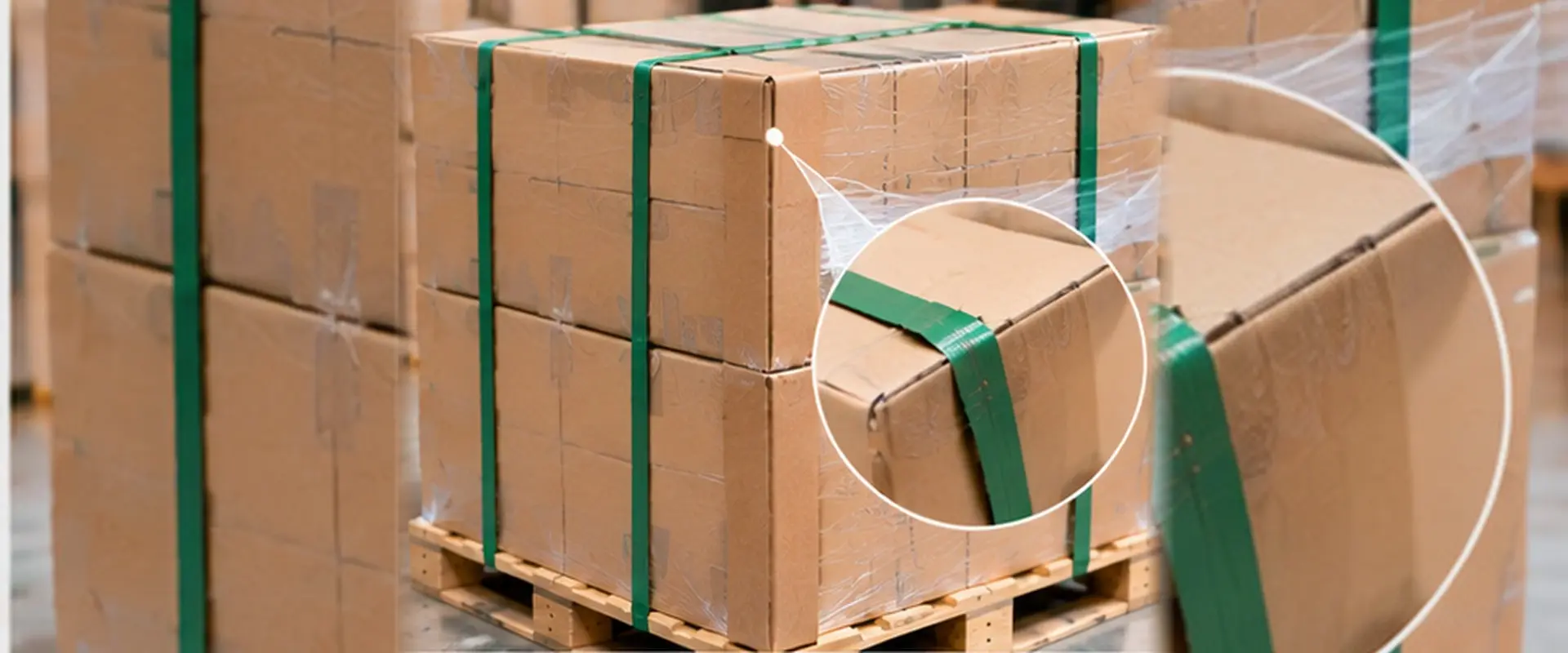
Protecting Carton and Product Corners
Damage to cartons is another major cause of cargo damage.
During transit, cartons are subjected to compression from stacking, continuous vibration, and impacts with other packages.
The corners and edges of cartons are inherently weak and highly susceptible to damage.
Using paper edge protectors serves several purposes:
· Reinforcing the four corners of the pallet
· Distributing the tension from strapping bands
· Reducing carton deformation
· Protecting vulnerable product edges
Edge protectors are particularly critical when securing cartons with PET or PP strapping.
Without them, the high tension of the straps can create localized stress concentrations, crushing the corners of the cartons.
However, edge protectors are merely one component of an overall packaging design.
They cannot compensate for insufficient carton strength, nor can they rectify improper pallet-stacking methods.
Preventing Moisture Damage During Ocean Freight
In containerized shipping, humidity is a critical factor that requires close attention.
Temperature fluctuations between day and night during ocean transit can lead to the formation of condensation inside the container.
Condensation can result in several adverse outcomes:
· Moisture absorption by the goods
· Reduced compressive strength of cartons
· Rust and corrosion of metal components
· Damage to or detachment of labels
· Contamination of the products
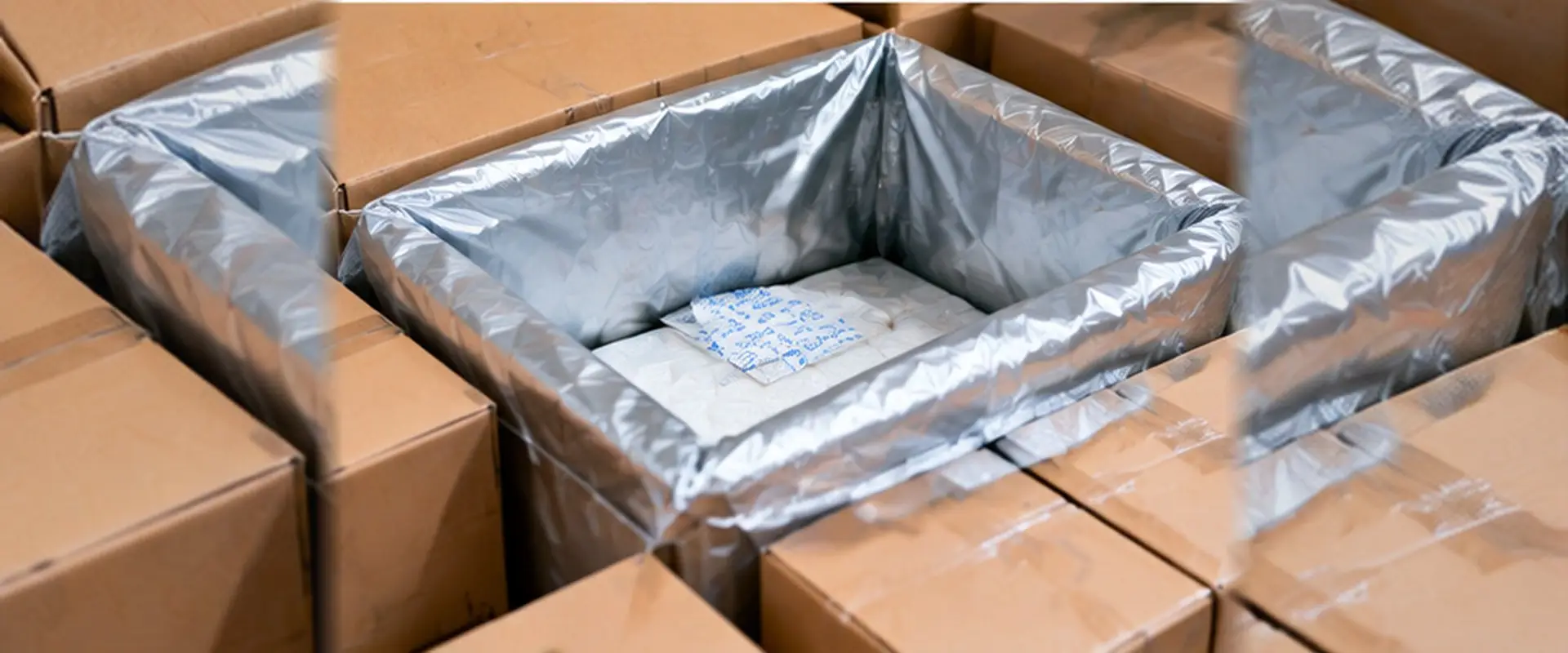
Moisture-prevention strategies should be tailored to the specific characteristics of the products.
Options include:
· Moisture-resistant packaging
· Plastic inner liners
· Barrier film bags
· Desiccants
· Proper ventilation design
While stretch wrap can protect product surfaces from dust, standard stretch wrap does not serve as a complete moisture barrier.
For moisture-sensitive goods, the packaging design must account for environmental conditions throughout the entire journey—from loading at the factory to unloading at the final destination.
Securing Cargo Inside the Container
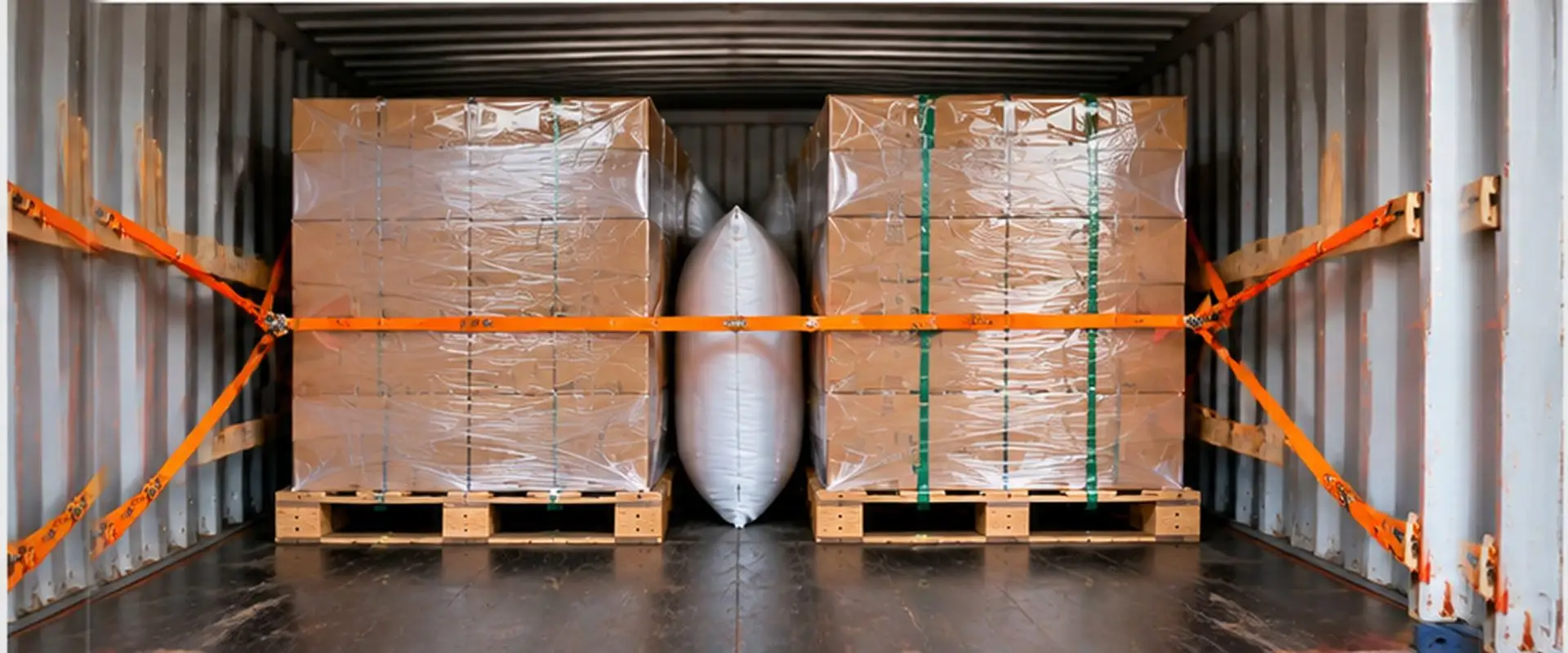
Even if palletized goods are perfectly packed, damage can still occur if they shift or slide within the container.
This is a point frequently overlooked by exporters.
Stretch wrap and pallet strapping only secure items onto the pallet itself;
they cannot prevent the entire pallet from sliding or shifting during transit. Inside a container, cargo may be subjected to:
· Sudden braking during inland transport
· Rolling or swaying of the vessel
· Continuous vibration
· Impact forces caused by acceleration and deceleration
Depending on the nature of the goods, additional securing methods may be required, such as:
· Blocking
· Bracing
· Dunnage materials
· Container airbags
· Lashing systems
Container loading plans must take into account:
· Weight distribution of the cargo
· Gaps between pallets
· Internal dimensions of the container
· The product’s tolerance for the transport environment
Well-packed pallets are merely one component of ensuring safe transport within a container.
Establishing and Standardizing Packing Procedures
For companies with ongoing, high-volume shipments, standardized packing procedures are crucial.
Variations in wrapping tension, the amount of film used, and strapping techniques—depending on which operator is performing the task—can lead to inconsistent packing quality.
A standardized set of export packing guidelines may include the following:
| Item | Specification |
| Carton type | Confirm board strength and size |
| Packing tape | Width, thickness and adhesive type |
| Stretch film | Thickness, width and wrapping method |
| Strapping | PP/PET type and strength |
| Edge protection | Required or not |
| Pallet size | Confirm dimensions |
| Container loading | Securing method |
Conducting routine inspections before goods leave the factory allows for the early identification and mitigation of potential risks prior to shipment.
Key areas for inspection include:
· Loose or shifted cartons
· Damaged or defective pallets
· Torn stretch wrap
· Improperly positioned strapping
· Insecure cargo bracing within the container
For recurring orders, documenting proven and effective packaging solutions helps ensure consistent packaging quality over the long term.

How can you effectively reduce cargo damage during containerized transport?
Simply increasing the amount of packaging material does not address the root cause of transit damage.
The most effective approach is to establish a comprehensive export packaging system:
Sturdy cartons → Reliable sealing → Stable pallet stacking → Standardized stretch wrapping → Appropriate strapping and reinforcement → Secure internal bracing
Each step is designed to specifically counter corresponding transport risks.
Yalan Pack supplies a wide range of industrial and export packaging materials, including stretch film, BOPP packing tape, PP/PET strapping, and paper edge protectors.
If you are looking to optimize your export packaging, providing the following information will facilitate a more accurate assessment:
· Product category
· Carton dimensions
· Pallet specifications
· Cargo weight
· Transport route
· Current packaging method
· History of any past damage
Our philosophy is not merely to add more packaging materials.
Our core objective is to design a scientific packaging system that ensures cargo remains stable and well-protected throughout the entire transport cycle, while achieving optimal cost-efficiency.
Share on Social:


Contact Us
In This Article
Related Posts
PP Strapping for Cartons: Packaging Challenges in E-Commerce Logistics
Oct 21, 2026
Polypropylene Strapping Under Temperature Changes: Effects on Packaging Performance
Oct 21, 2026
PET Strapping Supplier: Heat-Seal Joint Strength and Sealing Reliability
Oct 21, 2026
PP Strapping Supplier Guide: Smooth vs Embossed Strapping for Automated Packaging
Oct 21, 2026


