







What Packaging Materials Are Commonly Used in North American Warehouses?
By hqt
Oct, 2026Related Posts
What Packaging Materials Are Commonly Used in North American Warehouses?
Oct 23, 2026
PP Strapping for Cartons: Packaging Challenges in E-Commerce Logistics
Oct 21, 2026

Polypropylene Strapping Under Temperature Changes: Effects on Packaging Performance
Oct 21, 2026
PET Strapping Supplier: Heat-Seal Joint Strength and Sealing Reliability
Oct 21, 2026
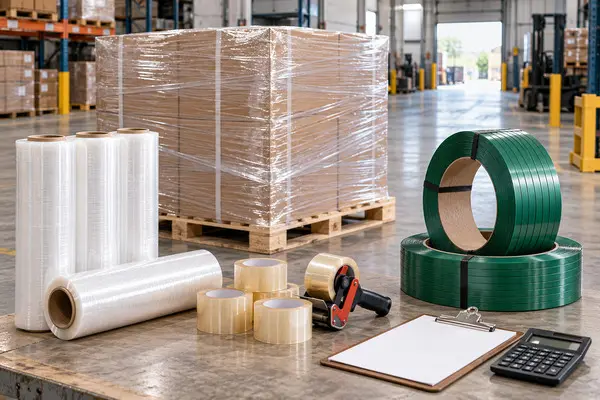
Warehouses in North America utilize a wide range of packaging consumables, including stretch wrap, packing tape, corrugated cartons, PP and PET strapping, paper edge protectors, shrink film, and various types of cushioning/void-fill materials. These supplies are essential for securing palletized loads and sealing cartons, ensuring product integrity during transit—whether for domestic distribution or cross-border shipping.
Packaging standards in the United States and Canada vary, depending on warehouse operational models, product weight, transport channels, and the level of automation in place. Selecting the right packaging materials not only improves packing efficiency and reduces the risk of product damage but also helps in managing overall logistics costs.
1. Stretch Wrap: The Primary Material for Securing Palletized Loads
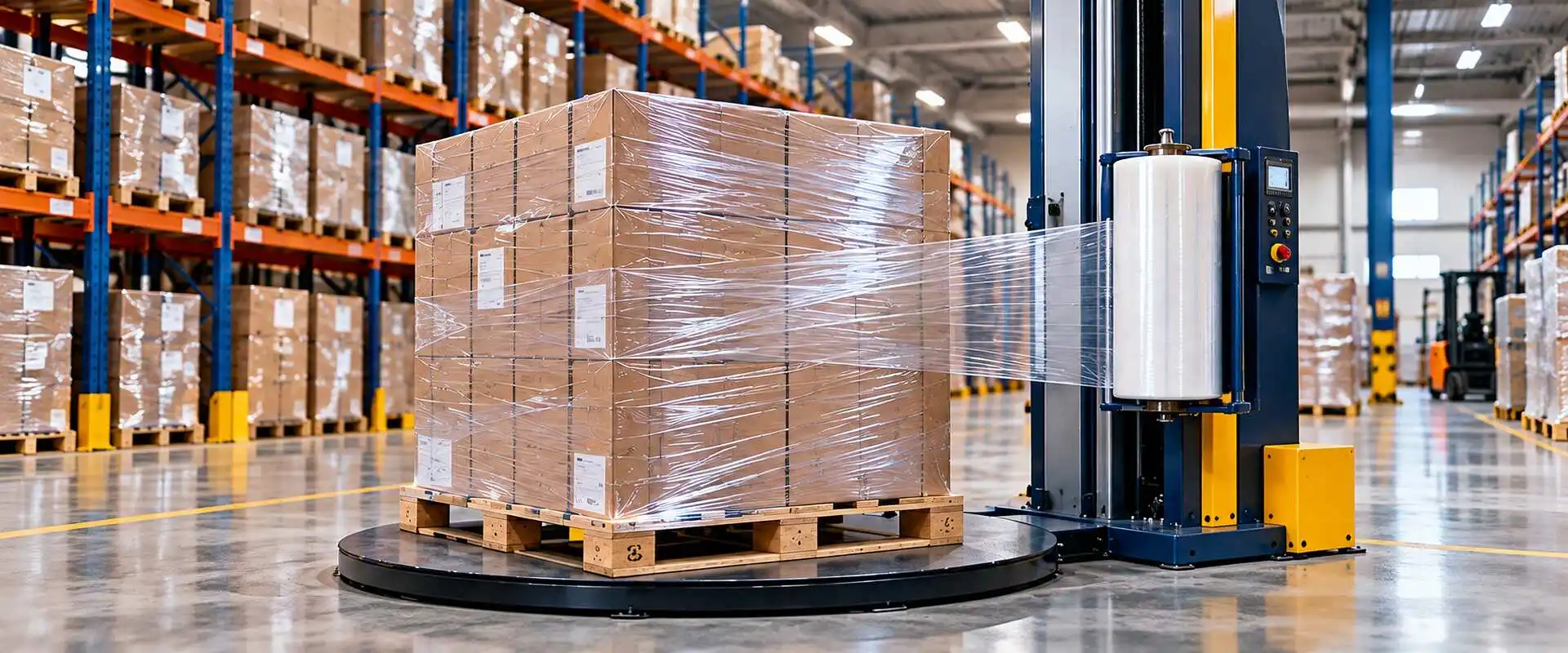
Stretch wrap—also known as pallet wrap—is a core consumable used in warehouses and distribution centers to stabilize palletized goods. By leveraging the film’s elasticity and gripping force, it binds cartons and products into a single, cohesive unit, preventing shifting during storage, forklift handling, and long-haul transport.
Stretch wrap is generally categorized into two types: manual (hand-applied) and machine-applied.
Manual Stretch Wrap
Designed for small-to-medium-sized warehouses, irregularly shaped pallets, or operations with lower packing volumes.
Common specifications in the North American market:
· Width: 18 inches (approx. 457 mm)
· Thickness: 60–80 gauge (approx. 15–20 microns)
· Roll Length: 1,000–1,500 feet
Machine-Applied Stretch Wrap
Used in conjunction with fully automatic or semi-automatic pallet wrapping machines; ideal for warehouses with high outbound volumes.
When the film’s properties are properly matched to the equipment settings, it ensures a consistent and secure wrap.
The standard width is 20 inches (approx. 500 mm), while the thickness is customized based on the specific nature of the goods and the requirements of the machinery.
When selecting materials, one should look beyond just thickness; it is essential to evaluate the film’s stretch capacity, tension (holding force), the resulting stability of the pallet load, and the total amount of material consumed per pallet.

2. BOPP Packing Tape: An Essential Consumable for Sealing Cartons
BOPP packing tape is a standard supply in North American warehouses, primarily used for sealing corrugated cartons to facilitate warehousing, order fulfillment, and logistics. Common types include:
· Water-based acrylic packing tape
· Hot-melt packing tape
· Standard clear or tan (kraft-colored) tape
· Custom-printed tape (with logos)
In the North American market, standard widths are 48 mm (approx. 2 inches) and 72 mm (approx. 3 inches). Typical roll lengths are 55 yards or 110 yards, with longer rolls also available for use with automated carton-sealing machines.
The choice of adhesive type should be based on factors such as the carton material, operating temperature, sealing equipment, and specific bonding requirements.
For instance, hot-melt tape offers superior initial tack, while acrylic tape provides better aging resistance and greater adaptability to various environments. Ultimately, the final bonding performance depends on the specific adhesive formulation and the conditions of the actual operating environment.
3. Corrugated Cartons: The Fundamental Packaging Medium for Warehousing
Corrugated cartons are widely used for the storage, protection, and transport of goods. They come in a diverse range of sizes, board grades, and structural designs, suitable for applications such as:
· E-commerce order packing and shipping
· Retail distribution
· Industrial parts packaging
· Secondary packaging for food and beverages
· Export and cross-border shipping
When selecting cartons, warehouse procurement teams should prioritize dimensions, board strength, stacking load capacity, and product protection requirements.
In the North American market, shipping cartons are commonly evaluated based on their Edge Crush Test (ECT) value.
However, the ECT value is not the sole criterion; the carton’s structural design, loading method, ambient humidity, and stacking configuration all influence its actual load-bearing performance. Selecting the right carton specifications can significantly reduce issues such as crushing or damage during warehouse handling and transit.

4. PP and PET Strapping: Securing and Reinforcing Cartons and Heavy-Duty Loads
Plastic strapping is used to bind goods and provide additional tension to secure palletized loads. The two most common materials used in the market are polypropylene (PP) and polyethylene terephthalate (PET).
| Feature | PP Strapping | PET Strapping |
| Typical application | Light to medium-duty bundling | Medium to heavy-duty loads |
| Material | Polypropylene | Polyester |
| Common use | Cartons, bundles, packaging lines | Industrial pallets, building materials |
| Equipment | Manual, semi-automatic, automatic | Manual and machine strapping systems |
PP (polypropylene) strapping is typically used for bundling and packaging cardboard cartons.
PET (polyester) strapping is better suited for heavy-duty industrial applications, which demand higher tensile strength and superior tension retention.
Before placing an order, North American buyers should verify the strapping’s width, thickness, break strength, and elongation, while also ensuring compatibility with their existing strapping equipment and other consumables.
The performance of the strap joint is also critical; the load-bearing capacity of the entire strapped unit is not determined solely by the strapping material itself.
5. Paper Edge Protectors: Enhancing Palletized Load Stability
Paper edge protectors—also known as corner boards or angle boards—are frequently used in conjunction with stretch wrap and strapping.
They protect the corners and edges of cartons and help distribute concentrated pressure along the edges of a pallet.
Typical applications include:
· Stacking corrugated cartons
· Furniture packaging
· Bundling construction materials
· Protecting industrial equipment
· Reinforcing pallets for export
Paper edge protectors help mitigate localized pressure damage caused by strapping and safeguard vulnerable corners during handling and transit.
When selecting these, buyers should confirm the length, leg width, thickness, and compressive strength specifications.
The appropriate dimensions should be determined based on the pallet height, the configuration of the stacked goods, and the required level of protection.

6. Shrink Film and Various Protective/Cushioning Materials
Beyond pallet wrapping and carton sealing, warehouses in North America utilize a variety of other materials to secure and protect goods.
Shrink Film
Used in combination with heat-shrink equipment, this material bundles items together or provides an outer protective layer; it is commonly used for retail multi-packs and the external packaging of industrial goods.
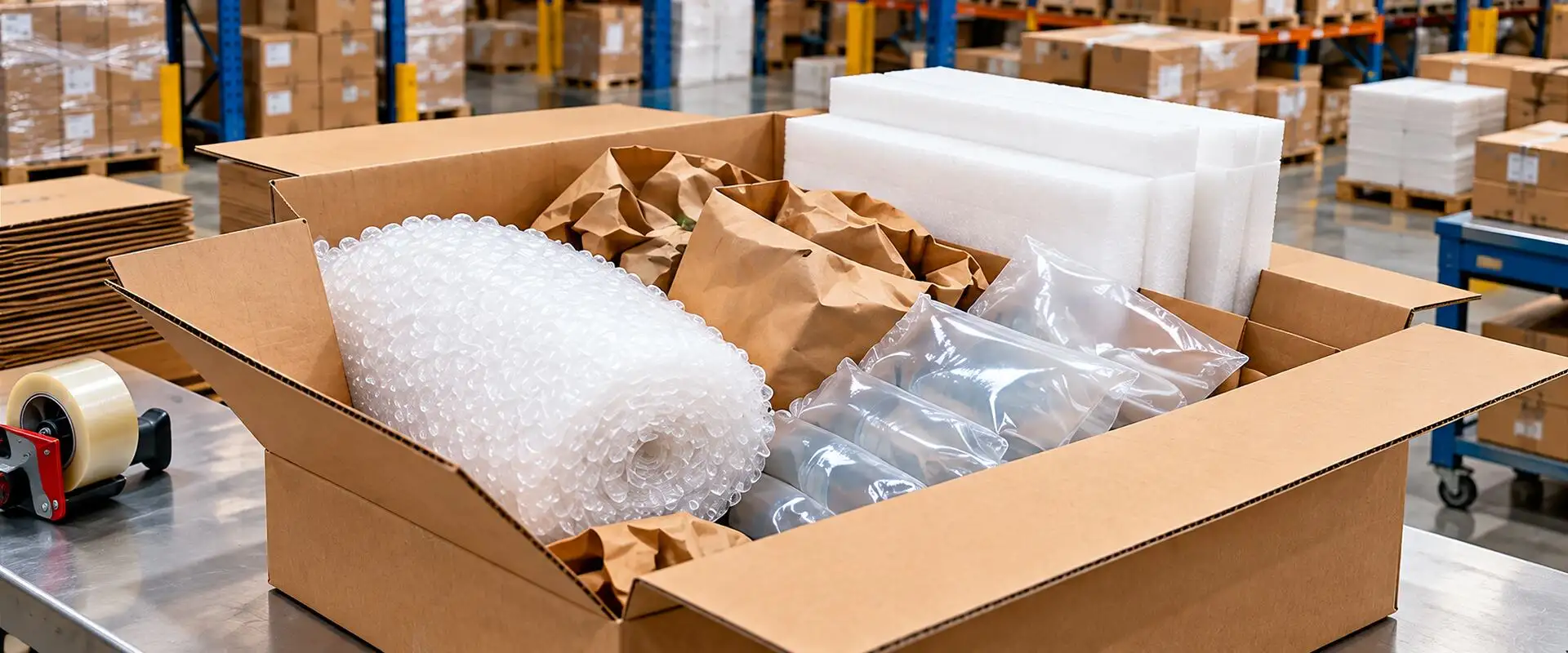
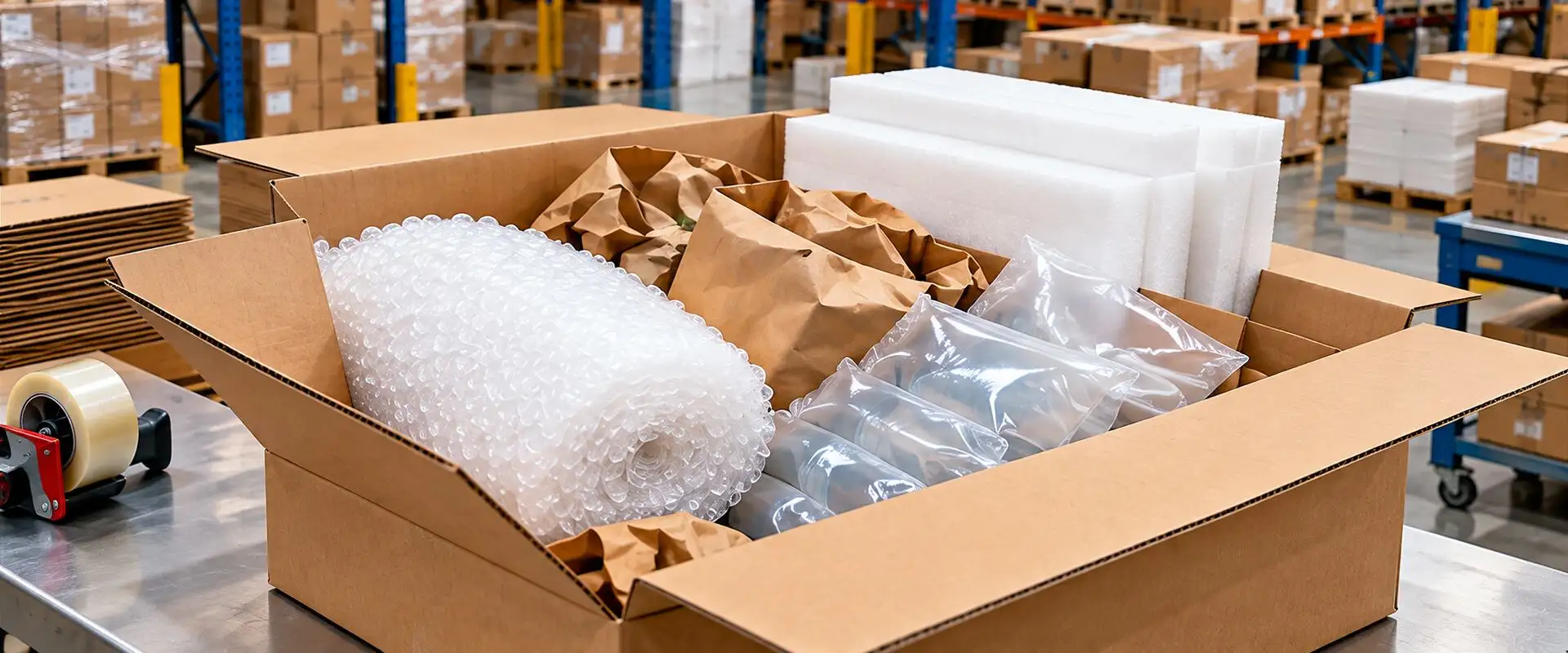
Bubble Wrap and Foam Materials
These provide cushioning and shock absorption, protecting fragile items from damage caused by impacts or vibrations.
Void-Fill Materials
Fillers such as paper-based cushioning or inflatable air pillows are used to occupy empty space inside cartons, preventing the contents from shifting during transit. The final choice of materials depends on the fragility level of the goods, carton specifications, handling and loading conditions, and the warehouse’s specific packing processes.
Warehouses should aim to ensure product safety while avoiding the use of excessive cushioning materials.
7. How should North American warehouses select packaging supplies?
Packaging procurement strategies are increasingly focused on operational efficiency and total comprehensive packaging costs.
When comparing prices, procurement teams should look beyond the unit cost of individual items and simultaneously evaluate the following factors:
| Purchasing factor | Why it matters |
| Material specifications | Ensures suitability for the product |
| Packaging equipment | Determines compatibility with machines |
| Product protection | Helps reduce damage during handling |
| Material consumption | Affects cost per shipment or pallet |
| Warehouse efficiency | Influences packaging speed and labor |
| Supplier consistency | Supports repeatable packaging performance |
| Sustainability considerations | May influence material selection and waste management |
For instance, if a low-cost stretch film fails to meet the performance standards required for on-site use, more material will be consumed to wrap a single pallet.
Similarly, if inexpensive carton-sealing tape loses its adhesion during transit, it can lead to additional costs incurred from the need for rework.
Therefore, the most sound approach to evaluation is to consider both material costs and actual packaging performance in tandem.

What key factors should be prioritized when sourcing warehouse packaging consumables?
For distributors and warehouse operators purchasing packaging materials in bulk, providing clear and comprehensive specifications enables suppliers to offer accurate price quotes.
When requesting a quote, you should include details such as product dimensions, thickness, roll length, material type, estimated purchase volume, and equipment compatibility requirements.
When selecting stretch film, the buyer must specify whether it is intended for manual application or use with automated wrapping equipment.
For BOPP carton-sealing tape, it is necessary to confirm the adhesive type, total film thickness, width, and roll length.
When sourcing PP or PET strapping, you must verify the dimensions, breaking strength, and the specific model of the strapping equipment to be used.
Yalan Pack offers both manual and machine-grade stretch film and BOPP carton-sealing tape, alongside a range of industrial packaging solutions, including PP/PET strapping and paper edge protectors.
By selecting packaging materials based on warehouse operational workflows, cargo characteristics, and verified performance, North American buyers can ensure consistent packaging quality while effectively managing overall operational expenses.
Share on Social:


Contact Us
In This Article
Related Posts
What Packaging Materials Are Commonly Used in North American Warehouses?
Oct 23, 2026
PP Strapping for Cartons: Packaging Challenges in E-Commerce Logistics
Oct 21, 2026
Polypropylene Strapping Under Temperature Changes: Effects on Packaging Performance
Oct 21, 2026
PET Strapping Supplier: Heat-Seal Joint Strength and Sealing Reliability
Oct 21, 2026


