







What Is the EU PPWR and How Does It Affect Packaging Material Buyers?
By hqt
Oct, 2026Related Posts

PP Strapping for Cartons: Packaging Challenges in E-Commerce Logistics
Oct 21, 2026

Polypropylene Strapping Under Temperature Changes: Effects on Packaging Performance
Oct 21, 2026

PET Strapping Supplier: Heat-Seal Joint Strength and Sealing Reliability
Oct 21, 2026
PP Strapping Supplier Guide: Smooth vs Embossed Strapping for Automated Packaging
Oct 21, 2026
The EU’s Packaging and Packaging Waste Regulation (PPWR) aims to reduce the total volume of packaging waste, improve the recyclability of packaging, and drive the transition toward a sustainable model for the packaging industry across the European Union. For those who procure packaging, this regulation will directly impact packaging selection, performance evaluation, documentation, and the entire procurement process.
While the regulation (EU 2025/40) has officially come into effect, many of its core regulatory requirements will not take effect until 2030 or later. Buyers who source stretch wrap, carton sealing tape, strapping, and other industrial packaging consumables should clarify which specific provisions apply to their products and procurement operations.
1. What is the EU’s Packaging and Packaging Waste Regulation (PPWR)?
The PPWR replaces the EU’s previous framework legislation on packaging waste, establishing a unified set of regulatory standards across all member states.
The core objectives of the regulation include: reducing excessive packaging, enhancing material recyclability, increasing the use of recycled content, and promoting the reuse of packaging where appropriate.
The scope of the regulation covers various types of packaging, including sales packaging, grouped (secondary) packaging, and transport (logistics) packaging.
For purchasers of industrial packaging, this means that items such as pallet stretch wrap, carton sealing tape, and cargo-securing strapping materials may fall under the scope of these regulations.
It is important to note that compliance requirements and implementation timelines vary depending on the specific category of packaging.

2. When do the main requirements of the PPWR take effect?
Purchasers should first understand a key point: not all provisions of the PPWR are implemented simultaneously.
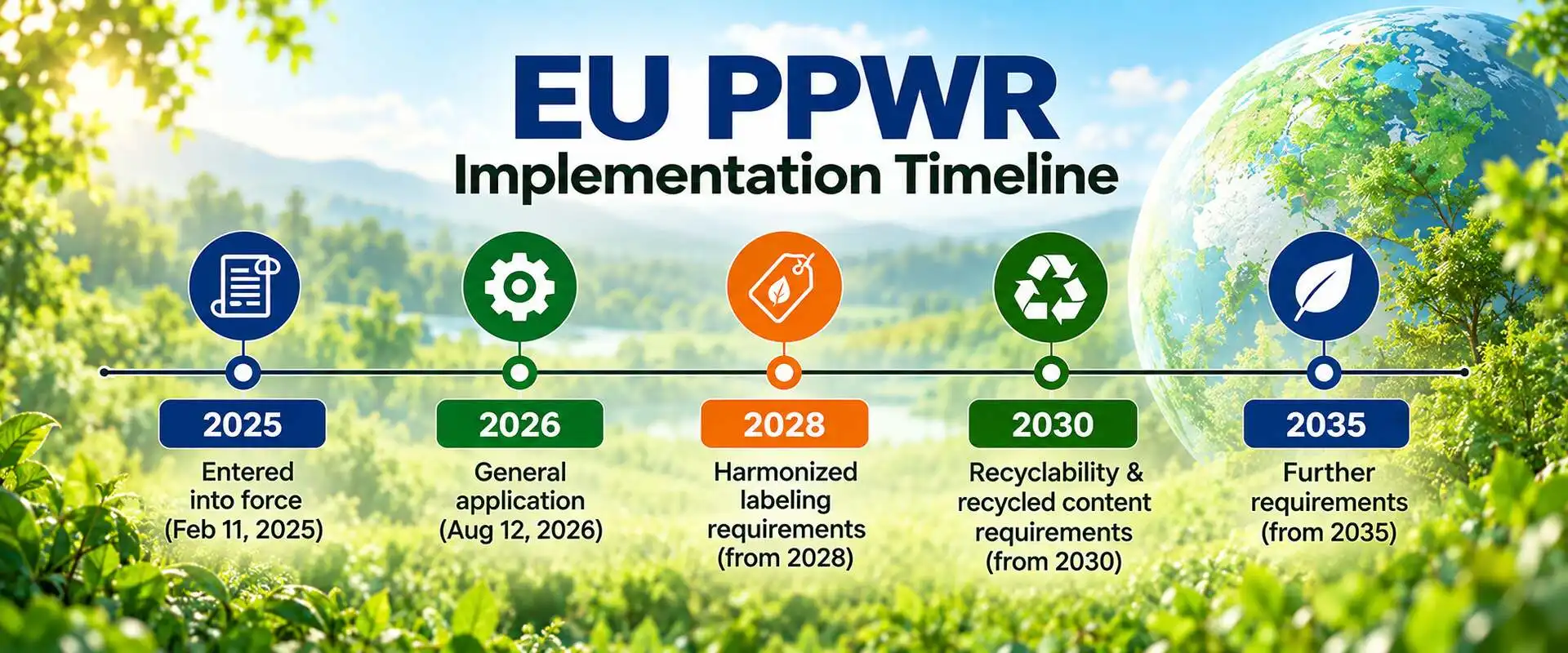
| Timeline | Main development |
| February 11, 2025 | PPWR entered into force |
| August 12, 2026 | General application of the regulation begins |
| 2028 onward | Certain harmonized labeling requirements are scheduled to begin, subject to implementing legislation |
| 2030 onward | Major recyclability, recycled-content and packaging minimization requirements become applicable according to their specific provisions |
| 2035 onward | Additional recycling-at-scale requirements are phased in |
Certain timelines are contingent upon the finalization of supplementary EU legislation; therefore, procurement teams must verify the relevant regulatory provisions before incorporating specific requirements into contracts.
3. How will the Packaging and Packaging Waste Regulation (PPWR) transform the procurement of packaging materials?
The PPWR encourages procurement professionals to look beyond unit price and basic specifications, prompting a more comprehensive, multi-dimensional evaluation of packaging products.
Historically, procurement decisions have primarily relied on factors such as thickness, width, basis weight, and price.
Under this evolving regulatory framework, however, procurement teams must also consider raw material composition, recyclability, the proportion of recycled content, packaging efficiency, and the availability of supporting compliance documentation.
For instance, two stretch films may share the same nominal thickness yet exhibit significantly different performance characteristics.
A film that maintains the stability of a palletized load while requiring less material offers a clear operational advantage.
Conversely, opting for a thinner film without first verifying its load-securing performance could increase the risk of cargo damage.
Ultimately, the goal of procurement is to select packaging products that satisfy both functional performance requirements and regulatory compliance standards.

4. Does the PPWR mandate that all packaging must be recyclable?
Recyclability is a core focus of the PPWR.
The regulation establishes detailed design-for-recycling specifications, with compliance standards currently scheduled to take effect in January 2030—though this timeline may be adjusted if the implementation conditions are deferred.
Packaging products will be assessed and categorized based on their recyclability performance.
These requirements are intended to ensure that packaging materials are better aligned with local recycling systems.
For procurement teams, the ability to accurately identify packaging materials has become increasingly critical.
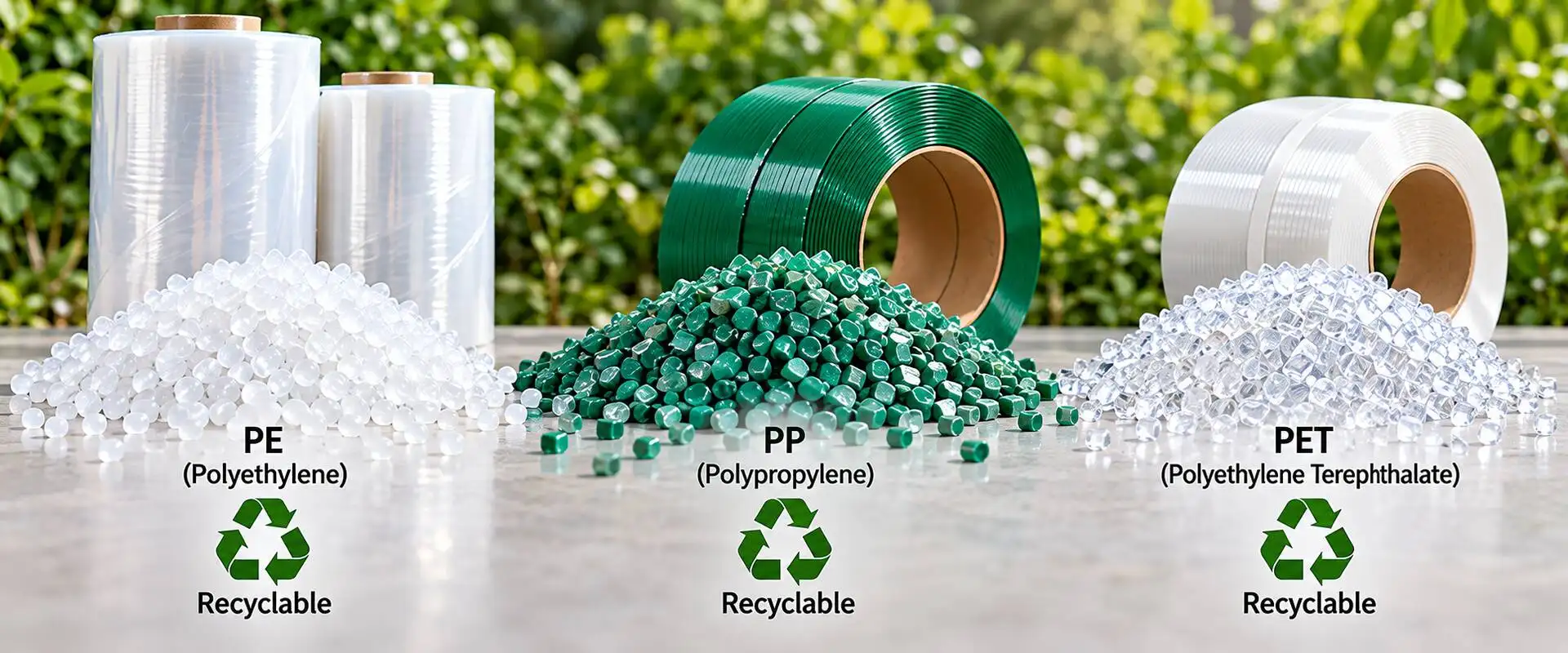
Materials such as PE stretch film, BOPP sealing tape, and PET strapping differ in their composition, and each is subject to distinct recycling assessment criteria.
Furthermore, a product labeled as "recyclable" does not necessarily meet all the design specifications mandated by the PPWR.
Procurement teams should request precise material specifications from suppliers and stay informed about updates to the relevant technical standards.
5. Can stretch film and PET strapping still be used?
In the logistics of industrial goods, stretch film and plastic strapping remain indispensable consumables for securing palletized cargo.
The Packaging and Packaging Waste Regulation (PPWR) establishes reuse targets for certain types of transport packaging—a point that has drawn significant attention from those responsible for packaging procurement.
However, under European Commission Delegated Regulation (EU) 2026/429, market operators who rely on pallets, stretch film, and strapping to secure and protect loads are exempted from the mandatory 100% reuse requirement stipulated in Article 29, paragraphs (2) and (3) of the PPWR. This exemption does not absolve companies of their other compliance obligations, nor does it alter the overall regulatory framework for the reuse of transport packaging.
For procurement teams, the key takeaway is that the PPWR does not outright ban traditional stretch film or PET strapping.
When finalizing procurement strategies, it remains essential to conduct a comprehensive assessment of product performance, raw material composition, consumption volumes, and the specific details of the relevant regulations.

6. Does the PPWR mandate the inclusion of recycled content in plastic packaging?
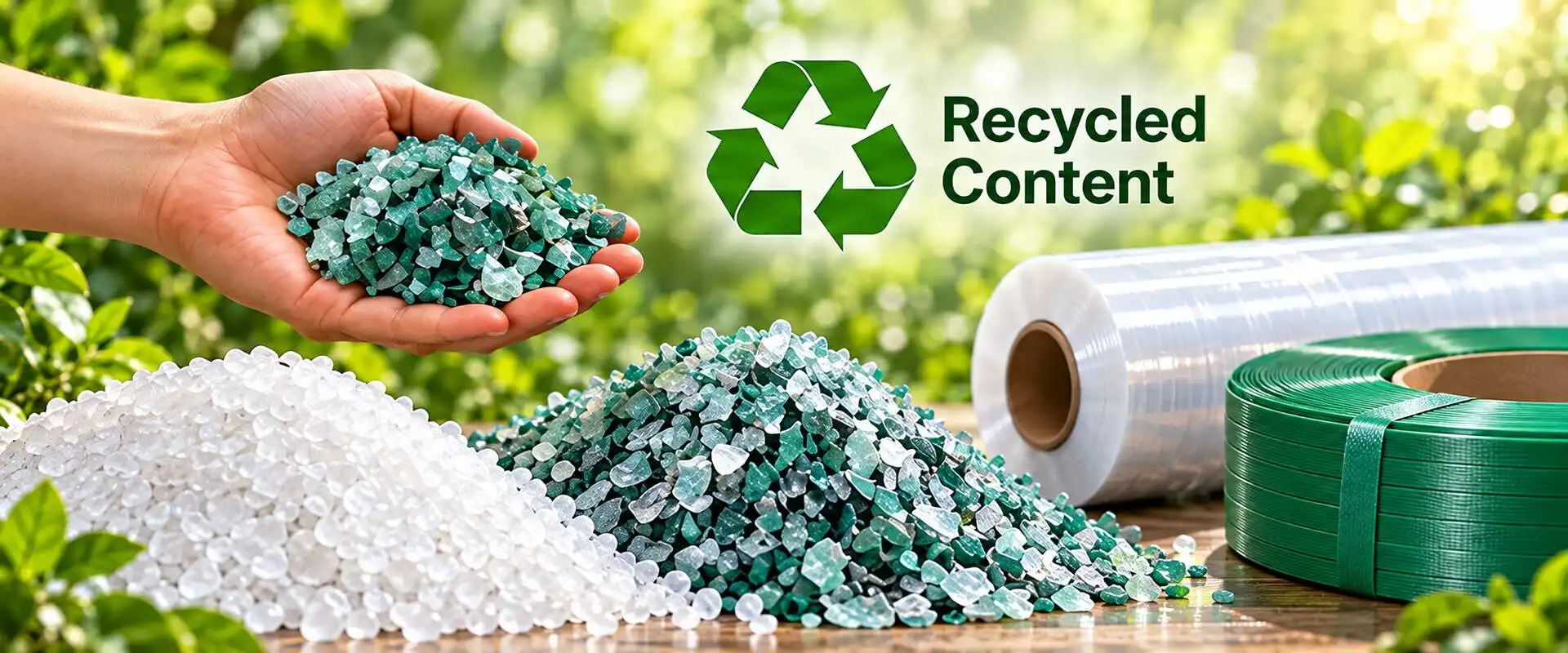
The PPWR sets minimum thresholds for post-consumer recycled content in specific categories of plastic packaging, with most of these requirements taking effect from 2030.
These thresholds vary by packaging category and are subject to specific exemptions and special provisions.
Procurement teams should not assume that all plastic packaging must contain the same proportion of recycled material.
Furthermore, the European Commission is currently developing supplementary rules for calculating and verifying recycled content.
For industrial packaging, the incorporation of recycled materials may affect properties such as tensile strength, elongation, and batch-to-batch performance consistency.
If a buyer intends to source stretch film or strapping that contains recycled content, they should request performance test data from the supplier to evaluate whether the product is compatible with their existing equipment and specific operational requirements.
Any environmental claims must be supported by comprehensive evidence; relying solely on vague marketing rhetoric is insufficient.
7. Can buyers reduce the amount of packaging used without increasing the risk of damage to goods?
Packaging reduction is one of the core provisions of the PPWR. Simply reducing the amount of materials used does not equate to optimizing a packaging solution.
For instance, while using less stretch wrap may lower material costs, an insufficient number of wraps can easily lead to unstable, toppling pallet loads.
Similarly, indiscriminately reducing the basis weight of cardboard boxes or the number of strapping bands can compromise packaging strength, significantly increasing the risk of cargo damage.
A scientific approach to optimization involves adjusting packaging solutions based on actual transport conditions and the required level of protection.
Purchasers must conduct a comprehensive assessment of factors such as pallet stability, the compressive strength of cartons, the containment force of stretch wrap, the tensile strength of strapping, and the stresses—such as vibration and impact—encountered during long-haul logistics.
The core principle of packaging optimization is to eliminate all redundant materials while ensuring the safety of the goods during transport.

What documents should packaging purchasers request from suppliers?
With the formal implementation of the Packaging and Packaging Waste Regulation (PPWR), procurement discussions are increasingly focused on technical documentation and proof of compliance.
Depending on the type of packaging and relevant legal obligations, purchasers should request the following from their suppliers:
• Material composition and complete product specifications
• Technical Data Sheets (TDS)
• Third-party performance test reports
• Documentation and evidence regarding the proportion of recycled content
• A formal Declaration of Conformity (DoC)
• Packaging labeling and full-chain traceability information
Each document serves a specific purpose: Technical Data Sheets (TDS) outline the physical performance parameters of the product, while a Declaration of Conformity serves as proof that the product meets current EU regulatory requirements.
Voluntary certifications, such as ISO 9001 or GRS, can serve as supplementary references but cannot replace the mandatory compliance documentation required by the PPWR.
Purchasing companies should carefully determine the specific list of required documentation based on their packaging categories and their respective roles within the supply chain.
What should packaging purchasers verify before placing an order?
For the purpose of PPWR compliance audits, you may use the following procurement checklist:
| Purchasing consideration | What buyers should confirm |
| Packaging application | Sales, grouped or transport packaging |
| Material composition | PE, PP, PET, paper or mixed materials |
| Recyclability | Applicable current and future requirements |
| Recycled content | Whether minimum-content targets apply |
| Packaging efficiency | Material consumption and protective performance |
| Reuse obligations | Whether the specific packaging format is covered |
| Documentation | Required technical and compliance evidence |
| Supplier capability | Consistent specifications and quality control |
For European buyers sourcing packaging materials from overseas manufacturers, clarifying all compliance requirements at the pre-order stage helps reduce uncertainty and prevents the need for repeated adjustments to product specifications later on.
Yalan Pack offers a comprehensive range of industrial packaging products, including hand and machine stretch film, BOPP carton sealing tape, PP/PET strapping, and paper edge protectors.
When submitting an inquiry, buyers should clearly specify product dimensions, material standards, performance parameters, and any required supporting documentation.
A sound and practical approach to evaluation involves considering the actual usage scenario, technical performance, and the relevant provisions of the Packaging and Packaging Waste Regulation (PPWR). It is a mistake to assume that a single material specification or a single certificate is sufficient to satisfy all compliance requirements.


Contact Us
In This Article
Related Posts
PP Strapping for Cartons: Packaging Challenges in E-Commerce Logistics
Oct 21, 2026
Polypropylene Strapping Under Temperature Changes: Effects on Packaging Performance
Oct 21, 2026
PET Strapping Supplier: Heat-Seal Joint Strength and Sealing Reliability
Oct 21, 2026
PP Strapping Supplier Guide: Smooth vs Embossed Strapping for Automated Packaging
Oct 21, 2026


