







Polypropylene Strapping Under Temperature Changes: Effects on Packaging Performance
By hqt
Oct, 2026Related Posts
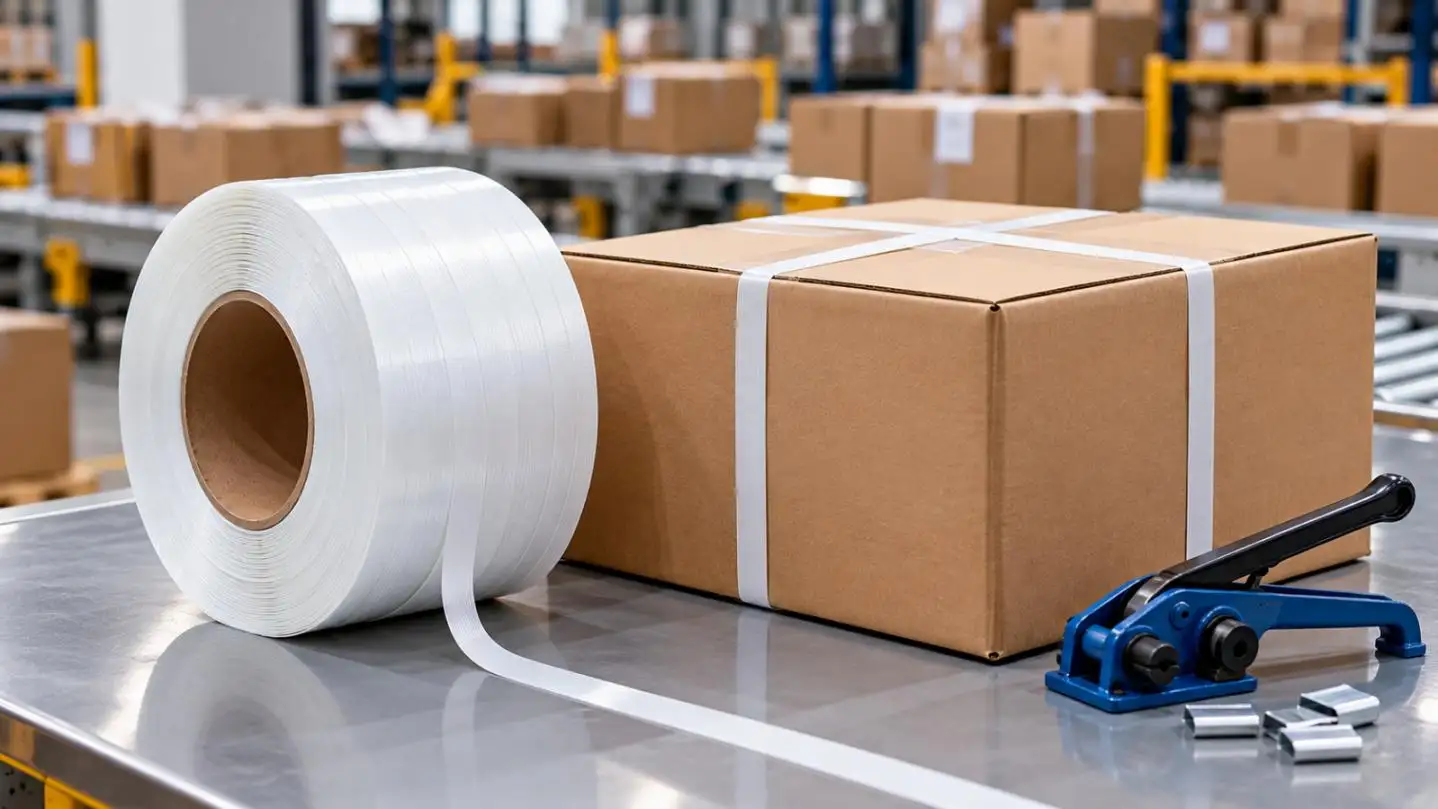
PP Strapping for Cartons: Packaging Challenges in E-Commerce Logistics
Oct 21, 2026

Polypropylene Strapping Under Temperature Changes: Effects on Packaging Performance
Oct 21, 2026
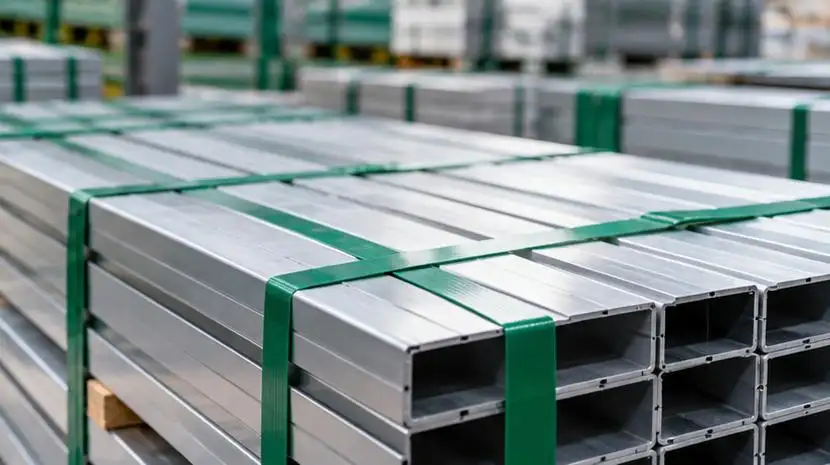
PET Strapping Supplier: Heat-Seal Joint Strength and Sealing Reliability
Oct 21, 2026
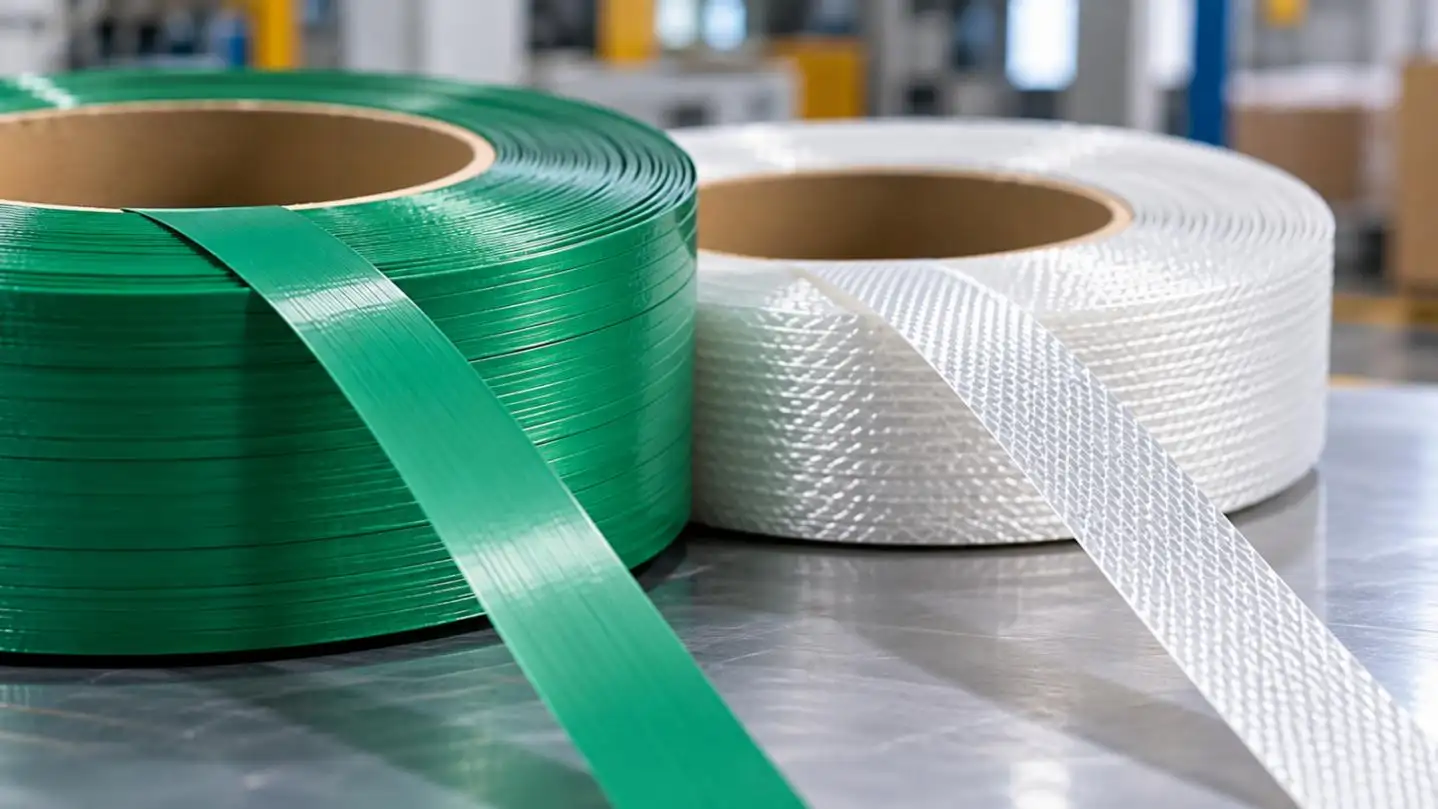
PP Strapping Supplier Guide: Smooth vs Embossed Strapping for Automated Packaging
Oct 21, 2026
Polypropylene Strapping is impacted differently by cold storage, high temperatures and repeated thermal cycling. Low temperatures increase stiffness of the strapping and increase the risk of brittle fracture. High temperatures, increase time-dependent deformation and stress relaxation, resulting in the strapping releasing the force it is holding.

When looking at industrial packaging, one has to analyze the full picture including residual tension, joint strength, and behavior under transport conditions. Breaking strength should not be the only factor considered.
How Does Temperature Affect Polypropylene Strapping?
Low-Temperature Stiffness and Brittle Failure
Because Polypropylene is a semi-crystalline polymer, at lower temperatures it becomes stiffer and less able to absorb energy (potentially leading to fracture).
Risks associated with cold storage include:
•Less ability to conform: Strapping has less ability to conform to the corners of cartons, and, therefore, will more likely cause sharp breakages when bending.
•Brittle fracture: Breakages can happen when the container is impacted, especially at broken edges.
•Joint failure: Heat sealed joints can fail if stressed at a point other than the heat sealed joint.
There is not a universal minimum operating temperature of Polypropylene Strapping. Factors that impact this include the formulation of the polymer, strain orientation, and the method of strap manufacturing as well as the initial tension applied.
High-Temperature Stress Relaxation and Time-Dependent Deformation
Time-dependent deformation of the strapping increases at higher temperatures. Two types of time-dependent behavior are particularly important.
•Creep: Strapping experiences permanent elongation at near constant load.
•Stress relaxation: Holding a load constant and allowing the strapping to elongate.
•Thermal expansion of the strapping, along with package contents, affects how the strapping behaves during thermal cycling.
Effects of Temperature on Tension Retention and Joint Strength
Why Does Polypropylene Strapping Become Loose Without Breaking?
A strap can remain structurally intact but lose the load-restricting force. Under the effect of elevated temperatures, the stress relaxation process is accelerated and, simultaneously, the carton compression and package settlement reduce the tension in the strap.
Tension retention can be calculated as follows:
Tension Retention (%) = (Residual Tension / Initial Tension) × 100
When evaluating Polypropylene Strapping, the following four aspects should be taken into account:
•Breaking Force (N): Maximum load a strap can take before it fails.
•Elongation at Break ( %): The amount of deformation (elongation) a strap can take before breaking.
•Tension Retention ( %): The force remaining in the strap after it was exposed to a given condition.
•Joint Efficiency ( %): It is defined as the breaking force of the joint divided by the breaking force of the strap under the same conditions.
Heat-sealed joints should be especially taken into account. Inadequate sealing conditions, such as temperature, pressure and/or time, can result in an incomplete fusing of the joint. On the other hand, excessive heat can damage the material.
Machine strapping can deliver more repeatable initial tension and sealing conditions than uncontrolled manual application. However, neither method eliminates temperature-dependent stress relaxation.

Temperature Effects on Polypropylene vs. PET Strappings
Mechanical behaviors of polypropylene and polyester strappings differ.
| Performance Factors | Polypropylene Strapping | PET Strapping |
| Tensile Capacity | Suitable for lighter loads | Higher |
| Elongation | Higher | Lower |
| Tension Retention | More susceptible to relaxation | Better retention |
| Cold Conditions | Brittleness concern (depending on grade) | Grade-specific validation |
| Typical Application | Cartons and bundles | Heavier and demanding pallet loads |
| Material Cost | Less | More |
For shipments where temperature control is lost, PET may be preferable for long-term load restraint.
To gain increased strength and breaking capacity of polypropylene strapping, one can increase thickness to achieve greater cross-sectional area; however, that does not eliminate polymer creep.
How to Test Polypropylene Strapping for Temperature Resistance
Temperature qualification should reproduce the intended shipping environment rather than rely on nominal material properties.
| Test | Evaluation Method | Key Measurement |
| Cold conditioning | Condition samples before tensile testing | Breaking force, elongation |
| Elevated-temperature exposure | Hold samples under controlled load | Creep, residual tension |
| Thermal cycling | Alternate specified temperatures | Tension loss, strap damage |
| Joint verification | Test conditioned sealed specimens | Joint strength, failure mode |
| Dimensional inspection | Measure samples across production batches | Width and thickness deviation |
ASTM D3950-23 provides specifications for nonmetallic strapping and joining methods, including mechanical performance requirements.
ASTM D4332-22 addresses environmental conditioning of packaging components. Neither standard establishes a universal safe operating temperature for every PP strapping grade.
For internal comparative testing, temperatures like -10°C, 23°C and 45°C may be used to represent typical distribution conditions. These tests do not reflect acceptance limits.
Polypropylene Strapping for Different Shipping Situations
The considerations should include the weight of the package, the duration of storage, the environment it will be exposed to and the equipment it will be compatible with.
| Shipping Situation | Primary Concern | Recommended Test |
| Refrigerated Warehouse | Stiffness and Impact Fracture | Conditioned Tensile and Joint Tests |
| Hot Climate | Stress Relaxation | Residual Tension Measurement |
| Export Shipping | Thermal Cycling and fatigue | Load-stability Testing and Cyclic Exposure Tests |
| Automated Packaging | Dimensional and Sealing Consistency | Feeding Tests and Joint Tests |
For cartons, especially if they are of the compressible variety, edge protection in combination with controlled application tension may be more effective than increasing strap thickness.
Precision and Strapping Specifications
At Yalan Pack, Polypropylene Strapping for manual and machine packaging is manufactured with precision to required dimensions.
Our PP/PET strapping products can be manufactured to the following specifications.
| Parameter | Specification |
| Available width range | 5–32 mm |
| Available thickness range | 0.4–1.2 mm |
| Core diameter | 200 mm / 406 mm |
| Application Methods | Manual / machine |
| Customization | Available to required length, thickness, width, color and core. |
We have an extrusion process in which dimensional inspection and tensile testing are part of quality control.
For orders that require stringent tolerance, customers should verify the maximum allowable deviations, breaking force, batch sampling and joint strength. Dimensional tolerances should be verified against accepted product specifications.

Common Questions About Polypropylene Strapping
Is Polypropylene Strapping Brittle in Cold Temperatures?
It can be, depending on the formulation, the temperature, and the conditioning situation.
Will Using Thicker Polypropylene Strapping Prevent Loosening Due to Temperature Changes?
It will not. Increasing thickness will increase the breaking force, but it will not affect stress relaxation.
Is PET always better than PP under temperature changes?
No. As a generalization, PET retains tension better than PP, but PP still is a good choice for many lighter and stable loads.
Does automatic strapping eliminate thermal tension loss?
No. While automated equipment does increase application repeatability, it does not eliminate material stress relaxation.
Can Yalan Pack manufacture PP Strapping of different dimensions?
Yes, we can manufacture PP strapping in different dimensions, either manually or automatically.
Packaging that is temperature sensitive requires residual measured tension, reliable joints, dimensional control and a material that is compatible to the environment the package is shipped in.
At Yalan Pack, we have PP strapping and PET alternatives that meet different packaging needs. Analyze our strapping solutions and contact us to review specifications for your packaging equipment and the conditions your distribution is subjected to.
FAQs
Q1. Does Yalan Pack manufacture Polypropylene Strapping for industrial packaging?
Yes. Yalan Pack supplies PP strapping for carton bundling, warehouse packaging, and industrial logistics applications.
Q2. Can Yalan Pack customize Polypropylene Strapping specifications?
Yes. We offer customizable widths, thicknesses, lengths, colors, and strength grades according to packaging requirements.
Q3. Is Yalan Pack Polypropylene Strapping suitable for cold storage?
Suitability depends on the operating temperature, strap grade, and applied tension. Cold-condition testing is recommended before bulk orders.
Q4. Does Yalan Pack Polypropylene Strapping resist high temperatures?
PP strapping can experience creep and tension loss at elevated temperatures. Performance should be verified under the intended storage conditions.
Q5. Does Yalan Pack provide PP strapping for automatic packaging machines?
Yes. Our machine-grade PP strapping is designed for automatic and semi-automatic packaging systems.


Contact Us
In This Article
Related Posts
PP Strapping for Cartons: Packaging Challenges in E-Commerce Logistics
Oct 21, 2026
Polypropylene Strapping Under Temperature Changes: Effects on Packaging Performance
Oct 21, 2026
PET Strapping Supplier: Heat-Seal Joint Strength and Sealing Reliability
Oct 21, 2026
PP Strapping Supplier Guide: Smooth vs Embossed Strapping for Automated Packaging
Oct 21, 2026


