







PET Strapping Supplier: Heat-Seal Joint Strength and Sealing Reliability
By hqt
Oct, 2026Related Posts
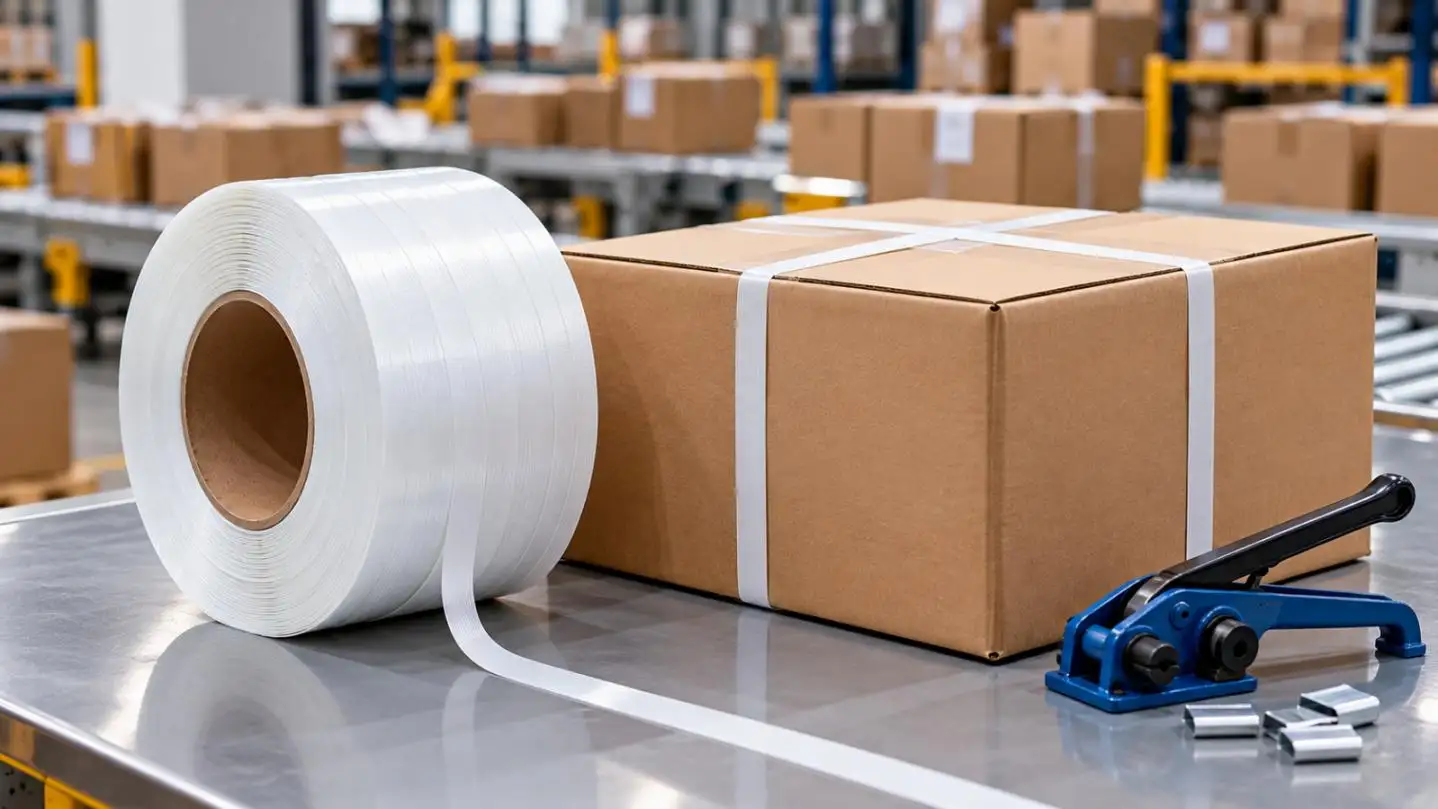
PP Strapping for Cartons: Packaging Challenges in E-Commerce Logistics
Oct 21, 2026

Polypropylene Strapping Under Temperature Changes: Effects on Packaging Performance
Oct 21, 2026

PET Strapping Supplier: Heat-Seal Joint Strength and Sealing Reliability
Oct 21, 2026
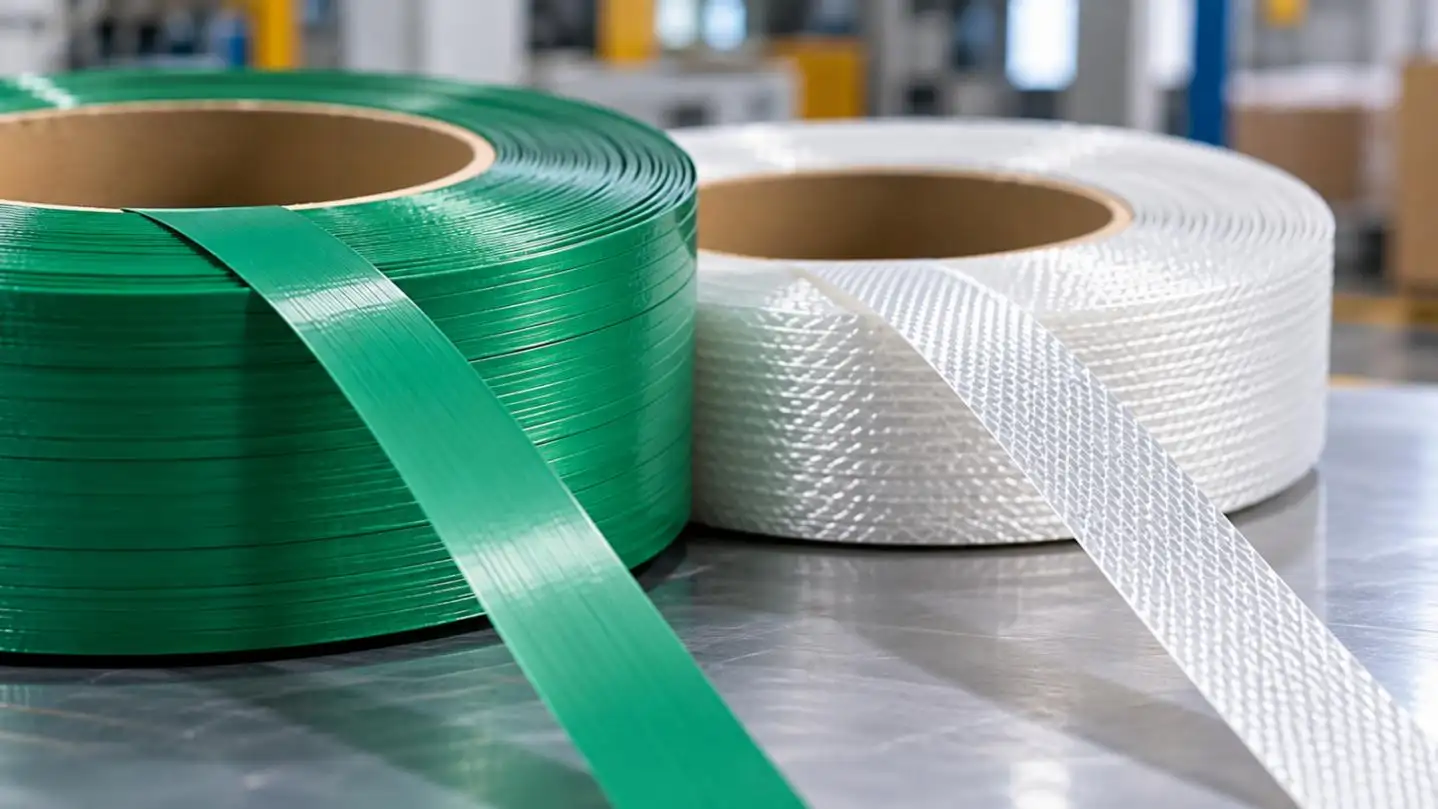
PP Strapping Supplier Guide: Smooth vs Embossed Strapping for Automated Packaging
Oct 21, 2026
A PET Strapping Supplier should be evaluated on more than strap tensile strength. On an automated pallet line, a strap may withstand the specified load while its welded overlap peels or breaks during handling. Reliable load containment depends on the interaction between PET material properties, sealing conditions, dimensional consistency, and machine-applied tension.

Why Joint Strength Is Different From Strap Strength
Breaking strength is the maximum load that an unjoined strap can withstand. Joint strength is the load that a specimen containing a connection can withstand.
Joint Efficiency (%) = (Joint Breaking Load / Unjoined Strap Breaking Load) x 100
An example calculation of joint efficiency is as follows. If a PET strap breaks at 6,000 N and the joint seals at 4,800 N, the joint efficiency would be 80 %. This example calculation is for illustration purposes and is not a Yalan Pack test result.
In the case of PET strapping, an appearance of integrity does not guarantee the strength of seals. A PET strapping supplier that is capable of sealing PET strapping should be able to test and evaluate joint strengths and seal efficiencies, and provide the results of those tests.
How PET Heat Sealing Creates Reliable Joints
Heat Transfers and Polymer Fusion
Contact heat sealing fuses molecules of polyethylene terephthalate (PET) by applying thermal energy and pressure. The process consists of the following:
•Heating - Thermal energy is applied and controlled to soften or melt the contacting polymer surfaces of the adjoining strands.
•Bonding - While the surface is malleable, the sealing tool is applied to maintain adherence.
•Cooling - The joined area stiffens and the sealing tool is removed from the strap.
An incomplete joint is due to inadequate polymer fusion. Excess heat can cause localized thinning of the terephthalate polymer, degrade the polymer, or modify the oriented molecular structure of the PET.
In friction welding, interfacial heat is generated via mechanical movement as opposed to an external heat source. Both methods require validation with the actual strap grade and sealing equipment.
Key Parameters Affecting PET Heat-Seal Joint Strength
Reliable sealing requires more than just cranking up the heat on the sealing machine.
| Parameter | Technical Effect | Potential Failure |
| Sealing Temperature | Controls interfacial melting | Cold Weld / Thermal damage |
| Dwell Time | Affects heat exposure | Incomplete / Excessive fusion |
| Contact Pressure | Maintains bonding contact | Voids / Displaced melt |
| Cooling Time | Allows joint consolidation | Premature Separation |
| Strap Thickness | Influences heat transfer | Inevitability of Bond |
| Surface Condition | Affects contact and fusion | Weak / Inconsistent joints |
Processing parameters are constrained. Too much pressure will not generate heat. Too much heat can weaken the joint.
Variation in surface topography may account for differences in sealing of embossed and smooth PET strappings.
There may be some variability in processing conditions due to varying levels of post-consumer recycled PET.
PET strapping manufacturers may have a difficult time meeting performance requirements due to variability of PET raw materials.
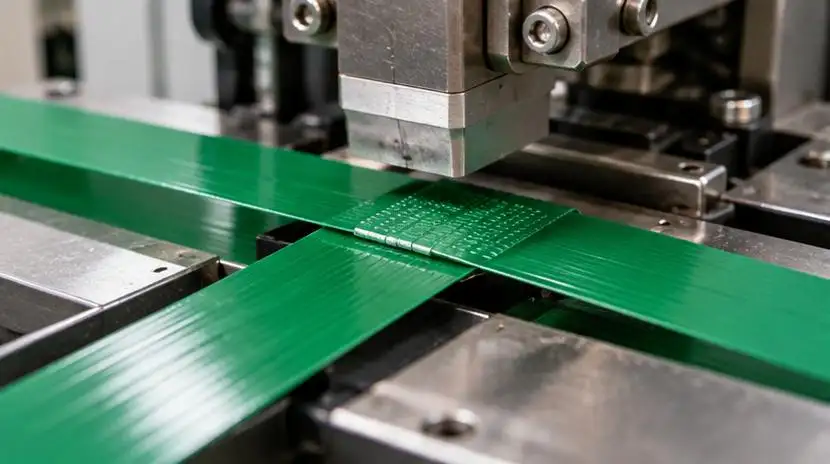
Heat Sealing vs Friction Welding: Which Is Better?
The most appropriate joining method for a given situation depends upon several factors, including the design and configuration of the machinery, the type of PET used, and the volume and type of packaging required.
| Comparison | Contact Heat Sealing | Friction Welding |
| Heat generation | Heated element | Mechanical friction |
| Main controls | Temperature, time, pressure | Motion, time, pressure |
| Maintenance focus | Heating components | Welding-tool condition |
| Common risks | Uneven heating, thermal damage | Tool wear, insufficient fusion |
| Validation | Joint tensile testing | Joint tensile testing |
Neither method guarantees higher joint strength under every operating condition.
Buyers should compare tested joint performance rather than relying solely on the sealing technology advertised by a PET Strapping Supplier.
Common PET Strapping Seal Failures and Troubleshooting
Weak Bonds, Brittle Joints, and Inconsistent Sealing
Reasons for failures may be due to:
•Peeling joints: Inadequate contact pressure and/or heating, contaminated surfaces, oxide formation.
•Brittle seams: Overheating, stress concentration, thin sections, residual stress.
•Inconsistent seals: Worn tooling, misalignment, differences in material batches, variation.
•Premature transport failures: Cargo settlement, sharp edge abrasion, excessive tension.
Troubleshooting comprises the following steps:
First, the failure location is inspected. Second, the measurements of the straps are taken. Third, the settings of the sealing head are checked. Fourth, tests are conducted to determine the strength of the joints. Finally, the transport conditions are evaluated.
One of the methods of joint tests is to alter only one process variable and evaluate the effects of the change on the strength of the joints.
Manufacturing Precision and Quality Control of PET Strapping
At Yalan Pack, we manufacture high quality PET machine strapping, PET strapping and PP strapping for automatic and semi-automatic packaging, with various options of width, thickness, strength grade, color and coil.
Our broader specifications of PET strapping include:
| Manufacturing Specification | Product Options |
| Strap width | 5-32 mm |
| Strap thickness | 0.4-1.2 mm |
| Core diameter | 200 mm / 406 mm |
| Tensile strength | Acc. to chosen spec. |
| Customization | Width, thickness, length, core |
These product options are not guaranteed manufacturing tolerances for every grade of PET.
For mechanical properties, extrusion and molecular orientation primarily impact strength.
With respect to precision, buyers should request:
•Breaking load and elongation of strap.
•Breaking load of joints and joint efficiency.
•Sampling limits and dimensional acceptance limits.
•Batch identification.
These measurements let us evaluate a PET Strapping Supplier in ways beyond nominal measurements.
How to Assess Joint Strength Before Buying
Breaking strength and elongation of joints are covered in ASTM D3950-23 and define the requirements for the evaluation of non-metallic strappings and joints.
When considering a purchase of PET Strapping, the tests should assess:
- Consistency: Ensure sample(s) taken from a production representative coil meets specification.
- Mechanical performance: Test the joints for breaking strength and determine the breaking strength of the unjointed strap.
- Failure analysis: Evaluate why the strap failed, if any, i.e. failed within the joint, adjacent to the joint, etc.
- Machine performance: Ensure the strap performs according to specification i.e. feeding, tensioning, and sealing.
- Transport performance: Evaluate how the packaged load is protected e.g. load settlement, corner protection, vibration, and expected storage conditions.
Test repeatability for break strength cannot be proven with just a single test. The test method and acceptance criteria should be agreed before a bulk purchase.
Assess PET Strapping Joint Reliability with Yalan Pack
To ensure a reliable process, Yalan Pack controls material consistency and processing conditions.
As a PET strapping supplier, Yalan Pack offers machine-grade strapping and is open to providing samples for trial use for Packaging Industry applications.
To better assess your needs, provide the model of the machine you intend to use, the strapping you wish to use and the load you transport.
FAQs
Q1: What types of PET strapping does Yalan Pack supply?
Yalan Pack supplies PET machine strapping in various widths, thicknesses, colors, lengths, and strength grades for industrial packaging applications.
Q2: Is Yalan Pack PET strapping suitable for automatic machines?
Yes. Yalan Pack offers PET strapping designed for automatic and semi-automatic packaging lines. Machine compatibility should be verified before bulk ordering.
Q3: How does Yalan Pack support reliable PET heat sealing?
Yalan Pack offers machine-grade PET strapping designed for consistent feeding and reliable heat sealing. Actual joint strength depends on material specifications and sealing conditions.
Q4: What factors affect the heat-seal strength of Yalan Pack PET strapping?
Sealing temperature, pressure, dwell time, cooling conditions, strap thickness, and surface characteristics all influence joint strength.
Q5: Can Yalan Pack provide different PET strapping widths and thicknesses?
Yes. Yalan Pack offers multiple strap dimensions and strength grades. Buyers should confirm available PET specifications and dimensional tolerances before ordering.


Contact Us
In This Article
Related Posts
PP Strapping for Cartons: Packaging Challenges in E-Commerce Logistics
Oct 21, 2026
Polypropylene Strapping Under Temperature Changes: Effects on Packaging Performance
Oct 21, 2026
PET Strapping Supplier: Heat-Seal Joint Strength and Sealing Reliability
Oct 21, 2026
PP Strapping Supplier Guide: Smooth vs Embossed Strapping for Automated Packaging
Oct 21, 2026


