







How Storage Environment Influences the Service Life of BOPP Packaging Tape
By hqt
Aug, 2026Related Posts
What Packaging Materials Are Commonly Used in North American Warehouses?
Oct 23, 2026
PP Strapping for Cartons: Packaging Challenges in E-Commerce Logistics
Oct 21, 2026
Polypropylene Strapping Under Temperature Changes: Effects on Packaging Performance
Oct 21, 2026
PET Strapping Supplier: Heat-Seal Joint Strength and Sealing Reliability
Oct 21, 2026
BOPP sealing tape is one of the most commonly used packaging consumables for carton sealing, warehouse packing, and export packaging. Although it appears simple in structure, the tape's actual performance is determined by more than just film thickness and adhesive strength.
Storage conditions also significantly affect the tape's long-term performance.
If rolls of tape are stored for months in high-temperature warehouses, near windows, or in other unsuitable environments, their actual performance will differ markedly from that of the same product stored in a climate-controlled indoor environment.
Therefore, for distributors, packaging companies, and manufacturers purchasing BOPP tape in bulk, mastering proper storage methods is crucial for effective inventory management and ensuring consistent carton sealing results.
1. Ambient temperature directly affects adhesive performance
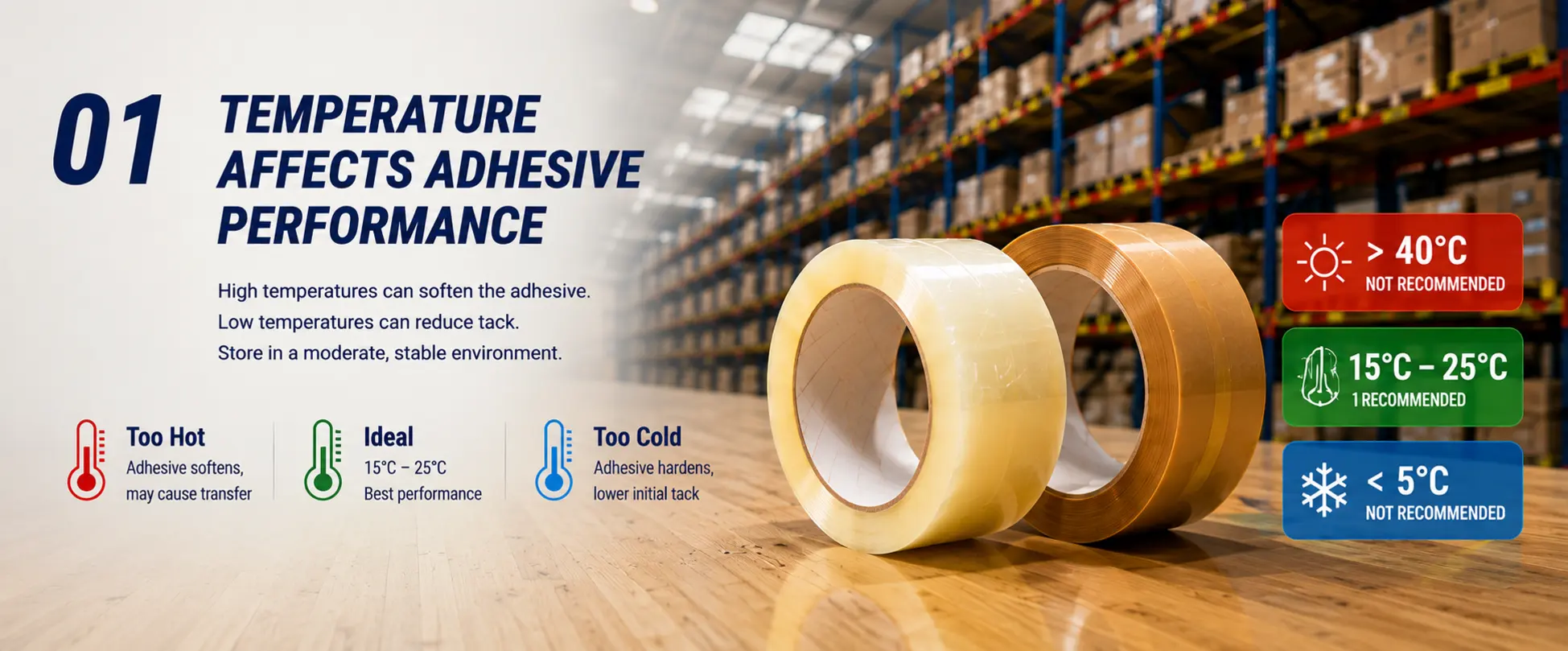
Temperature is one of the most critical factors in the storage of BOPP sealing tape. Most BOPP sealing tapes consist of a BOPP film backing and a pressure-sensitive adhesive coating. Common adhesives include water-based acrylic, hot-melt, and solvent-based types, each with varying temperature tolerances.
When tape is stored in high-temperature environments for extended periods, the adhesive gradually softens. This not only hinders smooth unwinding but also increases the risk of adhesive ooze, adhesive transfer, and changes in tackiness, directly compromising the carton sealing quality.
Excessively low temperatures also pose operational risks. As the ambient temperature drops, the pressure-sensitive adhesive hardens, making it difficult to fully wet the carton surface and reducing the speed and effectiveness of the bond.
In practice, it is essential to distinguish between two key metrics: storage temperature and application temperature. While the tape may maintain stable performance within a specific temperature range after application, the stages of storage and the actual sealing process still require appropriate environmental conditions. For applications involving cold storage or cold-chain logistics, purchasers should verify both technical parameters separately.
2. Avoidance of direct sunlight and UV exposure
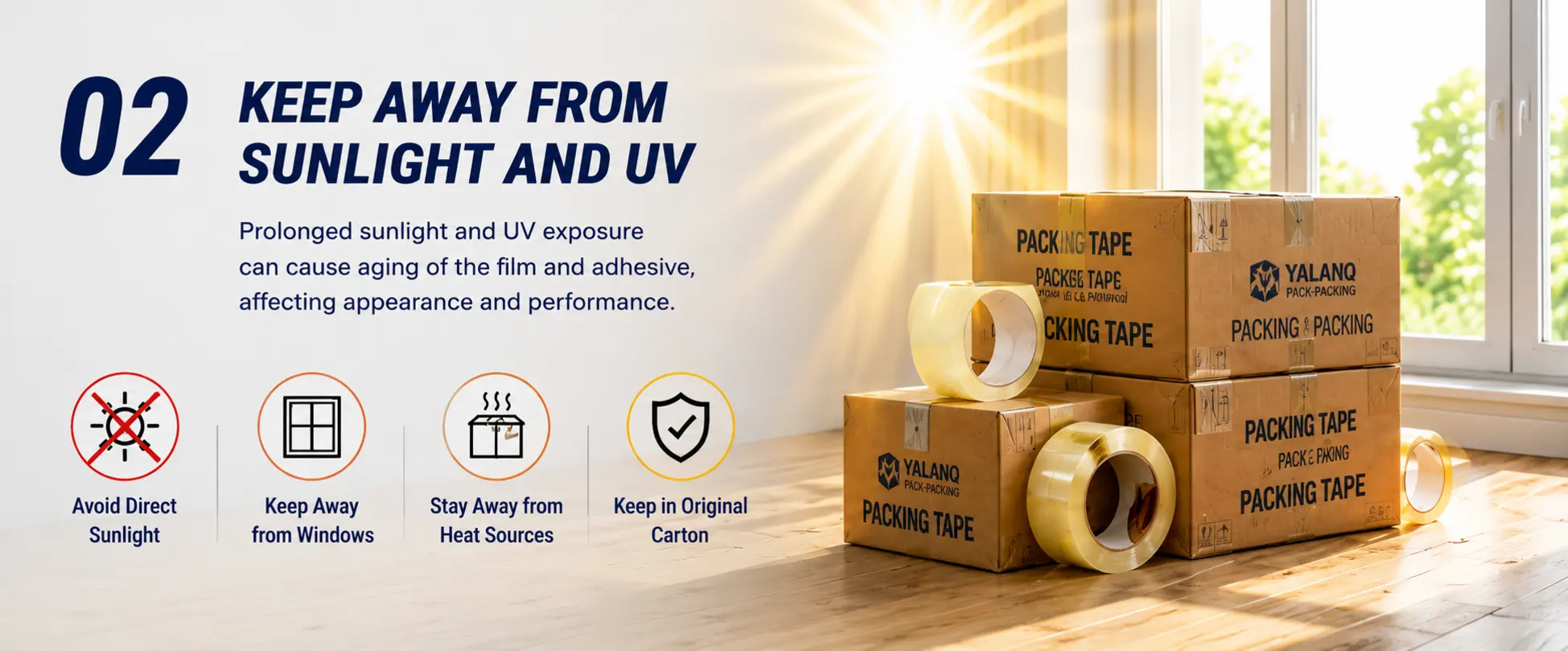
Storing packaging tape near windows or outdoors does not meet standard warehouse management requirements. Prolonged exposure to ultraviolet (UV) light and high temperatures causes BOPP film and adhesive systems to age, leading to issues such as altered appearance and reduced tackiness.
This is particularly critical for clear tape, colored carton sealing tape, and printed tape used for branding; aging not only compromises visual appeal but also undermines the reliability of the seal.
Recommended practice: Store cartons of tape in a dry indoor area, away from direct sunlight and heat sources. Keep the original packaging sealed until use; this facilitates inventory management and provides an extra layer of protection against external factors like dust and light.
3. Humidity cannot be overlooked; it directly affects carton sealing performance.
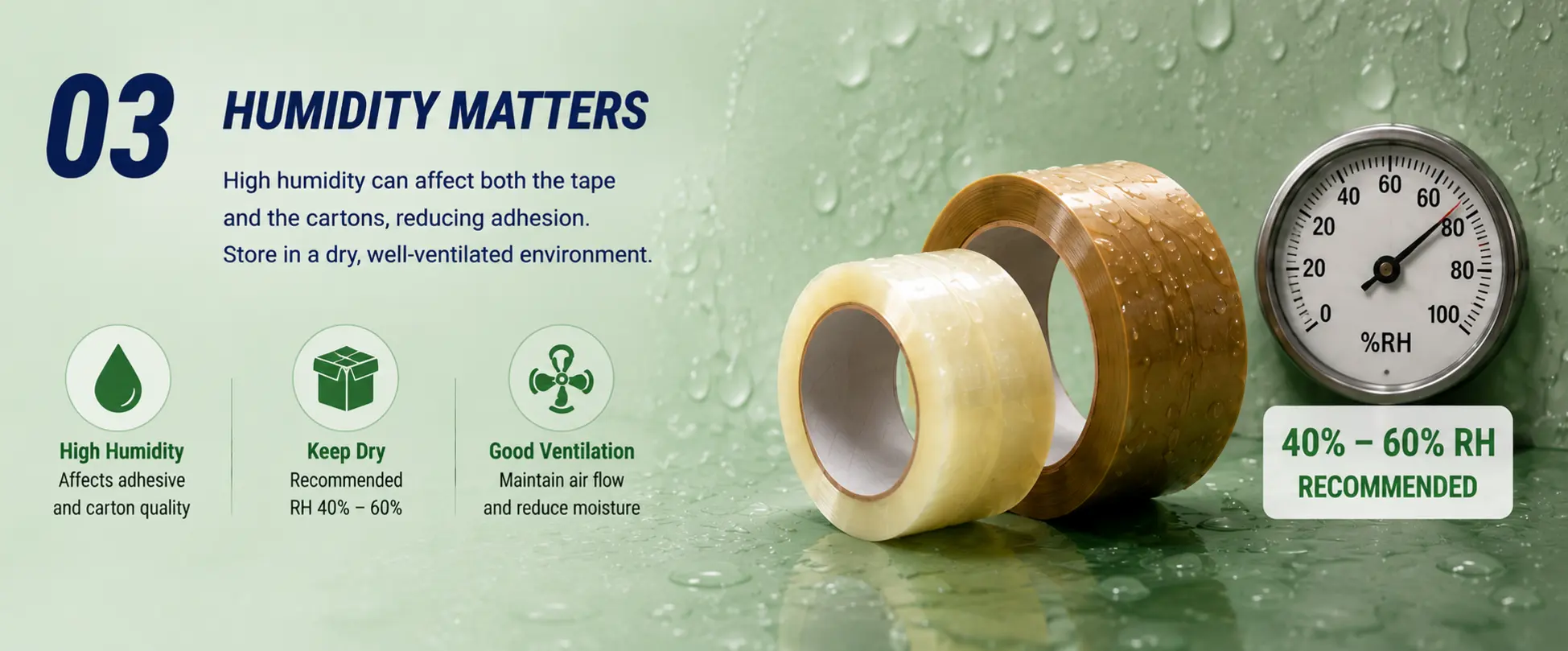
Humidity impacts not only the tape itself but also the corrugated cartons being sealed.
Corrugated cartons absorb moisture from the ambient air. High humidity alters the surface condition of the carton. Factors such as dust, recycled fiber content, rough paper surfaces, and moisture accumulation make achieving a reliable bond more difficult. This explains why the same BOPP tape might perform excellently on one type of carton yet fail to adhere properly on another.
Therefore, when evaluating BOPP packaging tape, it is advisable to conduct tests using the actual corrugated cartons used in production; testing is especially crucial in scenarios involving cartons with high recycled material content or harsh packaging environments. Additionally, the storage conditions for both the tape and the cartons should be taken into account.
4. Shelf life is not the same as an exact expiration date
Many purchasing clients ask: How long can BOPP packaging tape actually be stored?
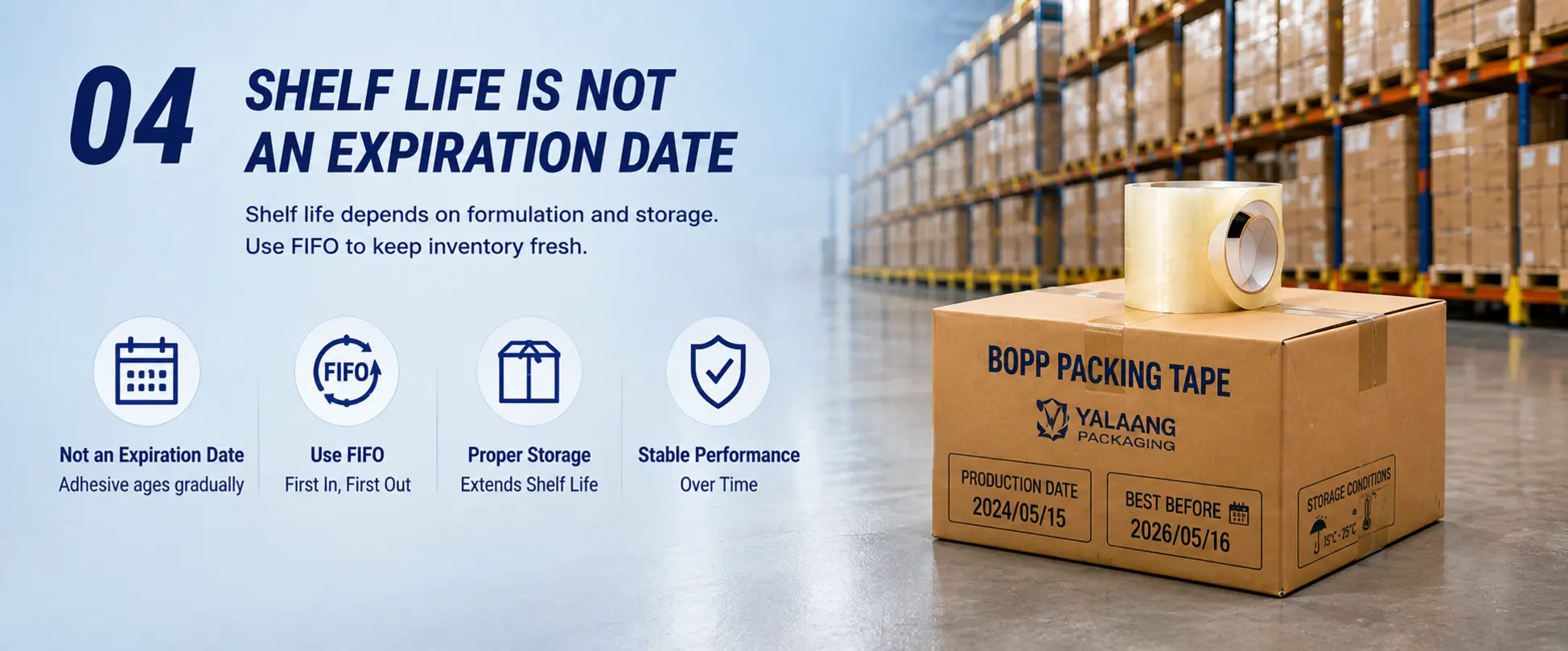
There is no single, universal standard answer. Shelf life is determined by a combination of factors: adhesive formulation, substrate quality, manufacturing processes, protective packaging, and storage conditions. The shelf life specified by a supplier applies only to that specific product and cannot be automatically applied to all BOPP tapes.
It is also important to understand that shelf life is not a hard deadline after which the tape becomes completely unusable. Adhesive aging is a slow, gradual process. Tape stored in good conditions can still function normally even after a long period; conversely, tape exposed to high temperatures or harsh environments for extended periods may experience performance degradation before its shelf life expires.
Enterprises making bulk purchases can effectively avoid the accumulation of old stock and minimize losses due to tape aging by adopting a FIFO (First-In, First-Out) inventory management system.
5. Storage is just one factor affecting tape performance
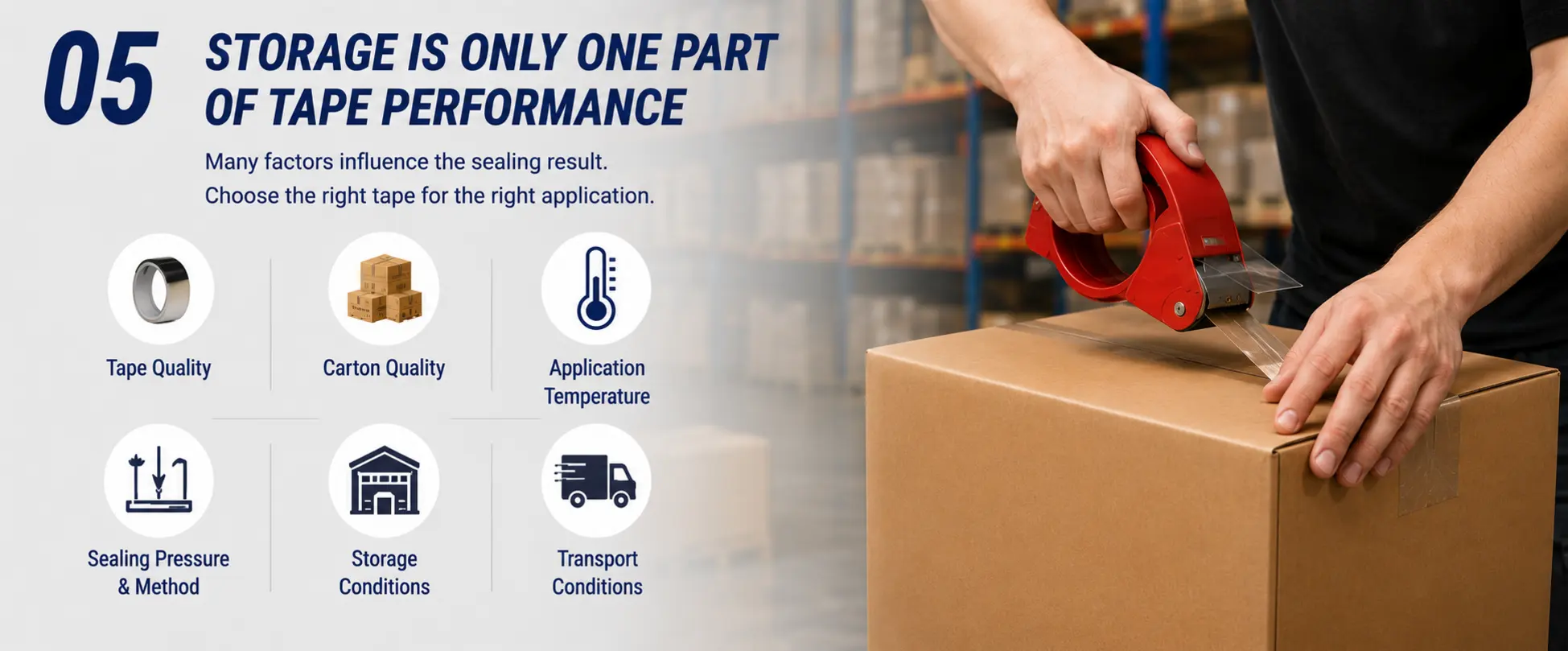
When encountering issues with carton sealing, one should certainly check storage conditions, but storage should not be assumed to be the sole source of the problem.
Poor sealing performance can also stem from the following causes:
• Mismatch between the adhesive type and the actual application scenario
• Insufficient adhesive coating weight
• Dust or contaminants on the carton surface
• Rough carton surface or high recycled paper content
• Unsuitable application temperature
• Insufficient pressure applied during sealing
• Mismatch between tape specifications/strength and carton weight
Troubleshooting tape failure requires a comprehensive review of the entire application process. For example, if tape detachment occurs only in winter, the issue is likely related to the application temperature rather than the storage duration; if the failure occurs only on a specific type of recycled carton, the root cause likely lies in the carton's surface conditions. Simply switching to a thicker tape often fails to resolve these types of issues.
Selecting the right BOPP packaging tape based on storage conditions
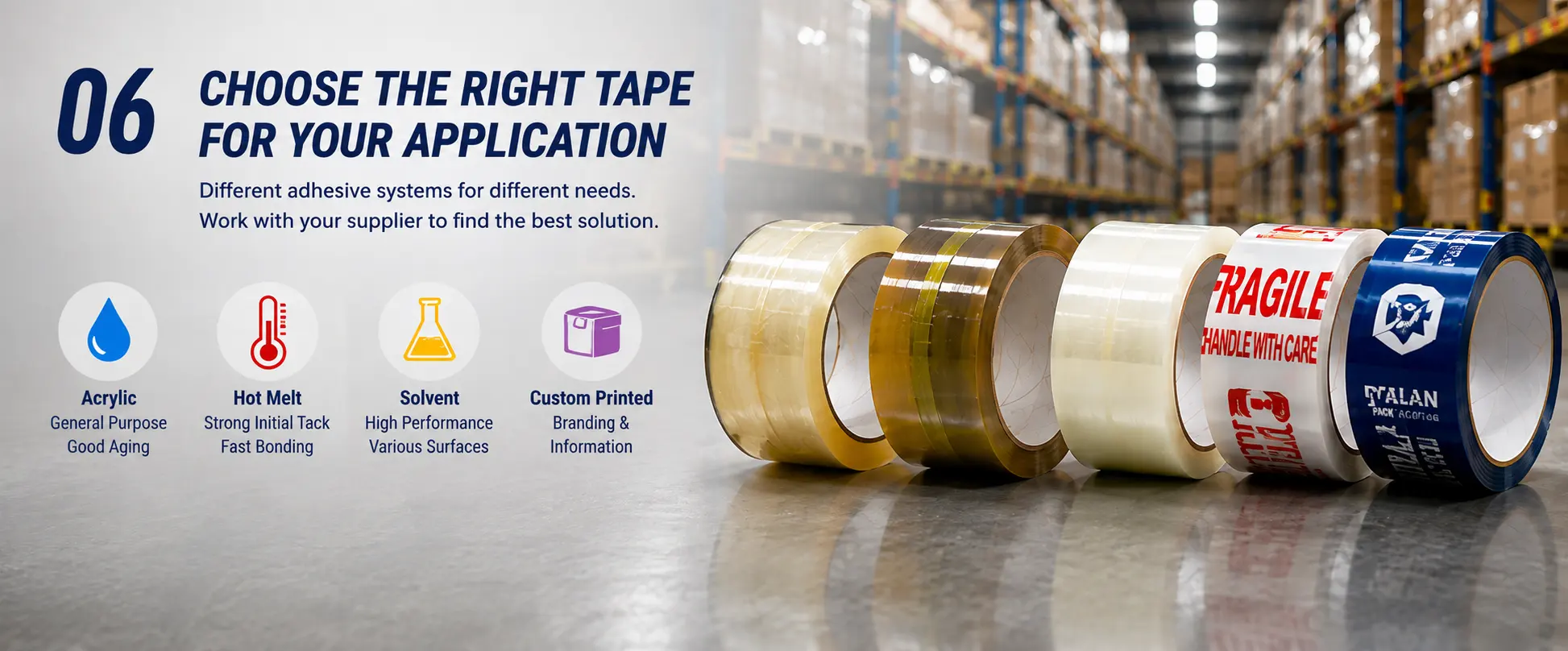
For standard carton sealing, water-based acrylic BOPP tape is widely used; it offers balanced overall performance and excellent aging resistance, making it suitable for the vast majority of general packaging applications. Hot-melt adhesive tape offers high initial tack, making it ideal for operations requiring rapid bonding. When specific performance requirements exist, solvent-based adhesive tapes are also a viable option.
No single type of adhesive can meet every customer's needs. When purchasing BOPP packaging tape, it is essential to comprehensively evaluate factors such as carton material and weight, packaging speed, application temperature, warehouse storage conditions, transportation logistics, and the planned storage duration.
Yalan Packing offers a wide range of BOPP packaging tapes in various widths, lengths, thicknesses, colors, and adhesive systems; the product lineup includes standard carton sealing tape, heavy-duty packaging tape, and custom printed tape.
For bulk purchases, it is advisable to focus discussions on actual application requirements rather than simply specifying parameters like 48mm width or 50-micron thickness. Two tapes with similar dimensions can perform very differently in practice due to variations in adhesive formulations and intended use cases.
Sealing failures involving BOPP packaging tape rarely stem from a single cause. Factors such as storage temperature, light exposure, humidity, inventory duration, carton quality, and application conditions all influence the final sealing performance.
For manufacturers and distributors purchasing tape, effective storage management is a crucial aspect of quality control. Proper storage and inventory rotation, avoiding exposure to extreme environments, and selecting the right adhesive for the specific packaging environment—this approach is far more reliable than selecting tape based solely on thickness and price.


Contact Us
In This Article
Related Posts
What Packaging Materials Are Commonly Used in North American Warehouses?
Oct 23, 2026
PP Strapping for Cartons: Packaging Challenges in E-Commerce Logistics
Oct 21, 2026
Polypropylene Strapping Under Temperature Changes: Effects on Packaging Performance
Oct 21, 2026
PET Strapping Supplier: Heat-Seal Joint Strength and Sealing Reliability
Oct 21, 2026


