







Acrylic vs Hot Melt vs Solvent Packaging Tape: Which Is Best?
By hqt
Jul, 2026Related Posts
What Packaging Materials Are Commonly Used in North American Warehouses?
Oct 23, 2026
PP Strapping for Cartons: Packaging Challenges in E-Commerce Logistics
Oct 21, 2026
Polypropylene Strapping Under Temperature Changes: Effects on Packaging Performance
Oct 21, 2026
PET Strapping Supplier: Heat-Seal Joint Strength and Sealing Reliability
Oct 21, 2026
Acrylic vs hot melt vs solvent packaging tape is not merely a chemistry comparison. The adhesive determines how quickly a tape grips a carton, how well it holds after days or months, how it reacts to temperature changes, and whether it can keep a recycled or heavily printed box closed during transport.
Many tape complaints begin with a simple mismatch. A buyer selects a familiar roll, but the carton surface, warehouse conditions, sealing speed, or storage period has changed. The tape may look normal during packing and then lift at the edges, split along the seam, or lose contact later in the supply chain.
This guide explains the practical differences among the three common adhesive systems and shows how to choose one based on the actual packaging process.
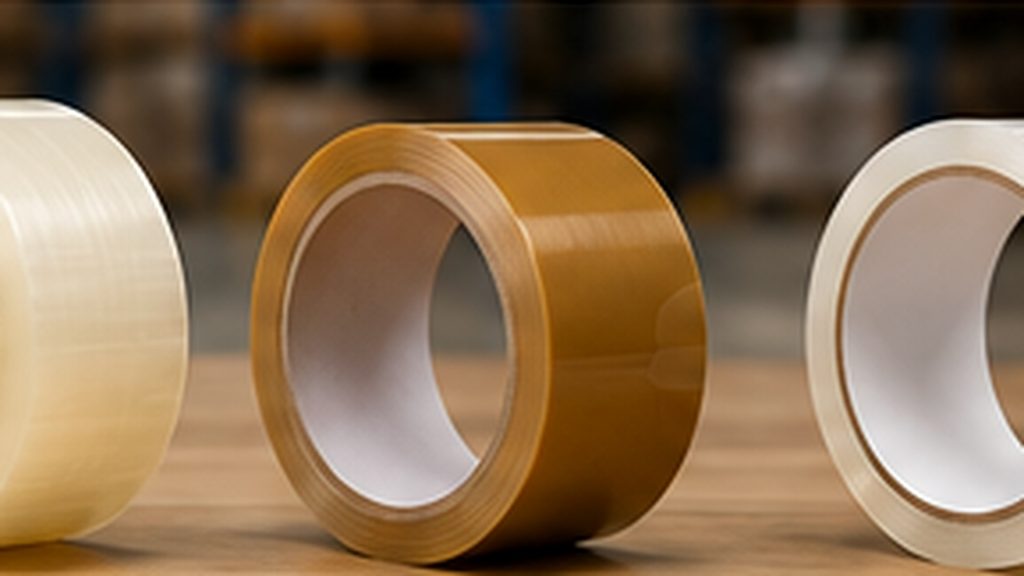
Start With the Tape Construction
Most carton-sealing tape combines a BOPP backing film with a pressure-sensitive adhesive. The backing provides tensile strength and a printable surface, while the adhesive creates contact with the corrugated board. Release treatment on the opposite side allows the roll to unwind.
The same-looking roll can behave very differently depending on the adhesive formulation, coating weight, film thickness, and manufacturing consistency. That is why comparing only total tape thickness or roll price rarely gives a complete picture.
Yalan's BOPP packaging tape category is designed for carton sealing, shipping, warehousing, and industrial packaging, with custom specifications available for different markets.
What Is Acrylic Packaging Tape?
Acrylic packaging tape normally uses a water-based acrylic adhesive. It is widely chosen for general carton sealing because it offers clean appearance, stable aging performance, and good clarity. Its adhesion often develops after application rather than reaching maximum grip immediately.
This makes acrylic tape suitable for cartons that will remain sealed during warehouse storage or longer distribution cycles. It is also a practical option when clear presentation matters, because good-quality acrylic tape can remain visually clean instead of becoming noticeably discolored.
Acrylic tape is often selected for standard cartons, retail distribution, export packing, and operations that need quiet unwinding. Yalan's low noise tape range is especially relevant where packing tables operate close to offices, picking zones, or other workers.
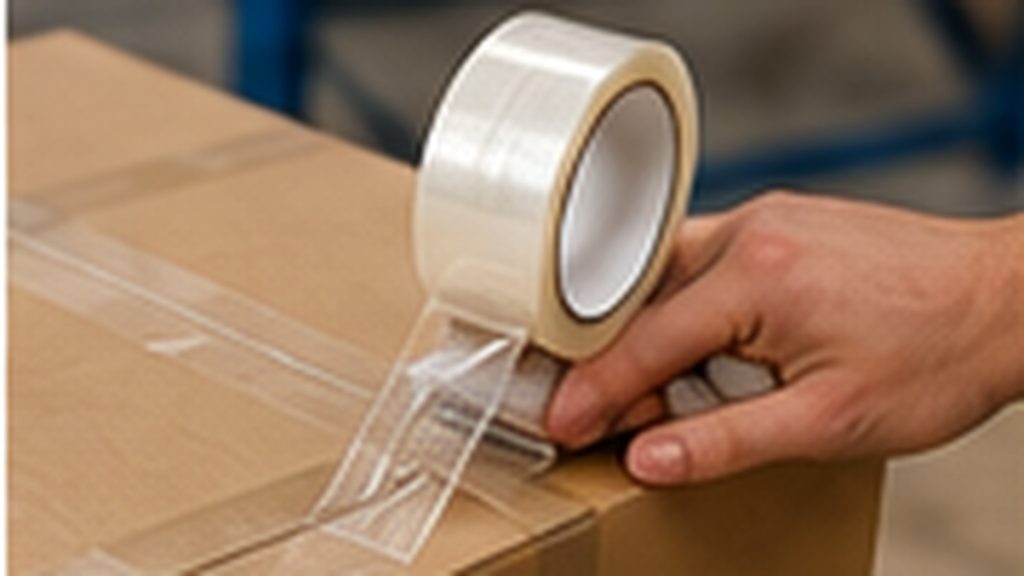
What Is Hot Melt Packaging Tape?
Hot melt tape uses a synthetic rubber-based adhesive that is coated while molten. Its main advantage is strong initial tack. The adhesive grips quickly, which is useful on fast packing lines and cartons that must be moved immediately after sealing.
Hot melt formulations are often chosen for high-throughput fulfillment, general shipping cartons, and packages that experience rough handling. They can perform well on many recycled corrugated surfaces because the adhesive wets the board quickly.
However, the best result still depends on carton cleanliness, pressure during application, and environmental conditions. A fast-grabbing adhesive cannot compensate for dust, loose fibers, wax, oil, or a poorly adjusted tape head.
What Is Solvent Packaging Tape?
Solvent adhesive tape generally uses a natural or synthetic rubber system prepared with a solvent carrier. It is normally selected when the packaging environment is more demanding and the buyer needs strong holding power across difficult conditions.
Typical reasons for specifying solvent tape include heavy cartons, long storage periods, demanding export routes, cold or humid areas, and surfaces that have been difficult to seal with standard grades. It is usually positioned as a higher-performance option rather than the default choice for every carton.
Because solvent formulations and substrates vary, samples should be tested on the actual box. A high-performance adhesive still requires enough application pressure and sufficient contact area.
Acrylic vs Hot Melt vs Solvent Packaging Tape
| Selection factor | Acrylic adhesive | Hot melt adhesive | Solvent adhesive |
|---|---|---|---|
| Initial tack | Moderate; builds after application | Fast and strong | Strong |
| Long-term holding | Good for normal storage | Good for fast distribution | Strong for demanding storage |
| Clarity and aging | Usually very good | May be less clear over time | Depends on formulation |
| Fast packing lines | Suitable with correct grade | Often preferred | Used when extra performance is needed |
| Difficult conditions | Choose a tested specialty grade | Can be sensitive to some extremes | Often the strongest candidate |
| Typical application | General sealing and storage | E-commerce and high-speed packing | Heavy-duty and export packaging |
Consider the Carton Surface
Modern corrugated boxes vary considerably. Virgin kraft liner, recycled liner, coated board, printed surfaces, and dusty cartons do not accept adhesive in the same way. Recycled board may have a rougher surface with shorter fibers, reducing the real contact area between tape and carton.
Before changing to a thicker tape, check whether the adhesive can wet the surface. Press a sample onto the carton, leave it for a realistic dwell time, and inspect edge lift and fiber tear. Strong bonding often removes surface fibers when peeled, while weak contact releases cleanly.

Match the Adhesive to Packing Speed
At a manual packing table, the operator can press the tape down and correct a poor seal. An automatic carton sealer has less flexibility. The tape must unwind consistently, track through the head, cut cleanly, and develop adhesion within the available contact time.
For production lines, evaluate machine packaging tape together with the equipment. Roll length, core size, unwind force, backing strength, and adhesive type all affect downtime and sealing consistency.
Do Not Ignore Application Pressure
Pressure-sensitive adhesive needs pressure. The tape should be rolled firmly onto both carton flaps, particularly around the ends of the center seam. If an operator lays the tape lightly across the box, air remains between the adhesive and the board.
A quality carton sealing tool applies more uniform pressure and keeps the roll aligned. On machines, worn rollers, incorrect tape-head tension, and poor carton height adjustment can create the same failure as using the wrong adhesive.
Test the Complete Package
A useful tape trial should reproduce the real operation. Seal representative cartons at the normal packing speed, then expose them to expected storage and transport conditions. Include the heaviest carton, the most recycled board, and any box with heavy printing or surface treatment.
Check the package immediately, after one day, and after the expected storage period. Look for edge lifting, flagging, loose seams, backing splits, and adhesive transfer. Compare the amount of tape used per carton as well as the roll cost.
Conclusion
Acrylic adhesive is a practical choice for general sealing, clear appearance, and stable storage. Hot melt adhesive offers rapid initial tack for fast packing and distribution. Solvent adhesive is often reserved for heavy cartons and more demanding environmental or transport conditions.
The best choice is the adhesive that remains secure on your actual carton through the entire distribution cycle. Send the supplier the carton type, package weight, application method, storage conditions, and required roll dimensions before approving a bulk specification.
Frequently Asked Questions
Which packaging tape adhesive has the strongest initial tack?
Hot melt and many solvent grades normally provide faster initial grip than standard acrylic tape. The result still depends on the carton surface and application pressure.
Is acrylic tape suitable for long-term storage?
Yes. Good acrylic tape is commonly selected for longer storage because of its stable aging and clarity, provided the grade matches the environment.
Which adhesive is best for recycled cartons?
Hot melt or solvent tape may provide better wet-out on some rough recycled liners, but the board should be tested because recycled cartons vary widely.
Can one adhesive grade be used throughout the year?
Possibly, but seasonal temperature changes can alter performance. Test the tape during the coldest and hottest conditions relevant to your warehouse and shipping route.
Does thicker packaging tape always seal better?
No. Thickness can improve backing strength, but poor adhesive selection or insufficient pressure will still cause sealing failure.
Share on Social:


Contact Us
In This Article
Related Posts
What Packaging Materials Are Commonly Used in North American Warehouses?
Oct 23, 2026
PP Strapping for Cartons: Packaging Challenges in E-Commerce Logistics
Oct 21, 2026
Polypropylene Strapping Under Temperature Changes: Effects on Packaging Performance
Oct 21, 2026
PET Strapping Supplier: Heat-Seal Joint Strength and Sealing Reliability
Oct 21, 2026


