







Hand Strapping vs Machine Strapping: How to Choose the Right System
By hqt
Jul, 2026Related Posts
What Packaging Materials Are Commonly Used in North American Warehouses?
Oct 23, 2026
PP Strapping for Cartons: Packaging Challenges in E-Commerce Logistics
Oct 21, 2026
Polypropylene Strapping Under Temperature Changes: Effects on Packaging Performance
Oct 21, 2026
PET Strapping Supplier: Heat-Seal Joint Strength and Sealing Reliability
Oct 21, 2026
Hand strapping and machine strapping can both create secure packages, but they solve different production problems. A manual station offers flexibility and a low entry cost. A machine provides faster cycles, more repeatable tension, and less repetitive work when packaging volume increases.
The right decision should be based on package size, daily output, labor availability, strap material, quality requirements, and the cost of downtime—not simply on the purchase price of the equipment.
What Is Hand Strapping?
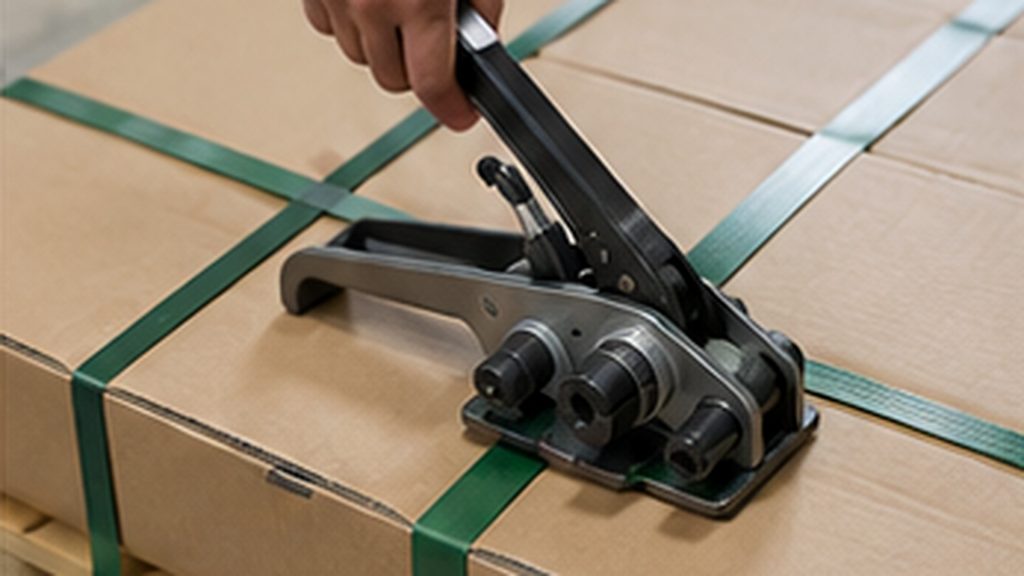
Hand strapping is applied by an operator using a tensioner, sealer, buckle system, or battery-powered combination tool. It is practical for low to medium volumes, changing package sizes, remote work areas, construction materials, and pallets that cannot easily move through a fixed machine.
Manual operations can use PP hand strapping for light cartons and PET hand strapping for stronger pallet applications. The system is easy to expand by adding another workstation, but the result depends heavily on operator training and tool condition.
What Is Machine Strapping?
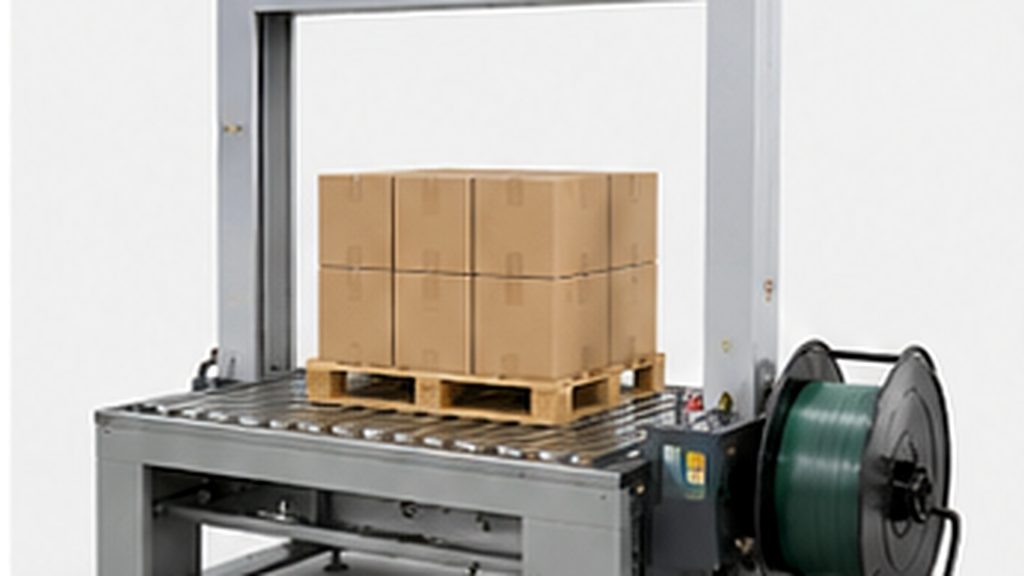
Machine strapping includes semi-automatic table machines, automatic arch machines, pallet strappers, and integrated production-line systems. The machine feeds the strap, applies controlled tension, seals the joint, cuts the band, and prepares for the next cycle.
Strapping machines are commonly used for repeated cartons, bundles, and pallets where packaging speed and consistency matter. They require suitable machine-grade strap, planned maintenance, and a stable package flow.
Hand Strapping vs Machine Strapping Comparison
| Decision Factor | Hand Strapping | Machine Strapping |
|---|---|---|
| Initial investment | Lower | Higher |
| Best volume range | Low to medium or irregular work | Medium to high and repetitive work |
| Package flexibility | Very flexible | Depends on machine opening and layout |
| Cycle speed | Operator dependent | Faster and more predictable |
| Tension consistency | Depends on tool and operator | More repeatable when correctly set |
| Labor demand | Higher per package | Lower per package |
| Maintenance | Simple tool maintenance | Regular machine service and cleaning |
| Integration | Standalone | Can connect with conveyors and packing lines |
Compare Real Throughput, Not Maximum Speed
A machine may have an impressive rated cycle time, but actual throughput depends on how cartons arrive, how operators position them, whether labels or corner protection are added, and how frequently the strap coil is changed. Measure the complete packing cycle rather than the sealing action alone.
Manual strapping can be efficient when packages arrive irregularly or when the operator is already completing other packing tasks. Automation becomes more attractive when a station has a steady queue, repeated dimensions, and enough volume to keep the equipment working.
Consider Labor and Ergonomics
Hand strapping requires repeated pulling, tensioning, sealing, and cutting. Over a long shift, these movements can slow production and create operator fatigue. A well-selected manual tool reduces effort, but it does not eliminate handling.
Machine strapping reduces repetitive operations and can allow one worker to manage several packaging steps. However, the process still needs safe loading, coil replacement, cleaning, jam removal, and quality checks. The labor saving should be calculated from the full workflow.
Tension Consistency and Package Quality
Manual tension can vary between operators and shifts. Battery-powered tools improve repeatability, but settings, battery condition, and tool wear still matter. Machine systems usually provide more consistent tension for repeated packages, which can improve appearance and reduce loose bundles.
Consistency is especially valuable when cartons have the same dimensions and customers expect a uniform package. For mixed products, the operator or control system must still select the correct setting so lighter cartons are not crushed.
Use the Correct Strap for Each System
Hand-grade and machine-grade straps may look similar but are not always interchangeable. Automatic equipment needs predictable coil winding, camber, width, thickness, surface friction, and joint performance. Poor feeding can cause more cost through stoppages than the saving from a cheaper roll.
For automated lines, review PET machine strapping for stronger loads and PP machine strapping for efficient carton and lightweight bundling. Confirm compatibility by testing the exact strap on the intended machine.
Calculate the Total Cost of Ownership
Manual systems require tools, seals or buckles, batteries where applicable, maintenance parts, and operator time. Machine systems add equipment purchase, installation, power, service, spare parts, and the cost of production interruptions.
The comparison should include annual package volume, labor minutes per load, consumable use, rejected packages, repairs, and expected machine utilization. A machine that is rarely used may not justify its cost. A manual station that limits a busy shipping line may be even more expensive through overtime and delayed orders.
When Should a Business Upgrade?
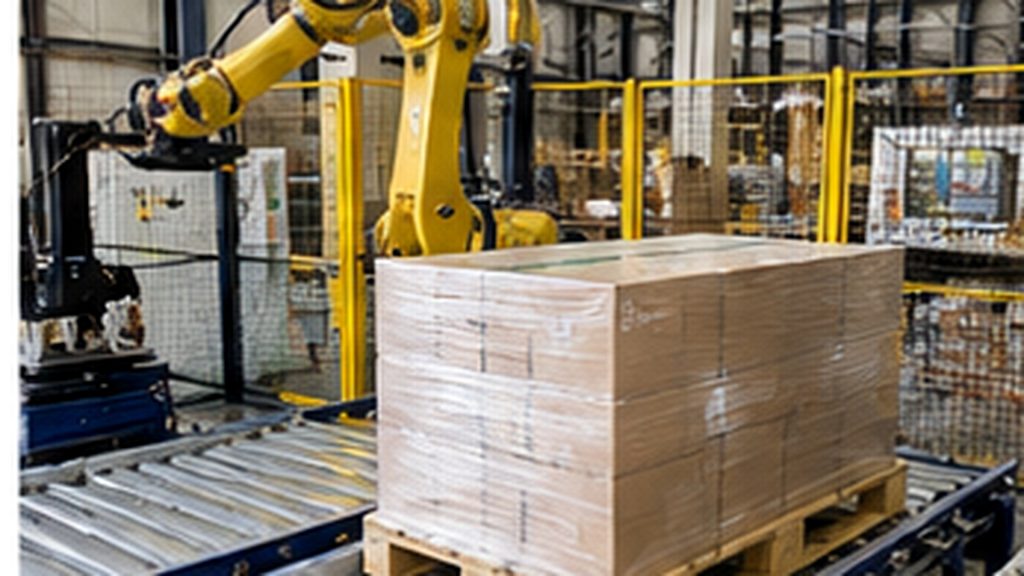
Common signs include a growing queue at the packing station, excessive operator fatigue, inconsistent tension, frequent rework, and difficulty meeting dispatch deadlines. Automation is also worth reviewing when package sizes become standardized or when the strapping step must connect with conveyors, weighing, labeling, or wrapping.
A hybrid system is often practical. Use a machine for standard cartons and regular pallets, while keeping manual strapping tools and tensioners for oversized, irregular, or low-volume jobs.
Questions to Ask Before Buying
Record the smallest and largest package dimensions, daily and peak volume, current labor time, required strap material, desired tension range, joint method, power supply, line layout, and maintenance capability. Ask the supplier to run your actual cartons and strap during a trial rather than evaluating an empty machine.
Also confirm coil specifications, spare-parts availability, operator training, cleaning requirements, and how quickly the machine can change between package sizes.
Conclusion
Hand strapping is the better choice for flexible, irregular, and lower-volume packaging. Machine strapping becomes valuable when the work is repetitive and the business needs speed, consistent tension, and lower labor per package. Many warehouses achieve the best result with both: automation for the regular flow and manual tools for exceptions. The decision should follow measured production data and a real package trial.
Frequently Asked Questions
Is machine strapping always faster than hand strapping?
It is usually faster for repeated packages, but the total line speed also depends on product handling, positioning, labeling, and other packing steps.
What volume justifies a strapping machine?
There is no single threshold. Compare annual labor time, package consistency, peak-hour queues, rework, and expected machine use against the total ownership cost.
Can one machine use both PET and PP strapping?
Some machines can, but the strap size, tension range, feed system, heater or welding settings, and manufacturer approval must be checked.
Are battery-powered tools considered hand strapping?
Yes. The operator still positions and controls the tool, although tensioning, welding, and cutting may be automated within the tool.
Should a warehouse keep manual tools after installing a machine?
Usually yes. Manual tools provide backup during maintenance and handle oversized, irregular, or low-volume packages that do not fit the machine.
Share on Social:


Contact Us
In This Article
Related Posts
What Packaging Materials Are Commonly Used in North American Warehouses?
Oct 23, 2026
PP Strapping for Cartons: Packaging Challenges in E-Commerce Logistics
Oct 21, 2026
Polypropylene Strapping Under Temperature Changes: Effects on Packaging Performance
Oct 21, 2026
PET Strapping Supplier: Heat-Seal Joint Strength and Sealing Reliability
Oct 21, 2026


